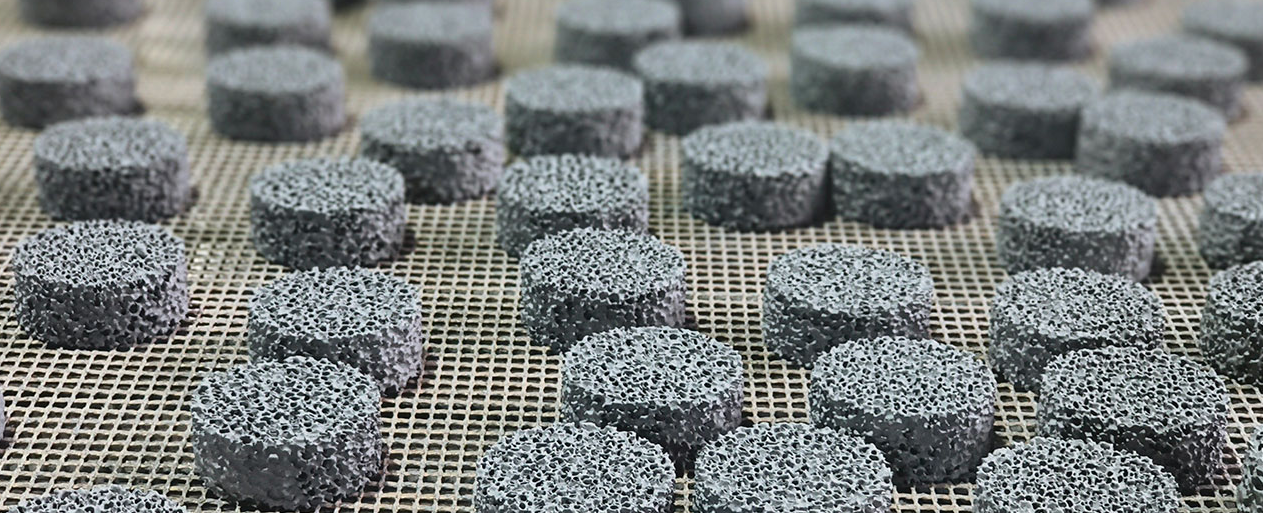
Buying ceramic filters for metal filtration from China cuts your costs by 30-50%. You also get access to advanced filtration technology. But you need to know how international purchasing works.
Finding suppliers is just the start. The real challenge? You need manufacturers who get your metallurgical needs. They must meet Western quality standards. First-time importers often make expensive mistakes—you want to avoid those.
Filtering aluminum, cast iron, or non-ferrous alloys? This guide covers your entire buying process. You’ll learn to read technical specs. We show you how to check manufacturers. You’ll get better deals through smart negotiation. Your filters will arrive ready for inspection.
Industrial buyers have proven strategies for building reliable Chinese sources. We give you those same methods. You’ll get practical checklists. Red flags appear at every buying stage—we’ll show you what to watch for.
Understanding Ceramic Filter Specifications for Your Metal Type
Your metal’s chemistry and pour temperature decide which ceramic filter survives casting. Pick the wrong material? You’ll see filter breakdown, metal contamination, or total filtration failure.
Match Filter Chemistry to Your Metal
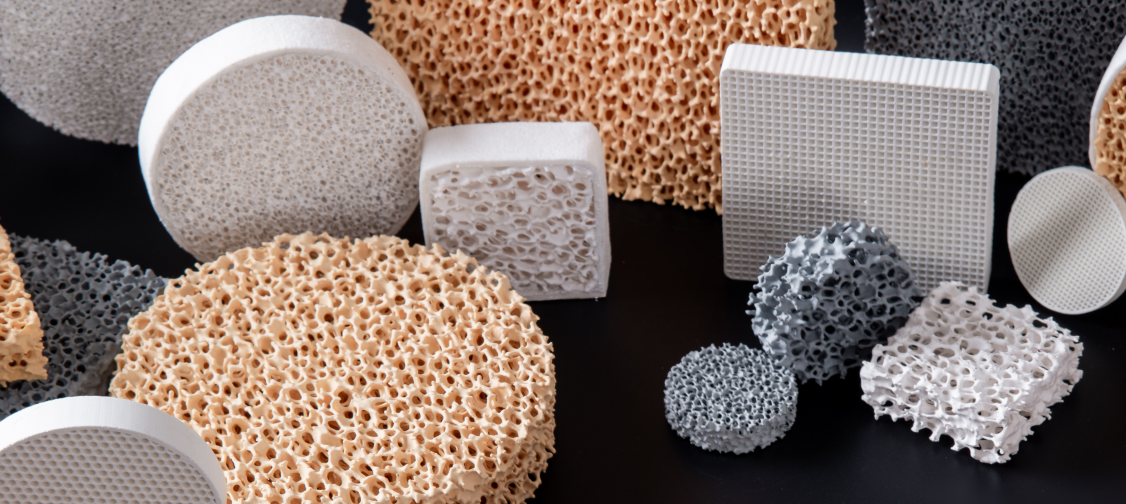
Aluminum alloys need alumina (Al₂O₃) filters for pour temperatures up to 1000°C. You get balanced cost and chemical resistance. Mullite filters work up to 1100°C. They handle thermal shock better for your regular casting work.
Running reactive or high-alloy melts above 1100°C? Zirconia (ZrO₂) filters are your answer. They resist corrosion and thermal shock where other materials fail. Steel and abrasive melts require silicon carbide (SiC) blends. These filters control wetting and handle abrasion damage.
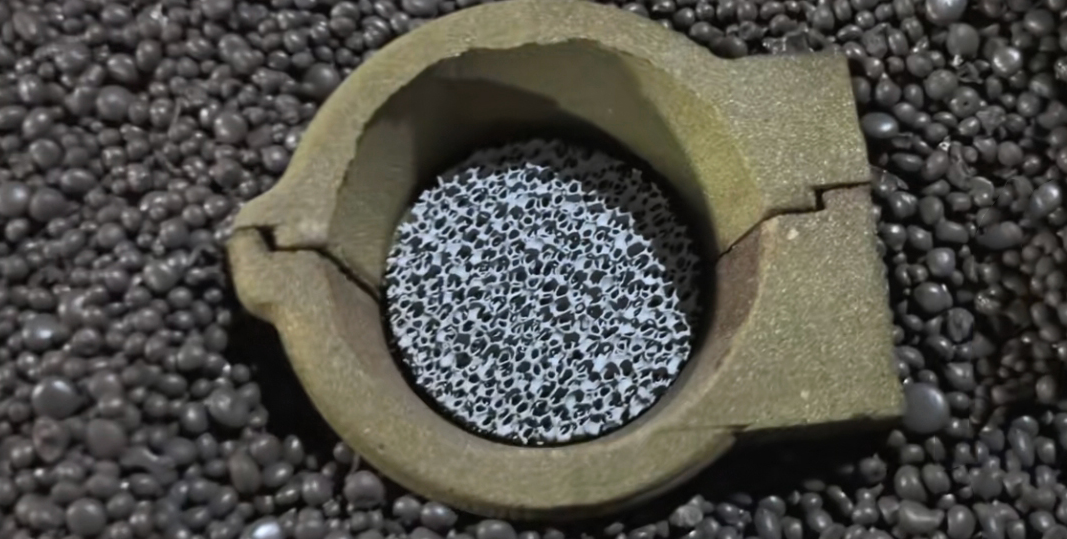
SEDEX ceramic foam filters work well for general molten iron and steel. The 22/20 PPI rating at 1×75² mm size filters efficiently. Flow stays smooth without restriction.
Pick the Right Pore Density for Your Casting
Pore density measured in PPI (pores per inch) controls what you capture. It also affects how fast metal flows. Large aluminum castings need 10-15 PPI filters. High throughput is what you get. Coarse dross gets removed. Production stays on pace.
Standard aluminum components work best with 15-20 PPI. This range balances surface finish with what you capture. Thin-walled or high-precision aluminum parts need 20-30 PPI filters. Fine inclusions get caught. Defects drop. Pour rates slow down, though.
Verify Temperature Ratings Against Your Process
Alumina filters max out at 1000°C. Mullite extends to 1100°C. Push either material past its rating? It breaks down and contaminates your melt. Zirconia handles temperatures over 1100°C. No degradation happens.
Check your actual pour temperature. Don’t just look at your furnace setting. Metal temperature drops during transfer. The filter still sees peak heat during the initial pour.
Consider Filter Geometry for Flow Control
Foam ceramic filters use 3D open-cell structures with graded pores. Depth filtration is what they provide. Turbulence gets dampened. Honeycomb filters give you smooth flow control. They capture less material than foam designs, though.
Straight-hole dry-pressed filters offer flat profiles and precise dimensions. They work for aluminum, iron, and steel. Predictable flow paths are what you need? These deliver. Metal mesh filters cost less. They catch coarse debris. Fine inclusions? High temperatures? They can’t handle those.
Test Compatibility Before Production
Ceramic filters must stay inert to your specific alloy. Run wettability tests to avoid unwanted reactions. The filter shouldn’t change your metal chemistry. It shouldn’t add contamination either.
Never reuse ceramic filters in production. Used filters lose porosity. Trapped contaminants can get into fresh melts. Single-use replacement prevents defects. Filtration performance stays consistent across all pours.
Finding the Right Chinese Manufacturers
Technology Shows Production Ability
Visit the quality control area. Check for automated inspection systems that catch defects human eyes miss. Top factories use AI and machine learning to track pore consistency across production runs. They rely on big data analytics to spot quality issues before they reach your order.
Ask about their quality control partnerships. Good manufacturers work with raw material suppliers and end users. They share testing data. They fix problems together. Factories that work alone? They’re guessing at what you need.
Check Recent Inspection Records
Get copies of SAMR validity inspection results from the past 12 months. Passing these government audits proves active compliance. The China TIC market will hit USD 69.09 billion by 2030, growing at 6.1% each year. Testing services took over 73% of revenue share in 2022. Manufacturers using certified third-party testing providers take quality seriously.
See if they meet “Made in China 2025” initiative targets. The government now enforces tougher penalties for non-compliance. Factories that cut corners face real consequences. Find manufacturers in the 33 Manufacturing Innovation Centers already set up. They’re working toward 40 MICs total.
Check Energy Label Registration
Ceramic filter production equipment needs current China Energy Label (CEL) registration. Manufacturers without this face customs delays, fines, or blocked market access. Check their CELC registration is active and correct. Missing compliance blocks shipments at Chinese ports before they leave.
Ask for documented staff training programs focused on quality control. Ask about their improvement culture. The best suppliers train operators on metal requirements—not just ceramic pressing.
Requesting and Comparing Quotations
Price quotes for ceramic filters from China vary by 300-400% between suppliers. A proper RFQ (Request for Quotation) process cuts through this noise. It saves you real money.
Spend 50% of your RFQ time on preparation. Do this before you contact any supplier. Validate your bill of materials first. Get your team to agree on what you need. Set clear criteria for suppliers. This work up front stops endless back-and-forth later. You get quotes that are accurate and easy to compare.
Build Your RFQ Document
Create a standard template. Send it to every supplier. Include your exact technical specs and quality standards. List the quantities you need with delivery dates. State your payment terms. Add evaluation criteria so suppliers know what you care about.
Your pricing template needs cost breakdowns. Ask for volume discounts at different levels. Request total delivered prices. Set firm deadlines for submission. Good suppliers respond fast. Slow quotes? They signal capacity problems.
Specify your quality needs: pore density tolerance, thermal shock resistance values, size accuracy. State the material you need – alumina, silicon carbide, or zirconia. Include your working temperature range and metal type.
Normalize Quotes for Fair Comparison
Quotes arrive in different currencies with different Incoterms. Convert everything to one standard currency first. Make sure logistics assumptions match across all suppliers. Some quote FOB Shanghai. Others quote CIF to your port. Calculate the real landed cost.
Check minimum order quantities with care. A lower unit price with 5000 MOQ costs more than a higher unit price at 2000 MOQ. This happens when you need just 2500 pieces. Factor in packaging costs as a separate line item. Confirm each quote matches your current BOM revision.
Check lead times against industry benchmarks. ISM reported 84-85 days average for production materials in mid-2025. A supplier promises 30-day delivery for custom ceramic filters? Red flag. They probably can’t deliver. Or they’ll ship poor quality to meet deadlines.
Evaluate Beyond Price Alone
The cheapest quote doesn’t usually win. Check delivery timelines against your production schedule. Review quality promises and testing methods. See what extra services are included – technical support, custom sizing, replacement guarantees.
Digital procurement teams cut sourcing cycles by 24% using structured evaluation. Track these metrics: quote turnaround time, quote completeness rate, cost variance from target models, supplier lead time accuracy.
One global manufacturer saved $400,000 each year and reduced procurement cycles 40% through automated quote analysis. You don’t need expensive software. A simple spreadsheet comparing standard quotes works fine.
Document Everything and Award with Strategy
Record the number of bids sent and received. Note your evaluation criteria and committee members. Document why you picked your winning supplier. This gives you leverage for future talks. It also protects you if the supplier doesn’t perform.
Let non-winning bidders know in a professional way. Thank them for taking part. You might need them as backup suppliers or for future orders. Strong ties with multiple Chinese manufacturers give you negotiating power. Plus, you get supply chain strength.
Sample Testing and Quality Checks
Order samples from at least three suppliers before you buy in bulk. Physical testing shows what spec sheets can’t. Get 20-30 pieces from different production runs for your sample batch.
Set your pass rate at 95% minimum for size accuracy and pore density. Measure each filter against your specs. Write down every problem. Numbers outside your range mean production issues. Calculate your error ratio: total defects divided by sample size. Above 5%? The factory has quality control problems.
Run These Seven Key Tests
Check your data for missing info first. Missing certifications or incomplete test reports? Drop that supplier right away. Check that numbers match specs—pore density, compression strength, heat resistance. Production dates need to be recent. Filters stored for 12+ months lose strength.
Check that all samples match the design. Do all pieces fit the listed dimensions? Look for duplicates or wrong labels. Test each filter separately—they need to work on their own under heat stress. Measure volume to confirm density. Weigh random samples against listed specs.
Negotiating Price and Payment Terms
Price sits second on the list of most-negotiated contract terms. It’s also the number one disputed item when things go wrong. Changes and unexpected costs trigger most fights. Get your pricing locked down first. Then tackle payment terms as a separate discussion.
Separate Price from Payment Timeline
Close the unit price first. Don’t mix it with payment talk. Suppliers push back harder with bundled requests. A manufacturer who agreed to $2.15 per filter will resist your net-60 terms request right after. Lock the price. Then show how extended terms help both sides through cash flow modeling.
Understand the Real Cost of Extended Terms
Suppliers raise prices 5-8% if you push payment terms 15-30 days beyond industry standards. A $50,000 ceramic filter order jumps to $54,000 just from asking for net-60 instead of net-45. Calculate this before you negotiate. Sometimes shorter terms with a lower unit price beat extended terms at higher pricing.
Net-60 electronic transfers create 48% higher DSO compared to net-30 on the same payment method. Each extra 30-day extension on ACH adds 15-20 days to your actual payment cycle. The math compounds fast. Using more than 4 different payment methods drives DSO up another 15%. Stick to one or two methods. Your accounting team will thank you.
Start with Industry Benchmarks
Common net terms run 7, 10, 15, 30, 60, or 90 days from invoice date. 5/10 Net 30 gives you a 5% discount for paying within 10 days. Otherwise you pay full price by day 30. 2MD means payment hits two months after the full delivery month closes. Stage payments work for large orders. Lines of credit suit repeat buyers.
Propose net-30 to net-90 as your opening range. Settle at net-45 as the middle ground. This gives you breathing room. It won’t trigger the supplier’s price-increase threshold. Commit to minimum spend levels or future orders. Suppliers extend terms when they see guaranteed volume.
Address 2025 Market Pressure
37% of vendors report 2025 trade negotiations got harder than 2024. Macro uncertainty and margin pressure make suppliers defensive. 64% of Amazon vendors faced cost-decrease requests in 2025. Chinese ceramic filter makers see similar pressure across their customer base. They’re protecting margins with force.
Lock Down Contract Clarity
Prioritize price, payment terms, and delivery dates above everything else. These three items cause most disputes. Invoicing and late payment issues jumped in 2024 due to inflation. Disputes still happen even after negotiation. Processes don’t align.
Digitizing contracts brings 55% compliance improvement. Put payment terms in writing with zero confusion. Specify the invoice date trigger. State the payment method. List any early-payment discounts. Define what happens with late payments. Ceramic filter shipments from China involve long lead times. You can’t afford payment disputes stopping your production line.
Use historical pricing data to support your position. Show what you paid last year. Reference competitor quotes. One manufacturer shared three comparable bids during talks. The Chinese supplier matched the best price to keep the business. Transparency works with real data backing your ask.
Managing Logistics and Customs Clearance
Ceramic filter shipments from China face new tariff and customs rules in 2025. The US eliminated the Section 321 de minimis exemption on August 29, 2025. Shipments under $800 no longer enter duty-free. Every ceramic filter order now goes through full customs clearance. You pay the applicable duties.
New tariff rules raise duties 30-60% on exports from specific countries. The US-Japan baseline tariff sits at 15% effective September 18, 2025. Drugs, natural resources, and civil aircraft get exemptions. Ceramic filters don’t qualify. Steel, aluminum, and copper get exemptions. Ceramic materials face full duties.

Track Your Transit Times and Port Conditions
China-to-US West Coast transit times run 32 days as of mid-September 2025. That’s down 0.5 days from the previous period. East Coast routes improved by 1.8 days. China-to-North Europe takes 60.9 days—up 0.9 days due to congestion. Plan your orders around these real transit windows.
European ports show mixed conditions in September 2025. Antwerp yard use exceeds 75% with wait times hitting 7-8 days. Rotterdam, Hamburg, and Bremerhaven run at 75-85% capacity. Delays range from 1-5 days. Mediterranean ports like Piraeus, Genoa, and Valencia face 3-6 day delays. European congestion has eased compared to peak periods.
US container imports dropped to 2,307,933 TEUs in September 2025. That’s -8.4% versus August and -8.4% year-over-year. Some routes saw capacity cuts. 25% of Far East-West Base (FEWB) sailings were blanked during weeks 40-41. Indian Subcontinent-to-US East Coast traffic slowed after tariff changes took effect.
Prepare Documentation for Digital Customs Processing
Over 50% of customs declarations went digital in 2025. The Customs Support Group processes more than 3 million declarations yearly. This covers 20 million goods lines across 14 EU markets. AI testing shows +50% efficiency gains in processing speed. Get your supplier to provide digital-ready docs from day one.
Your commercial invoice needs the correct HS code for ceramic filters. Wrong codes trigger delays and potential fines. List the material—alumina, silicon carbide, or zirconia. State the exact pore density in PPI. Include dimensions and filter geometry. Add the manufacturing date and production batch number.
Review Entries for Compliance and Refund Opportunities
Check all your entries back to August 7, 2025 for US refund eligibility and compliance. Origin and classification errors create refund chances once you fix them. Work with a customs broker who knows ceramic product codes. They’ll catch errors your accounting team misses.
Use one provider for customs processing across all markets. Standard data cuts errors for multi-country imports. A single provider learns your specific product. They track rule changes that affect ceramic filters. Different brokers for different ports create doc gaps.
Building Long-term Supplier Relationships
A ceramic filter supplier relationship based on shared value lasts longer than any single purchase order. Both sides put in resources and gain benefits over time. Your Chinese manufacturer dedicates production to your specs. You commit to volume and reliable payments.
Partnerships work toward shared goals—shorter lead times, better quality, or fewer defects. Short-term contracts can’t deliver these gains. Planning for shared risks matters more. Both parties get ready for problems. Chain issues cause less damage because your supplier puts your orders first during shortages.
Communicate with Structure and Clarity
Run quarterly business reviews with your supplier. Look at performance data together. Set new goals based on real numbers. Give feedback that points to solutions—not blame. Let your supplier share insights about your ordering patterns or spec changes. Their factory-floor view catches waste you miss.
Share your payment schedule clearly. Stick to agreed timelines every time. Trust breaks faster from payment delays than from any other problem. Talk about your long-term production goals openly. Suppliers who see your three-year capacity plans invest in equipment upgrades to serve you better. They put your orders first during tight capacity.
Joint business plans and shared digital tools keep both teams aligned. Set up structured governance meetings. Share performance data, cost details, and risk signals. Track total cost of ownership—not just the unit price per filter. Check financial stability, compliance status, and innovation metrics like new improvements put in place.
Real Results From Strong Partnerships
61% of Chief Procurement Officers call supplier collaboration their best risk strategy. Over 60% say it delivers the most value to their organizations. During semiconductor shortages, companies with long-term partnerships got inventory. Their competitors using one-off sourcing went without. Political problems hit shipping routes. Businesses with trusted logistics partners found alternatives faster than others stuck searching for new carriers.
Quality problems get solved better too. A supplier with a strong relationship fixes problems alongside you. One-off suppliers point fingers and delay fixes. 87% of companies now use eProcurement tools to improve supplier sourcing. Digital platforms make data sharing and communication standard.
Benefits You’ll See
Partnerships cut your total costs across the relationship. Innovation speeds up. Time to market drops because suppliers join product development from the start. Chains bounce back faster from problems. Environmental and social performance gets better through coordinated standards.
You get better pricing without constant talks. Suppliers show more flexibility adjusting terms or finding other solutions during urgent needs. Clarity increases. You spot risks sooner and handle them before they grow. One tech company partnered with their materials supplier to co-develop new products. Their product launch timeline got shorter by months.
Build responsible purchasing standards into supplier selection from day one. Focus on manufacturers who share your compliance values. Use third-party certifications from SGS or Bureau Veritas to check claims. Put compliance in place through shared understanding of requirements, coordinated data collection, and joint improvement work. Celebrate wins together through formal recognition programs. Your supplier’s team values appreciation—and gives it back with better service.
Conclusion
Sourcing ceramic filters for metal filtration from China gets easier with the right approach. Understand your specific filtration needs first. Vet manufacturers through certifications and references. Insist on sample testing before placing bulk orders. This cuts procurement risks and gives you competitive pricing.
Balance cost savings with quality assurance—that’s the key. Never sacrifice product specs for a lower price. The cheapest supplier isn’t always the most economical. Filter lifespan matters. So does filtration efficiency and avoiding production disruptions.
Start by shortlisting 3-5 manufacturers that meet your technical criteria. Request detailed quotes with complete specs. Always test samples under your actual operating conditions. Found a reliable partner? Build that relationship through clear communication and consistent orders.
Ready to source your ceramic filters? Download our free supplier evaluation checklist. It helps you ask the right questions and compare quotes properly. Your perfect filtration solution is just one smart decision away.