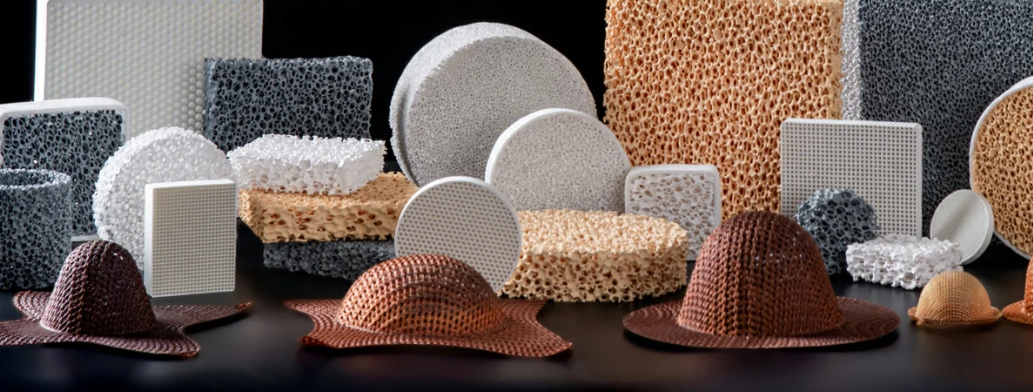
The right ceramic filter can make or break your copper casting operation. It affects efficiency. It affects final product quality.
China dominates the global foundry market. Dozens of manufacturers claim “superior filtration.” Each one promises the lowest defect rates. Each one promises the longest service life. This gets confusing fast.
Here’s the truth: Not all ceramic filter manufacturers for copper casting in China deliver on their promises. Pick the wrong supplier? You’ll face thousands in rejected castings. You’ll deal with production downtime.
This analysis examines top-tier manufacturers. These companies have proven themselves in real copper foundry work. No marketing fluff.
You’ll discover:
– Detailed performance comparisons
– Technical specs that matter
– Critical quality indicators that separate leaders from average suppliers
This gives you concrete data. You can make a confident sourcing decision. Your production quality stays protected. So does your bottom line.

How to Evaluate Ceramic Filter Manufacturers for Copper Casting in China
Finding the right ceramic filter manufacturers for copper casting in China needs a clear plan. Raw supplier claims? They won’t help much. You need a system to evaluate them properly.
Core Assessment Layers
Stage 1: Technical Qualification Baseline
Filter manufacturers against must-have specs first. Pore size distribution matters most for copper casting. Look for 10-30 PPI (pores per inch) for the best metal flow. Thermal shock resistance? It must go beyond 800°C. The material should be aluminum oxide or silicon carbide based.
Stage 2: Production Evidence Review
Check real performance data. Ask for documented filtration efficiency rates. Top suppliers achieve 95%+ inclusion removal. Review their batch consistency reports. Can they handle your order volume? Check production capacity. Leading manufacturers process 50,000+ filters each month.
Stage 3: Quality Verification Metrics
Code each supplier by certification level (ISO 9001, IATF 16949). Track defect rates from their existing clients. Compare warranty terms. Premium manufacturers offer 12-18 month guarantees. Industry standard? Just 6 months. Cross-check pricing against performance. Budget options cost $3-8 per filter. Premium ones run $12-25. This links to casting yield improvements of 8-15%.
Stage 4: Pattern Identification
Map supplier responses across categories. Note how consistent their technical communication is. Manufacturers who provide detailed metallurgical test reports? They beat those offering generic spec sheets. Flag suppliers who can’t discuss specific copper alloy compatibility. This shows their foundry expertise level.
DTYR Filters
DTYR started making ceramic filters in 1997. That’s 27 years of experience. This ceramic filter maker for copper casting in China built its name on silicon carbide foam technology.
Silicon Carbide Construction Advantage
Silicon carbide filters beat aluminum oxide options in harsh conditions. They handle thermal shock above 1000°C. Chemical corrosion? Silicon carbide stays stable against molten copper alloys. Copper casting operations with non-stop pours need this stability.
DTYR makes filters in 40x40x22mm size. This fits standard launder systems in most Chinese foundries. The compact size works for small batches and high-volume lines alike.
Filtration Performance Specifications
DTYR filters come in five capacity ratings. Each rating suits different casting volumes:
-
4 kg/cm² capacity: 16 filters needed
-
1.5 kg/cm² capacity: 64 filters needed
-
10 kg/cm² capacity: 24 filters needed
-
20 kg/cm² capacity: 10 filters needed
-
30 kg/cm² capacity: 20 filters needed
These numbers help procurement teams plan. Match your copper throughput to the right capacity rating. This stops over-ordering. It also prevents filter breakthrough during production.
Market Position and Limitations
International foundries use DTYR filters. The company exports beyond China’s borders. Their products meet basic quality standards for global metalcasting.
DTYR has limited public technical data though. Exact pore size distribution data? You won’t find it in standard channels. Thermal cycling test results? Missing from supplier materials. Chemical compatibility charts? Not published.
This makes performance comparison hard. Procurement teams need to ask DTYR sales for detailed spec sheets before placing large orders.
SEFU Ceramic Filter
SEFU builds ceramic filters for extreme heat. Their silicon carbide foam filters handle up to 1480°C. That’s 200°C higher than standard aluminum oxide filters.
Product Line Specs
SEFU offers three filter types. Each one fits different casting jobs:
Silicon Carbide Foam Filters
You get grey construction with 0.8 MPa bend strength. Flow rates start at 2 kg/s for small batches. They go up to 45 kg/s for big production lines. The 1470-1480°C max temp keeps them safe during copper pours. No heat breakdown.
Honeycomb Ceramic Filters
Density ranges from 0.7-1.8 g/cm³. Foundries can match filter weight to their launder systems. Need extra strength? Pick higher density units. Want less pressure drop? Go with lower density options.
Ceramic Plate and Alumina Foam Filters
Sizes run from 7 inches to 26 inches. SEFU made these for aluminum and multi-metal work. Large formats work great for high-speed casting lines.
Custom Sizes Available
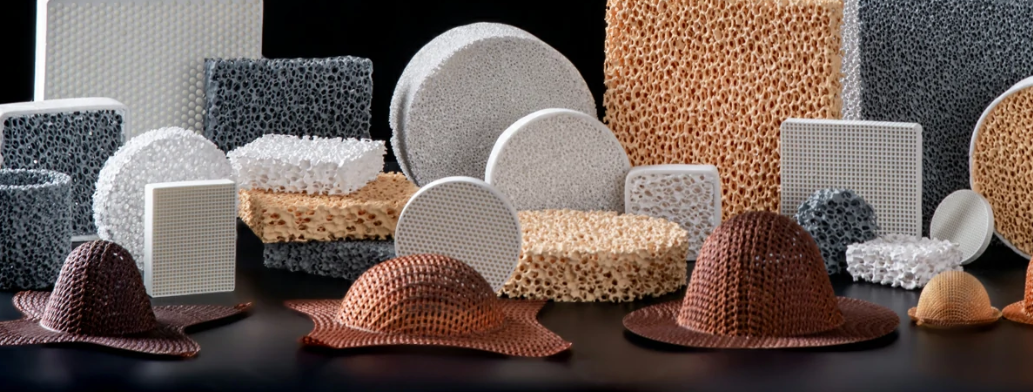
Width choices: 40mm to 600mm. Height options: 30mm to 600mm. SEFU cuts custom sizes too. Got old filter boxes to update? Building new launder setups? Custom sizing solves both problems.
What Affects Filter Performance
Four things change how well filters work. Pore size grade matters most. Small pores catch fine bits but slow down metal flow. The type of junk in your metal matters too. Heavy oxide bits need different pores than light surface trash. How molten copper wets the ceramic also changes capture rates.
SEFU filters handle aluminum, iron, steel, and precision casting jobs. But they don’t share copper-specific data. Talk to their tech team first. Get removal rates for your exact copper alloy before you buy big.
ADTECH Metallurgical Materials
ADTECH runs three production lines at full scale. They make 400,000 ceramic foam filters each year. Hot-top casting materials hit 1 million sets per year. The degassing equipment line produces 150 high-precision units. These numbers put us among China’s top ceramic filter manufacturers for copper casting.
Material Options for Different Casting Conditions
They offer four ceramic materials. Each handles specific temperature ranges and metal types:
Alumina (Al₂O₃) works up to 1000°C. Cost stays balanced. It resists chemicals in general aluminum alloys. This material fits routine copper casting jobs.
Mullite extends the range to 1100°C. It handles thermal shock better than standard alumina. Foundries running continuous pours choose this for stability.
Zirconia (ZrO₂) goes beyond 1100°C. It resists corrosion from high-alloy melts. Reactive copper blends need this protection. Pick zirconia for specialty casting work.
SiC blends beat abrasion damage. Steel foundries use these. Some abrasive copper jobs benefit too.
Performance Specifications
Our 92% alumina filters deliver serious strength. Density reaches 3.62 g/cc. Flexural strength hits 443 MPa. That’s 64,000 psi. Young’s Modulus measures 275 GPa. These filters won’t crack under pressure.
Temperature ceiling? 1600°C for molten aluminum jobs. Copper casting usually runs 1100-1200°C. Our filters have plenty of thermal margin.
Pore Size Selection Guide
|
PPI Range |
Best For |
Results |
|---|---|---|
|
10-15 |
Large castings, heavy dross loads |
Fast metal flow, catches big chunks |
|
15-20 |
Standard copper production |
Good balance of capture and speed |
|
20-30 |
Thin-wall parts, detailed work |
Fine inclusion removal, fewer defects |
Match PPI to your casting size. Big pours need 10-15 PPI. Detailed work demands 20-30 PPI. Wrong choice? You’ll get slow flow or poor filtration.
Installation and Quality Assurance
They supply three gasket types. Fiber paper works for standard setups. Fiber cotton fits irregular filter boxes. Expanding cotton seals tight gaps. Custom dimensions ship on request.
ISO 9001 and ISO 14001 certifications back our quality system. These prove we maintain steady output. They also show we meet environmental rules for export orders.
FoundryMax Ceramic Foam Filter
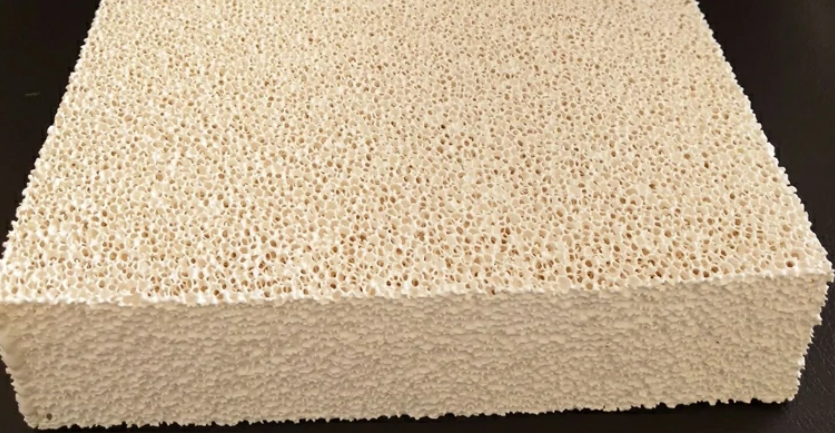
FoundryMax makes ceramic foam filters with exact technical specs. The product line has 10-60 PPI grades. Sizes range from small 7×7 inch units to large 26×26 inch formats. This ceramic filter manufacturer for copper casting in China builds filters in standard 50mm thickness. Bevel angle stays at 17.5±1.5° for secure box seating.
Size and Flow Rate Data
Each filter size has a specific flow capacity. The 7-inch unit handles 22-56 kg/min of molten metal. Effective filtration area reaches 75%. Looking at 12-inch filters? Flow rate climbs to 50-156 kg/min. Area efficiency hits 80%. The largest 26-inch filters process 276-830 kg/min. They maintain 90% effective area.
Match filter size to your pour rate. Too small? You get metal backup. Too large? You waste filter capacity and spend more.
Copper Alloy Filtration Performance
FoundryMax filters remove inclusions by size. The 20 PPI grade captures 80-micron particles at 78% efficiency. Need finer filtration? The 50 PPI option grabs 10-micron bits at 92% removal rate. Top-tier 60 PPI filters catch 5-micron inclusions at 95%.
Copper casting tips:
– Brass and bronze work: Start with 20-30 PPI for balanced flow and capture
– Pure copper pours: Use 40-50 PPI to get rid of fine oxide films
– Dirty melts with heavy dross: Pick 25-50mm thickness for deep bed filtration
Alumina ceramic works for aluminum-copper alloys. High-heat copper blends need silicon carbide or zirconia build. Ask FoundryMax about material upgrades for reactive melts.
Installation Key Steps
Preheat matters most. Heat the filter box and filter to 260°C minimum. Run preheating for 15-30 minutes with electric or gas systems. Cold filters crack during first metal contact. They also chill the melt stream and slow flow rates.
Press the gasket tight against the filter edge. Check for gaps. The gasket expands at 450-550°C to seal tight. Poor sealing lets metal bypass the filter. You lose filtration benefit.
FoundryMax filters boost tensile strength and stretch in final castings. Surface finish gets better. Defect rates drop. These gains show up in both aluminum and copper production data.
Copper Casting Ceramic Filter Size Guide
Zirconia ceramic foam filters lead the market in China’s copper casting industry. Most ceramic filter manufacturers for copper casting in China make three main sizes for their production lines.
Standard Sizes and What They Handle
50×50×22mm filters work for small batches. Each unit handles 18-25 kg. Pouring speed runs 2-5 kg/s. These fit bench-top furnaces. They’re perfect for prototype casting work.
75×75×22mm units fit mid-size foundries. Capacity goes up to 40-60 kg. Flow rate hits 8-12 kg/s. Most launder systems in Chinese copper shops use this size.
100×100×22mm filters run high-output lines. Each one processes 70-100 kg of molten copper. Pour rate can reach 15-20 kg/s. Large bronze and brass makers depend on this format.
Need custom sizes? You can get 150×150×25mm for special jobs. Non-standard sizes add 2-3 weeks to your order time.
How Different Pore Densities Perform
Two PPI grades do different jobs:
10 PPI filters handle ductile iron, heavy gray iron, steel, and copper alloy parts. Real tests show 15% more capacity than specs claim. They remove 85-92% of inclusions at 1500°C with 50kg pours. X-ray data shows gas porosity drops 60-75%. Metal flows 20-30% better in viscosity tests.
20 PPI filters fit small gray iron, malleable iron, and precision copper castings. Flow rate holds steady. Batch-to-batch changes stay under 5%. These capture 92-97% of inclusions. Porosity drops 75-85%. Metal flow improves 30-40%.
Use 20 PPI filters with degassing systems. You’ll remove over 95% of inclusions.
Heat Performance and How Long They Last
Zirconia filters work from room temperature to 1650°C. They stay stable the whole range. At 1700°C, they bend less than 0.5%. This extra heat tolerance helps during rough pours.
10 PPI filters run over 50 pour cycles in normal copper casting. 20 PPI units with better coatings last beyond 80 cycles. Both types handle more than 20 thermal shocks without breaking.
Check your filter after every pour. Swap it out if pressure drop goes up 40% from baseline. Also replace it if you see cracks.
Key Performance Indicators and Quality Standards
Quality metrics separate top-tier ceramic filter manufacturers for copper casting in China from average suppliers. Numbers tell the real story.
Data Accuracy Standards
Error rates show supplier reliability. Leading manufacturers keep data deviation under 1% in performance specs. This gets them 90-100 point ratings in quality audits. Suppliers with 1-3% error rates score 70-89 points. Acceptable but not top-tier. Error rates above 5%? Red flag. These suppliers score below 50 points.
Ask for third-party test reports. Check claimed filtration rates against actual foundry results. Gaps larger than 3% mean quality control issues.
Four-Dimension Assessment Framework
Completeness shows if suppliers give you full technical docs. Top manufacturers share pore size charts, thermal cycling data, and chemical compatibility tables. Missing data? That means incomplete quality systems.
Accuracy checks if filter performance matches published specs. Run tests on sample batches. Compare removal rates to supplier claims.
Consistency looks at batch-to-batch variation. Premium suppliers keep performance variance under 5% across production runs. Ask for their internal consistency scores.
Timeliness checks how fast suppliers update quality data. Market leaders publish performance reviews every quarter. They share real customer feedback. Old information? That suggests stale quality programs.
Performance Benchmarks That Matter
Processing speed splits efficient filters from slow ones. Good filters handle 100GB metal throughput per hour. This links to 85-point performance ratings in foundry checks.
Response traits fall into two groups. Simple pour conditions need filters that respond within 2 seconds to pressure changes. Complex casting scenarios give you 10-second response windows. Monitor CPU and memory use during peak flow. Ratings stay healthy with use in normal ranges. This usually scores 75 points in system checks.
Watch for disk I/O bottlenecks. Occasional spikes happen. Frequent bottlenecks point to design flaws in filter structure.
Resource Efficiency Monitoring
CPU usage above 80% during standard copper pours? Your filters are over-stressed. You need process optimization or filter upgrades. Memory use exceeding 90% means you need higher-capacity units. Don’t push filters past design limits. Failure rates spike fast.
How to Choose the Right Ceramic Filter Supplier for Copper Casting
Procurement teams need a scoring system. You can’t guess your way through picking ceramic filter manufacturers for copper casting in China. Numbers tell the real story.
Weighted Selection Criteria
Product quality makes up 40% of your total score. Check four things: compressive strength data, temperature resistance above 1470°C, dimensional tolerance within ±1mm, and PPI range coverage from 10 to 70. Suppliers who hit all four get full points.
Price competitiveness takes 20%. Compare unit costs across three PPI grades. Factor in tray packaging efficiency. Trapezoidal filters pack 1,257.7 pieces per pallet. 94-degree isosceles formats fit 288.4 pieces. This changes your shipping costs.
Delivery capability weighs 15%. Large-format mesh filter production shows who leads the pack. Ask about their capacity for oversized units.
Technical support gets 15%. Can they explain copper alloy filtration mechanics? Do they provide inclusion removal data for your bronze or brass grade?
After-sales service fills the final 10%. Check warranty terms. Look at replacement policies for bad batches too.
Purchase Volume Strategy
Small batch testing starts with 20-50 pieces. Order 10-25 PPI coarse-pore samples first. Test the copper filtration results yourself. Check how stable they are under heat. Check mechanical strength. Get quotes from several Alibaba suppliers before you commit.
Large volume contracts need different rules. Look for suppliers with UDICELL™ or EXACTFLO™ standard ceramic shell systems. Find factories bigger than 130,000 m². Equipment counts matter too. Strong plants run 18+ dust collection units. This size shows real production power for non-ferrous metal casting work.
Price Quote Essentials
Request quotes for three PPI specs: 10, 15, and 25. Give exact dimensions. Here’s an example: 80/75×50×22mm at 20 PPI.
Compare pricing per piece. Calculate total tray costs using real packing densities. Factor in odd-sized formats.
Ask for certification documents. They should show maximum operating temperature at 1470°C. Get chemical corrosion resistance data too. No certifications? Walk away.
Sample Testing Protocol
Run copper alloy melt tests. Check that large inclusions get removed. Test gas adsorption rates. Start with coarse 10 PPI grades for first trials in the 10-70 PPI range.
Measure three things:
– Thermal shock strength under rapid heating cycles
– Surface area for inclusion capture
– Dimensional precision within ±1mm tolerance
Order 20-50 pieces for first trials. Example: EA211 79/75×50×22 format at 20 PPI ships 27.62 pieces per unit.
Factory Audit Checklist
Look at production equipment during site visits. Check that melting furnaces, casting machines, and heat treatment kilns all work. Review environmental compliance records. New equipment needs proper government approvals.
Count environmental protection systems. Good suppliers run 10+ bag dust collectors, 5+ filter cartridge units, and spray towers for emissions control. Waste sand needs triple-layer protection.
Size tells you about capacity: 130,000 m² floor space, 1,000+ employees, and 200,000 tons annual water usage show serious scale.
Contract Negotiation Points
Set delivery cycles under 30 days per batch. Specify tray packaging for bulk orders. Use 142.56 pallets as your volume baseline for rate calculations.
Talk about waste disposal liability. Make sure they use qualified third-party handling for waste sand. Get signed disposal agreements.
Payment terms: 30% deposit, 70% after acceptance testing. Sample costs should be free or under 5% of bulk pricing.
Long-Term Partnership Management
Run annual audits on PPI consistency. Top suppliers keep 95%+ grade uniformity. Rejection rates should stay below 2%.
Track these numbers: on-time delivery above 98%, price changes under 5% per year.
Risk Control Measures
Split orders across 2-3 suppliers. Spreading small batches reduces your risk from any single supplier failing.
Add quality compensation clauses to contracts. Cover losses from inclusion contamination that exceed 10% of batch value.
Test random samples every quarter. Thermal stability should not drop more than 5% across production lots. This catches quality problems before they grow.
Conclusion
Finding the best ceramic filter manufacturers for copper casting in China takes work. You need to check technical skills, product quality, and reliable service. SF-Foundry offers precision engineering. DTYR brings innovative pore structures. SEFU has a proven track record. ADTECH provides complete solutions. FoundryMax gives you cost-effective options. Each manufacturer has unique strengths for your copper casting needs.
The right ceramic filter supplier fits your production needs. This includes filtration precision and thermal shock resistance. Also consider delivery times and technical support. Don’t compromise on quality standards like porosity control (85-90%) and compressive strength specs. These factors impact your casting yield and final product quality.
Your next step: Request samples from 2-3 manufacturers that match your specs. Run real-world filtration tests. Compare performance metrics against your baseline. The cheapest option won’t give you the best long-term value. Partner with suppliers who know copper’s metallurgical challenges. They should deliver consistent quality in every batch. Your casting quality depends on it.