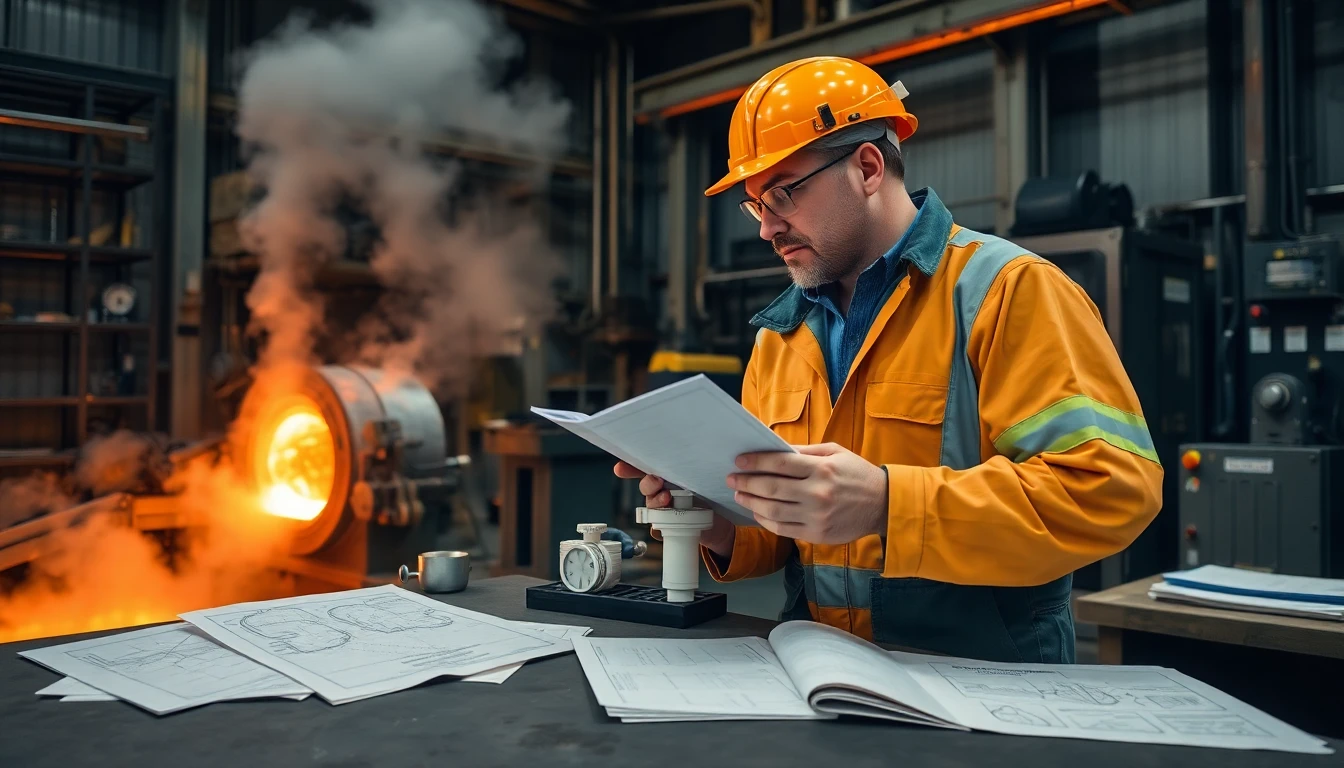
The right ceramic filter distributor makes all the difference. You get either metal defects that cost you money, or consistent, high-quality castings that keep your foundry ahead of competitors.
North American foundries deal with tough challenges. Strict environmental rules. Tight delivery schedules. You need distributor partners who know regional logistics. They must provide quick technical support and keep inventory close by.
Dozens of ceramic filter suppliers claim they’re the best. So how do you find which high temperature ceramic filter distributors deliver real performance, reliability, and value?
This guide evaluates the top 10 distributors serving North American foundries. We examine their technical skills, product ranges, geographic reach, and customer support systems.
You might be sourcing foam filters for aluminum casting. Or you need specialized ceramics for high-temperature steel work. Either way, you’ll discover which distributors fit your operational needs and quality standards. Real-world performance data backs everything here, plus selection criteria that foundry professionals actually care about.
Midvale Industries – Industrial-Grade Ceramic Foam Filter Specialist
Midvale Industries has worked in metalcasting since 1901. That’s 120+ years of foundry know-how in one distributor.
Their ceramic foam filters serve North American foundry operations. Auto makers use them. Aerospace plants trust their filtration. Healthcare casting shops depend on them for precise work.
Beyond Filters: Complete Foundry Supply
Midvale is a full-service supplier. Our trained reps bring years of industrial know-how to every conversation. You get filters plus the extra materials that cut your total production costs.
SELEE Corporation – Custom Ceramic Foam Filter Solutions
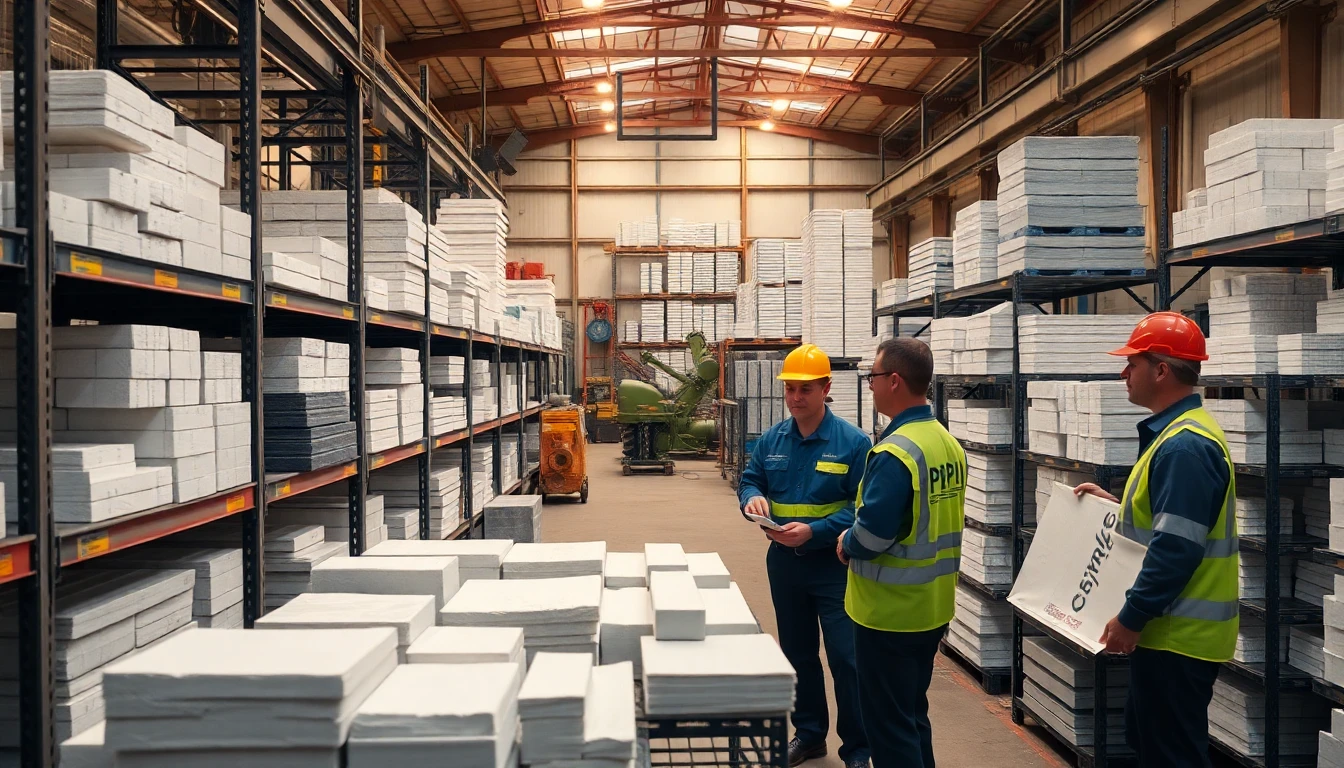
SELEE Corporation makes ceramic foam filters for precision aluminum casting. Their CS-W™ and CS-X™ product lines solve specific alloy problems. North American foundries deal with these challenges every day.
Aluminum Alloy Filtration by the Numbers
The CS-W™ series works with 6XXX series billet casting. Magnesium content stays below 1.20 wt.%. This glass-bonded aluminosilicate formula fights off corrosion and thermal shock. It beats standard options. The phosphate-free mix is key for aerospace or automotive parts.
For 5000 series aluminum alloys, SELEE offers fine filters with these specs:
– Permeability range: 400-2500 × 10⁻⁷ cm²
– Porosity: 0.80-0.95 (optimal zone hits 0.85-0.90)
– PPI grades: 20-45 available
The CS-X™ reticulated foam catches inclusions smaller than 100 microns. It uses deep bed filtration. Window sizes are tight. 40 ppi filters average 713-883 microns. 60 ppi drops to 417-517 microns.
Tolerance Control That Holds
SELEE keeps ±2.4mm tolerances on CS-W™ length and width. Thickness holds at 50mm ±2.4mm. The 17.5° bevel angle varies just ±1.5°. These tight specs give you the same gating performance across all production runs.
Macro-porosity runs 70-80% on both product families. Bulk density sits at 0.35-0.45 g/cm³ in the optimal range. Thermal expansion clocks 5.33 × 10⁻⁶ /°C.
Beyond aluminum, their SiC filters handle iron casting up to 1450°C. They cut leakers and blow holes in nodular, grey, and malleable iron work.
CoorsTek – Flow-Rite® Foundry Filter Global Leader
CoorsTek’s Flow-Rite® filters lead foundry operations worldwide. The mullite-based alumina-silicate construction gives you something competitors can’t match: the same cellular structure in every single unit.
Random foam structures create gaps in performance. One filter flows one way. The next flows another way. CoorsTek solved that issue. Their cellular design stays the same from filter to filter. You get the same pour rate and capture efficiency every time.
Built for Your Metal Type
Cell diameter options range from 10ppi/100csi to 30ppi/300csi. Open porosity goes from 75% to 95%. Lower PPI grades give you faster flow rates. They also catch bigger particles. Higher PPI ratings provide finer filtration. Resistance stays controlled.
Metal-to-filter ratios change by alloy:
– Gray iron: 3:1 to 5:1
– Aluminum and copper alloys: 4:1
– Ductile iron: 5:1 to 7:1
The mullite makeup resists thermal shock. No cracking happens. Hot strength stays high. Metallic oxide adhesion balances capture and flow just right.
Real Results
Automotive foundries rely on Flow-Rite® filters for engine blocks, transmission housings, and axle components. Non-metallic bits get trapped. Turbulence goes down. Oxide formation drops. Mold erosion slows.
ISO-certified facilities support every order. You get documented quality control and on-time delivery. Need custom sizes? They ship through our rapid tooling program.
Carpenter Brothers, Inc. – Multi-Material Filter Distributor
Carpenter Brothers works with all metals. Their four filter categories handle steel, iron, aluminum, magnesium, and brass casting.
You get pressed ceramic filters, ceramic foam filters, cloth filters, and wire mesh filters. Pick the filter that fits your process. Don’t force your process to fit the filter.
Material Options That Cover Your Alloy Range
Their ceramic foam filters come in six materials:
– Zirconia handles steel’s high heat
– Silicon carbide or alumina silicate/silicon carbide blends work for iron
– Alumina or alumina silicate suit aluminum casting
– Black graphite formulas fit brass and copper alloys
PPI grades range from 10 to 30. Lower numbers move metal faster. Higher numbers trap smaller particles. Square and circle shapes are available in custom sizes.
ERG Aerospace – Advanced Production Technology Provider
ERG Aerospace owns the patent for Duocel® foam production. This open-cell material uses solid ligament technology. You can get it in aluminum, copper, carbon, or silicon carbide. Density, pore size, and ligament thickness? All customizable to your specs.
Two Facilities Built for Complex Work
Their 20,000 sq. ft. machine shop handles manual and CNC work. Need a custom filter shape? Their in-house engineers run CAD models and CFD/FEA simulation. Full testing happens before production. Every component gets validated before shipping.
They use a special process to create open-cell foams with controlled ligament structure. Heat treating makes them durable. Bonding and brazing boost heat transfer efficiency. We keep quality consistent and costs predictable through vertical integration.
Proven in Extreme Conditions
Duocel® filters work where standard ceramics fail. You get high surface area-to-volume ratios. This means better heat transfer. The strength-to-weight ratio beats regular options. Pressure drop and thermal conductivity? They dial in right where your process needs them.
Their components run on the Space Shuttle, International Space Station, Boeing 777X, and C-130 Hercules. Aerospace operations rely on ERG’s filtration systems. So do defense, space, industrial, biomedical, and semiconductor companies. They use these systems for thermal management too. Fifty-plus years of foam-based component engineering backs every order.
Anguil Environmental Systems – Sustainable Filtration Solutions
Anguil Environmental Systems cleans wastewater that most foundries can’t handle. Their systems tackle the toxic waste from high temperature ceramic filter production and metal casting work.
Wastewater Treatment That Delivers Real Results
They process 65 GPM streams packed with Diesel Range Organics (DRO), VOCs, and Total Suspended Solids. Here’s how the chemistry breaks down:
DRO reduction: Chemical mixing cuts organics by ≥85%. pH stays between 4 and 8.5. They blend aluminum chloride (PAC) with polymer. Then filtration cleans the rest.
TSS reduction: Basic systems remove 80% of solids. Their ballasted floc system pushes turbidity below 1 NTU. You get drinking-water clarity from factory waste.
Two-Stage Pilot Testing Shows Real Performance
Stage 1 tests samples in the lab using jars. Stage 2 builds a full-size pilot system onsite with a clarifier. They track sludge removal with exact measurements. Wet weights, dry weights, and output rates all get recorded.
Cyanide wastewater drops to <0.04 ppm HCN with caustic and bleach. USEPA Method 10265 bench tests proved this works on 5-gallon samples. The payback? 14-16 months compared to hauling and disposal fees.
Their 2019 and 2023-24 reports show VOC control tech and full air/water treatment systems. EPA test methods back up every analysis. Outside labs check samples before and after treatment.
FoundryMax Ceramic Filter – Custom Filter Engineering
FoundryMax builds ceramic filters by understanding your metal first. Our engineers study your alloy mix, casting temperature, and quality goals. We design filtration solutions that match your exact conditions.
Custom Engineering That Fits Your Process
We customize four areas: ceramic formulas, filter size, pore design, and mounting specs. Our metal experts find inclusion problems at the source—raw materials, melting, or treatment steps. We design filters that remove impurities while maintaining metal flow rates.
Delivery timelines:
– Small orders ship in 5 working days
– Large orders take 15 working days
– Custom products arrive in under 25 working days
– Sample runs need 10-15 days
– Full production takes 15-30 days
Customization includes non-standard sizes and shapes for complex gating systems. This precise matching reduces installation time. It also cuts adjustment work. Pore size runs from 10 to 60 PPI. We control porosity to exact specs.
Extreme Temperature Performance
Zirconia filters handle specialty steels at 1700°C or higher. Peak thermal limit hits 1760°C. Steel foundries use them for turbine blades, furnace parts, and aerospace components. They work with stainless steel, low-carbon steel, and cobalt or nickel-based alloys.
Material temperature ranges:
– Alumina: up to 1100°C (1200°C short term)
– Magnesia: up to 1200°C for magnesium casting
– Silicon carbide: withstands 1500°C
– Zirconia: handles 1700°C operations
Zirconia filters boost filtration efficiency by 20% vs. standard SiC options. Advanced ceramic foam filters remove over 95% of non-metallic inclusions. One steel foundry used 50-70% less welding material after switching to zirconia-based filters.
Engineering Support That Responds Fast
We hold ISO 9001 certification and 20+ years of ceramic engineering expertise. We invest 8% of revenue in R&D each year. Our foundry engineers answer calls 24/7. You get initial solutions within 2 hours. Detailed technical support arrives within 12 hours.
We study your entire casting process—alloy choice, mold design, gating layout. We adjust filter material formulas based on your specific alloy mix. Metal analysis and performance testing happen at each stage.
Customer retention rate: 70% stay for 15 years or more. We visit every quarter and provide on-site guidance to keep production running smooth.
Technical Specifications
Material portfolio includes high-purity silicon carbide, alumina, zirconia, and magnesia powders. These formulas withstand extreme foundry temperatures.
Pore engineering:
– 80-90% open porosity with connected cells
– 10 PPI (2.5mm cells) to 60 PPI (0.4mm cells)
– Carbon steel works best at 10-20 PPI
– Stainless steel needs 20-30 PPI for finer oxide capture
– High-fluidity aluminum uses 18-30 PPI
– Heavy ferrous pours use 10-15 PPI
Filter sizing ranges from 40mm to 500mm standard sizes. Custom shapes run 50×50×15mm up to 300×300×50mm. Filter area should measure 2-4 times the choke area in your gating system.
Filtration uses mechanical blocking to stop particles larger than 100 microns at pore openings. Filters trap particles as small as 0.5mm.
Quality Control
We track 100% traceability from raw material choice to final inspection. We’ve produced over 1 billion ceramic filters since founding. We serve 1,200+ casting foundries in 35 countries.
ISO 9001:2015 certification covers every step—material selection, sintering, pore sizing, and testing.
Installation Flexibility
Most foundries place filters in three spots: sprue base, horizontal runner, or just before the ingate. Horizontal runner installation gives the best filtration for medium to large steel castings.
Application types:
– Sand casting: filters go in sprue or cross runner position
– Lost foam casting: stops foam gas residues from entering the casting
– Investment casting: installed at the front end of the pouring cup or pouring system for high-precision work
Seneca Ceramics – Quality Filter Supplier Built on Experience
Seneca Ceramics skips mass production. They build custom ceramic solutions that fix problems other suppliers can’t handle.
Chad Sheckler started the company in 1999. He brought 30+ years in ceramic R&D with him. That materials know-how shows up in every project. One customer spent 10 years searching the world for a solution. Seneca delivered 1 million precision pieces that hit their exact specs.
Technical Ceramics Built for Extreme Conditions
Their pore engineering covers 0.1 to 100 microns. Pore volume sits at 40-60%. The exact number depends on what you need to filter. They use alumina, zirconia, and silicon carbide formulas. Each gets tailored for resisting corrosion and staying stable under heat.
ISO 9001:2015 certification backs every order. Their 30,000 square-foot facility sits in Phelps, NY. It runs advanced manufacturing equipment. You get the same quality whether you order a small batch or a million-piece run.
Custom Development Takes Time—But It Works
Development runs 3+ years from first request to full production. Why so long? They don’t modify existing products. Each project means creating new ceramic formulations from scratch.
The company brings on 2-3 long-term customers each year. Small batches start at 1-2 pieces for researchers. Production grows to 1 million+ parts once testing shows success. Annual revenue climbs 10-15% year after year.
Their engineering team picks materials, optimizes designs, and builds rapid prototypes. Small enough to zero in on your specific problem. Big enough to deliver production volumes once you’re ready to scale.
Corning Incorporated – Research-Driven High-Performance Filters
Corning’s DuraTrap® filter line tackles tough emissions problems. Their materials science breakthroughs make this possible. Engineers control porosity, pore size, and thermal expansion at the molecular level. These filters beat standard silicon carbide options.
Four Material Systems for Different Metal Types
DuraTrap® AT filters use aluminum titanate construction. The single-piece structure gives you 50% porosity with 15 µm median pore size. Thermal expansion stays at just 5 × 10⁻⁷/°C. Density sits at 3.5 g/cm³. This setup survives extreme temperature changes without cracking.
DuraTrap® AC filters use advanced cordierite instead. CTE drops to 4 × 10⁻⁷/°C. Density falls to 2.5 g/cm³. Median pore size opens to 19 µm. Porosity stays at 50%. The result? Lighter weight and faster flow rates.
DuraTrap® AT HP (high porosity) pushes porosity to ~60%. Compare that to AT LP’s ~45%. This design manages 5x higher washcoat loads at the same pressure drop. Filtration efficiency matches the LP version. More capacity. Same performance.
Corning hit their 1 millionth Gasoline Particulate Filter production mark. Heavy-duty diesel engines use these systems. So do light-duty diesel with integrated SCR and gasoline engines around the globe. Millions of vehicles prove this technology delivers.
NORITAKE – Craftsmanship Meets Modern Filtration Technology
NORITAKE uses centrifuge science to solve coolant problems. Most foundries skip these issues. Their systems catch particles that standard filters miss.
Centrifuge Systems Built on Real Physics
Their centrifuge filters generate up to 3000G of force. That pressure separates particles down to 2.3μm. The NCX-50G model runs 20-40 L/min. This machine recovers over 90% of ultrafine particles. You get this from honing, lapping, and superfinishing work.
Physical size: 800mm × 1500mm × 1800mm. High-precision models use stainless steel for wetted parts. This fights corrosion from acidic coolants.
Specialized Systems for Precision Grinding
The MDKW series works with CBN and diamond grinding wheel operations. Filtration hits 5μm accuracy. The MDKW-6 unit processes at 20 L/min. Its rubber roller design removes more water from sludge than standard press systems.
Their cyclone separator relies on centrifugal force. No filter media needed. The nylon resin cyclone outlasts stainless steel against abrasion. Particles drop down. Dirty liquid goes sideways. Clean liquid flows up for reuse. A foaming control system keeps everything stable.
NORITAKE offers six filtration technologies. You get centrifuge, belt, paper, ceramic membrane, cyclone, and glass fiber systems. Each one handles different particle sizes. Each one matches the flow rates foundries face every day.
Key Selection Criteria for North American Foundries
First-pass yield numbers tell you everything. North American foundries targeting >95% acceptable parts cut rework costs and shorten lead times. Bad filters drive reject rates up. Good distributors keep PPM (parts per million) rejected below 500. The best hit under 200.
Technical Expertise That Solves Real Problems
Your distributor needs engineers who’ve fixed casting defects before. Staff with proven hands-on experience in metal chemistry control, temperature management, and pouring practice matter more than smooth sales pitches. Look for teams that understand sampling protocols and testing frequencies. They should know how ceramic filter placement cuts scrap and boosts yield.
Industry-specific knowledge counts double. A distributor working gray iron for 20 years knows different challenges than one focused on aluminum. Gray iron foundries face the highest operating losses in North America. Aluminum and copper operations run better margins. Your filter partner should understand which metal variables impact your specific alloy type.
Production Capacity and Equipment Resources
Can they handle your volume during peak demand? Check their production capacity as percentage of available hours per shift versus actual uptime. Calculate their production rate per asset to spot bottlenecks before you commit.
Foundries casting weights up to 2,500 lbs in gray or ductile iron need distributors who stock matching filter sizes on hand. Wide metal alloy coverage in their product range means fewer supplier relationships to manage.
Financial Performance Indicators
North American foundries saved over $83 million in hot metal costs through automated pouring systems paired with better filtration. Your distributor should show realistic annual tonnage projections. They should document scrap cuts and reduced metal needs from proper filter use.
Acceptable ROI timelines run 12-24 months for filter system upgrades. The producer price index climbed 2.2% for foundry operations between 2023-2024. Filter costs that outpace this benchmark hurt your competitive position.
Operating losses doubled or tripled for gray iron, ductile iron, and steel foundries versus aluminum shops. Pick distributors offering energy consumption data. Look for pouring manpower gains and metal holding ability during interruptions. These metrics translate to your bottom line.
North American Distribution and Support Comparison
Geographic reach separates foundry distributors. Some promise everything. Others deliver filters on time.
The top 10 high temperature ceramic filter distributors serving North American foundries use different distribution models. Some stock inventory at 17+ warehouse locations. Others run just-in-time systems from overseas plants. Your production schedule won’t wait for their logistics excuses.
Technical Support Response Times Matter Under Pressure
FoundryMax Ceramic Filter offers 24/7 engineering support. You get a 2-hour initial response and 12-hour detailed solutions. Their foundry engineers visit every three months. Your pour schedule breaks? Seconds count more than sales pitches.
CoorsTek provides technical help through ISO-certified facilities. They support rapid tooling programs. Custom filter orders ship faster than most competitors manage standard products.
ERG Aerospace runs in-house CAD modeling. They use CFD/FEA simulation before production. Their 20,000 sq. ft. machine shop handles custom shapes. Other distributors reject these as “too complex.”
Cross-Border Service for Canadian Operations
Carpenter Brothers operates dedicated Canadian facilities. Foundries north of the border get the same service speed as U.S. plants.
Most other distributors add 5-10 business days for Canadian shipments. Currency conversion slows things down. Customs documentation adds delays. Cross-border logistics create more problems. You run plants in both countries? Ask each distributor for real Canadian delivery data—not promises.
Conclusion
Picking the right high temperature ceramic filter distributor for North American foundries goes beyond price. You need a true partnership. You need precision. And you need proven performance in extreme heat.
Today’s successful foundries get three things: Filter quality affects casting defects. Local support cuts downtime. The right distributor works as part of your quality control team.
Maybe you want R&D strength like Corning provides. Or green solutions from Anguil. Or NORITAKE’s craft tradition. Match your choice to your specific metal challenges and production size.