Water clarity problems, clogged systems, rising maintenance costs—these issues hit facilities hard. Sand filters have powered water treatment across industries for decades. But here’s the challenge: most decision-makers can’t tell if this proven technology fits their needs. Or if newer options give better returns.
Sand filters shine in specific uses. Their simplicity and durability beat complex systems in many cases. But they don’t work well everywhere.
This guide shows you where sand filters win—from city water treatment to factory uses. You’ll see how they stack up against wedge wire options. We cover six real benefits that vendor brochures skip. You’ll learn seven key factors that separate smart buys from costly errors. Plus, you get installation strategies that avoid common problems. These mistakes cost facilities thousands in fixes.
What Are Sand Filters and How Do They Work
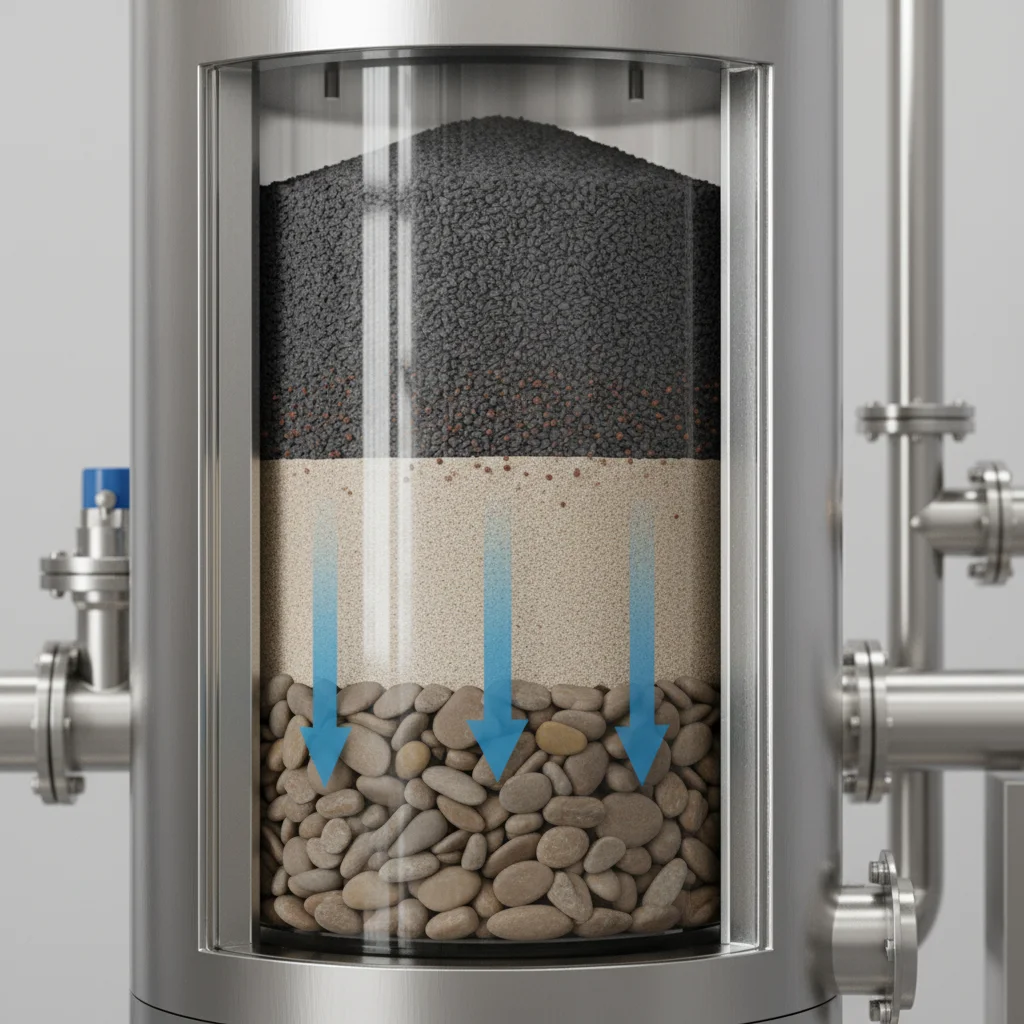
Sand filters remove dirt and suspended particles through a simple mechanical process. Water flows down through a 15-30 inch deep bed of quartz sand. Physical filtration happens in real time. No chemicals. No complex parts. Just gravity and the right-sized sand grains doing the work.
The core component is quartz sand with a grain size of 0.45-0.55 mm. This specific size creates the right spaces between grains. Particles get trapped. Clean water passes through. Your typical residential pool system needs 10-20 kg of this sand to work.
The Physical Structure
The filter tank uses layers. At the bottom sits 12-16 inches of graded gravel. These pieces range from 1/8-inch to 1-inch. This support bed stops fine sand from escaping through the underdrain system. It also spreads backwash water during cleaning cycles.
Your main sand bed sits above this. A multi-function control valve at the top manages five operating modes. Perforated pipes and filter fingers sit below. They collect the filtered water after it passes through the sand layers.
Three Key Operating Modes
FILTER mode runs your standard operation. Water enters at the top. It flows down through sand layers. Clean water exits through the underdrain system. The sand traps suspended solids three ways: straining, settling, and sticking to grain surfaces.
BACKWASH mode starts up at 8-10 PSI above startup pressure. Check your pressure gauge. Water flow reverses. It enters from the bottom. It flows upward, breaks loose built-up dirt, and flushes it through the sewage outlet. Skip this step? You’ll see reduced flow. Efficiency drops. Motor strain shortens your pump’s life.
RINSE mode comes after every backwash. It clears leftover dirt from the sewage pipe. Then you return to normal filtration.
Some advanced filtration systems use dual-media filters. They have an anthracite coal top layer (0.8-1.2 mm grains, specific gravity 1.4-1.6). The coal’s pores run about 20% larger than sand. This stops early surface clogging.
7 Proven Applications Where Sand Filters Excel
Sand filters do real work in eight different settings. Each one uses the technology’s simple mechanics in its own way. Some need huge volumes. Others need small sizes. Here’s where these systems deliver solid results.
Municipal Water Treatment Plants
Cities run their biggest treatment operations on sand filtration. These facilities process millions of gallons each day. A typical municipal plant pushes 3.14 million gallons through filters on average days. Peak demand hits 6.5 MGD.
The performance numbers show what matters. Feed water enters at 10.5 mg/L total suspended solids. It leaves at 5.5 mg/L. Each filter unit removes 47% of TSS in one pass. Stack multiple stages? The complete water resource recovery facility achieves 94% TSS removal. That covers turbidity, pathogens, and suspended particles.
This is the largest market segment for sand filters. Cities need primary and secondary filtration that runs 24/7 with little oversight. Sand beds do just that.
Industrial Process Water Systems
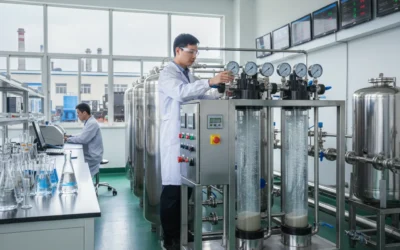
Factories in food processing, pharmaceuticals, chemicals, and power generation use sand filters for three key stages. Pre-treatment cleans incoming water. Process water filtration keeps product quality high. Tertiary treatment on wastewater ensures discharge compliance.
The automation integration trend drives adoption here. Modern industrial sand filters connect to SCADA systems. They track differential pressure. They trigger backwash cycles on their own. This cuts maintenance labor costs while meeting strict regulatory discharge standards.
Swimming Pool Filtration
Pool owners spend USD 225 million per year on sand filter systems in 2025. That market grows at 6.3% per year through 2033. Why? Two words: durability and simplicity.
Your residential pool needs clean water without hard maintenance schedules. Sand filters run for weeks between backwash cycles. You replace the media every 5-7 years. No cartridges to scrub each week. No DE powder to handle. Both residential and commercial pool operators pick this proven hygiene standard.
Agricultural Irrigation Networks
Farmers pumping from wells, rivers, or retention ponds deal with suspended sediment. Sand filters protect drip lines and sprinkler heads from clogging. This application segment grows fastest in emerging economies. Infrastructure investments in India, Southeast Asia, and parts of Africa focus on irrigation water quality. Clean water means higher crop yields and longer equipment life.
Home Water Purification
Bad municipal supplies or private well water push homeowners toward point-of-entry filtration. Compact sand filter designs fit in basements or utility rooms. Health risk awareness drives this residential adoption. Families want visible particle removal before water reaches taps and appliances.
Aquaculture Operations
Fish farming demands stable water quality. Recirculating aquaculture systems use sand filters to remove fish waste, uneaten feed, and biofilm particles. The mechanical filtration happens before biological treatment stages. This specialized use requires careful media selection and frequent backwashing schedules.
Small Community Wastewater Systems
Rural housing developments and small businesses face a common problem. Soil conditions limit traditional septic drain field performance. Intermittent sand filters solve this. They handle flows under 0.106 million gallons per day. That covers 63% of US community wastewater needs documented through 2000.
These systems provide pre-treatment before soil absorption. They work where conventional septic systems fail. Installation costs run lower than package treatment plants. Maintenance stays simple enough for small community operators.
Sand Casting Filtration
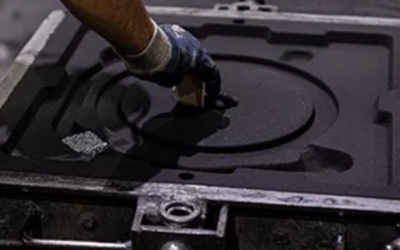
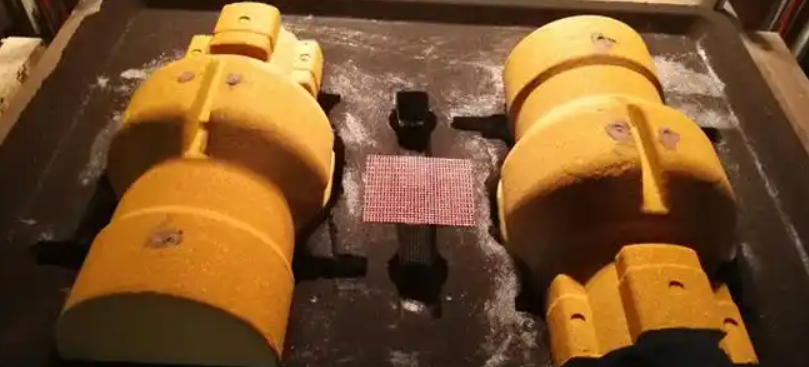
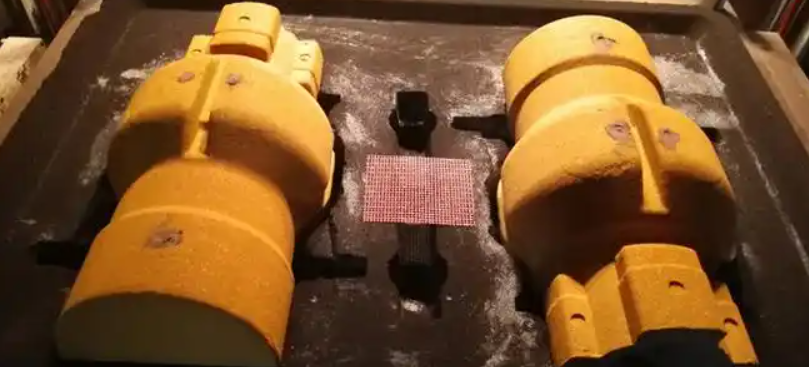
Foundries filter molten metal before casting. Specialized high-temperature sand filter beds remove slag, dross, and non-metallic inclusions. This niche industrial use demands engineered sand compositions that withstand extreme heat without breaking down.
The global sand filter market reflects this diverse application range. Total value hit USD 2.98 billion in 2024. It grows at 6.3% per year toward USD 5.16 billion by 2033. Asia-Pacific leads regional growth at 7.1% CAGR. That acceleration comes from industrial expansion and infrastructure development across emerging markets.
6 Key Benefits That Make Sand Filters Stand Out
Sand filters deliver measurable performance that cuts through the hype of expensive alternatives. Here’s what the data shows.
Near-Perfect Turbidity Removal Without Complex Chemistry
Slow sand filters achieve 99% turbidity removal. This works across standard designs, slag-modified systems, and zeolite-modified variants. You get crystal-clear water through simple gravity and biological processes. No chemical dosing systems. No operator certifications for chlorine handling. The sand bed does its job day after day.
Bacterial Elimination That Rivals Chemical Treatment
New sand filters remove 85% of coliform bacteria right out of the gate. Give them time to develop a biological layer? That jumps to 99%. Biosand filters using 0.84-3.3 mm sand grains knock out 95-99.6% of total coliform. Some facilities hit 99.9% bacteria removal without adding a single chemical. The biological film forms in the top sand layer—called the schmutzdecke—and does this work on its own.
Proven Pathogen Protection
Giardia cysts get trapped at 98% efficiency in new filters. Mature systems hit 100%. Cryptosporidium removal exceeds 99% with sand that has a uniformity coefficient of 1.72. Compare that to 48% removal with low-grade sand at 3.5-3.8 uniformity. The numbers show why media selection matters.
MS2 virus removal runs at 0.56 log10 per centimeter in the top 5 cm of sand. The same biological layer that catches bacteria handles this viral reduction.
Organic Compound Reduction
Total organic carbon drops by 20.99% as water passes through the filter bed. Slow sand filters cut dissolved organics through active biofilm metabolism. This helps facilities dealing with surface water high in natural organic matter.
Real Health Outcomes in Communities
Families using sand-filtered water report 47% fewer diarrheal diseases. Field studies show 95% of households say their water quality improved. 80% report better overall health for their families. These aren’t lab claims. These are real outcomes from installations.
Operating Cost Advantage
Rainwater treatment through sand filtration costs up to 60% less than buying the same volumes from local water utilities. You skip the bills each month. You control your water quality. The recurring costs are occasional backwashing and media replacement every 5-7 years.
How to Choose the Right Sand Filter: 7 Decision Factors
Your filter choice decides if you solve problems or create new ones. Seven factors separate systems that run for years from ones that fail in months.
Flow Rate Calculation: The 4-Hour Rule
Pool water needs full circulation every 4 hours for proper filtration. Calculate your pool volume in cubic meters. Divide by 4. That’s your required flow rate in m³/h. Match your filter capacity to this exact number. Too small? You get cloudy water and algae growth. Too large? You waste money on unused capacity and pay higher energy bills.
Each filter type handles flow at its own rate. High-rate sand models push 20 gallons per minute per square foot. DE filters max out at 2 gpm per square foot. Cartridge units hit 1 gpm per square foot at best. Pick the wrong type for your flow needs and you’re stuck with poor performance.
Sediment Analysis: Size Matters More Than You Think
Run a sieve analysis on your formation sediment before you buy anything. Find the particle size where 70% of material gets retained. Take that number and use a 3-8 multiplier to get your filter material size. The multiplier depends on your formation type.
Got uniform formations with 40% retained size at 0.010-inch or less? Use a 3-6 multiplier. Got semi-consolidated aquifers with mixed sediment and silt layers? Go with 6-8. Never exceed 8. You’ll risk sand-pumping that wrecks your system.
Here’s a real example: Your sediment measures 0.005-inch at 70% retention. Use a multiplier of 5. You need 0.025-inch filter material. Use this exact sizing. The grain-size ratio controls sand pumping more than any other factor.
Slot Size Compatibility
Your slot size must match your filter pack grain size. This isn’t optional. Slots too small? You limit flow capacity and choke your system. Slots too large? Sand pumps through and wrecks downstream equipment.
One-size-fits-all doesn’t work here. Systems with standard 0.030-inch slots across all uses end up inefficient. They need constant maintenance. They cost more to run. Custom sizing based on actual sediment data stops these problems.
Annular Space: The 3-Inch Sweet Spot
Keep your filter pack thickness between 2-5 inches. The optimal depth hits 3 inches. This covers the screen fully without going overboard. Design your annulus for at least 3 inches minimum. This gives you room for proper pack placement during setup.
Going beyond 5 inches makes installation harder without adding benefits. The grain-size ratio—not pack thickness—controls sand pumping. Save money and installation time by sticking to 3 inches.
When Natural Development Won’t Cut It
Filter packing makes sense in specific cases. You need it with sediments that run very uniform and fine-grained. You need it with layers so mixed you can’t find exact locations. You need it with slot sizes for natural development that limit screen capacity. You need it with water chemistry that causes extreme buildup. You need it with weak sandstone that provides limited lateral support.
Skip packing in stable formations with clear layering. Natural development costs less and works fine.
Engineering Specs That Prevent Failure
Use the D15 filter criterion the right way. Your minimum D15 of filter material must equal or exceed 4 times the d15 of base soil. Never go below 0.1 mm. Maximum D15 caps at 9 times the d85 of base soil for Category 1 soils—minimum 0.2 mm.
Check your coefficient of uniformity. Both coarse and fine limits of your filter band should stay at 6 or below. For gap-graded filters, keep the ratio of maximum to minimum diameter at 60% passing under 5.
These ratios decide if your filter holds particles or lets them through. Get them wrong and you see 95% TSS removal dropping to 50% or worse.
Physical Design and Material Selection
Format matters with tight plant room space. Some designs take up less ground area but keep the same filtration capacity. Check your available footprint before you order.
Build materials affect how long your system lasts. Fiberglass tanks handle corrosive environments better than steel. Polyester units cost less upfront but may need replacement sooner in tough conditions.
Different media types give you different results. Zeolite or special sand mixes catch finer particles than standard quartz sand. Standard sand removes particles down to 20-40μm. Upgraded media can go below that range if your setup needs it.
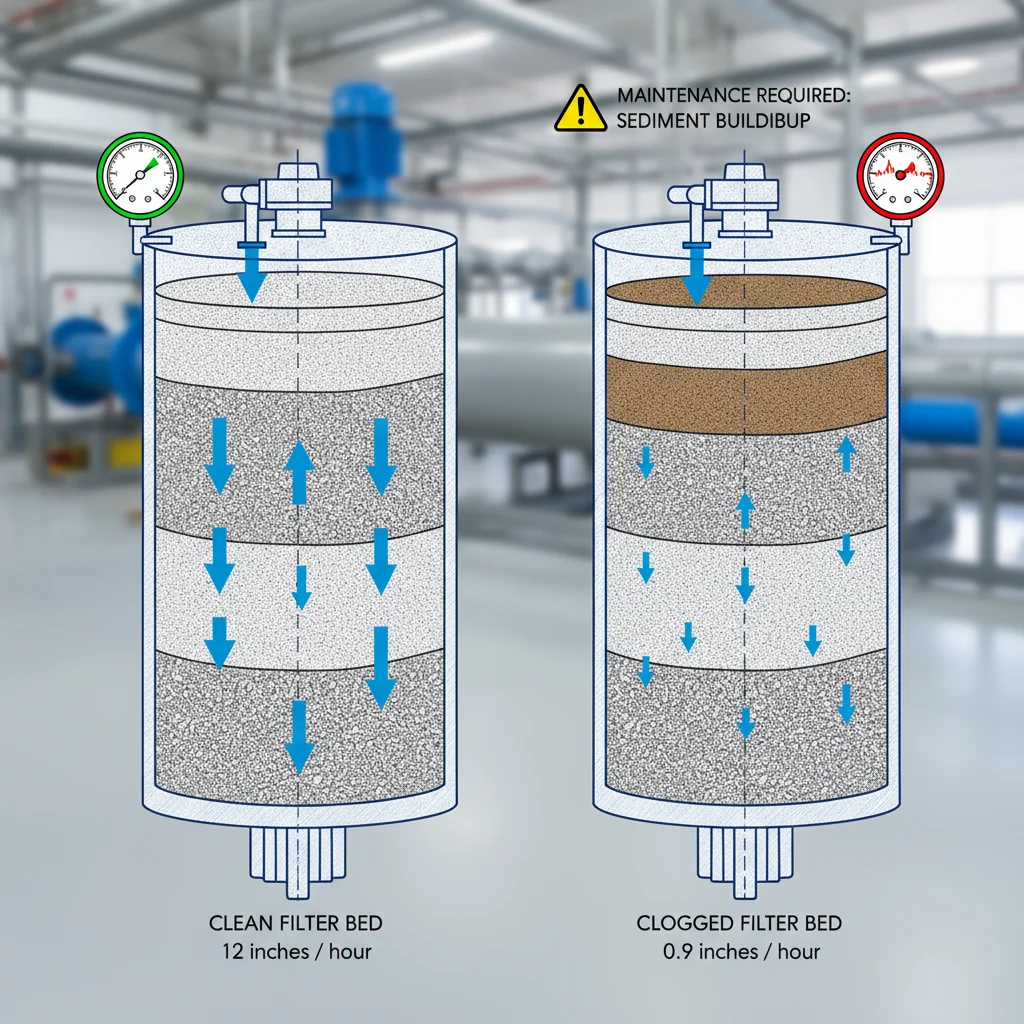
New filter beds start strong with flow rates exceeding 12 inches per hour. As sediment builds up, expect this to drop toward 0.9 inches per hour. Plan your backwash schedule around this drop to keep efficiency high.
Common Mistakes to Avoid When Selecting Sand Filters
Buyers waste thousands on filters that fail within months. The problem? They skip basic checks before placing orders. Here are the traps that cost facilities real money.
Picking the Wrong Media Grain Size
Media that’s too fine chokes your system. Pressure drop spikes fast. Head loss climbs right away. Buildup happens faster. You backwash twice as often. Flow gets restricted. Your pump works harder and dies sooner.
Go too coarse and particles sail right through. Turbidity stays high. You lose capture ability. Industrial uses need 0.45-1.4 mm grain sizes. Match this to your actual flow rate data—not guesses.
Using Basic Silica Sand for Everything
Standard silica sand can’t handle oils, hydrocarbons, iron, manganese, organics, or fine solids. It wasn’t built for these jobs. You need specialized media.
Anthracite handles turbidity better. It extends run times too. Garnet catches fine particles that silica misses. Activated Carbon pulls out organics. Greensand or DMI-65 targets iron and manganese. Stop forcing one media type to do work it can’t handle.
Sticking With Single-Media When You Need Multi-Media
Single-layer filters clog at the surface. You get channeling. Runs end fast. The entire bed depth goes unused.
Multi-media designs stack anthracite over silica sand #20 over garnet. This spreads filtration through the full depth. Solids capacity jumps. Run times double or triple. The cost difference pays back in months. You get fewer backwash cycles. Water quality improves.
Buying Low-Quality Media to Save Money
Cheap media breaks down fast. It generates fines. Turbidity spikes happen right after backwashing. You replace it every 12-18 months instead of 3-5 years.
Look for NSF/ANSI certification. Check crush strength specs. Verify low acid solubility. These features aren’t optional. They decide if your media survives or turns into powder.
Delaying Media Replacement Past Its Lifespan
Sand grains round off with use. Channels form. Biofilm builds up. The typical lifespan runs 3-5 years. Push beyond that and you’re running a pretend filter.
Monitor differential pressure. Track effluent quality each week. Log operating hours. These numbers shift? You need fresh media—not more backwashing.
Undersizing for Peak Flow Conditions
Your filter might handle average days fine. Then irrigation peaks hit. Pressure drops below 10 psi. Flow rates collapse. Your downstream equipment starves for water.
A system rated for 100 GPM can’t handle 140 GPM surges—even if “it’s just temporary.” Pool systems need 10-25 psi during operation. Below 10 means low water or sand depletion. Above 25 signals dirty media or overfilling. Size for your worst-case flow, not your typical Tuesday.
Choosing Too-Fine Media for False Precision
Finer media traps better—on paper. In practice, you get constant clogging. Maintenance costs soar. Pressure builds up faster than you can manage.
Balance grain size with flow speed needs. Check the uniformity coefficient. Lower UC means more uniform grains and less clogging. Skip laboratory precision. You need industrial reliability.
Skipping Water Analysis Before Purchase
You can’t spec a filter without knowing what’s in your water. Size of contaminants matters. Levels matter. Your end goals matter.
Test first. Run pilot tests on small-scale systems. Spending $500 on analysis saves you from $15,000 mistakes.
Ignoring Maintenance Requirements
Some operations need backwashing twice each week. Others need cartridge replacement every 6 months. Your vendor’s “low maintenance” claim doesn’t override physics.
Build maintenance time into your operating schedule. Budget for it. Staff for it. Skip this and efficiency drops. You can’t recover from it.
Running With Wrong Sand Levels or Calcified Media
Low sand drops operating pressure under 10 psi. Too much sand or calcified buildup pushes pressure too high. Worn sand creates “mudballing”—clumps that bypass filtration. Overpowered pumps force water around these clumps instead of through them.
Check sand levels during annual inspections. Replace calcified media right away. This isn’t a “maybe next quarter” task.
Conclusion
Sand filters aren’t just another piece of equipment—they’re workhorses that keep water systems running well across industries from municipal treatment plants to swimming pools. You’ve got the playbook now. You understand how sand filters use natural filtration. You know where they deliver the most value. And you know which factors matter when choosing your system.
Here’s what makes the difference: Match your needs with the right filter setup. Avoid common mistakes that waste money (like buying too small or ignoring water chemistry). Follow proven installation steps that prevent expensive delays.
Ready to move forward? Start by checking your current filtration needs against the 7 decision factors we covered. Choosing between sand filters and other technologies? Compare the total cost of ownership—not just the initial price. The right sand filter system pays for itself. Lower maintenance costs do this. Plus, it lasts longer.
Still have questions about your situation? Contact our filtration specialists for a free system assessment built for your needs.