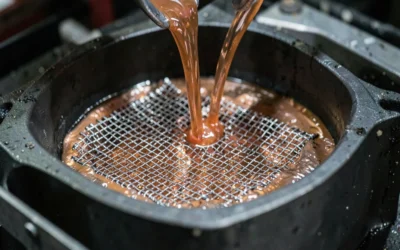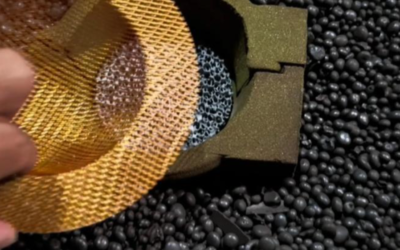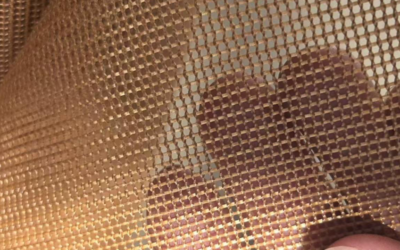
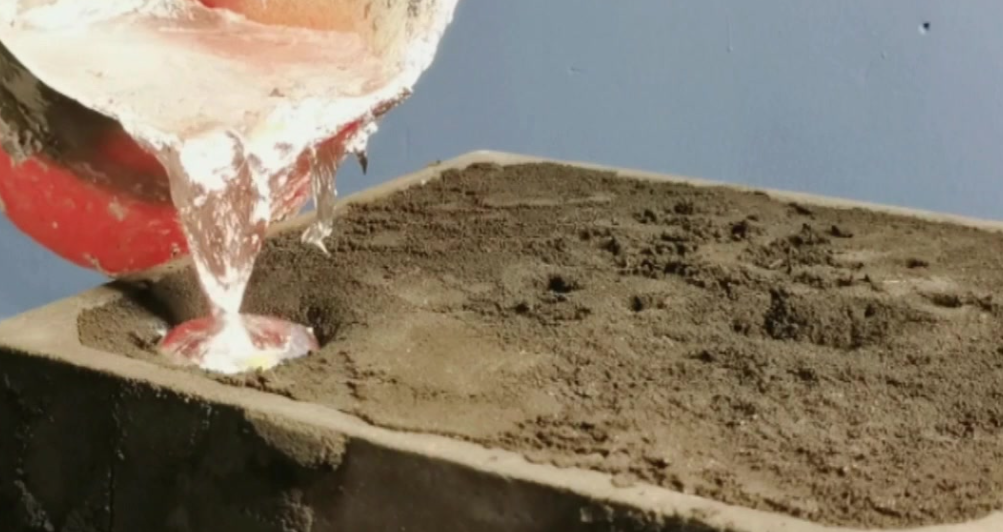
Picking the wrong mesh filter supplier can wreck your foundry’s output fast. Contaminated castings, unexpected downtime, and replacement costs nobody planned for — these add up quickly.
Dozens of suppliers operate across Australia. But not all of them understand what metal foundry work demands. Choosing the right one is the difference between a smart procurement call and an expensive lesson.
This breakdown covers the 7 best mesh filter companies for metal foundries in Australia. Each supplier is evaluated on what foundry operations care about most:
-
Material specs
-
Custom fabrication capability
-
Delivery reliability
-
Real-world application fit
Filtering molten metal or managing slag — the right supplier is on this list.
What Makes a Mesh Filter Supplier Right for Metal Foundries (Selection Criteria)
Not every supplier selling mesh filters knows what goes on inside a metal foundry — and that gap costs you money.
The right supplier isn’t just a vendor. They’re a technical partner. They match filter specs to your specific melt, your pour temperature, and your contamination profile. Here’s what separates the good ones from the rest.\
Four Criteria That Matter
1. Temperature Compatibility
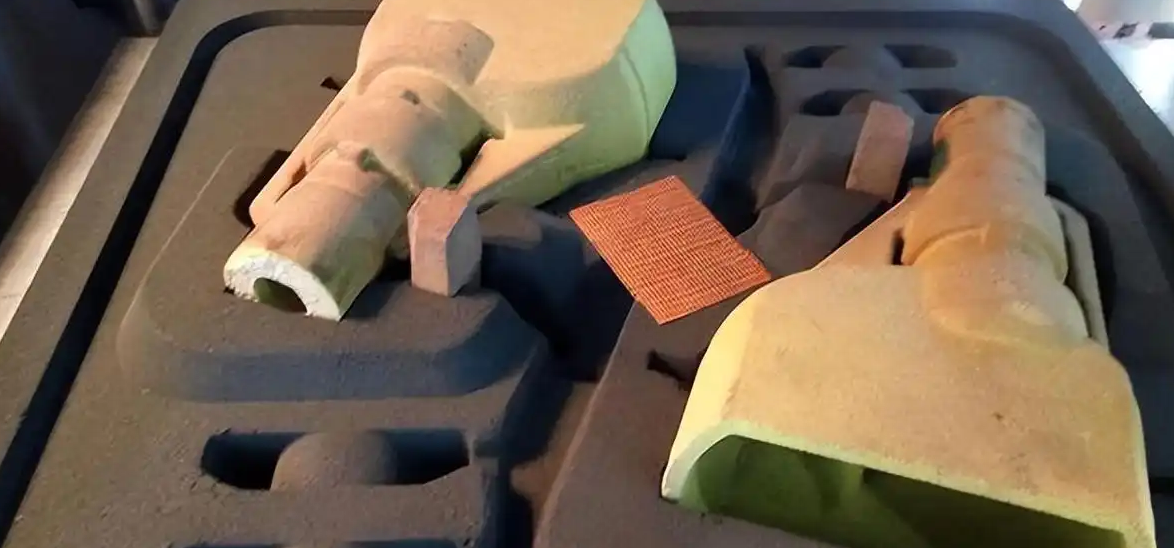
This is non-negotiable. Silica fiberglass mesh handles steel pours up to 1620°C. Fiberglass mesh for aluminum runs in the 660–700°C range. Get this wrong and your filter fails mid-pour — that’s not a quality issue, that’s a safety issue.
2. Mesh Size Matched to Your Slag Profile
There’s no universal pore size. Ductile Iron with heavy dross needs 10–15 ppi. Grey iron performs better at 15 ppi. A good supplier walks you through the math. That means mesh count, wire diameter, and opening size — all three. They should also provide free test filters across multiple sizes before you commit.
3. Filtration Efficiency vs. Flow Rate Balance
High-volume aluminum producers have switched suppliers over fractional price differences because throughput matters. Look at turbulence reduction and hot-top performance together with micron ratings. Don’t treat them as separate decisions.
4. Total Cost — Not Just Filter Price
Silica mesh filters can cut de-gating and riser knock-off costs by up to 50% compared to ceramic foam alternatives. The Waupaca Foundry case shows this clearly. A $120,000 filter investment pushed scrap rates down far enough to offset the full spend.
The bottom line: Ask any shortlisted supplier for test filters. Request defect analysis support. Check that they can customise dimensions for your ingate or riser configuration. If they can’t do those three things, move on.
Allround Mesh — Best for Custom-Fabricated Foundry Filtration Components
Allround Mesh does one thing very well: they build filtration components around your foundry. Not the other way around.
For Australian metal foundries with non-standard ingate configurations or unusual casting weights, that difference is huge. Most suppliers hand you a catalogue. Allround Mesh hands you a solution.
What Sets Their Product Range Apart
The size range alone stands out — 30x30mm all the way up to 900x1000mm, with 100+ available configurations for custom fabrication. Filtering a small grey iron pour under 100kg? Running compacted graphite iron at scale? There’s a spec built for it.
Here’s how the mesh opening breaks down by metal type:
-
White Iron & Malleable Iron: 1.5mm aperture
-
Grey Iron (≤100kg pour): 1.5mm
-
Grey Iron (≥100kg pour): 2.0mm
-
Compacted Graphite Iron & Bronze: 1.5mm or 2.0mm depending on pour volume
Temperature resistance reaches 1620°C. That covers steel, iron, and copper alloy pours with no issues. The Mock Leno weave keeps its structure under that heat. Gas emission stays at ≤60 cm³/g in under 15 seconds at peak temperatures. This matters because it stops porosity defects from forming in finished castings.
The Filtration Math Works
Porosity sits at 50–60% with a filtration rate of 60–80%. Allround uses a clear sizing formula — F1 = F2 / (A × B) — where your filter cross-section runs at 2–4x the original runner area. No guesswork. Just solid, engineered throughput.
For foundries running high-volume or multi-metal operations, this level of technical precision from a supplier is rare. It’s worth paying close attention to.
Sefar Australia — Best for High-Precision Filtration Mesh with Global R&D Backing
Two hundred years of filtration expertise doesn’t just happen. Sefar has spent two centuries refining mesh technology. Their Australian operation brings that full R&D weight to metal foundries that can’t afford precision failures.
This isn’t a generalist supplier trying to serve everyone. Sefar runs full manufacturing control across their global network — every product line, every micron rating, every material specification goes through their own processes. That control matters. Your filtration has zero room for inconsistency.
Where Their Specs Stand Out
Their product range covers filtration scenarios most suppliers can’t touch:
NMO nylon Monofilament Mesh delivers absolute ratings from 10–1000 µm at 99% efficiency. Flow rates on P2 sizing hit 380–565 l/min, with zero fibre migration. No downstream contamination from the filter itself. That’s not a marketing claim. That’s monofilament construction doing what physics demands — nothing more, nothing less.
POMF polypropylene Microfibre Bags reach down to 1 µm at 95% efficiency. You get a dirt-holding capacity of 300g — serious capacity for high-contamination metalworking environments.
CHF Pleated filter elements run at 700 l/min with 900g dirt-holding capacity. That’s double the throughput of standard P2 bags. Service life is longer too. The inside-to-outside flow design with irrigation channel mesh spreads contaminant load across the surface — no hot spots, no early failure.
Built for Metalworking
Sefar built their coolant filtration range for steel mills and metalworking belt filter systems. Their stainless steel cartridge elements — available in DIN 1.4301 (AISI 304) or DIN 1.4401 (AISI 316) — hold up through chemical cleaning and ultrasonic cleaning cycles without breaking down.
Every product line carries FDA 21 CFR 174.5 compliance. Foundries running food-grade or pharmaceutical-adjacent metal components get that compliance built in. It cuts out a significant documentation burden.
High-precision filtration backed by two centuries of process knowledge — few suppliers in Australia can offer that combination.
Metal Mesh (Sefar Metal Mesh) — Best for Perforated Metal and Wire Mesh Variety
Rigid catalogues leave foundries stuck with options that don’t fit their specs. Metal Mesh — part of the Sefar group — fixes that. Australian foundries get perforated metal and woven wire options that match their spec sheet, not the other way around.
The format range speaks for itself. Woven wire mesh and welded wire mesh both come in 30m rolls. Flat panels cut straight from rollgoods. Maximum widths reach 1.3m on brass mesh (XY-R-06) and 1.58m on the PR 260/55 Gold. Maximum lengths go up to 120m. For large foundry operations buying at volume, that scale is a real advantage.
Tolerances Tight Enough to Trust
Procurement teams care about precision — and Metal Mesh delivers it.
Perforated metal flatness holds to ±15mm on widths under 1000mm. Squareness sits at ±3mm for apertures under 1mm. Stainless steel thickness tolerances stay within 0.09mm at T≤1.6mm, stepping up to 0.38mm for stock thicker than 4mm. These are hard engineering commitments, not estimates.
Woven wire mesh count tolerances break down like this:
-
Under 30 mesh: ±2% warp / ±5% weft
-
30–200 mesh: ±2% warp / ±5% weft
-
Over 200 mesh: ±3% warp / ±4% weft
Wire diameter tolerances on mild steel go as tight as ±0.010mm in the 0.279–0.381mm range. That level of control matters for critical filtration and casting applications.
Primary materials are stainless steel DIN 1.4301 (AISI 304) and DIN 1.4401 (AISI 316). Other alloys are available on request. So foundries handling corrosive metals get real material flexibility — without needing a second supplier.
Stainless Mesh Australia — Best for Fast Nationwide Delivery and Harsh-Environment Stock
Slow deliveries kill production schedules. Stainless Mesh Australia fixes that.
Based in Archerfield, QLD, they hold Queensland’s largest stainless mesh stock. Order before 12pm and your material ships same day. Australia-wide courier delivery for orders under 32kg and 900mm width lands within 3 days. For foundries running tight schedules, that turnaround isn’t a bonus — it’s the baseline expectation.
A Stock Range Built for Real Conditions
Over 100 standard woven mesh sizes are ready to ship. Need something specific? Their technical team can match across 380+ specifications by mesh count and SWG wire gauge. This cuts lead time on non-standard requirements.
The spec depth is worth knowing:
-
Fine filtration: 500 mesh with 0.025mm wire diameter, 0.026mm aperture, 26% open area — micron-level impurity capture for precision applications
-
Coarse filtration: Apertures up to 25mm in welded rolls and panels — built for quarry and mining-scale slag removal
Proven in Harsh Australian Environments
All stock uses 304 and 316 stainless steel. It has held up across 15+ years of Australian operating conditions — heat, corrosion, and abrasion from quarry, mining, and bushfire-adjacent environments. The material holds. Security screens and welded panels also cover structural containment needs, not just filtration.
Australian metal foundries need reliable stock now — not next week. Stainless Mesh Australia delivers on both counts.
Pearl Filtration — Best for Complete Filter System Solutions Beyond Just Mesh
Most mesh filter suppliers hand you a product. Pearl Filtration hands you a working system.
That difference matters more than most foundry procurement teams expect — until something breaks mid-production and the supplier has no answer past the catalogue page.
Pearl Filtration has spent 20+ years supplying industrial liquid and air filtration across Australia. In that time, they’ve built something most competitors haven’t: full end-to-end system capability. They don’t just sell filter components. They design, build, and commission complete filter systems. Then they handle element replacement and cost reduction on the back end.
A Product Range That Covers Every Layer of Filtration
The range runs deep:
-
Filter bags: Polyester, polypropylene, and nylon options; 1–1000 µm micron ratings; all standard sizes in stock
-
Filter cartridges: Depth/sediment, PP pleated, PES membrane, and carbon types — multiple end-cap styles and micron ratings ready to ship
-
Filter housings: Stainless steel, polypropylene, and PVC; BSP, ANSI flange, BSM, and Tri-clover port configurations; sanitary and sterilisation-compliant designs
-
High-flow filters: Wider micron range options that cut element count, simplify change-outs, and reduce servicing time
-
Panel and HVAC filters: Australian-made; standard and custom sizing for particulate removal, coalescent, and carbon applications
Stock stays high across two warehouses — Melbourne (VIC) and Central Coast (NSW). Orders ship fast across Australia and to international destinations on short lead times.
Pearl Filtration is also an authorised distributor for Parker Hannifin, Sun-Central (Sunmicron), and Synopex. So you get access to proven filtration technology from world-leading brands, with local support behind it.
Your operation needs more than mesh. You also need a supplier that stays accountable across the full system lifecycle. Pearl Filtration delivers both.
SSWM (Stainless Steel Woven Mesh) — Best for Bulk Roll Stock and Repeat Manufacturing Supply
Repeat manufacturing runs live or die on one thing: consistent supply. SSWM understands that — which is why foundries running high-volume, repeat orders keep coming back.
You get 350+ specifications stocked in 304 and 316 grades. The selection depth is serious. Mesh range runs from 500/inch (fine filtration) down to 1/inch (coarse). That covers nearly every foundry filtration scenario through a single supplier. Weave types include Plain, Twill, Lock Crimp, and Inter Crimp. Finish options are mill, black powder coated, Hollander, and bolting cloth. The full range meets ASTM E2016-15 for industrial woven wire cloth.
Roll Stock Built for Volume Buyers
This is where SSWM stands apart from the field.
Bulk roll dimensions come stocked in multiple configurations:
-
2m rolls/sheets × 1245mm width
-
10m length × 1550mm width
-
30m length across 1245mm, 1550mm, and 1830mm widths
-
1200 × 2400mm stocked panels — with custom large volumes available
Minimum order quantities are built around real manufacturing rhythms:
-
915mm–1245mm widths: 2 lineal metres minimum, then 1m multiples
-
1550mm and 1830mm widths: 10 lineal metres minimum, then 10m multiples
All 350+ specs in 2m and 10m rolls are pre-cut and ready for same-day dispatch. Cuts run across roll width — no lengthwise cuts.
Mesh Specs That Match Your Filtration Needs
Open area data drives flow rate decisions. Here’s what you’ll find in SSWM’s 304 SS clearance stock:
-
Heavy: 3×1.6mm aperture at 65.78% open area; 4×0.9mm at 74% open area
-
Coarse: 12×0.34mm at 70% open area; 12×0.45mm at 62% open area
-
Fine: 60×0.16mm at 39% open area; 200×0.04mm at 47% open area
Wire diameters run from 0.02mm at 600 mesh up to 0.8mm at 6 mesh. MOQ starts at just 1 roll, with factory-level discounts available at higher volumes.
Foundries locking in repeat supply contracts will find that SSWM takes the guesswork out of procurement.
Monarch Industrial — Best for Pipeline and Inline Strainer Solutions in Foundry Systems
Pipeline contamination doesn’t announce itself. It destroys pumps, valves, and heat exchangers until the repair bill lands on your desk.
Monarch Industrial, based in Brisbane, focuses on stopping that from happening. Their core specialty covers inline and pipeline strainer solutions:
-
Duplex basket strainers
-
Simplex basket strainers
-
Y strainers
-
Tee type strainers
-
Cone and plate strainers
-
Temporary commissioning strainers
For foundry systems running fluid pipelines under constant production pressure, that’s a solid product range.
What Their Strainer Specs Mean for Foundry Operations
The DB Series Duplex Basket Strainer stands out from the range. You get 6″ and 8″ sizes, rated at 150 PSI / PN10 at 23°C non-shock. It runs in-line or loop flow configurations. The key advantage: you can clean the baskets without shutting the system down. The hand-removable cover makes this easy in practice, not just on paper.
Simplex Basket Strainers are built from electro-polished AISI 2205 cast stainless steel. That’s a duplex alloy with strong corrosion resistance. These work well for applications where short process shutdowns are fine.
Need something non-standard? The in-house CNC Plasma cutting service handles custom screen designs with fast lead times. The Brisbane workshop builds replacement baskets and screens on-site. No waiting on outside fabricators.
Temporary cone, basket, and plate strainers round out the range for commissioning and pipeline maintenance work. You install them between flanges as either short-term or permanent filtering devices.
How to Choose the Right Mesh Filter Supplier for Your Foundry (Decision Guide)
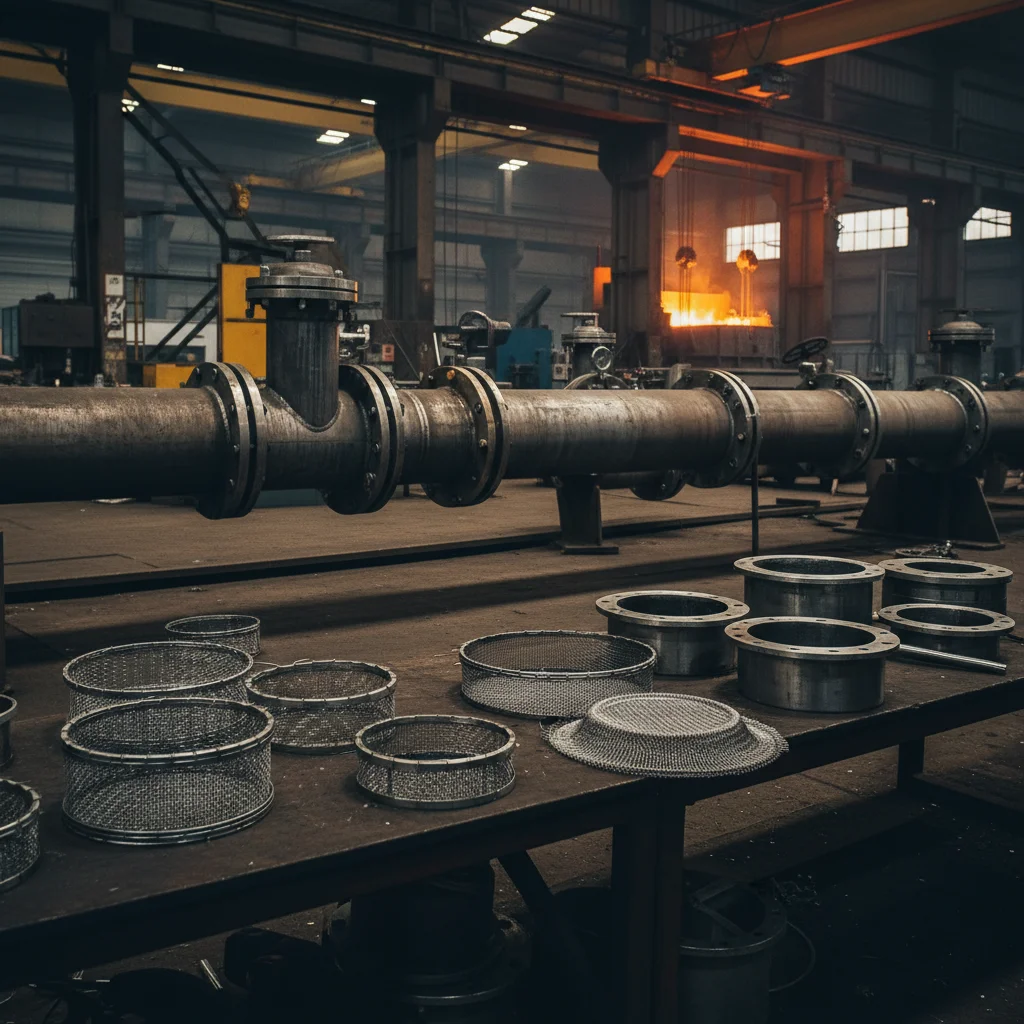
Seven suppliers. One decision. Pick the wrong one and you lose more than money. You lose production time, casting quality, and supplier trust that takes months to rebuild.
Here’s a clear framework to make a smart procurement call — not an expensive one.
Match the Supplier to Your Volume and Alloy
Not all foundries have the same needs. Start here:
|
Foundry Scale |
Annual Volume |
Filter Type |
Non-Negotiable Requirements |
|---|---|---|---|
|
Small |
<500 tons/year |
10–30 PPI ceramic foam or Fiberglass mesh |
Free test filters; lead times under 4 weeks |
|
Medium |
500–5,000 tons/year |
Stainless/fiberglass mesh (15–20 PPI); high-silica mesh up to 1620°C |
Min. order 100 units; technical support |
|
Large |
>5,000 tons/year |
SiC ceramic foam; porosity >80% |
Metallurgical defect analysis; ongoing supply agreements |
Four Things to Verify Before You Sign Anything
1. Ask for QC documentation before anything else. You want pore uniformity checks, dimensional tolerances, mechanical strength testing, and pre-firing chemical analysis. A supplier who hesitates to hand these over? That hesitation says everything you need to know.
2. Check the filter with your own hands. Pure, consistent color means uniform material. A sticky surface points to excess adhesive — and that brings secondary contamination into your melt. Don’t skip this step.
3. Check dimensional and thermal margins. The operating temperature must exceed your melt temperature. A real buffer matters — not just a match. Filter thickness matters too. Thicker filters give you deeper filtration and higher inclusion capacity. Thinner filters give you lower pressure drop. Know which tradeoff your operation actually needs before you order.
4. Run a controlled trial before you commit to volume. Any serious supplier gives you free test filters — ask for them. Lock in your baseline defect and scrap rates first. Then run identical gating and pouring variables across the full trial batch. The data tells you whether the filter works. The sales pitch doesn’t.
The supplier that earns your contract knows your alloy chemistry inside and out. They provide metallurgical defect analysis when problems come up. And they don’t go silent after the purchase order clears.
Conclusion
Picking the wrong mesh filter supplier hurts more than you think. It costs you metal, time, and profit on every pour.
Each of the seven companies here does something different. Need custom-fabricated parts? Allround Mesh is worth a look. After precision engineering with global R&D behind it? That’s Sefar. Want bulk roll stock to keep your line running? SSWM handles that well. The right choice comes down to your process, your volume, and your setup.
Here’s what to do: don’t shortlist by price alone. Find which supplier’s strength lines up with your biggest filtration problem. Then request samples before you sign anything.
The 7 best mesh filter companies for metal foundries in Australia don’t chase the same customer. They each serve a different need. One of them fits what you’re dealing with right now — closely.
Figure out which one that is. Your next pour will be cleaner for it.