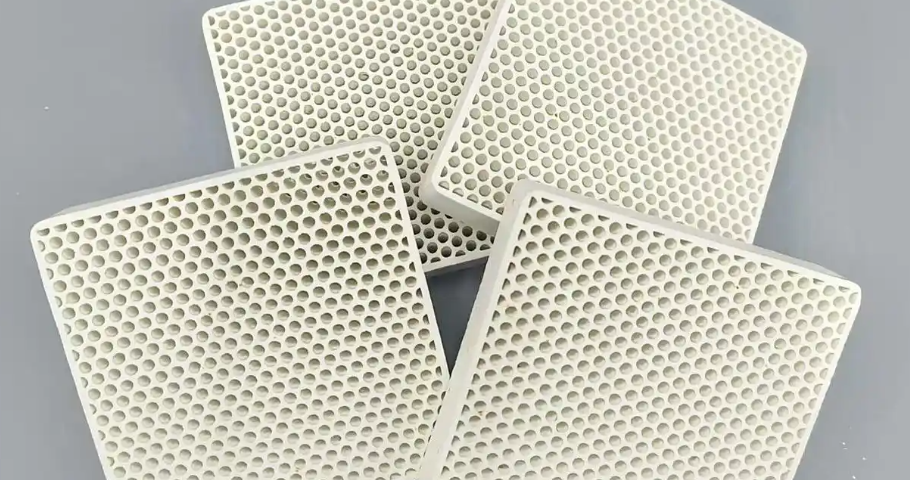
Finding the right honeycomb air filter in the USA can be tough. Many shoppers can’t figure out which type they need or where to buy it.
The term “honeycomb filter” covers many different products. You might need one for a kitchen range hood, a humidifier wick, industrial chemical filtration, or EMI shielding. Each type sells through different channels. This confusion wastes your time and leads to wrong purchases.
This guide solves that problem. You’ll learn what honeycomb filter categories exist. We’ll show you which major retailers and manufacturers serve each type. You’ll know how to match your specific use with the right product and source.
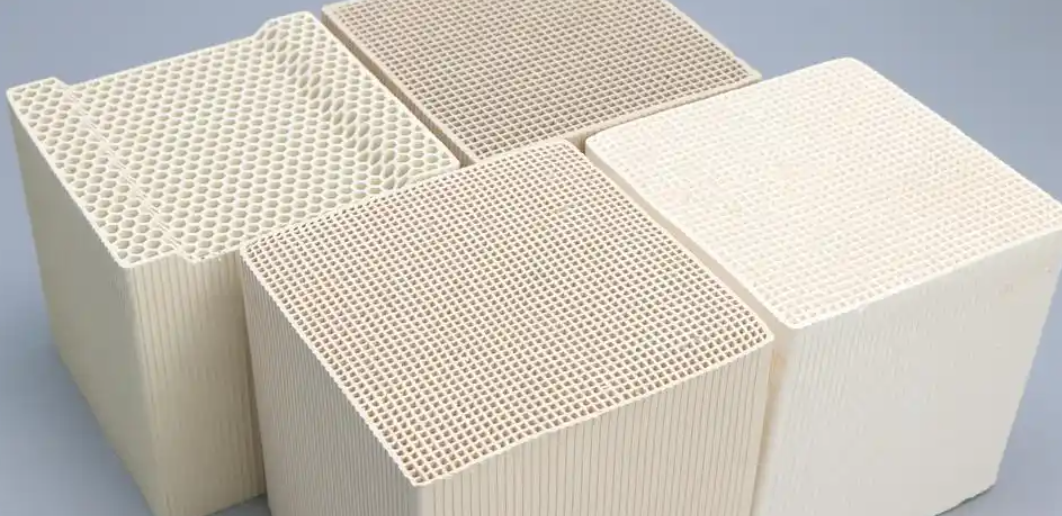
Consumer Honeycomb Air Filters (Kitchen & Home Use)
Most kitchen range hoods in American homes need new filters every 6-12 months. Cooking frequency and grease buildup affect this timeline.
Premium Charcoal Kitchen Hood Filters
The AirHood® 2 Premium Honeycomb filter sets the bar for home kitchen ventilation right now. This filter measures 151mm across and 20mm thick. It uses a ceramic base with coconut husk activated charcoal coating. The structure packs 11,000 cells at 400 CPSI (cells per square inch).
Here’s what you get:
– 41% increased airflow vs. standard charcoal filters
– 3x stronger odor elimination power
– 6x longer lifespan (around 1 year with 12 hours of cooking per week)
You can regenerate this filter in a standard oven or air fryer. This extends its life far beyond typical throwaway filters.
Washable Aluminum Mesh Honeycomb Filters
These primary grease filters use multi-layer stretched aluminum foil for the honeycomb structure. Two outer protective nets sandwich the core. Most models hit MERV 4-8 ratings (G1-G2 European standard). They catch cooking fumes and airborne dust particles.
High-efficiency versions reach H14 classification. They deliver ≥99.995% filtration at 0.3μm particle size. Here are three common commercial sizes:
-
800x600x96mm: 780 m³/h airflow, 110 Pa resistance
-
1170x570x69mm: 1,100 m³/h airflow, 110 Pa resistance
-
1170x870x69mm: 1,650 m³/h airflow, 110 Pa resistance
All run at 0.45 m/s face velocity. You clean them with water and reuse them forever. No filter aging problems.
Stainless Steel Non-Combustible Options
AOM HS stainless steel Honeycomb Filters meet AS1668 and AS1530.1 Australian standards. These work for non-combustible kitchen ventilation. At 1.78 m/s velocity, they hold 15 Pa resistance with 97% efficiency at 8μm particles. Higher velocity (2.54 m/s) bumps resistance to 25 Pa. Efficiency stays at 96%. These fit HC Series hoods in HS02 and HS04 setups.
Humidifier Honeycomb Wick Filters
Evaporative humidifiers need honeycomb wick filters to spread moisture through your home. These filters use cellulose paper with aluminum backing. This design creates lots of surface area for water to soak in and evaporate.
Core Specifications by Model
Honeywell HE100A/HE-100A tops the high-output models. It has an aluminum-backed honeycomb design. The HW600 replacement measures 6.4″ x 2.8″ x 8.6″. It pairs cellulose paper with a 0.005-inch aluminum sheet for strength.
BestAir HW600-PDQ-3 comes in a 3-pack. Dimensions are 6.75″ x 7.5″ x 1.5″. The HC-888 Filter C weighs 2.16 pounds. Its size is 6.85″ x 2.91″ x 9.54″. Package size: 9.65″ H x 10.75″ W x 14.6″ L.
Smaller units use the HAC-504 at 5″ H x 7″ L. This fits Honeywell HCM-350 series. Hunter replacement filters measure 9.5″ x 7.5″ x 1.25″. Just drop them in.
Industrial Chemical Honeycomb Filters
Chemical processing plants need filtration systems that handle tough stuff. We’re talking corrosive gases, volatile organic compounds, and metal casting contaminants. Honeycomb filters in this sector use special materials and chemical treatments. Home systems don’t come close to this level.
Bry-Air DRISORB™ Chemical Adsorption Filters
The DRISORB™ formed honeycomb series solves industrial air quality problems that standard carbon filters can’t touch. These filters pack over 40 lbs per cubic foot of bulk density. Order depths from 1 inch to 12 inches in both standard and custom sizes. For best performance, run airflow between 400-600 FPM.
Chemical treatments decide what contaminants each filter removes:
– Potassium Permanganate (KMnO₄): Removes sulfur dioxide, hydrogen sulfide, and organic vapors
– Potassium Hydroxide (KOH): Stops acidic gases like HCl and SO₂
– Phosphoric Acid (H₃PO₄): Captures ammonia and alkaline compounds
Parker Fulflo® Honeycomb Wound Cartridges
Liquid filtration needs a different approach. Parker Fulflo® cartridges hit 90% efficiency for particle sizes from 0.5μm to 150μm. The honeycomb wound media stands up to organic solvents, animal oils, petroleum oils, and vegetable oils. No breakdown over time.
Standard dimensions are 1 inch ID x 2-7/16 inch OD. Lengths go from 3 inches to 50 inches. Operating limits are 30 psi differential pressure for change-out. Maximum forward pressure is 60 psi. Each 10-inch length section handles 10 GPM (38 LPM) flow rate.
Micron ratings match specific industrial needs:
|
Filter Grade |
Liquid Filtration (μm) |
Gas Filtration (μm) |
|---|---|---|
|
Ultrafine |
0.5 |
<0.5 |
|
8R |
<1 |
– |
|
K10R |
20 |
– |
|
K8R |
30 |
5 |
|
K6R |
40 |
7 |
|
K5R |
75-100 |
10 |
|
K5B |
100-150 |
100+ |
Calculate required filter size with these formulas: GPM = (Clean ΔP × Length Factor) / (Viscosity × Flow Factor). Or flip it: Clean ΔP = (GPM × Viscosity × Flow Factor) / Length Factor. This exact matching stops you from over-sizing. That saves money.
Honeycomb Ceramic Metallurgical Filters
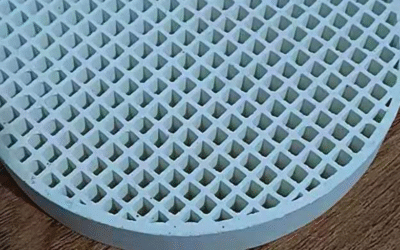
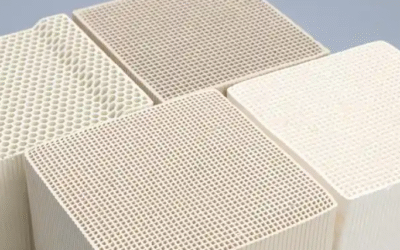
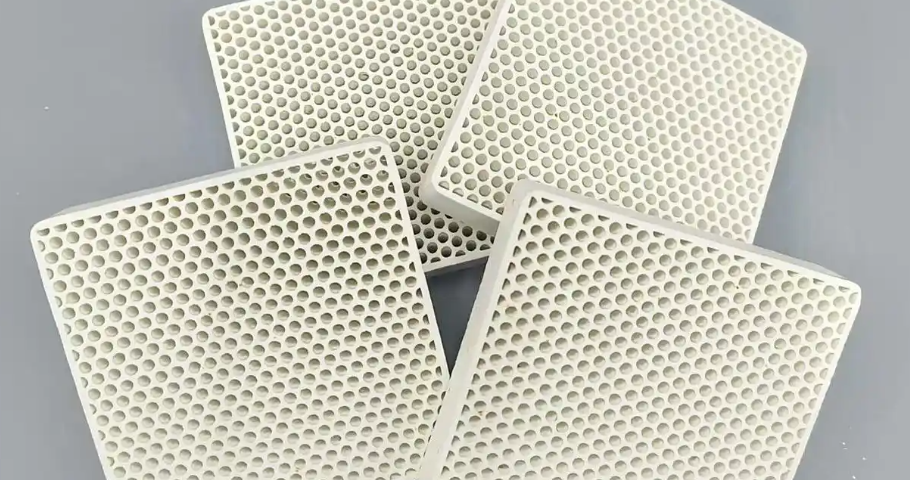
Metal casting operations use Honeycomb ceramic filter plates to pull out impurities from molten metal. These plates work with alumina alloy, nodular iron, Gray Iron, and stainless steel casting. Cell density runs from 60 to 400 cells per square inch. Micro cell sizes measure 2-3 μm for catching fine particles.
Five ceramic material grades are available. Each handles different temperature ranges:
Cordierite (entry level): 35-37% Al₂O₃, softens at 1380°C, thermal expansion ≤1.8 x 10⁻⁶/K, compressive strength ≥12 MPa
Cordierite-Mullite (moderate duty): 40-50% Al₂O₃, softens at 1500°C, thermal expansion ≤3 x 10⁻⁶/K, compressive strength ≥15 MPa
Mullite (high performance): 50-60% Al₂O₃, softens at 1550°C, thermal expansion ≤5 x 10⁻⁶/K, compressive strength ≥15 MPa
Corundum Mullite (extreme heat): 68-73% Al₂O₃, softens at 1700°C, thermal expansion ≤5.5 x 10⁻⁶/K, compressive strength ≥15 MPa
Zirconia Mullite (maximum durability): 68-73% Al₂O₃, softens at 1700°C, thermal expansion ≤5.5 x 10⁻⁶/K, compressive strength ≥15 MPa
Pick your material grade based on operating temperature and metal type. Higher alumina content costs more. But it lasts longer in tough conditions.
Gas-Phase Contamination Solutions
Freudenberg Honeycomb Modules and SAAF Honeycomb Grids target airborne molecular contaminants. These systems install in standard filter tracks. Mount them flat or upright. It depends on your HVAC layout.
They grab gaseous and vaporized molecules that slip right through mechanical filters. This covers odors, VOCs (volatile organic compounds), and chemical fumes. Industrial clean rooms need these modules. So do semiconductor fabrication plants and pharmaceutical manufacturing facilities. They help meet strict air quality standards.
Activated Carbon Honeycomb Filters
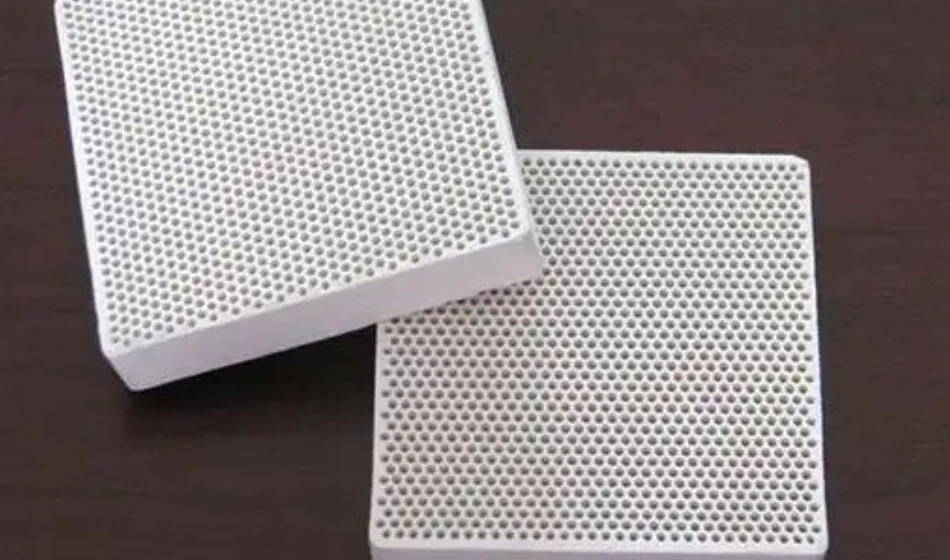
Coal-based Activated Carbon gets pressed into honeycomb structures. This removes VOCs better than loose granular media. These filters pack more carbon into less space. Plus, airflow resistance stays low.
Core Performance Specs
Impregnated Activated carbon honeycomb filters hit ≥25% benzene adsorption efficiency. They handle toluene, xylene, and non-methane hydrocarbons. Volume ratings go up to 7.5 lbs (3.4 kg). You get minimum 60% CTC (ASTM D-3467) carbon activity. This keeps performance steady across all batches.
Compressive strength goes past 0.8 MPa under normal use. The structure won’t collapse during high-demand periods. Temperature rating runs continuous at 150°F (66°C). Most commercial HVAC systems can use these. Light industrial jobs work too.
Carbon Loading Capacity
Panel depths are 1 inch or 2 inches nominal. A 2-inch filter without pre-filter holds 1 lb of carbon per square foot. Total media weight runs from 1.0 to 4.3 lbs. Panel size decides the weight. V-bank setups pack 24 lbs of carbon into a 24x24x12 inch frame.
What Gets Removed
These filters grab ammonia, H₂S, SO₂, ozone, cooking odors, sewer gases, gasoline fumes, environmental tobacco smoke (ETS), and volatile organic compounds. Designs meet ISO 6, 7, and 8 cleanroom standards. Testing uses ISO 10121-2 and ASHRAE 145.2 protocols.
Honeycomb Filters for EMI/RFI and High Heat
Electronic equipment cabinets have two main problems: electromagnetic interference (EMI) and heat buildup. Standard filters can’t block interference and keep good airflow at the same time. Honeycomb EMI/RFI filters solve this.
Pro-Grade RFI/EMI Honeycomb Vent Filters
EMC-EMI.tech makes honeycomb vent filters tested to IEEE-Std-299 and ESQ-517-23 protocols. Thickness options are 12.5mm, 19mm, 25mm, and 50mm. Standard panel sizes are 300x300mm, 300x600mm, 450x450mm, and 600x600mm. Cell sizes come in 3.2mm, 4.0mm, and 4.8mm.
You can choose tin-plated steel, brass, stainless steel, or aluminum. Each material works best in different rust conditions and frequency ranges.
Shielding across the electromagnetic spectrum:
|
Frequency Range |
Attenuation (dB) |
|---|---|
|
14 kHz |
≥75 |
|
150 kHz |
≥100 |
|
200 kHz-50 MHz (E-field) |
≥110 |
|
50 MHz-1 GHz (plane wave) |
≥110 |
|
1-10 GHz (microwave) |
≥100 |
|
10-18 GHz |
≥90 |
|
100 kHz-18 GHz overall |
>100 |
Minimum order is just 1 piece. Custom prototype work is easy without buying in bulk.
Major US Retailers & Direct Purchase Channels
Walmart dominates the US retail landscape with $675.6 billion in 2024 revenue. That’s $284.2 billion more than Amazon’s $391.4 billion. This retail gap matters for honeycomb air filters. Each filter type flows through specific channels. Market position and product focus drive these choices.
Home Improvement Giants Lead Kitchen Filter Sales
Home Depot and Lowe’s control most residential honeycomb air filter sales in the US. Home Depot generated $157.6 billion in 2024 revenue across 2,300+ stores. Lowe’s pulled in $81.5 billion through 1,700+ locations. Both chains stock kitchen range hood filters in their HVAC departments.
You’ll find these brands in-store:
– Broan replacement filters (fits most standard range hoods)
– GE charcoal honeycomb filters
– Whirlpool aluminum mesh grease filters
– Universal fit options for multiple brands
Basic aluminum Mesh filters cost $15-$45 at these retailers. Premium charcoal honeycomb models run $30-$80. Size and brand affect the price. Both chains offer same-day pickup for in-stock items. Standard shipping takes 2-5 days.
Mass Merchants Cover Humidifier Wicks
Walmart operates 5,321 US stores with a focused appliance section. Their online marketplace carries Honeywell HW600, BestAir HC-888, and HAC-504 humidifier wick filters. Single units start at $8.99. Multi-packs drop per-unit costs by 20-30%.
Target brings in $106.7 billion revenue across 1,900+ stores. They stock similar humidifier filter options. Their Up & Up private label offers budget picks at $6-$12. Quality matches name brands for most home humidifiers.
Amazon changed the game for homeowners hunting specific filter models. Their $391.4 billion revenue includes massive third-party seller networks. You can buy NB-008 Universal reusable wicks. Plus rare Hunter model replacements or bulk packs of any major brand. Prime members get free 2-day shipping on most filters over $25.
Warehouse Clubs Offer Bulk Pricing
Costco brings in $244.9 billion revenue across 624 US locations. They sell multi-packs of popular filters. A 4-pack of Honeywell HW600 runs $28-$35. Regular retailers charge $12-$15 per filter. You save 40% with a warehouse club membership ($65/year basic, $130/year Executive).
Costco runs seasonal deals on 3M Filtrete kitchen hood filters and activated carbon panels. Stock rotates based on regional demand. Not every warehouse keeps the same filter inventory.
Direct Manufacturer Channels Beat Retail Prices
Industrial buyers skip retail stores. Bry-Air sells DRISORB™ chemical honeycomb filters direct at www.bry-air.com. Custom sizes and chemical types need technical help. Filter units cost $200-$2,000+. Depth and chemical treatment affect the price.
Parker Hannifin moves Fulflo® honeycomb wound cartridges through approved distributors. Find local suppliers at www.parker.com/locator. industrial filters cost $50-$500 per cartridge. Length and micron rating drive the price.
Universal Air Filter Company (www.uafco.com) makes dual EMI honeycomb units. They sell direct to equipment makers and end users. Standard 10 PPI Quadrafoam panels cost $35-$85. Custom sizes add 15-25% to base pricing.
Freudenberg Filtration Technologies supplies gas-phase honeycomb modules through regional HVAC distributors. Their dealer network covers all 50 states. Module size drives pricing: $150-$800 per unit for standard commercial setups.
Specialty Online Retailers Fill Niche Gaps
FilterBuy.com and FilterKing.com stock hard-to-find residential honeycomb filters. They carry old models and off-brand replacements. Major retailers dropped these items. Standard delivery costs $6-$12. Orders over $50 ship free most times.
Grainger and MSC Industrial Supply serve commercial and industrial clients. Their honeycomb filter selection includes ceramic filters for metal work, activated carbon blocks, and high-heat options. Business accounts get net-30 payment terms. Individual buyers pay 15-30% more than direct maker channels.
eBay and AliExpress list cheap import honeycomb filters at $3-$20. Quality control varies widely. These work for basic uses. Skip them for industrial chemical work or food service gear. Cost savings don’t justify contamination risks or equipment damage.
How To Choose The Right Honeycomb Filter For Your Needs
Your HVAC system manual has the first two numbers you need: CFM rating and maximum allowable pressure drop. Pull those specs before you look at any filter. These numbers cut out 60-70% of wrong options right away.
Match Cell Density To Your Application
Cell density controls how much air moves through and what gets trapped. We measure this in cells per square inch (CPSI).
12 CPSI gives you maximum airflow with minimal resistance. Use this for general ventilation where you need volume over filtering power. Large particles get caught. Fine dust passes through.
16-20 CPSI balances capture rate and air movement for most industrial HVAC systems. This range handles standard dust in factories, warehouses, and commercial buildings. It’s the default pick for typical applications.
24 CPSI creates tighter spacing between cells. You get better particle capture. Pressure drop goes up at the same rate. Paint booths and overspray areas need this density. So do operations that make fine dust.
Size Your Filter Housing Correctly
Grab a tape measure. Record the exact dimensions of your filter housing: width, depth, height. Don’t forget to measure space taken by flanges and gaskets. A filter that’s 1/4 inch too large won’t install. One that’s 1/4 inch too small leaks dirty air around the edges.
Standard module sizes include 24x24x1″, 24x24x2″, 24x24x3″, and 24x24x4″. These fit most commercial setups. Roll media comes in 48″ and 60″ widths with custom lengths. You cut these to size on-site for odd openings.
Check Pressure Drop Ratings
Pressure drop below 0.2 inches water gauge (w.g.) keeps energy costs low. Every 0.1″ increase in pressure drop forces your blower to work harder. That raises electricity bills by 3-5% in systems that run all the time.
Your HVAC manual lists maximum pressure drop. Never exceed that number. The blower motor will strain, overheat, and fail sooner than it should.
Verify Wall Thickness And Durability
Wall thickness ranges from 0.002″ to 0.006″. Thicker walls resist collapse under fast airflow. They also add weight and cost.
Pick reinforced edge frames for high-pressure setups. Standard extruded honeycomb edges can bend during system startup or filter loading. Reinforced construction stops this edge collapse problem.
Compare Filter Types By Structure
|
Type |
Cell Density |
Best For |
Limitation |
|---|---|---|---|
|
Standard Extruded |
12-24 CPSI |
General HVAC, budget projects |
Edge collapse under stress |
|
Reinforced Edge |
16-20 CPSI |
High-pressure systems |
Higher cost and weight |
|
Coated/Anodized |
Varies |
Humid or electrical environments |
Limited supplier options |
|
Formed Honeycomb |
Macroporous |
Chemical/gas phase filtration |
Premium pricing |
Formed honeycomb works better than extruded versions for chemical uses. The manufacturing process creates higher bulk density. This lets you pack more chemical treatment into the same space. You also get lower pressure drop and better strength.
Pick Chemical Treatments For Gas-Phase Filters
Identify your specific pollutants first. Different chemicals remove different contaminants:
-
Activated carbon: VOCs, odors, organic vapors
-
Potassium permanganate (KMnO₄): Sulfur dioxide, hydrogen sulfide
-
Potassium hydroxide (KOH): Acidic gases
-
Phosphoric acid (H₃PO₄): Ammonia, alkaline compounds
Fill rates come in 25%, 50%, 75%, and 100% media density. Higher fill rates remove more pollutant but increase pressure drop. Match fill rate to your pollution level and air change needs.
Temperature And Environment Factors
Standard honeycomb filters handle continuous operation up to 150°F. Special coatings extend this range for high-heat uses. Humid spaces need moisture-resistant treatments. The honeycomb structure breaks down without them.
Pricing Guide & Cost Comparison
Honeycomb air filter prices vary widely by type and use. A simple humidifier wick costs $8. An industrial chemical filter hits $2,000. Know these price ranges to avoid overpaying or picking the wrong grade.
Consumer Kitchen Hood Filter Pricing
Basic aluminum mesh honeycomb filters run $15-$45 at Home Depot and Lowe’s. Broan and GE standard sizes fill this range. Universal fit models cost less. Brand-specific replacements add 20-30% to the price.
Premium charcoal honeycomb filters go for $30-$80. The AirHood® 2 Premium model has a ceramic base and coconut husk coating. It sells for $65-$75 through maker channels. This filter lasts 6× longer than basic charcoal types. Your monthly cost drops 60% versus throwaway filters.
Stainless steel non-burn filters for commercial kitchens start at $85 for basic sizes. AOM HS series units meeting Australian AS1668 standards cost $120-$180. The higher price covers fire safety proof and permanent use.
Industrial Chemical Filter Investment
Bry-Air DRISORB™ formed honeycomb filters range $200-$2,000+ per module. Price grows with depth (1-12 inches) and chemical treatment type. A standard 2-inch depth potassium permanganate module costs $350-$500. Custom 12-inch units with multiple chemical treatments go past $1,800.
Parker Fulflo® honeycomb wound cartridges run $50-$500 each. A basic 10-inch length ultrafine grade (0.5μm) sells for $75-$95. Longer 50-inch sections cost $400-$500. Flow rate and micron rating create these price gaps.
Ceramic metal-making filters for metal casting cost $120-$800 per plate. Entry-level cordierite 60 CPSI plates start at $120-$180. Top-tier zirconia mullite 400 CPSI units reach $600-$800. Higher alumina content and cell density explain the premium.
Activated Carbon Honeycomb Price Points
Standard carbon honeycomb blocks (100×100×100mm) cost $25-$45 for 100 CPSI density. Upgrading to 400 CPSI raises prices to $55-$75. Panel Filters with frames run $65-$150 for 24×24×2 inch sizes holding 1-2 lbs of carbon.
V-bank setups packing 24 lbs of carbon sell for $280-$380 per 24×24×12 inch unit. Commercial HVAC installers get volume discounts of 15-20% on orders of 10+ units.
Retail Channel Price Comparison
Home improvement stores (Home Depot, Lowe’s) mark up home filters 20-35% above direct maker pricing. Most homeowners accept this for quick access and ease.
Warehouse clubs (Costco) beat retail pricing by 35-45% on multi-packs. A 4-pack Honeywell HW600 at $28-$35 versus $12-$15 per filter at regular stores saves $13-$25 per purchase.
Online specialty sellers (FilterBuy, FilterKing) charge 10-15% above wholesale for rare models. Their markup stays below big-box stores. Plus, they stock stopped items.
Direct maker channels offer 25-40% savings versus retail for industrial products. Bry-Air and Parker Hannifin direct sales cut out middleman costs. Some have minimum order amounts.
Conclusion
Finding the perfect honeycomb air filter in the USA doesn’t have to be hard. Need a replacement humidifier wick at Home Depot? Looking for industrial-grade activated carbon filters from specialized suppliers? Comparing prices between Amazon and manufacturer websites? You now have a complete roadmap to make smart decisions.
The three pillars of smart filter shopping: Know your exact specs (dimensions, material type, and application). Compare prices across multiple channels (retail giants versus direct manufacturers). Prioritize quality certifications that match your air quality goals.