
The air you breathe at home matters more than you think. Korea’s crowded urban centers deal with fine dust and indoor pollutants every day.
Searching for the top 10 ceramic air filters in Korea? You’ve probably seen confusing product claims. Information conflicts everywhere about what works.
Here’s what you need to know: Korea’s air purification market runs on advanced HEPA technology. Pure ceramic solutions are rare. Understanding this—and where ceramic materials fit in—saves you from wasting money.
Looking at Coway’s latest models? Curious about Samsung’s smart purification systems? Interested in ceramic filtration? This guide breaks down your real options. We compare filtration standards that count (H13 vs H14). You’ll see which solutions give Korean households true value.
By the end, you’ll know which air purification system fits your space. Budget matters. So do your health priorities. You’ll have clear answers for all three.
Leverage Korea’s Real Strengths
Korean air purifier technology leads Asia in smart features and HEPA engineering. Follow this market trend. Ceramic alternatives won’t help you here. Coway’s AP-1512HH and Samsung’s AX60 series dominate sales. They solve Korea’s fine dust problem through proven H13/H14 filters. Ceramic marketing claims don’t match up.
Test your ideas before buying. Visit Seoul’s major electronics districts (Yongsan, Gangnam). Compare actual CADR numbers on display units. Check replacement filter availability at local stores. Korean households care most about filter lifespan and PM2.5 removal rates. Material composition ranks lower.
This pivot saves you ₩300,000-₩500,000. You avoid misleading “ceramic filter” products. These products perform worse than true HEPA systems.
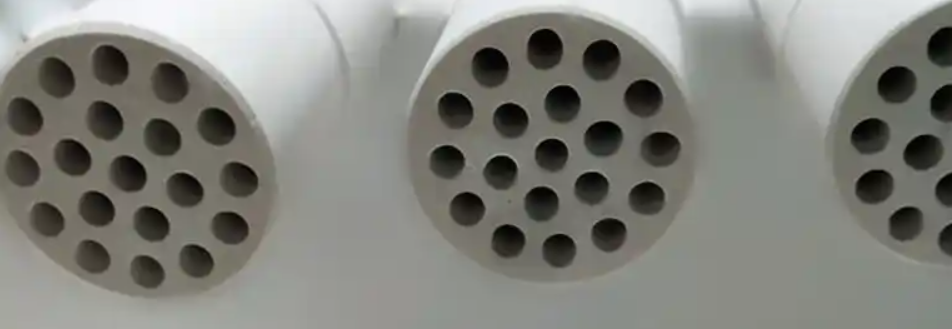
Top 10 Air Purifier Brands/Models in Korea
Korea’s air purifier market hit USD 432.20 million in 2025. Growth projections reach USD 635.40 million by 2030. That’s an 8.01% CAGR. Some estimates show 10% growth each year through 2034.
Three Korean brands lead this market: Coway, LG Electronics, and Samsung Electronics. LG leads South Korea’s home market. Premium pricing is their edge. Samsung stands out with multi-layer HEPA technology and SmartThings App connection. Coway just won its 19th Red Dot Design Award in 2025 for Product Design.
Foreign brands push hard for market share. IQAir from Switzerland brings ₩200 million in revenue. Blueair focuses on Korea’s PM2.5 issues across Asia-Pacific. Xiaomi, Philips Korea, Dyson, and Sharp fill out the rest.
Top models changing 2025 buying trends:
– Coway Airmega 350/450 – Round design with strong cleaning power
– LG PuriCare AeroHit – Advanced tech in a clean, simple look
– Samsung HEPA series – PM1.0 sensors with quiet, energy-saving operation
HEPA filters run 95% of Korea’s high-power units. Yellow dust and fine particles made this tech the top choice. Smart air purifiers hold 25% market share now. This part will grow fastest. Seoul homes want app-based control and tracking.
Coway Co., Ltd. – Air Purifier Series
Coway dominates the Korean market for a reason. With 19 consecutive Red Dot Design Awards, they don’t just make appliances; they make furniture that cleans your air. Their strategy? Ignore the “ceramic” hype and focus on what works: engineered HEPA systems. Here represents why Seoul households trust these models.
Core AP Series Models
AP-0823E is your go-to for compact living (13-26㎡). Weighing just 3.0kg and sipping only 22.8W of power, it fits perfectly in studio apartments. It uses a three-stage defense: pre-filter + True HEPA H13 + deodorization. The noise level stays between 20-52dB, so it won’t wake you up. Maintenance is simple: replace the main filter yearly and dry-wipe the pre-filter—no water needed.
AP-1511FHE is the heavy hitter. It uses a six-stage filtration system, including an ANTI-FLU HEPA filter that claims to remove 99.9% of bacteria and viruses. It doesn’t just filter; it sterilizes. The RBD plasma ionizer manages formaldehyde (0.9mg/m³), while low-ozone technology keeps it safe.
Samsung Electronics – Smart Air Purification Solutions
Samsung took a different approach. In February 2023, the Samsung Advanced Institute of Technology unveiled a breakthrough: a filter system using Cu2O (cuprous oxide) and TiO2 (titanium dioxide). This aims to tackle particle capture and VOC decomposition simultaneously.
The 20-Year Filter Revolution
Here is the game changer: Standard HEPA filters need tossing every 6-12 months. Samsung’s new technology aims for a 20-year lifespan. The concept? You wash it with water to refresh the surface, maintaining performance without the waste. It claims to hold 4 times more dust than conventional filters while breaking down volatile organic compounds—a massive plus for compact Korean apartments where every replacement cycle counts.
Commercial Application and Market Positioning
Currently, you’ll see these mostly in commercial spaces—transit hubs and office towers—where maintenance needs to be minimal. However, as Korea’s home air purifier market races toward a projected USD 2.238 billion by 2032, expect this “washable tech” to trickle down to consumer home units, challenging the disposable HEPA model.
LG Electronics – Air Purification Product Line
LG’s PuriCare line is the status symbol of Korean air purification. The 360° Tower model serves up a massive 930m³/h CADR, arguably the highest verified output for home units in the region. One unit can effectively manage a 120㎡ space.
360-Degree Purification Architecture
Unlike boxy purifiers that pull air from one side, the PuriCare drinks in air from every angle. It uses PM1.0 sensors to track particles smaller than standard PM2.5 monitoring. The best part? UVnano LED technology. It works to sterilize the fan blades and filter surface, claiming to kill 99.99% of bacteria. It’s an extra layer of hygiene that justifies the premium price tag.
Product Segmentation Strategy
-
PuriCare Mini: Perfect for your 20㎡ bedroom or car, running whisper-quiet (sub-20dB).
-
PuriCare 360° Tower: The beast for 120㎡ living areas.
-
AeroCatTower: A specific answer for pet owners (53㎡ coverage), focusing on dander removal. It even made TIME Magazine’s 2025 Best Inventions list.

Rising Stars: Local Korean E-commerce Brands
The barrier to entry has dropped. Korea’s massive e-commerce infrastructure has allowed smaller, agile brands to challenge the giants. With the market hitting ₩242.9 trillion in 2024 and 79% of Koreans shopping online, you no longer have to stick to the “Big Three.”
Digital Platform Opportunities
Coupang is the battleground. With over 22 million active users, new brands use aggressive pricing and rapid delivery to compete. Meanwhile, NAVER Shopping Live has turned air purifier sales into entertainment. Live commerce is growing at a 36% CAGR. If you want the latest “bang for your buck” deal, don’t look at department stores; look at livestreams.
The “Olive Young” Effect
Interestingly, retailers like Olive Young are piloting zones for “Super Rookies.” While known for beauty, their lifestyle sections are introducing compact, design-focused air purifiers to younger demographics. These smaller brands often focus on one thing: aesthetics and basic H13 filtration at half the cost of premium models.
Comparing HEPA H13 vs. H14 Standards
In Korea, you will see “H13” or “H14” stamped on every box. Many buyers pay extra for H14 without knowing why. The actual difference is 0.045% in filtration efficiency. Does that justify the price jump? Let’s look at the numbers.
Core Technical Specifications
|
Grade |
Efficiency |
EU Standard |
ISO Standard |
Penetration (PPM) |
|---|---|---|---|---|
|
H13 |
≥99.95% |
EU7 |
ISO 35H/40H |
500-100 |
|
H14 |
≥99.995% |
EU8 |
ISO 45H/50H |
50-10 |
H13 is the sweet spot for Seoul homes. It blocks 99.95% of particles like fine dust and smoke. H14 is medical-grade. Unless you are running a sterile lab or have severe respiratory conditions, H14 often means higher airflow resistance (more noise) and higher replacement costs for a benefit you might not notice.
Guide to Coverage Area and CADR Ratings
CADR (Clean Air Delivery Rate) determines if a unit can actually handle your room size. The math is simple: Applicable Area (m²) ≈ CADR (m³/h) × 0.1.
Matching Room Size to CADR
-
Children’s Rooms (10-15㎡): Look for 120-200 m³/h CADR. Prioritize ozone-free certification.
-
Master Bedrooms (15-20㎡): You need 150-250 m³/h. Ensure noise levels stay ≤40dB for sleep.
-
Living Rooms (25-40㎡): Go big. You need 300-500 m³/h. Models like the Haier KJ600F-HY or huge Coway towers are designed for this.
Formaldehyde Considerations
Moved into a newly built Korean apartment? You need to check the Formaldehyde CADR. A baseline of ≥50-60 m³/h is necessary. Activated carbon filters need weight—look for filters with ≥1kg of carbon if odor and VOC removal is your main goal.
Filter Replacement Costs and Cycles
Ownership costs go beyond the sticker price. Expect to pay ₩80,000-₩165,000 per year for HEPA replacements in premium models. However, don’t just rely on the calendar.
The Real Factor: Pressure Differential
Smart replacements essentially measure “clogging.” As dust from Seoul’s yellow dust season builds up, air resistance rises. Yellow dust (March-May) can reduce filter life by 30-40% compared to other seasons. A filter rated for 12 months might actually die in 8 months if you live near construction in Ansan or heavy traffic in Gangnam.
Pro Tip: Wash your pre-filter monthly. It takes 5 minutes and can extend your expensive HEPA filter’s life by 3-4 months. It’s the easiest way to save ₩50,000.
Energy Consumption and Noise Control
Korean purifiers have to balance power with silence. Sleep modes typically hit 20-35dB—quieter than a library. However, during pollution spikes, auto-modes can ramp up to 52dB.
Energy Efficiency: Look for the Energy Efficiency Level 1 certification. A 50W unit running 24/7 costs roughly ₩64,400 per year (at ~₩147/kWh), but efficient smart sensors that turn the fan down when the air is clean can cut this in half.
Smart Features and User Experience
Korea is a hyper-connected society, and its appliances reflect that. Brands like Coway, Samsung, and LG have integrated sophisticated app controls.
-
Samsung SmartThings: Allows full remote control. You can turn on your purifier while commuting home on the subway.
-
LG ThinQ: Provides real-time visualization of air quality and filter health.
-
Coway IoCare: Tracks energy usage down to the Won, solving the mystery of your electric bill.
ALTERNATIVE: If Insisting on “Ceramic” Angle
Ceramic materials work well for precision tools and industrial uses. Air filtration? That’s a different story. Ceramic gauge blocks and air purifiers have nothing in common.
What “Ceramic” Means in Filtration Context
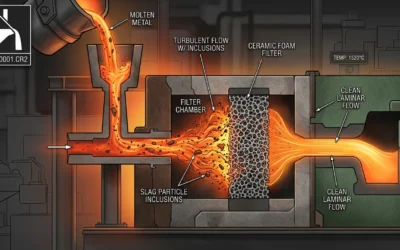
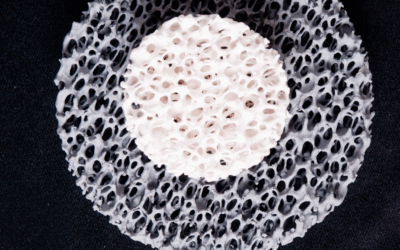
Ceramic pre-filter plates exist in some Korean models. They catch large particles (>10μm) like hair and dust clumps. These washable plates sit at air intake points. They don’t filter PM2.5 or PM1.0. HEPA layers handle that job.
Stabilized zirconia ceramic appears in industrial cleanroom equipment. ISO 3650 K-grade ceramic parts resist heat changes at (9.7 ± 0.8) × 10⁻⁶ K⁻¹. Labs need this precision. Your Seoul apartment doesn’t. Home air purifiers skip these materials. Each unit would cost ₩500,000+ more.
Ceramic Element Performance vs. HEPA Standards
Some Korean brands use ceramic ionizer plates. They make negative ions that stick particles together. Ionization boosts total filtration by less than 5%. The H13/H14 HEPA layer captures 99.95-99.995% of actual particles.
No Korean air purifier uses ceramic as the main filter. ASTM C484-20 thermal shock standards and C648-20 breaking strength specs? Those cover tiles and industrial ceramics. They don’t work for breathable air filters.
Why Korea Skipped Ceramic Filter Development
Manufacturing costs make ceramic filters too expensive. HEPA filters cost ₩88,000-₩165,000 for replacement. Ceramic filters with H13 performance? You’d pay ₩300,000+. Korean households won’t pay triple for the same PM2.5 removal.
Filter replacement works better with disposable HEPA. You swap filters in 30 seconds. Ceramic systems need professional cleaning every 3 months. Seoul’s replacement shops serve HEPA standards. They don’t handle specialized ceramic maintenance.
Accept this market reality. Korean air purifier R&D put billions into HEPA engineering. Coway earned 19 Red Dot awards from smart HEPA design. Samsung’s 20-year washable filter uses Cu2O and TiO2 coatings. Not pure ceramic. Your “ceramic filter” search shows products with ceramic accents. Not ceramic filtration technology.
Industrial Applications of Ceramic Materials
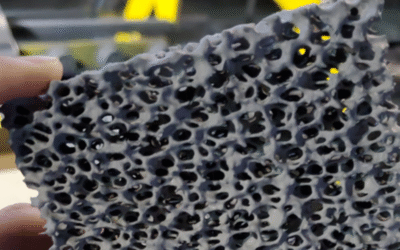
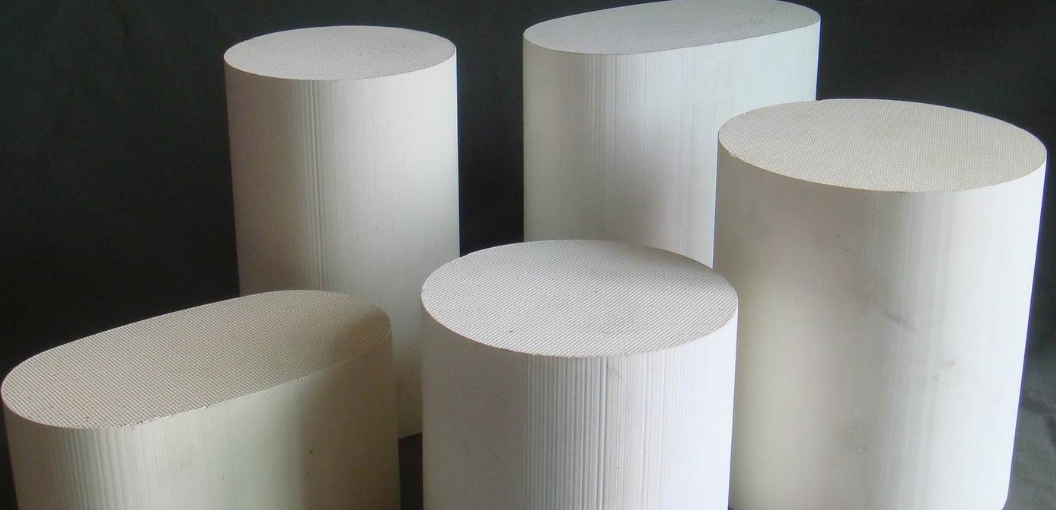
You searched for ceramic filters, but they are mostly found in factories, not living rooms. Honeycomb ceramic structures are used in industrial waste gas treatment where temperatures exceed 1700°C—conditions no home HEPA filter could survive.
Companies like NGK and Corning produce these for automotive catalytic converters and power plants. They are designed for extreme heat and chemical corrosion, making them overkill (and overly expensive) for filtering household dust.
Don’t Confuse Them: Korean Ceramic Water Filters
A common mistake for expats in Korea is confusing “Ceramic Domes” with air filters. Korea Ceramic Dome products are for water, not air.
These cartridges have microscopic 0.2-micron pores designed to filter waterborne bacteria like typhoid and cholera physically. They usually fit Zen Water Systems. If you see a “ceramic dome” for sale, it is likely for your kitchen counter, not your air purifier. Clean these monthly with a soft sponge, but never use soap.
Conclusion
Korea’s air purifier market is easier to understand than you think. True ceramic air filters exist only for industrial use. The top 10 air purifier brands in Korea—Coway, Samsung, LG, and Cuckoo lead the pack—give you proven options. These combine HEPA filtration, smart features, and energy savings made for Korean homes.
What’s your next step? Match your room size to the right CADR rating. Compare filter replacement costs over 2-3 years, not just the price tag. Look for models with H13 or H14 HEPA certification. Tech lovers will appreciate Samsung and LG’s app controls. Coway wins on cost-performance.
The best air purifier? It’s the one you’ll keep up with. Not the one with the most filters. Check promotions from authorized Korean retailers. Verify warranty coverage. Light sleeper? Don’t skip noise levels.
Ready to breathe cleaner air? Figure out your main issue first—allergies, fine dust (PM2.5), or odor control. Then check the brand comparisons above. You’ll find your perfect match among Korea’s top performers.