The wrong ceramic filter supplier doesn’t just hurt part quality. It drains your foundry through rising scrap rates, rework costs, and missed delivery windows.
The problem? Dozens of manufacturers are competing for your business. Separating capable suppliers from the ones who just look good on paper takes more work than it should.
This breakdown cuts through that. We evaluated the top 5 ceramic filter suppliers for Investment casting foundries on the criteria that matter most:
-
Filtration efficiency
-
Alloy compatibility
-
Certification standards
-
Real-world production flexibility
What Are Ceramic Filters in Investment Casting (And Why They Matter)
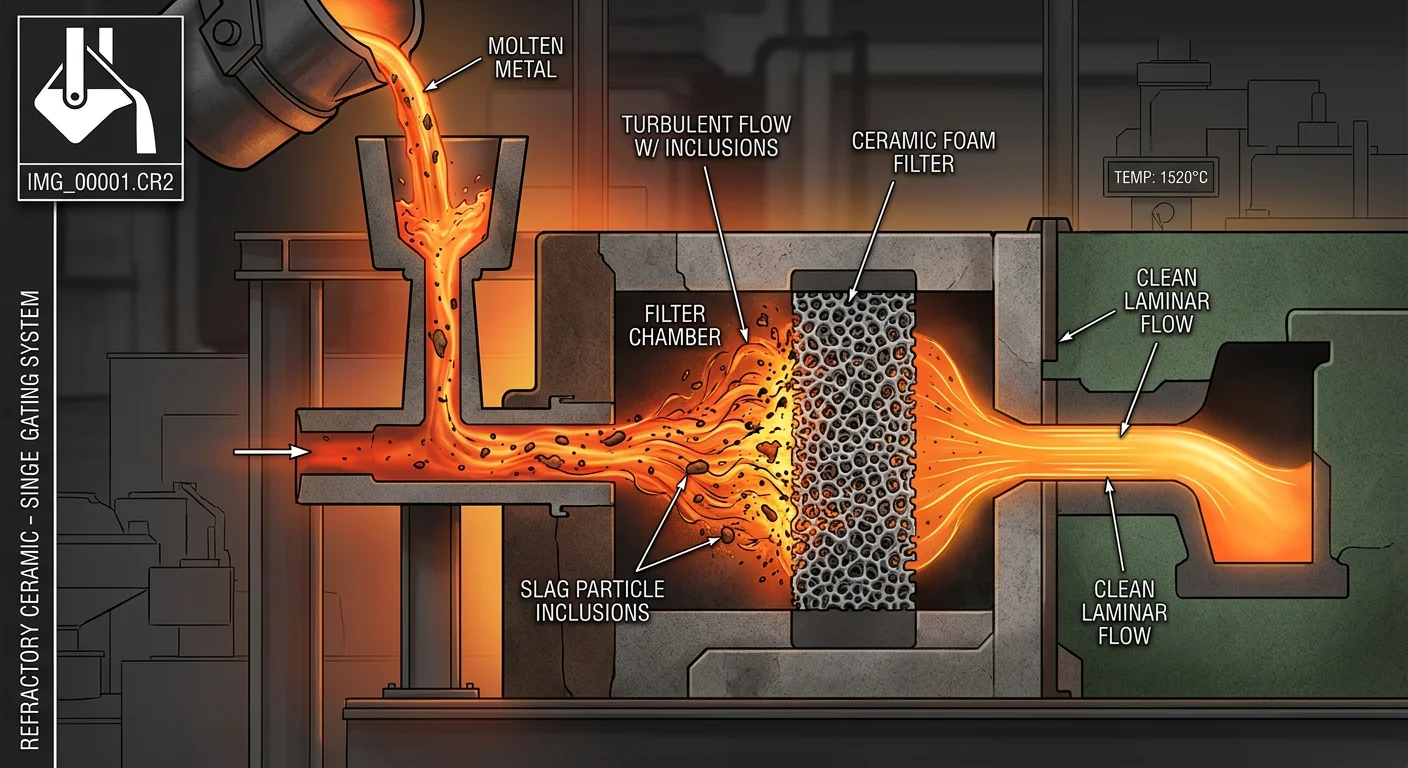
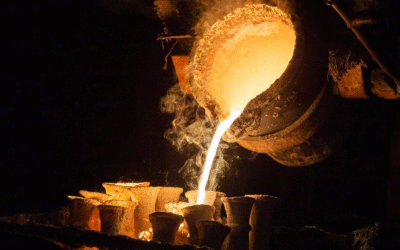
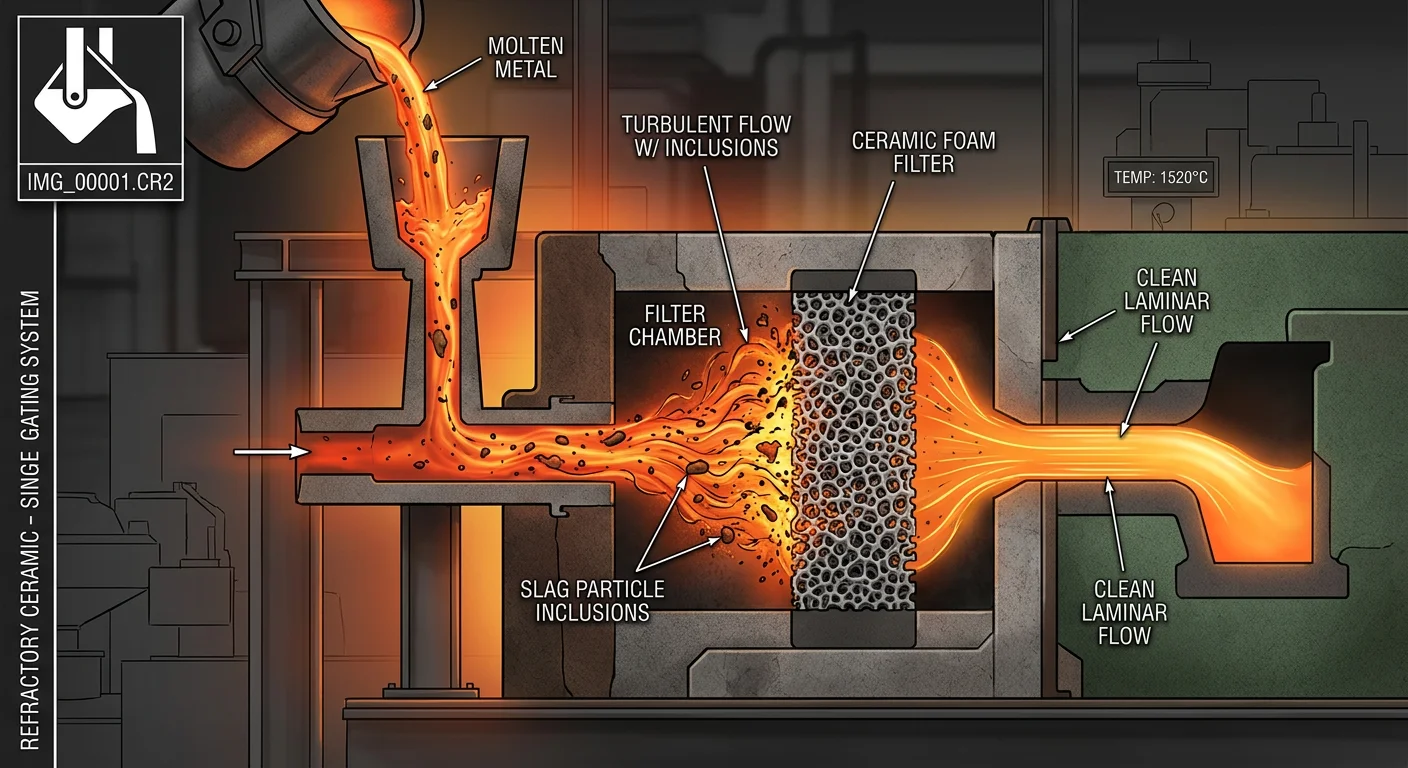
Molten metal is violent. It carries oxides, slag particles, and non-metallic inclusions at temperatures that would destroy most materials. Those contaminants reach your mold cavity — you don’t get a second chance.
Ceramic filters exist to solve that exact problem.
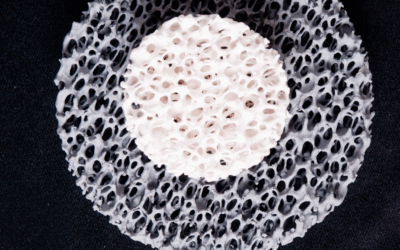
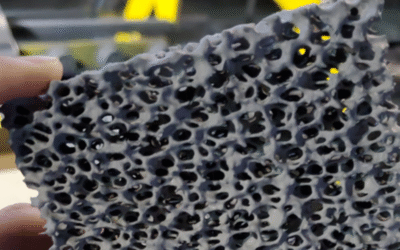
They sit inside the gating system and block up to 90% of non-metallic inclusions before metal enters the mold. They also convert chaotic turbulent flow into steady laminar flow. That cuts porosity, oxide entrapment, and the non-fill defects that eat into thin-walled casting yields.
The financial case is clear. Foundries that switched from honeycomb to foam filters saw 6–12% yield improvements in aerospace applications. Filtration efficiency gains of 30–40% over conventional methods mean fewer scrapped parts and lower rework hours.
Filter Type Determines Your ROI
Not all Ceramic filters perform the same way. The three main types sit at different points on the performance-cost scale:
-
foam ceramic: Moderate filtration. Fragile under thermal shock. Flow patterns are inconsistent — that raises scrap risk in precision applications.
-
Honeycomb: High filtration efficiency with true laminar flow control. Handles extreme temperatures well. No cleaning required. This is the go-to filter for high-volume investment casting.
For most foundries, honeycomb filters hit the right spot — high efficiency, no foam fragility, and no premium per-unit cost.
The Silicon carbide foam filter market backs this up: $198M in 2024, on track to hit $271M by 2032 at a 4.7% CAGR. Automotive alone drives over 45% of total consumption. This demand is structural, not speculative.
Pick the right filter type before you pick a supplier. That choice determines which suppliers can serve your operation — and which ones are selling you the wrong solution at the right price.
How to Evaluate a Ceramic Filter Supplier: 6 Key Selection Criteria
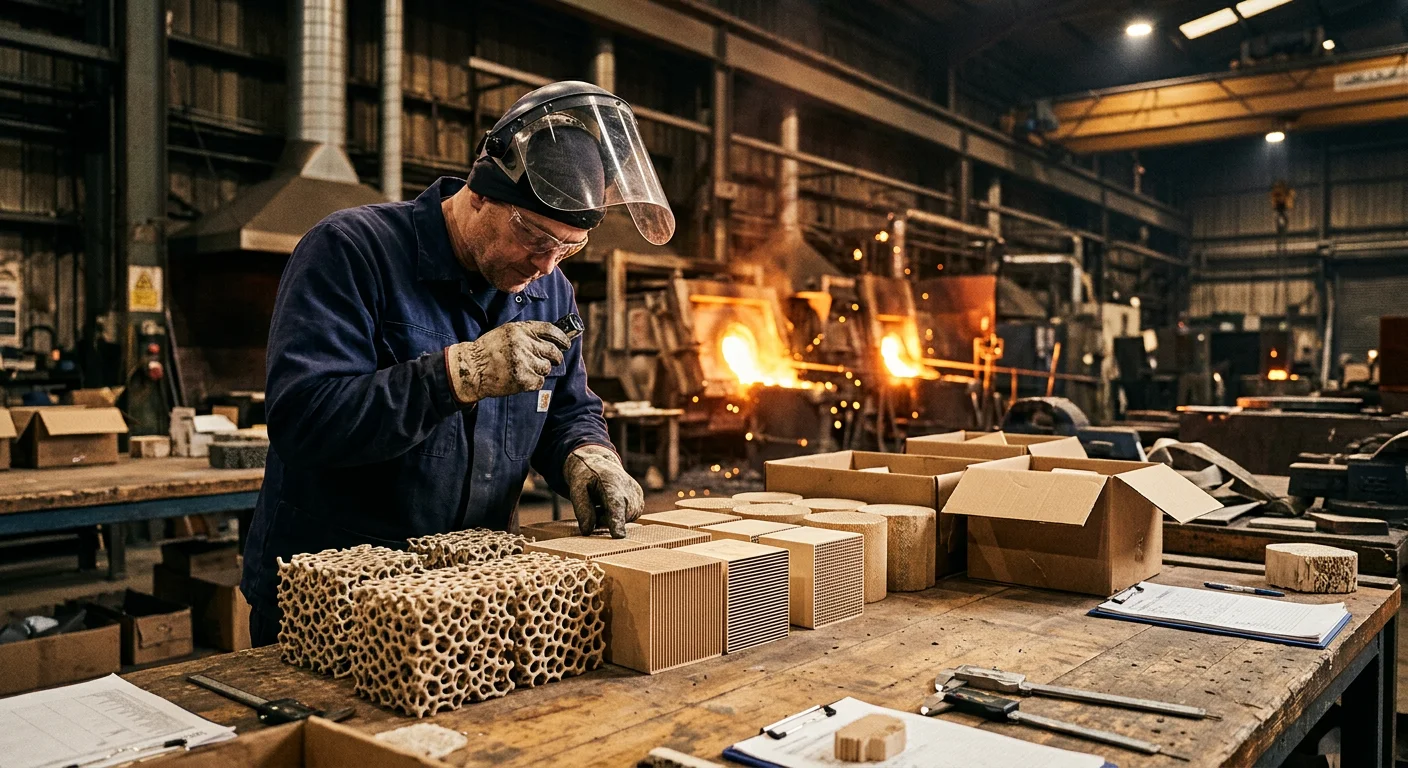
Some suppliers are worth every dollar. Others will drain your budget quietly — through failures, delays, and hidden costs. These six criteria help you tell them apart.
Go through each one before you sign anything.
1. Raw Material Quality
Start here. Always.
A filter made from low-grade alumina or zirconia won’t survive the thermal stress of investment casting. It breaks down. It sheds particles. It fails at the worst possible moment.
Ask every supplier for their material specs upfront. Find out where their raw materials come from and what grade they use. No clear answer? That tells you everything you need to know.
2. Certifications That Hold Up to Scrutiny
ISO 9001 and ASTM compliance aren’t marketing badges. They prove a real quality control system is in place.
A certified supplier has documented processes, traceable materials, and steady output. An uncertified one is asking you to take their word for it — with zero third-party backing.
Check that certifications are current. Check their scope. Don’t accept anything that expired two years ago.
3. Manufacturing Capacity and Technology
Can they handle your volume without cutting corners under pressure?
Look at their equipment. Check whether their production floor can scale to meet your deadlines. A supplier that runs smoothly at 10,000 units per month might fall apart at 100,000.
Ask them point-blank: What happens to your quality controls when a large order comes in fast?
4. Industry Experience and Client Portfolio
Years in business matter. But client diversity matters more.
A supplier working across metal casting, automotive, and environmental applications has proven they can adapt. They’ve solved problems across different alloys, geometries, and production setups. That range of experience means fewer surprises on your end.
Request case studies. Ask for references from operations close to yours.
5. Customization Capability and R&D Investment
Standard filters solve standard problems. Investment casting doesn’t deal in standard problems.
Make sure your shortlisted suppliers offer real customization — not just different sizes. Look for active R&D: university partnerships, collaboration with industry engineers, proprietary process development.
Suppliers putting money into innovation now are the ones who’ll keep pace as your casting needs grow. The ones who aren’t may not be able to support you in two or three years.
6. Lead Times and Delivery Reliability
Quality means nothing if the filters don’t arrive before your pour is scheduled.
Get lead times in writing. A supplier who hedges on delivery dates during a sales call will hedge harder once production gets tight.
Foundry environments run on tight schedules. There’s no room for supply chain surprises. Confirm their delivery track record before you commit.
How to Score Your Shortlist
Evaluate each supplier against these six criteria. Then run a weighted scoring formula: Σ (criterion rating × weight). Put more weight on the criteria that matter most to your operation.
Set a minimum threshold — 3.8 out of 5 is a solid baseline. Any supplier who falls below it gets cut, no matter how competitive their price looks.
SELEE Advanced Ceramics — Best for Custom Shapes & Specialty Alloys
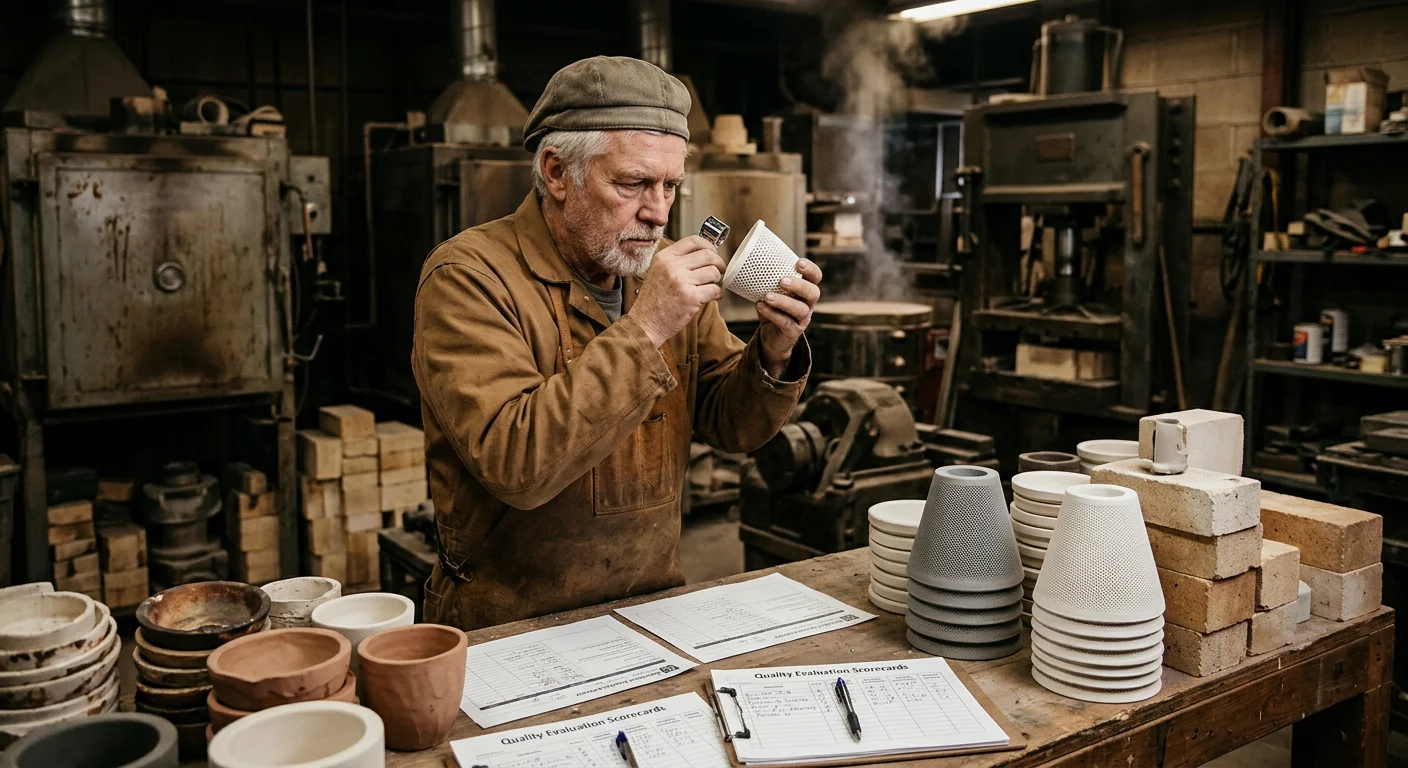
Sixty years of making refractory products leaves a mark. Not in a brochure — in the real ability to solve problems that newer suppliers have never faced.
SELEE Advanced Ceramics is based in Gilberts, Illinois. They’ve been building custom ceramic refractory shapes since the 1960s. Their investment casting focus runs 30+ years deep. That’s not a sales pitch. That’s hands-on knowledge built into every crucible, ladle, and filter they make.
Where SELEE earns its spot on this list:
Their core position is clear — standard parts don’t always fit. So they engineer ones that do. The sales team doesn’t just take orders. They design new components around your exact requirements.
In investment casting, geometry, alloy compatibility, and heat demands don’t fit a catalog. That’s the reality. SELEE builds around it.
Their go-to material is high purity alumina. It delivers strong corrosion resistance, thermal shock resistance, and high-temperature strength. High-temperature firing during production cuts casting inclusions — before the filter ever reaches your Gating System.
Product range for investment casting operations:
-
Crucibles from 1 to 4,000 lbs melting capacity
-
Round bottom and straight wall designs
-
Open top and teapot ladles with configurable spout/lip options
-
Custom Investment casting filters — non-standard sizes and shapes
-
Fused silica filter bowls (pre-cast advanced ceramics)
Their pre-cast shapes also reduce labor costs on cleaning and installation. That adds up fast across high-volume production runs.
SELEE holds ISO 9001 certification and keeps their operation tight. At 38 employees and under $5M revenue, this isn’t a bulk commodity supplier. It’s a precision shop. They dig into your specific problem before they propose anything.
Best fit: Foundries running specialty alloys, non-standard geometries, or applications where catalog filters keep falling short.
SEFU CERAMIC — Best for ISO-Certified High-Volume Foundry Operations
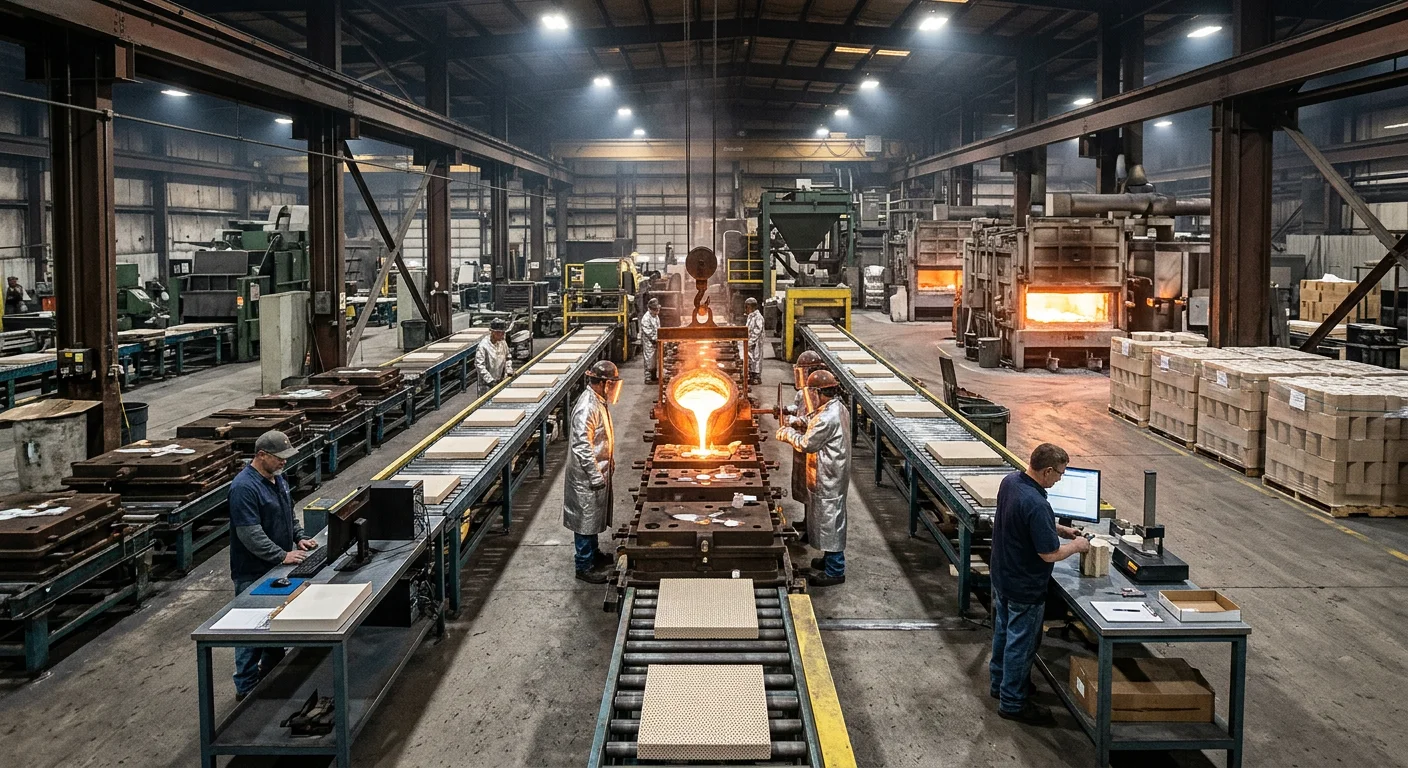
Scale breaks things. That’s the foundry reality nobody mentions in sales meetings — quality controls that work at 10,000 units start falling apart at 10 million. SEFU CERAMIC was built for the operations where that pressure hits hardest.
Their Investment Casting Filters cover the full range of investment casting metals: Gray Iron, Ductile Iron, aluminum, and copper alloys. The alumina-silicate material pulls out non-metallic inclusions at throughputs most suppliers can’t match — 4,000 to 20,000 lbs per hour, across line runs from 80 to 300 feet. That’s industrial-scale filtration at speeds exceeding 100 mph.
What ISO certification means here:
SEFU’s ISO-certified facilities aren’t a badge they pull out for audits. Rapid compaction tooling built to customer specs, multi-axis CNC machining, heat treating, and wire/plunge EDM all back them up. As-fired dimensional tolerances hold at 0.5%. Machined flatness reaches 1µm/m. At millions of units, that consistency isn’t just impressive — it’s what stops your scrap rate from eating into your margins.
The vertical integration advantage:
SEFU controls the full production chain — from raw powder through shaping and coating. That’s how they keep batch consistency tight even as order sizes hit 100,000 lbs in a single run. Their spray drying capacity alone processes 5,000 lbs per hour.
Filter area ratios are set for each metal type:
– 3:1 for gray iron
– 4:1 for aluminum and copper
– 5:1 for ductile iron
This keeps flow dynamics under control without cutting into throughput.
With 50+ global locations across four continents and revenues at $1.25B, supply chain disruptions that knock out smaller suppliers don’t reach SEFU’s customers. The network is big enough to absorb shocks that would stall a smaller operation.
Best fit: High-volume investment casting foundries where batch consistency, certified tolerances, and delivery reliability are non-negotiable.
ASK Chemicals LLC — Best for Flexible Filter Placement in Shell Mold Systems
Shell mold systems punish inflexibility. The gating geometry shifts. The alloy changes. The pour rate moves — and a filter that can’t keep up becomes a problem fast.
ASK Chemicals was built around that reality.
They run operations across 22 countries with 2,000 employees worldwide. That’s not just headcount padding. Research centers on four continents — Europe, Asia, America, Africa — feed straight into product development. So you get solutions built from real global input, not recycled catalog specs.
What makes flexible placement their advantage:
Filters in investment casting shell mold systems need to go in different spots. You might need one at the runner cup. Another inlaid in the gating. One set at the gate itself. Or dam and cylindrical configurations based on metal behavior and mold geometry. ASK Chemicals engineers around those placement options. They don’t force your operation to adapt to what’s already sitting in the catalog.
Their material lineup covers alumina and zircon-based ceramics — each matched to specific molten metal types. That matching isn’t a cosmetic detail. Pair the wrong ceramic to the wrong metal and you lose filtration efficiency. Worse, you introduce contamination risk at the worst possible moment.
North America footprint:
Ohio-based operations give North American foundries a solid logistics anchor. As of late 2025, they hold 33 active local positions. That signals real infrastructure investment — not a skeleton crew running a regional satellite office.
The ceramic filtration market is also worth a look: $110.39B in 2025, heading toward $189.29B by 2034 at a 6.3% CAGR. North America holds a 47.7% share of that. ASK Chemicals sits inside that growth curve — they’re not chasing it from behind.
Best fit: Investment casting foundries running shell mold systems where filter placement flexibility and alloy-matched material selection drive yield gains and scrap reduction.
FoundryMax — Best for Aerospace, Medical & Precision Applications
Aerospace foundries don’t get to fail in silence. A rejected turbine blade or a contaminated orthopedic implant doesn’t just cost money. It ends contracts, triggers audits, and stains a supplier’s reputation for years. FoundryMax knows that pressure. Their entire product philosophy is built around it.
Their ceramic filters are built for applications where standard filtration falls short. High-thermal-stability ceramics hold structural integrity from sub-zero conditions up to 1,600°C. They do this without shedding particles into the melt. That’s a big deal in aerospace investment casting. One inclusion in a flight-critical component can shut down an entire qualification program. This doesn’t mean their standard ceramic filters are inadequate; on the contrary, their high-precision ceramic filters prove that their standard ceramic filters will not disappoint.
Where FoundryMax focuses its precision edge:
-
Thermal management — Low thermal conductivity materials built for flight data recorders, heat shields, and bleed air duct applications
-
Weight-optimized ceramics — Lightweight filter designs that hold full filtration efficiency. They support fuel-conscious aerospace manufacturing targets without cutting corners.
-
Precision components — Filter geometries matched to sensor housings, gyroscope components, and fire detection assemblies. Dimensional consistency is non-negotiable here.
Certification matters just as much as the product itself. Aerospace-grade ceramic filtration requires AS 9100-aligned material traceability, backed by ISO 9001 and ISO 14001 manufacturing standards. FoundryMax holds its quality controls to that level — not as a sales pitch, but as the baseline these industries expect.
Best fit: Investment casting operations producing aerospace structures, precision medical devices, or any application where inclusion control and thermal performance decide whether you pass or fail qualification.
Side-by-Side Comparison: Which Supplier Fits Your Foundry’s Needs?
Five suppliers. Five different strengths. One fits your operation the way it runs — not the way a sales rep pitches it.
Here’s how they break down:
|
Supplier |
Best For |
Metals |
Strength |
Avoid If |
|---|---|---|---|---|
|
SELEE Advanced Ceramics |
Custom shapes & specialty alloys |
Any investment metal |
60+ yrs refractory experience, engineered-to-spec |
You need bulk volume at low unit cost |
|
SEFU CERAMIC |
High-volume ISO-certified operations |
Iron, aluminum, copper |
4,000–20,000 lbs/hr throughput, 50+ global locations |
Your runs are small and irregular |
|
ASK Chemicals |
Shell mold systems, flexible placement |
Alumina & zircon-matched metals |
22-country footprint, placement flexibility |
You don’t need multi-location logistics support |
|
FoundryMax |
Aerospace, medical, precision casting |
High-temp specialty alloys |
1,600°C stability, AS9100-aligned traceability |
You’re running standard commercial castings |
|
SF-Foundry |
Cost-conscious foundry production |
General foundry metals |
Competitive unit economics since 2002 |
Certification depth is a hard requirement |
Conclusion
Picking the right ceramic filter supplier isn’t a box to check. It’s a quality call that shows up in every casting you pour.
No single supplier is the “best” across the board. The right one is the supplier whose strengths match your metal, your tolerances, and your production volume.
Start with the side-by-side comparison. Then request samples from your top two candidates. Run them through your actual process. The castings will tell you things the spec sheets won’t.
The top ceramic filter suppliers for investment casting foundries are worth nothing to a foundry that doesn’t know what it needs. Get clear on your requirements before you place the first order.