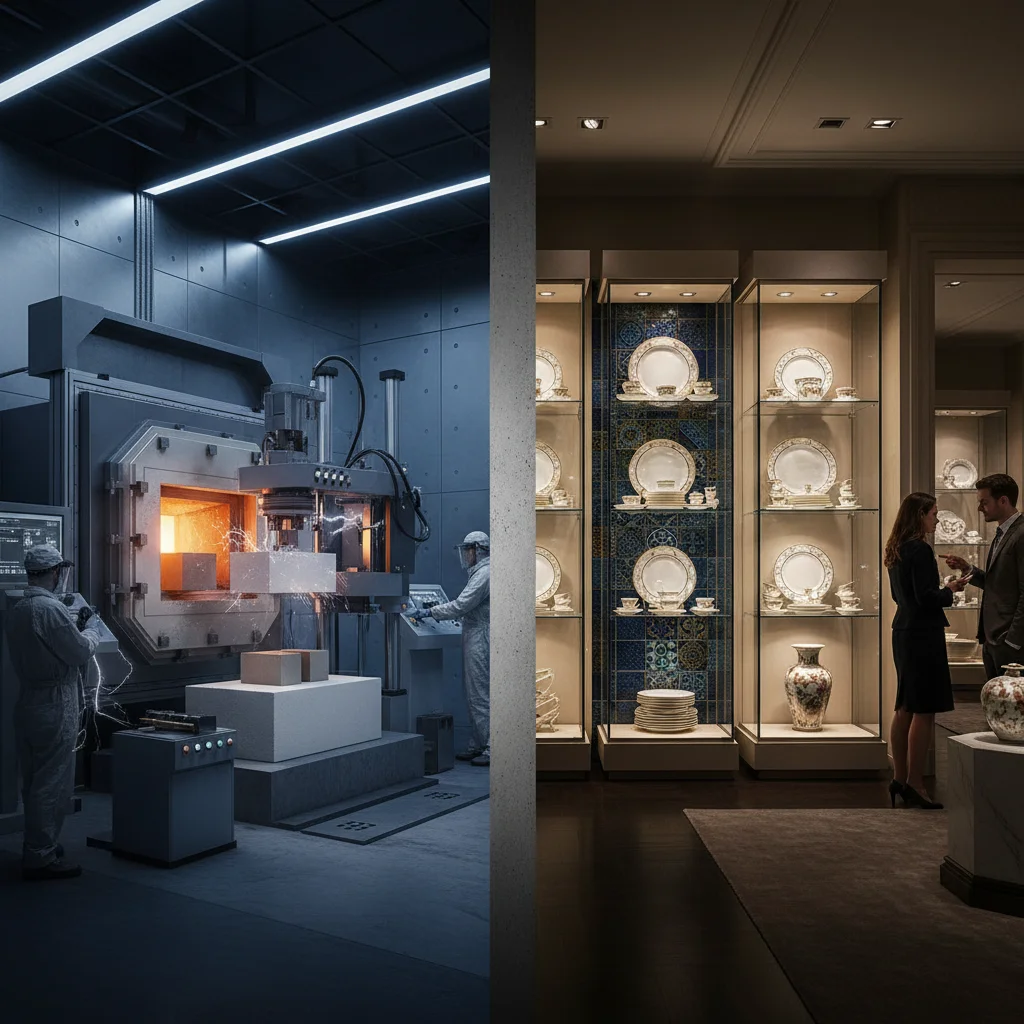
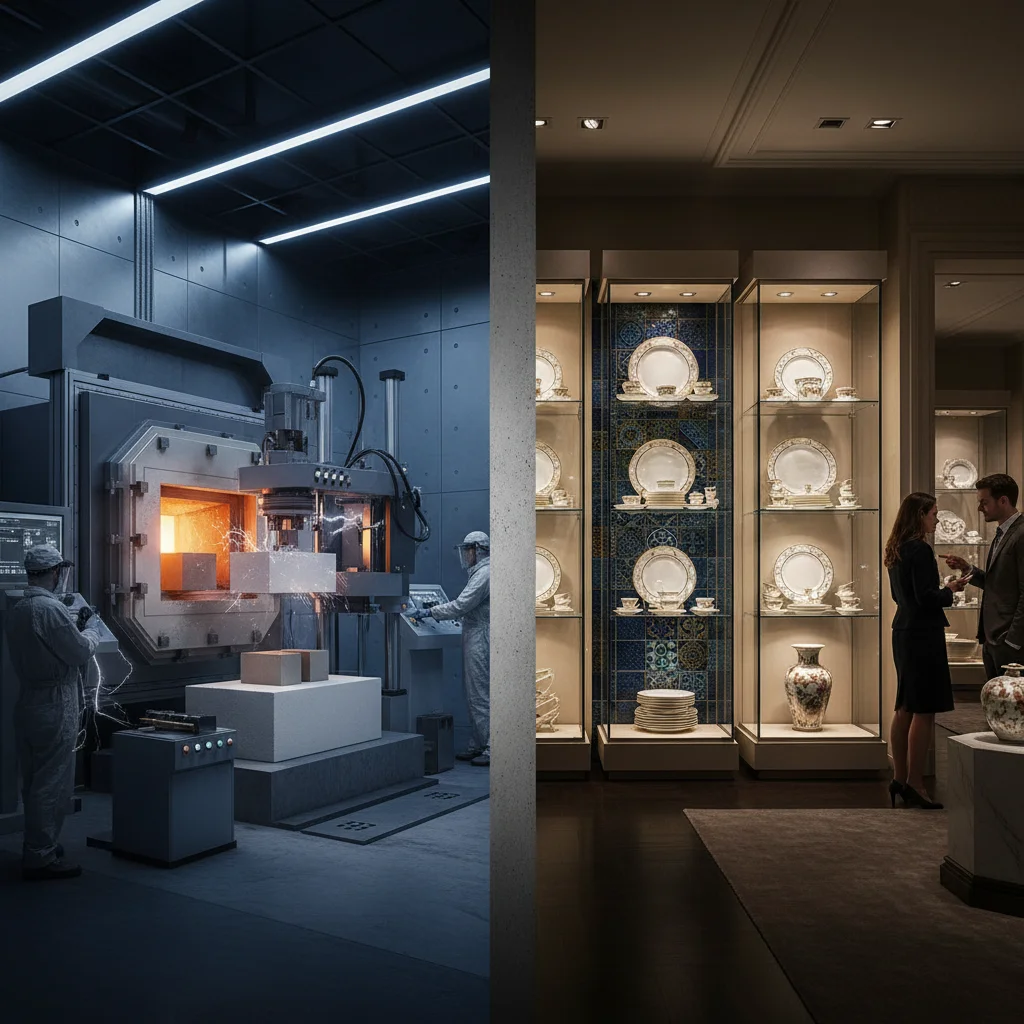
Walk into a high-end kitchen showroom and you’ll admire the flawless glaze of a luxury tile. Step into a semiconductor fabrication plant and you’ll find ceramic components built to handle temperatures that would destroy most materials. Same word, two different worlds.
So what separates luxury ceramic from industrial ceramic? The gap goes far beyond looks. We’re talking about composition, manufacturing precision, mechanical performance, and price points that sit on opposite ends of the scale. Sourcing the wrong type for a design project or an engineering application can lead to a very expensive mistake. Knowing the difference matters.
Luxury vs. Industrial Ceramics: Key Differences
The numbers tell the story. The global Industrial Ceramics market stands at USD 6.42 billion in 2024. It’s on track to hit USD 12.6 billion by 2032 — close to double. Luxury and traditional ceramics? That’s a separate USD 12.3 billion in 2025, climbing to USD 18.9 billion by 2035. Two distinct industries. Two different growth paths. Built on very different foundations.
What They’re Made Of
The materials divide is where everything starts.
Industrial ceramics rely on alumina and zirconia — together holding 42.5% of the U.S. market share — plus silicon carbide and silicon nitride. These compounds deliver thermal stability, corrosion resistance, and electrical insulation. Luxury materials can’t come close on any of those fronts. Silicon nitride components in jet engines cut fuel consumption by 10%. That’s real engineering output.
Luxury ceramics use clay, silica (quartz), and feldspar. Beautiful materials. Ancient materials. Their strength lies in aesthetics, glaze quality, and craftsmanship — not tensile strength or heat resistance.
Performance vs. Presentation
|
Property |
Industrial |
Luxury/Traditional |
|---|---|---|
|
Thermal Resistance |
High |
Moderate |
|
Corrosion Resistance |
High |
Lower |
|
Weight |
Lighter than metals |
Heavier, clay-based |
|
Primary Purpose |
Engineering performance |
Decorative and functional beauty |
Germany’s ceramics sector holds 30% of the European market. Its manufacturers built that position by applying industrial ceramic’s durability to automotive and aerospace work. China takes a different route — dominating luxury ceramic production through scale and lower labor costs. Two separate competitive strategies.
The applications show the split clearly. Industrial ceramics go into semiconductors, medical implants, EV components, and 5G infrastructure. Luxury ceramics end up on your dinner table, your bathroom wall, and museum shelves.
Material Composition
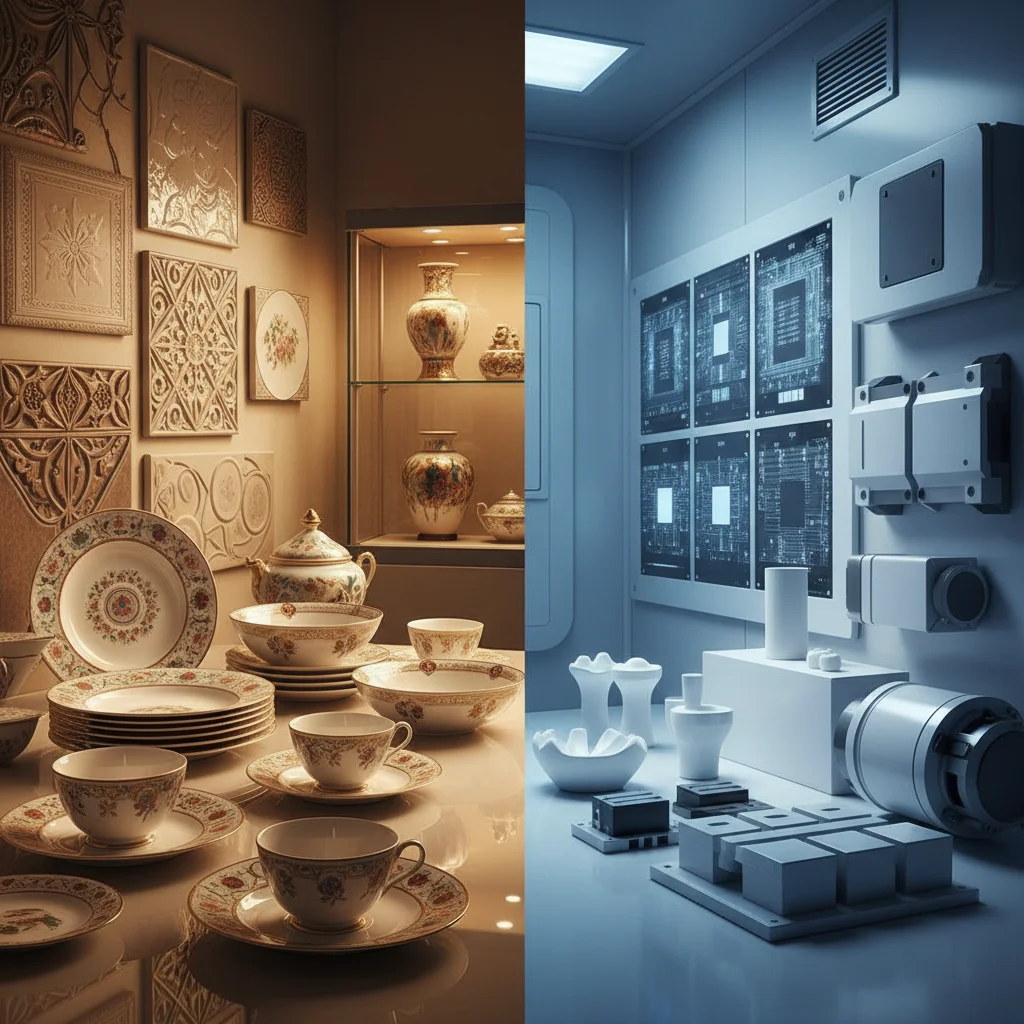
The recipe determines everything. Two ceramics can look alike on a shelf and share almost nothing at the molecular level.
Industrial ceramics are engineered compounds — precision-formulated, not dug from the ground and shaped by hand. The core ingredients come straight from a materials science playbook:
-
Alumina (Al₂O₃) — exceptional hardness, thermal stability, electrical insulation
-
Zirconia (ZrO₂) — fracture toughness, resistance to thermal shock
-
Silicon carbide (SiC) — extreme heat resistance, structural rigidity under load
-
Silicon nitride (Si₃N₄) — lightweight strength, performance in high-friction environments
These aren’t interchangeable. Each compound gets chosen for a specific performance outcome. Take a zirconia component in a medical implant — it earns its place through strict chemical purity tolerances. Use the wrong formulation and the part fails. The stakes are clinical.
Luxury ceramics draw from a different ingredient list: kaolin clay, silica (quartz), and feldspar. These three materials have shaped decorative and Functional ceramics for centuries. They fire well. They hold glaze. They produce the translucency that makes fine porcelain worth what it costs.
Clay-based compositions were never built to withstand a jet turbine or insulate a semiconductor wafer. That’s not a weakness — it’s a different job entirely.
The manufacturing process widens the gap further. Industrial ceramic production demands controlled sintering environments, tight particle size specs, and strict purity standards to hit consistent mechanical properties. Luxury ceramic production focuses on aesthetic consistency — matching color, surface finish, and glaze behavior batch after batch.
Same category name. Different chemistry entirely.
Manufacturing Process
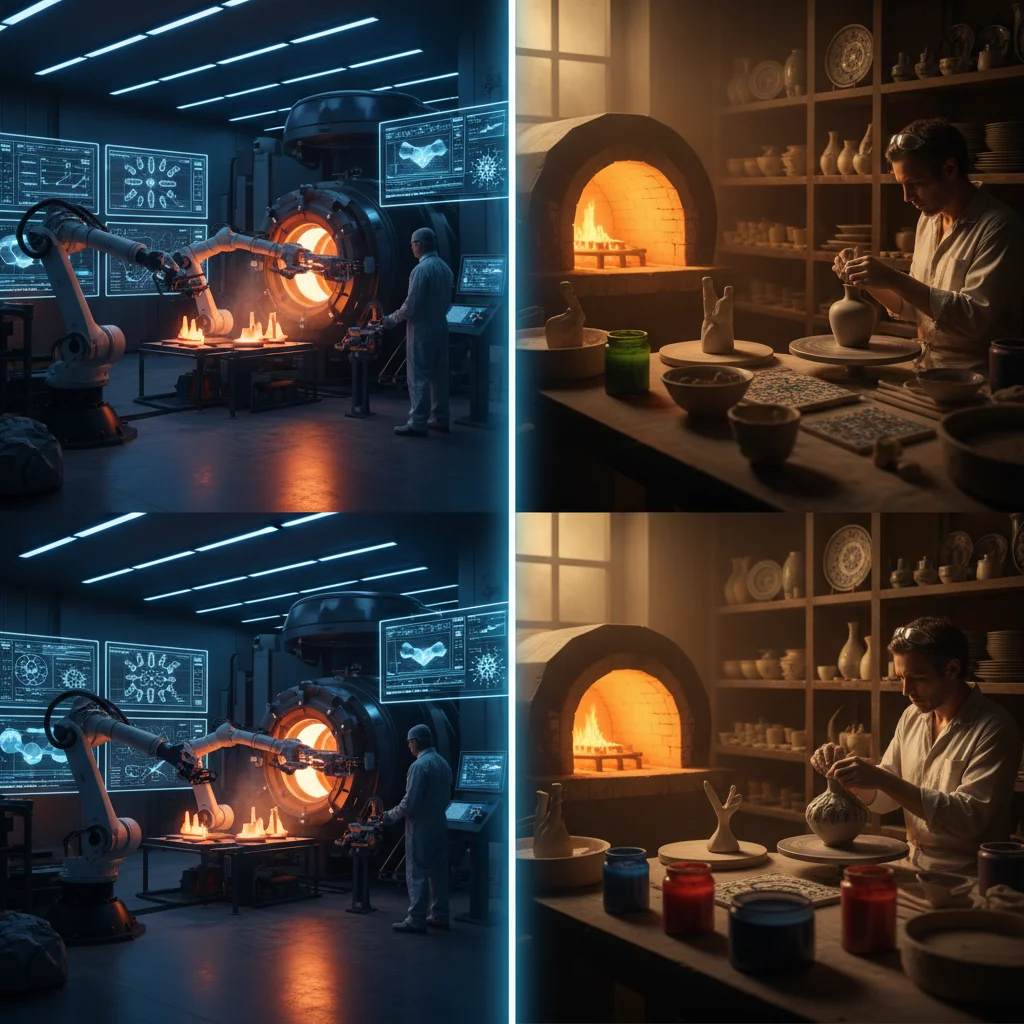
The gap between luxury and industrial ceramic isn’t just in the chemistry — it lives inside the factory.
Walk through an industrial ceramic production facility and the first thing you notice is control. Every variable gets tracked. Particle size. Sintering temperature. Atmosphere inside the kiln. Purity levels at each stage. Nothing gets left to chance. A component that ships to a semiconductor fab or a surgical suite cannot fail. The whole manufacturing process reflects that pressure.
Industrial ceramic production follows a precise sequence:
-
Powder preparation — raw compounds are milled to exact particle size specs. Uneven particle size creates uneven density in the final part. That creates weak points. Weak points cause failure.
-
Forming — material gets pressed, extruded, or cast into near-net shapes. Common techniques include isostatic pressing and injection molding.
-
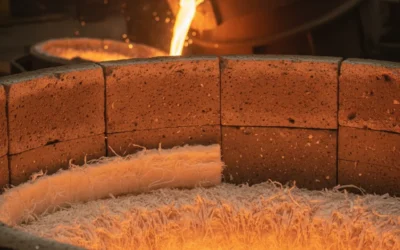
Sintering — parts fire at extreme temperatures inside controlled-atmosphere furnaces, sometimes above 1,600°C. This is where density, hardness, and structural strength get locked in.
-
Finishing — grinding, lapping, and polishing bring tolerances to within microns of spec.
That final step alone can eat up a large portion of part cost. Precision machining ceramics is slow, tool-heavy work. It takes time and specialized equipment.
Automation is changing how this gets done. A PwC survey of 443 executives across 24 territories found that automated key processes are set to rise from 18% in 2026 to 50% by 2030. The top 20% of manufacturers are expected to push that figure to 65%. Heavy use of advanced technology in production and operations is forecast to hit 76%, up from just 29% today.
Robotics is the main driver behind this shift. 78% of manufacturers deploying robotics point to productivity as the goal. The appeal is clear — speed, repeatability, and the ability to run continuous sintering cycles with no human intervention.
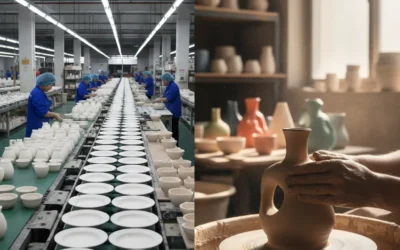
Luxury ceramic manufacturing runs on a different set of priorities. Glaze consistency. Color matching across batches. Surface finish. Craftsmanship still plays a real role — at the high end, hand-finishing adds to perceived value. The kiln matters, but so does the eye of the person inspecting the piece.
These two production approaches produce very different results. One builds components engineered to spec. The other builds objects engineered to be beautiful. Both demand mastery. Neither process would work for the other’s purpose.
Performance Properties
Numbers separate the two ceramics faster than any visual inspection can.
Industrial ceramic doesn’t just perform well — it performs where every other material has already failed. Alumina holds its structure past 1,600°C. Zirconia resists crack propagation through a process called transformation toughening — it grows stronger under stress instead of breaking. Silicon carbide stays rigid under heavy mechanical load at temperatures that would soften steel. These aren’t marketing claims. They’re why industrial ceramics appear in jet turbines, surgical implants, and semiconductor wafers. In those places, failure isn’t a cost — it’s a catastrophe.
The benchmarks that matter are hardness, thermal conductivity, fracture toughness, and dielectric strength. Industrial ceramics score high across all four. That combination is rare. Metals handle heat but carry electricity. Polymers insulate but melt under high heat. Industrial ceramic handles multiple hard jobs at once. That’s why engineers keep reaching for it.
Luxury ceramics work in a different performance category entirely. The benchmarks here are visual and tactile, not mechanical:
-
Glaze durability — resistance to surface cracking and color fade over time
-
Thermal shock tolerance — relevant for cookware and tableware, but within modest temperature ranges
-
Water absorption rate — a key indicator of porcelain density and quality grade
-
Surface hardness — enough to resist scratching in everyday use, not enough to replace a bearing component
Fine porcelain can survive a dishwasher cycle. It cannot survive a turbine.
That gap drives everything downstream — pricing, sourcing decisions, quality control standards, and application fit. A buyer choosing luxury tile for a renovation and an engineer sourcing alumina substrates for electronics are both buying “ceramic.” They’re buying two different things with very different outcomes. Mix those two categories up, and you don’t just get confusion. You get project failures.
Electrical & Chemical Properties
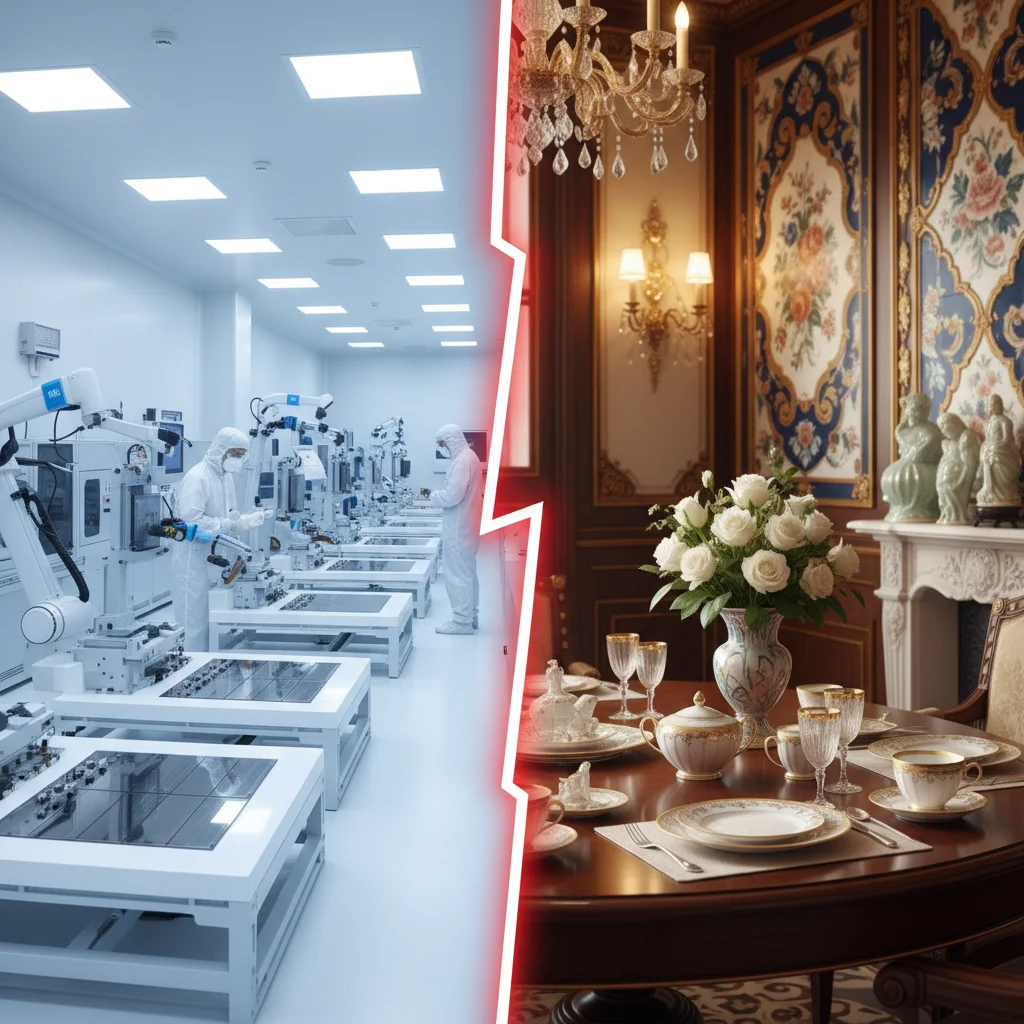
Here’s where the two ceramics stop competing and start living in completely different worlds.
Industrial ceramics are electrical insulators built to perform where most materials fail. Alumina porcelain carries a dielectric constant (ε_r) of 8.0–11. That number matters. A high dielectric constant means the material stores and manages electrical charge without conducting it. That’s what engineers need for semiconductor substrates, spark plug bodies, and high-voltage insulation components. Barium titanate pushes that figure to 1,200. That’s why it shows up in capacitors that hold enormous charge in a small space.
Metals don’t come close here. Copper — the benchmark conductor — sits at a resistivity of 16.78 nΩ·m. Silver edges ahead at 15.87 nΩ·m. But conductivity is the enemy inside a circuit board or a power insulator. Industrial ceramic’s core value is simple: electricity stops at its surface. It doesn’t travel through. That’s not a side effect of chemistry — engineers design it that way from the start.
Chemical resistance runs just as deep. Alumina and silicon carbide ceramic resist acid attack, alkaline corrosion, and oxidation at temperatures where most protective coatings have already burned away. So chemical processing plants line reactor vessels with industrial ceramic instead of stainless steel. Stainless steel can’t hold up under those conditions. Industrial ceramic can.
Luxury ceramics — glazed porcelain, decorative tile, fine china — offer surface-level chemical resistance at best. The glaze handles staining and mild cleaning agents. Push past that into industrial solvents or sustained heat exposure, and the material breaks down fast.
The gap between these two ceramic categories isn’t about degree. It’s about purpose. One insulates a semiconductor. The other looks beautiful on a kitchen backsplash. Neither can do the other’s job.
Applications
Where a ceramic ends up tells you everything about what it was built to do.
Industrial ceramics have claimed space in the most demanding environments on earth. These are places where temperature, pressure, chemical exposure, or electrical load would destroy standard materials within hours. The application list covers modern engineering’s hardest problems:
-
Semiconductors — alumina substrates and silicon carbide components form the core of chip fabrication. Purity tolerances are measured in parts per million.
-
Medical implants — zirconia’s biocompatibility and fracture resistance make it the top choice for dental crowns and orthopedic parts. These components need to last decades inside a human body.
-
Aerospace and automotive — silicon nitride bearings in jet engines and EV drivetrains cut weight, reduce friction losses, and outlast the thermal cycles that destroy steel counterparts.
-
5G infrastructure — high-dielectric ceramics control signal frequencies across base station components. Electrical performance here cannot drift.
-
Chemical processing — reactor vessel linings and pump seals made from alumina and SiC hold up against acids and alkalis that would corrode metal in weeks.
Each of those use cases reflects an engineering decision made under real pressure. No engineer specifies industrial ceramic because it looks good. They specify it because nothing else holds up under those conditions.
Luxury ceramics serve a different set of applications. Fine porcelain sits on a dinner table or behind museum glass. Decorative tile covers kitchen backsplashes, bathroom walls, and hotel lobbies. High-end sanitaryware — sinks, basins, fixtures — pairs visual finish with basic functional durability. Artisan pieces carry cultural and collectible value. Thermal conductivity has nothing to do with it.
Look at who is buying, and the gap becomes clear. An aerospace procurement team and an interior designer both search for ceramic suppliers. Their spec sheets share almost no common language. One measures flexural strength and dielectric constant. The other checks glaze uniformity and color consistency across a production run.
That gap in application defines the entire market. Two ceramics. Two separate jobs.
Durability & Longevity
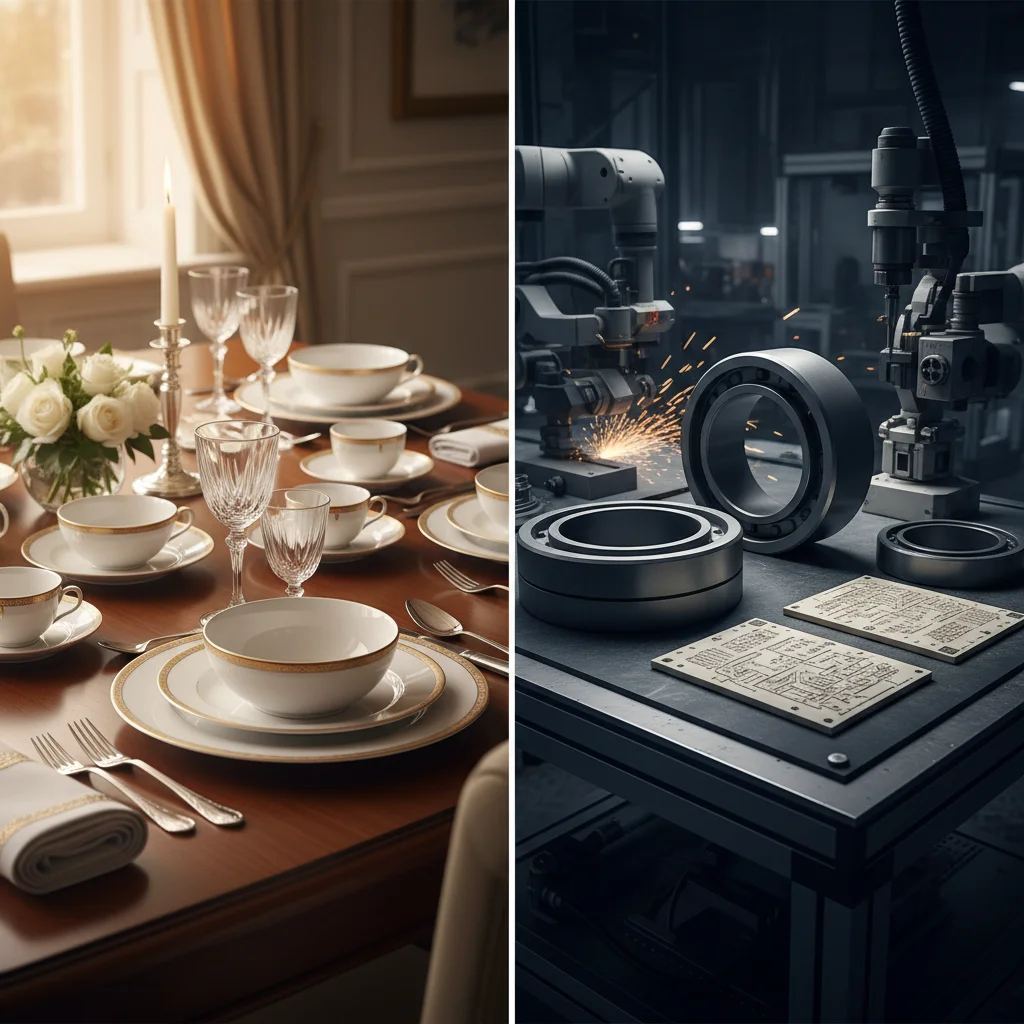
Longevity is where the gap between luxury and industrial ceramic gets real — fast.
Industrial ceramic doesn’t wear out. It outlasts the systems built around it. Alumina components in semiconductor fabrication equipment survive thousands of operational cycles with no measurable degradation. Zirconia implants inside the human body are built to stay functional for 20 to 30 years — longer than most metals used in the same role. Silicon carbide components in chemical processing environments hold up against corrosive conditions that would eat through stainless steel in weeks. The material doesn’t just endure. It outperforms the alternatives, under conditions those alternatives simply can’t handle.
Key durability advantages of industrial ceramic:
-
Hard enough to resist surface wear under sustained mechanical friction
-
Thermally stable — no structural breakdown at temperatures above 1,600°C
-
Chemically inert — blocks corrosion at the molecular level
-
Low porosity — cuts off internal moisture pathways, one of the top causes of long-term material failure
Luxury ceramics offer a different kind of longevity. A well-fired porcelain piece won’t rot, rust, or fade. Museum collections hold glazed ceramics that are hundreds of years old and still structurally sound. That’s real durability. But it works within limits — home use, stable temperatures, careful handling.
This distinction matters when you’re sourcing. Industrial ceramic takes extreme stress. Luxury ceramic takes time. Those are two very different promises.
Cost Consideration
Price is where the two ceramics stop being comparable.
Industrial ceramic costs more to make, more to specify, and more to source. That gap is built into the structure — it’s not a coincidence. The raw compounds alone (alumina, zirconia, silicon carbide) cost more than clay and feldspar from the start. Then you add precision sintering, micron-level finishing, and strict purity checks. Each step pushes the cost per unit higher. A single zirconia dental implant component or an alumina semiconductor substrate carries a price tag closer to engineered infrastructure than to bathroom tile.
Luxury ceramic runs on different economics. Material inputs are cheaper. Labor is the bigger cost driver — skilled artisans at the high end, lower-cost mass production at the other. Brand, craftsmanship, and perceived value set the price ceiling. Molecular purity specs do not.
What drives cost in each category:
-
Industrial ceramic: raw compound purity, sintering precision, post-processing machining, quality certification requirements
-
Luxury ceramic: artisan labor, glaze complexity, brand positioning, batch consistency across decorative production runs
The most common sourcing mistake buyers make is applying luxury ceramic pricing logic to an industrial spec sheet. Or expecting industrial-grade supply chains to quote at decorative tile margins. These are not the same market. They run on different cost structures, different supplier networks, and different procurement timelines.
One purchase buys performance validated to engineering tolerances. The other buys beauty measured by aesthetic standards. The invoice reflects that difference — completely.
Conclusion
The gap between luxury and industrial ceramic goes beyond aesthetics. It’s about purpose, precision, and performance. Luxury ceramics bring beauty and artisan craftsmanship to living spaces. Industrial ceramics are built to survive conditions that would destroy almost any other material.
What’s the difference between luxury and industrial ceramic? It comes down to one simple question: what does your application demand? Designing a high-end interior? Luxury ceramic gives you the visual drama you need. Working in extreme heat, electrical environments, or heavy mechanical stress? Industrial-grade is the only option.
Don’t let the wrong choice cost you. A cracked tile can ruin a renovation. A failed component can shut down a production line. Neither outcome is acceptable.
Start by defining your requirements. Then match the ceramic to the job. The right choice isn’t the most expensive one — it’s the most appropriate one.