
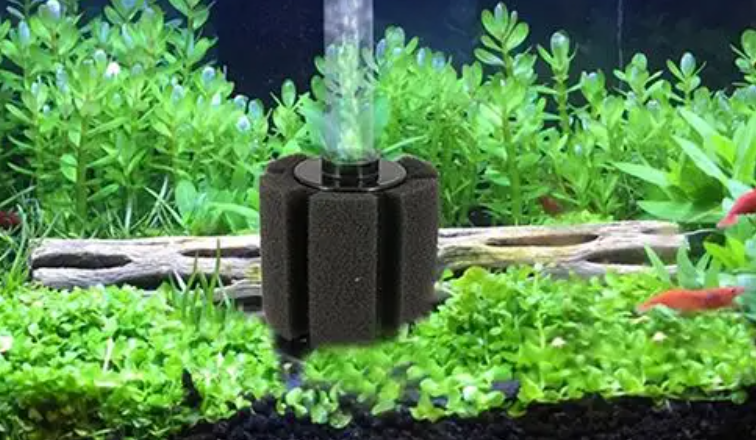
The right sponge filter makes all the difference between clear water and a cloudy, unhealthy aquarium. You’ve scrolled through tons of options online. Which brands deliver on their promises? Which ones break down after a few weeks? Not all sponge filters work the same—some give you better biological filtration and last longer, while others struggle to move water well.
Setting up a breeding tank? Keeping a shrimp aquarium? Need gentle filtration for delicate fry? The best sponge filter brand depends on knowing what separates quality performers from cheap letdowns. We tested and analyzed seven top options—from the trusted Hikari Bacto-Surge to the innovative Huijukon designs. These tests help you invest in a filter that works. Here’s what makes each brand stand out and which one belongs in your tank.
Hikari Bacto-Surge Sponge Filter
Hikari brings decades of Japanese aquarium engineering to sponge filters. The Bacto-Surge line uses a special foam design that grows more beneficial bacteria. You get four sizes—Mini (96038), Small (96040), Large (96044), and X-Large (96048). Each size fits specific tank volumes from 10 gallons up to 125 gallons.
The foam makes this filter different. Hikari builds the sponge with finer pores than standard filters. This foam filter creates more surface area for helpful bacteria. The tiny foam structure allows good bacteria to grow throughout the entire block. Oxygenated water flows through these small channels. This keeps your biofilter working well.
Each size matches specific tank needs. The Mini works for tanks up to 10 gallons. The foam measures 1.77″ H × 2.17″ diameter. The Small covers 40-gallon tanks with 2″ H × 4.75″ D foam. The Large model supports 75-gallon setups. It measures 4″ H × 4.5″ D. The X-Large handles 125 gallons with a 5.75″ H × 6.25″ D sponge block. Tank owners run the X-Large on 120–150 gallon displays with good results.
The uplift tube and air diffuser give you strong water lift. Clogs don’t happen often. Air drives water through the thick foam. Particles get trapped while your biological filter gets fed. The sponge feels soft but lasts long. Rinse it clean without worry—it won’t fall apart. You’ll use this filter for years.
This filter does many jobs. Run the Bacto-Surge as your main filter in breeding tanks, shrimp tanks, or fry systems. Add it as a polishing filter to catch small bits your other filter misses. Mount it as a pre-filter on hang-on-back units. This extends cartridge life and adds more biological filtering. The system works in freshwater and saltwater tanks.
Hikari prices this line in the mid-to-high range. You pay a bit more than cheap options. But you get proven Japanese quality and better foam design that beats generic brands.
Qanvee Bio Sponge Filter
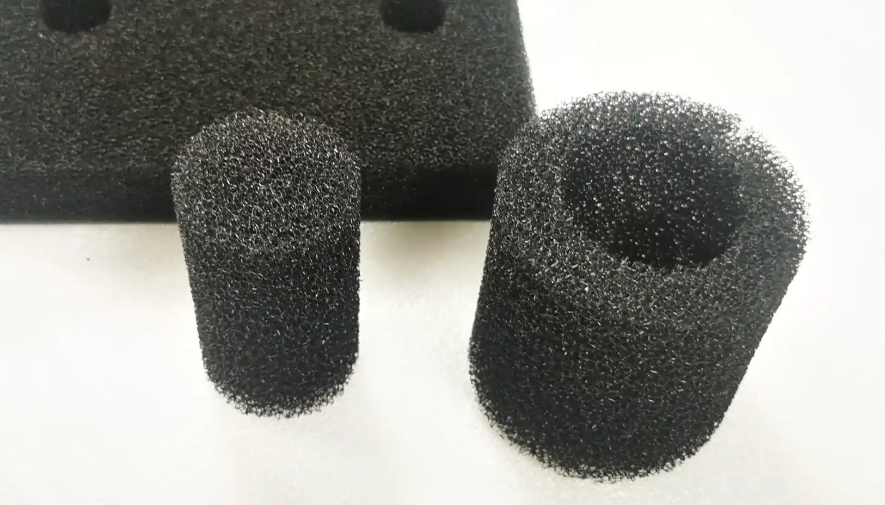
Qanvee makes budget-friendly aquarium gear in the low-to-mid price range. They focus on small, powerful filters. We don’t have much public info about their history. But their products show clear goals: dual-sponge design and built-in media chambers. Most competitors skip these features at this price.
The QS-100A and QS-200A models are their main Bio Sponge filters. The QS-100A works for tanks up to 15 gallons or 60 cm long. You get a sponge that’s 1.89″ wide and 3.30″ tall. The QS-200A fits bigger tanks over 60 cm. It has a larger 2.36″ × 4.25″ sponge block. Both use the same telescopic lift tube. You can adjust it from 7.67″ to 10.82″. Set the right water depth for your tank height.
Here’s what makes Qanvee stand out: two round sponges sit on each side of a center chamber. Most cheap filters only have one sponge. Two sponges mean more space for good bacteria to grow. Better yet—you can clean one sponge at a time. Rinse the left one this week. Clean the right one next week. Your bacteria colony stays healthy. No sudden crashes in sensitive shrimp tanks.
The center chamber holds 100 ml media in the QS-100A and 200 ml in the QS-200A. Fill it with ceramic rings for more bio-filtering. Toss in activated carbon for chemical filtering. Add fine filter floss to polish the water. The chamber takes loose media or pre-bagged stuff. Some BioSpon 200A versions have a removable media box. This makes loading and cleaning easier.
You get three-stage filtering: the sponge surface catches debris, bacteria grow in the sponge holes and media chamber, plus you can add carbon for chemical cleaning. The sponge is high-density foam. The plastic parts are food-grade safe. Black and green colors are available.
Qanvee offers 12V low-voltage pumps in the DD100A and DD200A models. These all-in-one units work without separate air pumps. They fit small desktop tanks up to 2 feet long. Perfect for quiet bedroom tanks or office setups.
Uxcell Biochemical Sponge Filter
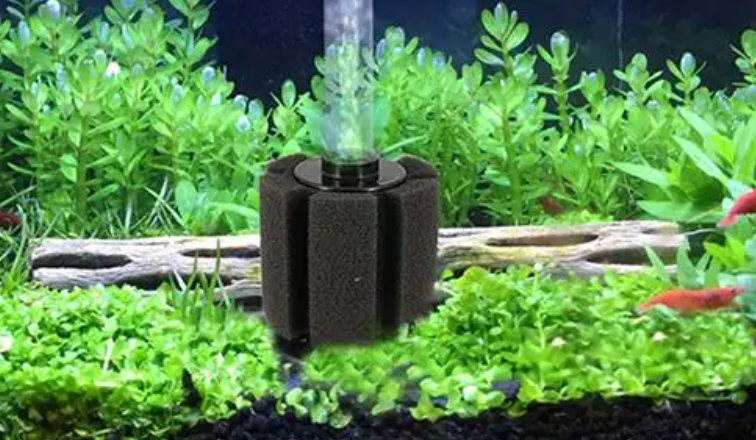
Uxcell is a China-based online parts filter supplier. They sell hardware, electronics, and aquarium accessories. Their approach? Mass-market parts at rock-bottom prices. The brand skips premium features and fancy packaging. You get basic biochemical sponge filters built for one goal: cheap biofiltration for hobbyists on tight budgets.
The cylinder model measures 5.91″ L × 4.61″ D with black sponge material. This mid-sized filter fits between their mini version (2.7″ × 2.2″) and the larger XINYOU XY-380 model (4.5″ diameter × 8.0″ height). The XY-380 handles tanks up to 20 gallons. It works well for small fish like guppies, dwarf cichlids, and killifish. At 306 grams, the sponge body feels dense. Not ultra-light like some basic designs.
Uxcell gives you multiple size options. Stack two mini filters in a small breeding tank. Run the cylinder model as a backup biofilter. Pair the XY-380 with your main filter for extra bacteria growth. The brand also sells 3-piece and 4-piece sponge sleeve sets. These plastic sleeves fit over water intakes on canister or internal filters. DIY modders love these sets. Wrap them on hang-on-back intake tubes to protect fry. Slide them onto powerheads in shrimp tanks. Add them as pre-filters to catch debris before it reaches expensive filter media.
The sponge quality stays functional, not premium. You get standard black foam with typical pore sizing for bacteria growth. No precise PPI ratings. No special Japanese engineering. Just basic filtration material that gets the job done. The plastic parts use simple construction. Nothing breaks fast, but nothing feels high-end either.
Marketplace platforms sell Uxcell filters in multi-pack bundles. The XY-380 three-pack deals are common. This cheap positioning makes the brand popular with hobbyists. You’re setting up multiple tanks or running breeding operations? You need several gentle filters without big spending per unit.
Aquarium Technology Inc. Hydro-Sponge Filter
ATI created the first design. Now the market has tons of copies and fakes. ATI makes the real version. U.S. stores sell ATI Hydro-Sponge filters as the genuine product. This brand does one thing well: stackable, high-flow sponge filters that need no suction cups.
The standard Hydro-Sponge line has five sizes. Each size fits different tank volumes. The Hydro-Sponge I works in tanks up to 10 gallons. It has a compact 2.25″ H × 3.75″ W sponge. The Hydro-Sponge II fits 20-gallon setups with a 4.25″ H × 2.75″ W block. Mid-range tanks use the Hydro-Sponge III for 30 gallons (4.25″ H × 3.75″ W). Larger systems need the Hydro-Sponge IV up to 80 gallons with 4.5″ H × 4.5″ W foam. The biggest Hydro-Sponge V handles 120-gallon tanks at 4.5″ H × 5.25″ W.
You choose between two pore sizes: fine filter at 30 PPI (pores per inch) or coarse filter at 10 PPI. The 30 PPI catches smaller bits. The 10 PPI flows faster and fights clogs in dirty tanks. Both types grow good bacteria inside the sponge. The foam traps waste but won’t suck in fry or baby shrimp.
ATI made a heavy base that stands freely. It locks down tight. No suction cups needed. The raised base lifts the sponge off the tank floor. Debris can’t pile up underneath. All models stack on each other. Want more filtering power? Stack a second Hydro-Sponge on top. The system grows with your bioload.
The one-inch diameter lift tube pushes more water than narrow tubes on cheap filters. Here’s the big plus: this tube fits powerheads without adapters. Use the Hydro-Sponge as a pre-filter on canister intakes. Attach it to a powerhead for strong flow. Or run standard air pumps for gentle circulation. The wide tube works with both.
ATI released the Hydro-Sponge PRO line as their latest upgrade. These models use special foam instead of regular sponge. ATI says this boosts efficiency by nearly twice compared to standard versions. The PRO foam manages heavy bio loads that clog regular sponge filters. You get the same five sizes—PRO II (20 gal), PRO III (30 gal), PRO IV (80 gal), and PRO V (120 gal). The PRO III fits best in 15–40 gallon tanks with messy fish. Same 4.25″ H × 3.75″ W size as the standard Sponge #3, but moves more water.
AquaNeat Sponge Filter
AquaNeat makes sponge filters for aquarium owners who want good bio-filtration at low prices. The brand sells through Walmart and Amazon. Their products focus on affordable filter media—bio sponge pads, open-cell foam sheets, single sponge filters, and double sponge filters. AquaNeat targets the entry-level market. You get working filtration. It costs less than Japanese or U.S. brands.
The SF-A004 model is their main single-sponge design. This filter works in 40–60 gallon tanks. The sponge measures 4.5″ diameter × 8.0″ height. The unit weighs 8.1 ounces (230 grams). You get a detachable soft sponge around a plastic core and uplift tube. The weighted base holds everything underwater. No suction cups needed. Air from your pump pushes water through the foam. This gives you mechanical and biological filtration in one unit.
AquaNeat also offers the XY-2822 model for tanks up to 55 gallons. The size is 6.5″ L × 2.4″ W × 9.5″ H. The sponge block measures 2.4″ diameter × 4.5″ height. Both models fit similar tank sizes. Choose based on sponge shape and how much space you have.
Got small fish that need gentle flow? The AquaNeat Double Sponge Filter fits tanks from 5 gallons up to 40 gallons. The listing says “Betta/Shrimp Safe 5 Gallon” and “40 Gallon Tank” together. That’s a bit mixed. But the main benefit is clear: dual sponge arms provide more surface area for good bacteria than single-sponge models. This design works well for delicate fish like bettas and shrimp. They need slower water flow.
Clean your AquaNeat sponge every 2–4 weeks. Do this once flow weakens or the foam looks dirty. Rinse and squeeze it in old tank water only. Tap water kills good bacteria. Replace the sponge once it tears or cleaning doesn’t help flow anymore. All models require an external air pump and airline tubing. These don’t come in the box.

Huijukon Air Driven Sponge Filter
Huijukon makes simple air-driven filters for budget-minded hobbyists. Their dual sponge filter costs under $10. Breeders with multiple tanks love this price. New shrimp keepers find them perfect for first setups. You can buy standalone filters or complete kits. The kits come with air pumps, tubing, air stones, and media chambers.
The dual sponge design stands out. Two cylinder-shaped sponges attach to one central stem. Each sponge has 60 PPI (pores per inch). That means dense foam with tiny pores. This foam gives bacteria tons of space to grow. The tiny pores catch debris. Baby fish and shrimp stay safe because the foam is gentle. Both sponges sit on rotatable holding arms. You can twist them to fit the filter flat against your tank wall. A suction cup keeps it secure.
The telescoping lift tube offers real flexibility. It starts at 9 inches minimum height. You can stretch it to 14 inches for deeper tanks. That’s 4 extra inches of adjustment. Why does this help? Longer tubes pump water harder. They also improve circulation. Pull the outlet up near the water surface. Bubble noise drops. Short tubes sit deep underwater. Bubbles make loud popping sounds there.
Clean one sponge each time—never both at once. Rinse the left sponge this week in old tank water. Next week, clean the right one. Your bacteria colony survives this way. This separate cleaning system stops bio-filter crashes in delicate tanks. The sponges pop off fast for squeeze-rinsing.
Huijukon rates their filter for 56–220 liters (15–58 gallons). The kit version handles 10–30 gallon tanks. The slim 6.5-inch width fits small breeding tanks. Your fish keep plenty of swimming room. You get solid mechanical and biological filtration without spending much.
Huijukon Sponge Filter Kit
The Huijukon Sponge Filter Kit bundles everything beginners need to start gentle filtration right away. You get the dual sponge filter body, suction cups, and airline tubing in one package. Some kits include air pumps and air stones. Others sell the filter alone—you buy the air pump on its own. Check the listing before ordering. The kit saves you time hunting for matching parts across different brands.
The filter handles tanks up to 75 gallons in the media chamber version. This version uses high-density 80 PPI foam. The tighter pores catch smaller particles than standard 60 PPI models. You also get two media chambers built into the central column. Fill them with ceramic rings for extra bio-filtration. Add activated carbon for chemical filtering. Toss in filter floss to clear cloudiness. The chambers accept loose media or bagged inserts.
This design works in freshwater and saltwater setups. The fine 80 PPI sponge handles reef tanks. You need mechanical filtering without strong currents. Saltwater hobbyists use it as a secondary biofilter with protein skimmers. The media chambers hold phosphate removers or carbon for chemical control in marine systems.
The basic double sponge kit fits smaller tanks. Most listings rate it for up to 20 gallons. The XY-2831 base design (which Huijukon rebrands) supports 50 liters or 13.2 gallons. One goldfish keeper tested it on a larger tank. They found the flow “not powerful enough for goldfish” as a sole filter. But it worked great as a backup biofilter with stronger filtration. High-bioload fish need more water movement than this gentle air-driven unit provides alone.
Price is the biggest draw. The basic unit costs under $10 for the filter body. Complete kits with air pumps run $15–$25 depending on what’s included. This makes Huijukon perfect for multi-tank breeders. Buy several units without breaking your budget. Stock fry tanks, shrimp systems, and quarantine setups without spending much.
Conclusion
Pick the best sponge filter brand based on your tank needs and budget. Breeders need fry-safe setups? The Hikari Bacto-Surge wins with its dual-sponge design and strong biological filtration. On a tight budget? AquaNeat and Uxcell give you great value. Want something that lasts? The Hydro-Sponge Filter is the top choice for durability and long-term use.
Here’s what to do: Check your tank size first. Look at your bioload. Do you need mechanical filtration, biological support, or a breeding filter? Match these needs to the filters we reviewed. Focus on features that fit your setup. Even the best filter needs care. Rinse it regularly. Inspect it each month. This keeps any top filter running well for years.
The right sponge filter takes your water quality from good to great. Your fish deserve that upgrade. Now you know which brand gives it to you.