
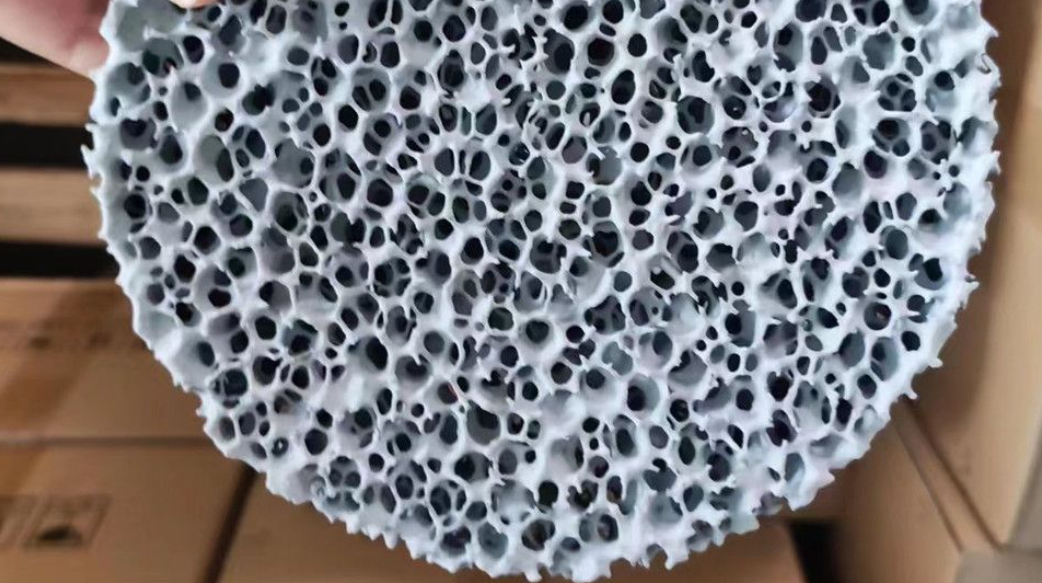
Looking for large polyurethane Reticulated foam sources? It’s not like ordering regular packaging materials. This product needs suppliers with strong manufacturing power and technical know-how.
You might need bulk foam for industrial filters, acoustic panels, or large cushioning projects. The right manufacturer makes all the difference. They deliver on quality, consistency, and scale. Pick the wrong one? You’ll face delays and problems.
Here’s the issue: Most buyers spend weeks calling general foam suppliers. These suppliers can’t handle the volume. They don’t meet technical specs either.
This guide shows you the top manufacturers and distributors for large-scale Reticulated foam. We break down what matters for your purchase: Pricing structures, Lead times, Customization options, Quality standards.
These factors separate professional suppliers from basic ones. You’ll know exactly where to look.
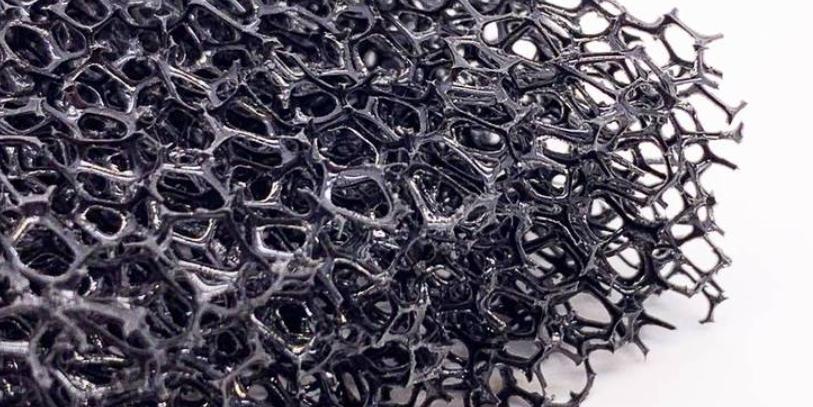
Top Makers of Large Polyurethane Reticulated Foam
A few specialized producers dominate the global reticulated foam industry. These companies have the technical setup and size needed for large-format production.
Key manufacturers to contact:
-
Carpenter Co. (United States) — The world’s largest integrated Polyurethane foam maker. They’ve been operating since 1950. The company makes flexible foam for bedding, furniture, and industrial packaging. Their integrated approach controls quality from raw materials to finished products.
-
Woodbridge Foam Corporation (Canada) — Specializes in advanced polyurethane solutions for automotive uses. Their work covers seating parts, interior acoustics, and energy management systems. Innovation drives their production methods.
-
WinFun Foam (China) — Part of Changzhou Chengfeng Foam Co., Ltd. They make both polyether and Polyester reticulated foam. Special features include flame resistance, antistatic properties, electric conduction, slow recovery, and high resilience. You’ll find their foam in cars, planes, trains, and medical equipment.
-
Sheela Foam Ltd. (India) — A major player in the Asia Pacific market. This region holds the largest global market share for reticulated foam right now.
-
Rogers Foam Corporation (US), Foamcraft Inc., NEVEON Holding GmbH, and Flextech Inc. — Proven suppliers with solid track records in specialty foam production.
The reticulated foam market hit USD 502-506 million in 2023. Projections show growth to USD 683 million by 2028. That’s a 5.5-6.2% CAGR. This growth pushes makers to expand, merge, and partner up. They’re targeting new industrial uses.
Rogers Foam Corporation – Custom Large-Scale Solutions
Rogers Foam Corporation packs serious manufacturing power. Founded in 1947, they run 11 plants across the U.S. and Mexico. Annual revenue hit $75.4 million in 2025. Their team of 246 employees backs one of the largest foam fabrication operations in North America.
What makes them stand out for large-scale projects:
-
Custom machinery design and build — They create equipment built for unique production needs
-
Mixed material work — Foam, fabric, and adhesive come together in single pieces
-
Special reticulated foam — Low perm foam and felted foam types included
-
Testing done in-house — They check performance and quality before shipping
Their 850,000 sq ft Albuquerque facility opened in September 2022 for high-volume work. This plant serves Tempur Sealy International. It also handles automotive, aerospace, and medical device work at large scale.
Rogers works across many industries. Automotive seating and foam filters. Aerospace parts. Medical devices. industrial filtration systems. Furniture cushioning. They partner with OEMs and tier suppliers on long-term production deals.
Need custom large polyurethane reticulated foam specs? Contact Rogers at (617) 623-3010 or visit www.rogersfoam.com. They’ll go over max dimensions, thickness choices, and volume pricing for your needs.
Woodbridge Foam Corporation – Automotive Grade Bulk Supply
Woodbridge Foam Corporation operates North America’s largest round block foam production line. Their 50-inch diameter (1.27M) round blocks set the industry standard. Flat blocks reach widths up to 78 inches (1.98M). The continuous pour method keeps density consistent throughout.
Large polyurethane reticulated foam production:
-
Thickness options: 0.065-1 inch (1.65-25.5mm) range
-
Density spectrum: 1-6 lb/ft³ depending on application
-
Firmness control: 15-175 IFD for flexible foam; 20-250 lb for polyether technical foam
Their ComfortFlow™ climate-controlled seating foam comes in three grades. Each grade works with automotive ventilation systems:
-
ComfortFlow™ 20/40 — 2.3-2.7 lb/ft³, 20 PPI for standard airflow
-
ComfortFlow™ 30/32 — 1.9-2.3 lb/ft³, 30 PPI for balanced performance
-
ComfortFlow™ 45/34 FL — 1.9-2.3 lb/ft³, 45 PPI for maximum breathability
Woodbridge meets strict OEM standards. These include GM6291M, WSS-M2D243, MS-AY 309, TSK6712G, and FMVSS302. They partner with General Motors, Ford, FCA, Toyota, Hyundai, Kia, and Daimler on production contracts.
Their fabrication services include die cutting, reticulation, roll compressing, and lamination. They work with PE film, PU film, or textile scrims. Contact them for automotive-grade bulk orders that meet your specific technical needs.
The Rubber Company – Stock Sheets and Custom Rolls
The Rubber Company fills the space between ready-made products and custom orders. Their polyurethane reticulated foam comes in two formats: stock sheets that ship right away and custom rolls made to your specs.
This foam works in filters, sound dampening panels, cushioning parts, and industrial wiping. You get even pore spacing, strong bounce-back after compression, and resistance to chemicals.
Stock items arrive in 2-3 days. Custom rolls take 7-14 days based on what you need. Their support team helps you pick the right density, pore size, and order amount. Contact them to talk about your large polyurethane reticulated foam needs and request test samples.
WT Burnett – Reticulite Low-Density Bulk Options
WT Burnett’s Reticulite line gives you heat-treated polyester polyurethane foam. It’s built for large volume needs. The open-cell structure creates porous material. Density ranges from 1-6 lbs/ft³. This range works for max airflow filtration. It also handles cushioning jobs.
Two PPI (pores per inch) grades handle different jobs:
60 PPI — Large pore openings push max airflow. Pressure drop stays minimal. This works in HVAC pre-filters. Also good for dust control systems and low-frequency sound dampening panels.
80 PPI — Smaller pores trap finer particles. Airflow stays good. This grade shows up in bio-filtration equipment and medical sponges. It also works in automotive cushioning where you need mid-range sound absorption.
Their 2.00 lbs/ft³ foam has solid specs. Compression Force Deflection at 25% runs 0.21-0.65 psi. Tensile strength hits 10-25 psi. Elongation reaches 125-220%. Tear resistance clocks in at 1.50-2.50 pli.
Automotive uses meet strict OEM standards. These include FMVSS 302, Chrysler MS-AY326, GM251M Type I, Ford ESA-M4D200-B, and Toyota TSK6712G-1A-40-N. The foam passes Paint Pot Test requirements. Low air permeability lasts over 30 minutes.
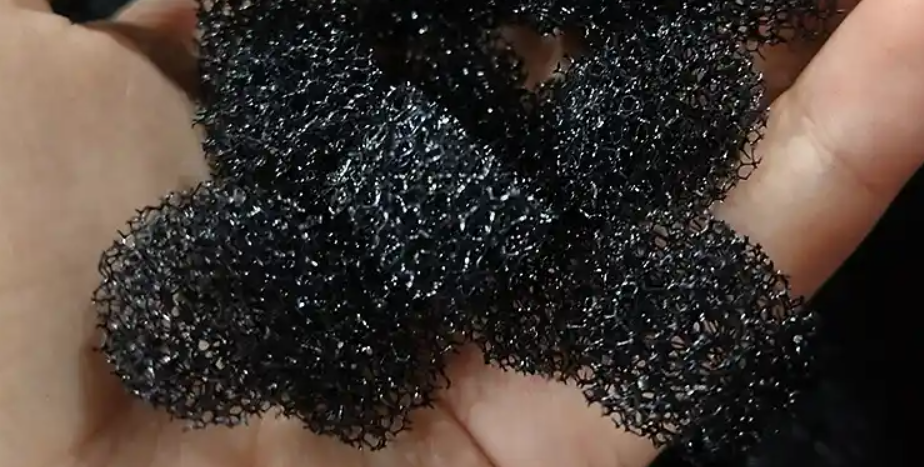
HEUBACH Corporation – Fabrication and Large-Format Cutting
HEUBACH Corporation handles foam fabrication from start to finish. They source raw materials and take them all the way through to final assembly. Their 3-D CNC horizontal cutting machines work with crosslink polyethylene, regular polyethylene, and polyurethane foams. The system rotates parts 90° for multi-axis precision. You get the tightest tolerances in the industry for complex one-piece shapes.
Large-format cutting capabilities:
-
Water jet cutting — Multiple CAD-driven machines slice detailed shapes and cavities into foam and plastics. Speed stays high. Accuracy holds tight on all foam types.
-
Skiving precision — Our machines slit rubber and foam down to less than 1/32 inch thickness. Bun stock gets converted to exact specs.
-
Die cutting volume — Steel rule dies produce thousands of parts each day with medical-grade accuracy.
Our turnkey process covers product design, prototyping, and full manufacturing. CAD/CAM integration runs through every step. We offer adhesive lamination of roll stock and sheet stock, heat sealing, thermoforming, and contract assembly.
The lamination line bonds foams with plastics, rubbers (heavy density and high durometer), and natural fibers. This creates composite materials for specialized industrial uses. These applications need large polyurethane reticulated foam combined with other substrates.
All Foam Products – Filter Foam in Volume
All Foam Products stocks a wide range of filter foam in volume ready to ship right away. You’ll find multiple grades of large polyurethane reticulated foam built for industrial filtration systems. Buy in volume and get warehouse-direct pricing. This cuts 20-35% off standard retail costs.
Available filter foam types:
-
Reticulated polyurethane — 10, 20, 30, 45, 60, and 80 PPI options for different particle sizes
-
Polyester-based foam — Resists chemicals in harsh environments
-
Polyether formulations — Resists moisture and protects against mildew
-
Flame-retardant grades — Meets UL94 and FMVSS302 standards
Their bulk order program starts at 100 square feet. Volume discounts kick in at 500, 1,000, and 5,000 square feet. They ship compressed rolls to cut freight costs. One compressed roll equals 4-6 standard sheets.
HVAC makers, aquarium filter companies, automotive paint booths, industrial dust collectors, and medical equipment producers all buy filter foam in volume. All Foam Products holds ISO 9001 certification. Each batch comes with density testing reports and compression set data. Request volume quotes through their online portal. Or call their industrial sales team.
Filson Filter – High PPI Specialized Manufacturing
Filson makes high-PPI reticulated foam filters for precise industrial filtration. Their PPI range runs from 3 to 120. This covers coarse pre-filters all the way to ultra-fine particle capture systems. The 80 PPI grade works well for many uses. Pore sizes around 0.015 inches create tight cell structures. These trap contaminants but keep pressure drops low.
The 100 PPI version gives you maximum filtration accuracy. But you need careful system design. Smaller pore openings raise blockage risk in high-debris settings. Many manufacturers pair 100 PPI foam with coarser upstream filters. This extends service life.
Temperature performance by type:
-
Polyether/polyurethane base: Handles up to 155°C continuous operation
-
10 PPI reference grade: -40°C to +140°C working range
60 PPI foam fits aquarium filters, swimming pools, and biotech equipment. You get precise sieving without too much flow restriction. At thicknesses beyond 0.50 inches, resistance climbs fast. The foam stands up to mild acids, alkalis, saltwater, organic solvents, and soap solutions.
Contact Filson’s technical team to match PPI ratings with your particle size goals and flow needs. They’ll figure out the best thickness for your large polyurethane reticulated foam filtration project.
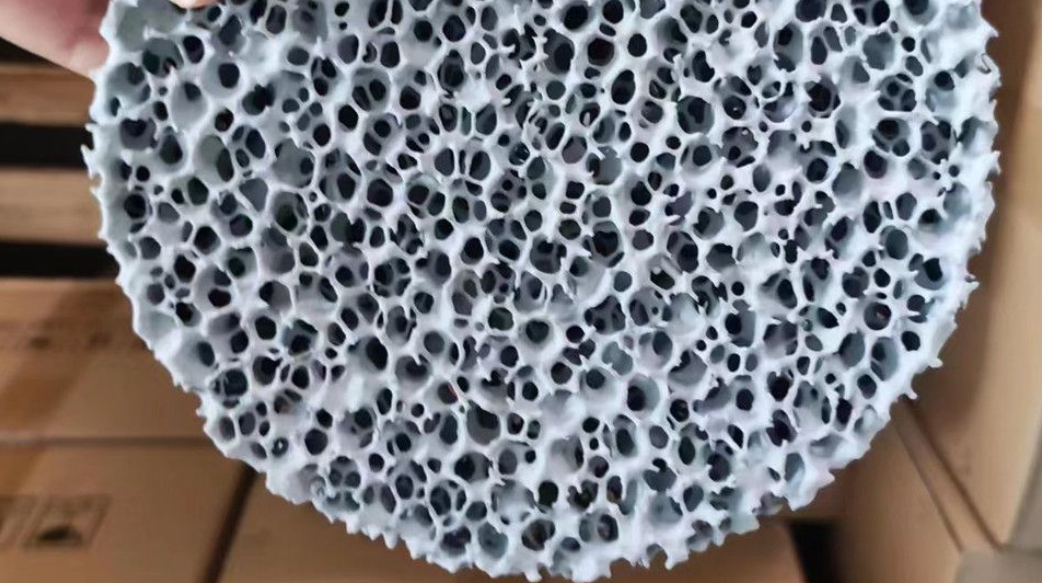
Buying Direct vs. Through Distributors
You source large polyurethane reticulated foam through two main paths: straight from makers or through distributors. Each route has different costs, ways to talk, and service options.
Price structures differ clearly:
Buy direct from makers. You skip middleman markups. Distributors add extra layers that raise prices. Small orders see bigger price jumps. 41% of global retailers say direct-to-consumer channels build brand loyalty. Why? Pricing stays clear. Order in bulk? You get better negotiating power with production facilities.
How we buy has changed:
Digital buying through maker websites grew from 25% usage pre-2020 to 32% post-2020. Search engine sourcing jumped more—from 31% to 47% in the same time. Distributors still do well with old-school channels. Their in-person and print methods run at 28-36% “very frequent” usage. Digital distributor channels reach 45% for email and 38% for website/mobile platforms.
Branch and store spots serve 26-28% of buyers who want local access. Talk with distributor reps first? Then 64% place orders via email, 43% use websites or mobile apps, 41% call reps by phone, and 33% visit physical branches. Construction and service sectors prefer talking person-to-person and visiting branches. They use less pure digital ordering.
Big foam buyers now prefer direct contact with makers for volume deals. Digital shoppers like email—63% after visiting distributor sites. But 49% finish purchases on maker websites. This shift to makers helps with repeat large orders. Plus, it makes custom spec talks easier.
After-sales support varies by channel:
Distributors track order histories across all points—website, supplier reps, phone, and branches. Direct makers offer growing transaction systems. Mixed approaches use both methods. 39% of retailers using both direct and indirect support report sales increases over 20%.
Got large polyurethane reticulated foam projects? Look at order size first. Small test runs? Distributors ship faster. They keep stock ready. Big production volumes? Go straight to makers. You get custom specs and better prices. Match your choice to project deadlines and budget limits.
Key Specs for Large-Scale Orders
Bulk orders of large polyurethane reticulated foam need clear technical specs from the start. Vague requests create product mismatches. They waste resources too.
Critical specs to define before you order:
Pore density (PPI – Pores Per Inch) — This number controls filtration precision. It also affects airflow resistance. Lower PPI (10-30) handles coarse debris in industrial dust collection. Higher PPI (60-100) captures fine particles. You’ll find these in medical devices and automotive paint booths. Specify the exact PPI rating based on your particle size targets.
Foam density range — We measure this in pounds per cubic foot (lb/ft³) or kilograms per cubic meter (kg/m³). Light densities (1-2 lb/ft³) work for sound dampening and breathable cushioning. Medium densities (2-4 lb/ft³) suit most filtration systems. Heavy densities (4-6 lb/ft³) provide structural support in seating and gaskets. The wrong density causes early compression. It can also create weak rigidity.
Dimensional tolerances — Large-format foam sheets and blocks need clear size limits. Standard industrial tolerance runs ±2-3% on thickness and ±1% on length/width for continuous production. Tighter tolerances cost more. But they give you consistent fabrication results for die-cutting or CNC machining.
Performance certifications — Specify required standards in your purchase order. FMVSS 302 covers automotive flammability. UL94 ratings show fire resistance classes. ISO 9001 confirms quality management systems. ASTM D3574 tests compression methods. Medical applications need FDA-compliant materials or ISO 10993 biocompatibility testing.
Special treatments — List any post-processing needs: flame retardant additives, anti-static coatings, hydrophilic treatments for water applications, or antimicrobial compounds for healthcare uses. Each treatment adds 15-40% to base material costs. But it prevents field failures.
Minimum order quantities (MOQ) — Custom PPI ratings or special chemical treatments often need 500-1,000 square feet minimum. Stock grades ship with no minimums from distributors. Factor MOQs into your procurement timeline. Budget for them too.
Get material data sheets (MDS) before you finalize large orders. These sheets show compression force deflection, tensile strength, tear resistance, and chemical compatibility.
Quality Control and Testing Standards
Production testing is standard practice in the reticulated foam industry. 38% of manufacturers now use active testing to check material performance. They spot batch problems and track how materials behave in real use. This move from basic visual checks to data-based quality control helps suppliers catch issues before shipping.
Standard quality control protocols include:
-
Batch sampling procedures — Large orders get systematic testing at set times during production
-
Physical property checks — Tests measure compression set, tensile strength, tear resistance, and density against order specs
-
Size accuracy checks — Laser systems verify thickness and cell structure consistency across entire foam blocks
-
Chemical makeup analysis — Lab tests confirm proper polyol/isocyanate ratios and additive levels
Third-party testing grows fast. 81% of organizations either hold ISO 27001 certification or plan to get it in 2025. That’s up 14% from 67% in 2024. Audit frequency jumped too. 58% of companies ran four or more quality audits in 2025. 35% of enterprises averaged over six audits per year.
Buyer priorities shifted. Number of controls tested ranks as the #1 quality sign now. Report length and detail come in second. Auditor reputation alone doesn’t cut it anymore.
Synthetic test data now supports over 25% of quality testing at more than one-third of foam producers. This method boosts precision on custom blends. It also helps meet strict rules for automotive and medical-grade materials.
Get complete material data sheets and recent third-party test reports before you finalize large polyurethane reticulated foam orders. These documents show the supplier runs consistent quality systems.
Conclusion
You can find the right supplier for large polyurethane reticulated foam easily. Know where to look first. Need custom fabrication? Rogers Foam and HEUBACH Corporation excel here. Want cost-effective bulk orders? Check out Woodbridge and WT Burnett. These manufacturers give you solid starting points.
Buy direct from manufacturers. This gets you better pricing and more customization options. Distributors work differently. They offer convenience and smaller minimum orders.
Ready for the next step? Write down your exact specs. List your PPI rating, density needs, dimensions, and volume requirements. Contact 2-3 suppliers for quotes. Compare them side by side.
Quality checks matter. Request samples before you order. Ask for test certifications too. Don’t commit to large orders without testing first. Plan your lead times now. Custom fabrication takes longer. Tight deadlines? Factor this in from the start.
Your supplier choice affects product performance. It impacts your costs too. Vet your partners now. Find suppliers who understand your application. They should scale with your demand. Look for responsive technical support. They need to stand behind their products.
Your perfect large polyurethane reticulated foam solution waits. Make a well-informed decision. You’ll get there.