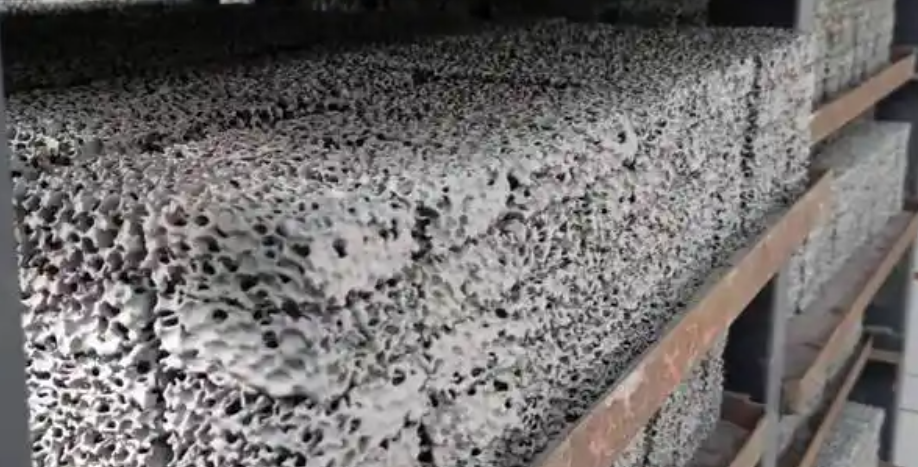
Looking for ceramic foam filter suppliers in China for copper casting? It’s tough – the industrial market is huge and complex.
Here’s the good news: China has some of the world’s best ceramic filter makers. You can find high-temperature silicon carbide filters and premium zirconia options at great prices.
But knowing where to buy is just step one.
You need to understand the technical specs. Check the MOQ requirements. Verify quality certifications. Find the right production zones. These steps separate a good partnership from an expensive mistake.
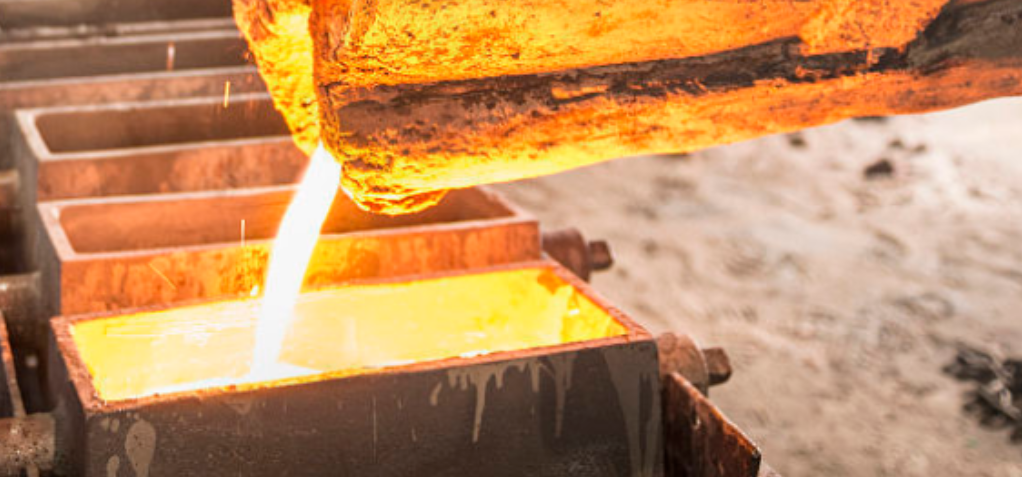
Finding Ceramic Foam Filters for Copper Casting in China
You can find the right ceramic foam filters through a clear five-stage process. Here’s how to evaluate suppliers step by step.
Stage 1: Get to Know the Market
Look at what suppliers offer and check their product specs. Watch for patterns in pricing, minimum order quantities, and what they can do technically. See if they focus on silicon carbide or zirconia filters.
Stage 2: Sort Suppliers into Groups
Break down suppliers into these main types:
– Direct manufacturers with their own R&D labs
– Trading companies that carry multiple brands
– Regional clusters (Shandong, Hebei, Jiangsu areas)
– Export-focused versus domestic market suppliers
Stage 3: Check Technical Specs
Rate suppliers on these key points:
– PPI ratings (10-60 PPI works for copper casting)
– Temperature resistance (needs 1200-1600°C range)
– Filtration efficiency (should remove 70-95% of impurities)
– Chemical composition (SiC vs. ZrO₂ base material)
Stage 4: Compare Performance
Put suppliers on a chart by their capabilities. Sort them by how much they can produce, what certifications they have (ISO 9001, ASTM standards), and price ranges. Separate the premium suppliers from budget options.
Stage 5: Make Your Choice
Look at how supplier location connects to quality certifications and reliability. Pick your sourcing approach based on how much you cast and what quality level you need.
Top Ceramic Foam Filter Manufacturers for Copper Casting in China
China’s industrial zones have makers who spent decades perfecting ceramic foam filters for copper casting. These companies mix their own formulas with modern making methods. The result? Filters that meet strict metal industry standards.
Leading Factory-Direct Suppliers
SF-Foundry excels at copper-based alloy filtration. Their filters handle up to 1700°C maximum temperature with zero cracking risk at peak heat. The PPI 30-40 range catches fine impurities in copper melts. They use a polyurethane sponge base. This creates a 3D open-pore structure. It traps slag and oxides from 900-1700°C. Custom sizes and shapes? You can order them to fit your casting setup.
Ningxin Group runs their Made-in-China storefront. You get factory pricing on silicon carbide, alumina, and zirconia foam filters. Their gravity die casting filters suit copper applications with 10 PPI hole density. The grey-colored filters ship from their factory. This cuts out distributor markups.
AdTech built their name on silicon carbide foam ceramic filters for copper and iron casting filtration. They serve global aftermarket buyers. Their focus? Metal filtration solutions only.
FoundryMax delivers real performance gains. Their copper alloy filters boost casting yield. How? By cutting scrap. Real-world tests show 25% increases in both elongation and tensile strength. Their honeycomb structure filters out inclusions. At the same time, bubbles escape. This reduces holes and turbulence in the molten metal stream. Plus, your runner system layout gets simpler.
Technical Specifications Across Chinese Manufacturers
Material makeup changes with application temperature. Silicon carbide filters handle grey iron, ductile iron, and copper at 1500-1700°C. Zirconia filters reach 1700°C. They have low thermal growth and resist chemicals. Alumina filters work for lower-temperature alloys at 1100°C.
The 10-40 PPI range catches the tiniest impurities. Flow stays smooth. These filters hit 0% failure rates at peak temperatures. They resist thermal shock. No clogging or turbulence messes up your pour.
Chinese makers use patent-based formulas. Silicon carbide filters contain 60-65% SiC, 30-35% Al₂O₃, 2-5% SiO₂, and 0.5-2.5% talc plus binders. Zirconia versions blend 75-80% ZrO₂, 10-15% Al₂O₃, 5-10% CaO, and 0.5-2% Y₂O₃.
All makers provide ISO certification. They offer sample testing. You can get full custom options on dimensions and thickness.
Silicon Carbide Foam Filters – Best Choice for High-Temperature Copper Casting
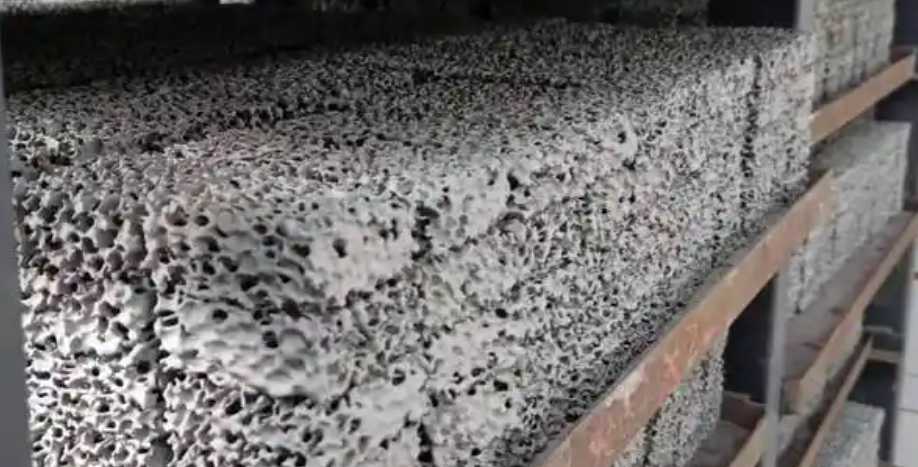
Silicon carbide foam filters lead copper casting work where high heat and clean metal matter most. The unique structure handles heat that destroys other filter materials.
Why Silicon Carbide Beats Other Materials
SiC filters stay strong at 1540-1560°C for copper alloys. The max working heat hits 1470-1480°C. You get a safe margin during typical copper pours at 1100-1200°C. Compare this to alumina filters. They break down near their heat limits. Silicon carbide keeps working.
The material weighs 3.1 g/cm³ in solid form. Foam structure drops this to 0.3-0.5 g/cm³. This creates 80-90% porosity. High porosity means more surface area to trap dirt. The filter stays strong with ≥1.0 MPa compression strength at room temperature.
Heat shock resistance matters in real foundry work. These filters take 1200°C to room temperature cycling three times without cracking. Your casting line won’t stop for filter changes mid-shift.
Matching PPI Ratings to Your Copper Grades
Pick filters based on what you’re casting:
Gray and cast copper needs 15-20 PPI. Larger holes handle faster flow. They catch big slag chunks without blocking.
Brass and bronze alloys work best with 20-30 PPI. This balances filtration with metal flow. You remove smaller oxides while keeping pour speed steady.
Pure copper work needs 40-50 PPI filters. Fine holes trap tiny oxide bits. These bits wreck electrical flow and surface finish. The denser build catches what coarser filters miss.
Dirty melts with heavy dross need thicker filters. Use 25-50mm thickness instead of standard sizes. The extra depth gives multiple filtration layers.
Durability That Cuts Operating Costs
Filter life varies by pore density:
10 PPI filters last over 50 pour cycles before replacement. Coarser build fights clogging.
20 PPI coated versions push beyond 80 cycles. Special surface coats extend working life.
All SiC filters handle more than 20 thermal shock events without breaking. Replace filters when pressure drop jumps 40% above baseline or cracks show up.
Hardness of 28 GPa and fracture toughness at 4.60 MPa·m¹/² mean these filters resist damage during handling and setup. Your workers won’t break them during quick changeovers.
Chemical Stability Against Molten Copper
Silicon carbide fights corrosive attack from copper alloys. The material doesn’t dissolve or react with molten metal at casting heat. This keeps filter bits out of your final castings. Alumina filters sometimes drop particles under harsh chemical conditions. SiC holds its structure through the pour.
Zirconia Ceramic Filters – Premium Option for Copper Alloys
Zirconia filters cost more than silicon carbide or alumina options. They deliver performance that pays off for critical copper alloy work.
Extreme Temperature Capability
These filters work at 1700-1760°C maximum temperature. That’s 200°C higher than silicon carbide limits. Copper melts at 1085°C. High-performance copper alloys pour at 1200-1400°C. Zirconia handles this range with extra room to spare.
The material makeup drives this heat resistance. ZrO₂ content reaches 70-94%. The blend adds 10-35% Al₂O₃, 0-5% SiO₂, and trace stabilizers. This formula survives six thermal cycles at 1100°C without damage. Your filters won’t crack during multi-shift work.
Alumina filters fail here. They break down above 1200-1350°C. For copper alloy casting above these temps, alumina doesn’t work. Zirconia becomes your sole ceramic choice.
Better Filtration Performance
Porosity sits at 70-90% across the filter body. This creates huge surface area for trapping dirt. The 10-60 PPI range gives you exact control over what gets caught.
Filtration accuracy beats metal foam filters by 5-20 times. Zirconia removes both large and small bits. It catches oxide films. It pulls out trapped gas bubbles. The result? Cleaner copper reaches your molds.
The open-cell design turns rough metal flow into smooth movement. This cuts air mixing during pouring. Fewer flaws show up in finished castings.
Mechanical Strength Ratings
Physical traits matter during filter handling and setup:
-
Compressive strength: ≥1.2 MPa at room temperature
-
Flexural strength: >1.0 MPa
-
Density: ≤1.5 g/cm³
These numbers mean filters resist breakage during setup. Workers can place them without worry. The low density keeps heat mass down. Filters warm up fast during preheating steps.
Flow Capacity by Standard Sizes
Match filter size to your pour volume:
|
Dimensions (mm) |
Pouring Rate (kg) |
Filtration Capacity (kg) |
|---|---|---|
|
50×50×22 |
3-5 |
30 |
|
75×75×22 |
7-12 |
60 |
|
100×100×22 |
14-20 |
100 |
|
Dia 80×22 |
6-10 |
50 |
|
Dia 90×22 |
8-16 |
70 |
Chinese makers stock these standard sizes. Custom sizes run from 50×50×15mm to 300×300×50mm. You can order square, round, rectangular, or trapezoid shapes. Delivery takes 2-3 weeks for custom specs.
Edge Treatment Stops Metal Bypass
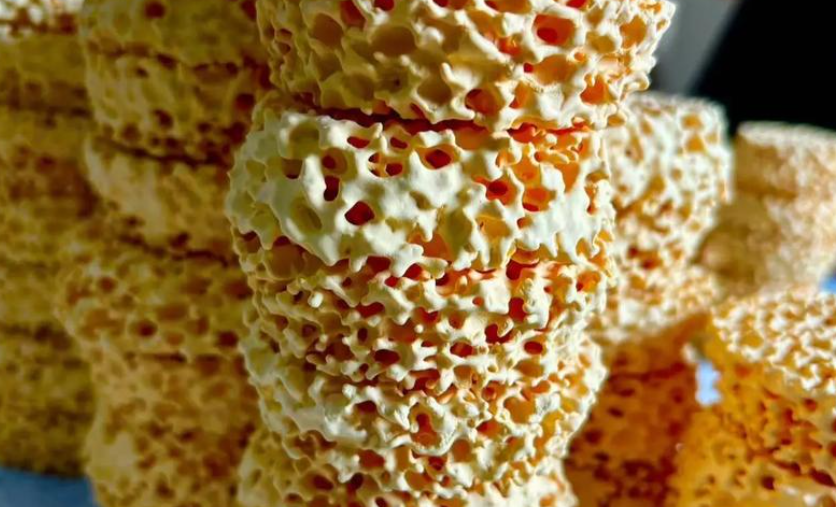
Sealed edges stop molten copper from flowing around filter edges. Metal sneaking past ruins the whole filtration goal. Quality Chinese suppliers coat filter edges to make tight seals against launder walls. This pushes all metal through the porous body.
Chemical Stability With Reactive Alloys
Zirconia fights off chemical attack from copper-based melts. It stays stable with brass, bronze, and specialty copper alloys. Silicon carbide works well here too. But zirconia adds extra safety for reactive mixes.
Place filters in your gating system before metal enters mold spaces. They work in sand casting, gravity die casting, and precision investment casting setups. Preheat filters to 200-300°C before pouring. This stops thermal shock cracking from hot metal hitting the ceramic.
Cost-Performance Calculation
Zirconia filters cut scrap rates and rework costs. How much? Results vary by casting type. Foundries report 15-30% drops in defect-related waste. The premium filter price pays back through better yield on expensive copper alloy batches.
For high-volume work or standard copper grades, silicon carbide gives better value. Save zirconia for jobs where you need top purity. Use them for aerospace parts, electrical contacts, or marine hardware that needs zero defects.
Key Technical Specs to Check Before Buying
You need to verify eight critical specs before purchasing any ceramic foam filter. Skip one and you risk bad casting results or wasted money on filters that don’t fit your setup.
Material Mix and Temperature Ratings
Get the exact chemical formula from your supplier. Silicon carbide filters contain 60-65% SiC, 30-35% Al₂O₃, 2-5% SiO₂. Zirconia types need 75-80% ZrO₂, 10-15% Al₂O₃. Ask for third-party lab certificates that confirm these numbers.
Compare the max working temperature to your copper casting process. Your filter needs to handle at least 200°C above your pour temperature. Copper alloys pour between 1100-1400°C. So pick filters rated for 1470°C minimum. Get thermal shock test data. The filter should survive three cycles from peak heat to room temperature.
Physical Size and Weight Specs
Standard sizes are 50×50×22mm, 100×100×22mm, and 300×300×50mm. Measure your launder or filter box first. Custom sizes cost 15-25% more. Plus, they add 2-3 weeks to delivery.
Filter thickness affects how much it can filter. Standard 22mm thickness works for most jobs. Heavy slag conditions? You need 25-50mm thick filters. Get weight specs from suppliers. Foam density should be 0.3-0.5 g/cm³ for good porosity.
PPI Density and Porosity Levels
Match pore density to your copper grade. Pure copper needs 40-50 PPI to catch fine oxides. Brass and bronze work with 20-30 PPI. Gray copper runs fine with 15-20 PPI. Get porosity data. It should measure 70-90% for good flow rates.
Ask for filtration test results. Quality filters remove 92-97% of particles above 20μm. Lower numbers? That means poor quality.
Mechanical Strength Values
Check that compression strength meets or beats 1.0 MPa at room temperature. Filters below this crack during setup. Get flexural strength data. It should top 1.0 MPa for handling strength.
Look at thermal shock resistance ratings. Filters need to handle rapid temperature swings without cracking. Ask how many thermal cycles the filter survived during testing.
Compliance Certs and Quality Standards
Demand ISO 9001 certification from the maker. Get ASTM standard compliance documents for refractory ceramics. Quality suppliers give you material safety data sheets (MSDS). These list chemical makeup and handling needs.
Ask for third-party inspection reports. SGS or similar testing agencies should confirm product specs match claimed performance.
How to Contact Suppliers and Request Samples
Talk directly with Chinese ceramic foam filter suppliers. A clear plan cuts confusion and gets samples to you faster. Companies using one central platform find suppliers 87% faster than those using scattered emails and phone calls.
Build Your Supplier Contact Framework
Pick one person on your team to handle each supplier. This stops delays that happen when multiple people talk to the same vendor.
Decide how often to connect. Weekly updates work for active orders. Monthly check-ins suit stable partnerships.
Track every interaction in one system. Write down contact dates, quotes, sample requests, and feedback. Real supplier data shows 53% faster responses and better technical answers from organized buyers.
Sample Request Process That Gets Results
Ask for samples with exact technical specs. State your PPI rating needs (20 PPI for brass, 40 PPI for pure copper). Add your temperature range and volume needs per month. Unclear requests push sample shipments back 2-3 weeks.
Set clear performance targets before samples arrive:
|
Quality Metric |
Your Target |
Industry Standard |
|---|---|---|
|
Defects per million opportunities (DPMO) |
<1000 |
<1500 |
|
First pass filtration yield (FPY) |
>95% |
>90% |
|
Late sample deliveries |
<5% |
<8% |
|
Order accuracy rate |
>98% |
>95% |
Set up reviews every three months after samples ship. Talk about how filters perform in your actual casting setup. Top Chinese suppliers tweak formulas based on your feedback. This gives you better filtration in production runs.
Use supplier portals (Alibaba, Made-in-China, direct factory platforms) to track samples in real-time. You also get access to technical documents. For orders above 5,000 pieces, ask to visit the site. Check manufacturing quality yourself.
Quality Certifications and Export Compliance
Chinese ceramic foam filter makers need proper certifications to ship overseas. ISO 9001:2015 is the baseline quality standard in this industry. This certification shows suppliers keep production processes and quality control consistent. The global ISO certification market hit US$16.14 billion in 2024. It projects growth to US$66.25 billion by 2034 at a 15.2% CAGR. China drives this growth—holding 38.30% of Asia-Pacific’s export compliance services market share in 2025.
Core Certifications for International Buyers
Demand these certifications from any Chinese supplier:
ISO 9001:2015 confirms quality management meets global standards. Suppliers pair this with export compliance frameworks like TSA and C-TPAT. They must renew it every year. Top factories combine ISO 9001 with ISO 14001 (environmental management) and ISO 45001 (occupational health/safety). This cuts audit costs. Plus, it makes quality, safety, and environmental checks simpler.
ASTM standards for refractory ceramics check material performance. Ask for test reports showing ASTM C1674 (thermal conductivity) or ASTM C20 (apparent porosity) compliance. These papers prove filters meet North American technical needs.
Third-party inspection certificates from SGS, Bureau Veritas, or Intertek add extra proof. Independent labs test chemical makeup, temperature resistance, and filtration efficiency. Reports should match supplier claims within 2-3% tolerance.
Export Documentation Requirements
US buyers deal with specific rules. Suppliers need to know ITAR (International Traffic in Arms Regulations), EAR (Export Administration Regulations), and OFAC (Office of Foreign Assets Control) rules. Ceramic foam filters usually don’t fall under ITAR restrictions. But EAR compliance matters for dual-use materials.
Request these export documents with every shipment:
-
Commercial invoice with HS code 6903.90.00 (ceramic refractory products)
-
Packing list showing piece count, weight, dimensions
-
Certificate of Origin (Form E works best for ASEAN trade benefits)
-
Material Safety Data Sheet (MSDS) listing chemical makeup and handling steps
-
Quality inspection report from accredited third-party lab
China’s export compliance services market reached $2,689 million in 2025. It grows at 9.687% CAGR through 2033. Professional suppliers invest in compliance systems. This shortens customs clearance times and cuts documentation errors.
Reducing Import Risk
Export compliance training helps suppliers avoid expensive mistakes. Common problems in 2026 include manual HS code checks, cross-border rule differences, and demurrage fees from delayed customs clearance. Work with suppliers who automate compliance checks. They should keep export licenses updated.
Ask about their recordkeeping systems. Quality exporters track every shipment for 5+ years. This protects you during customs audits or product liability checks.
SME suppliers often lack compliance know-how. Stick with mid-to-large makers who employ dedicated export compliance staff. These teams know current rules. They update procedures as regulations change. You’ll pay less for imports once suppliers get documentation right the first time.
Top Industrial Zones for Ceramic Filter Production
China leads the world in ceramic filter manufacturing. Three provinces handle most of this production. These zones give you raw material access, technical skills, and export infrastructure. Together, they deliver 36.0%-38.6% of the world’s ceramic filter market share as of 2024.
Shandong Province – Precision Manufacturing Hub
Shandong produces more ceramic filters than any other Chinese province. Advanced R&D facilities and automated production lines make this possible. Factories here focus on silicon carbide foam filters for copper casting.
Qingdao Port sits nearby. This cuts shipping times by 5-7 days compared to inland suppliers.
Key advantages in Shandong:
– You get direct access to high-purity silicon carbide raw materials
– ISO 9001 certification rates above 85% among major suppliers
– Technical universities train the workforce continuously
– Logistics costs run $120-$180 per container less than Henan routes
Hebei Province – High-Volume Production Center
Hebei’s industrial zones specialize in cost-efficient mass production. Factories here operate at large scales. This pushes MOQs down to 300-800 pieces during peak seasons. The region serves domestic foundries and export markets.
Manufacturing capacity here supports:
– Zirconia and alumina filter production at competitive prices
– Bulk orders for 5,000+ pieces with 22-28% volume discounts
– Quick turnaround on standard sizes—7-10 day lead times
– Tax incentives from the government for ceramic manufacturers
Jiangsu Province – Innovation and Customization
Jiangsu suppliers lead in custom filter development and premium products. R&D investment here beats other Chinese regions. Factories work with buyers to adjust PPI ratings, dimensions, and chemical formulas for specific copper alloy needs.
This zone delivers:
– Custom filter prototyping in 2-3 weeks
– Advanced testing labs that meet ASTM standards
– Export compliance skills—98%+ order accuracy rates
– Premium zirconia filters that handle 1700°C temperature requirements
These three provinces make China the top ceramic filter producer globally. You get access to USD 0.6 billion in regional capacity with strict quality controls. China’s Ministry of Ecology and Environment enforces these standards.
Conclusion
Finding the right ceramic foam filter supplier in China gets easier once you know where to look. Silicon carbide filters work great for extreme temperatures. Zirconia options shine for precision copper alloy work. Manufacturers in Henan, Shandong, and Jiangsu provinces deliver proven solutions. They back their products with ISO certifications and export compliance standards.
Your next move? Request samples from 2-3 suppliers that fit your technical specs and budget. Compare their MOQ flexibility, payment terms, and response times. These first interactions tell you a lot about partnership potential. Check quality certifications carefully. They protect you from production defects and expensive downtime.
Where can I buy ceramic foam filter for copper casting in China boils down to three things: quality, cost, and supplier reliability. The manufacturers in this guide have solid track records. But the right fit depends on your specific casting needs. Reach out now. Ask questions. Test samples before you commit to bulk orders. Your casting quality depends on it.