Sourcing the wrong ceramic filter causes real damage — scrapped castings, contaminated alloys, and production delays that hit your bottom line. No foundry manager wants that.
Your filter supplier matters as much as the filter itself. This holds true for molten aluminum, iron, and steel alike.
We vetted and ranked the top 7 silicon and alumina ceramic filter suppliers for the Metal casting industry. Each one was evaluated on product quality, technical range, and real-world reliability.
Plus, you’ll get a bonus roundup of extra suppliers. Use them to benchmark against your current source and see where you stand.
Top 7 Silicon and Alumina Ceramic Filter Suppliers for Metal Casting
Seven suppliers made this list. Each one earned it.
Here’s how we scored them: product range, material specs, real buyer data, pricing transparency, and whether the supplier could hold up under the demands of a busy foundry. Not every name here is a household brand — but every name here delivers.
1. FoundryMax
FoundryMax sits at the top of this list for one clear reason: consistency.
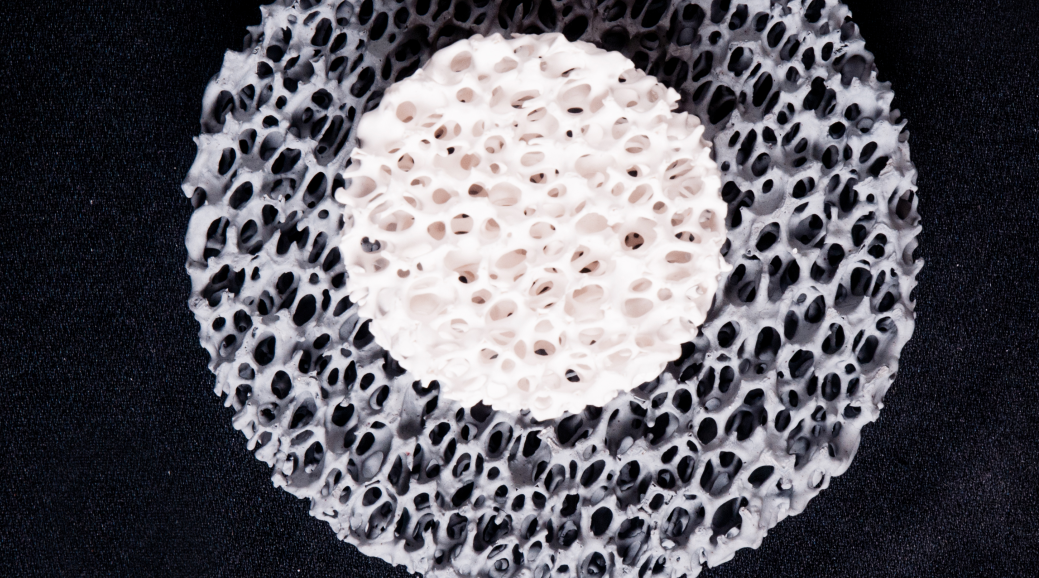
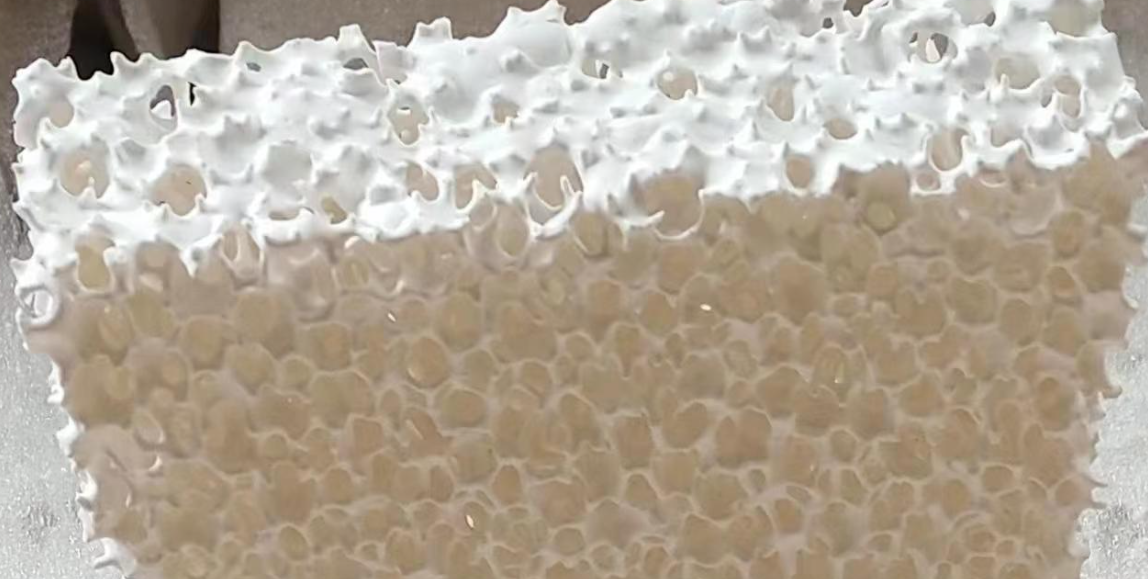
Their alumina ceramic foam filters handle high-efficiency slag and dross removal across a wide range of metals — steel, aluminum, copper, iron, zinc, and magnesium. That’s a broad application range. FoundryMax covers all of it without dropping performance in any single category.
What makes them stand out isn’t just material quality. It’s the testing protocol. Each batch goes through quality testing before it ships. You’re not gambling on consistency run to run. For foundries running tight tolerances, that matters a lot.
They also offer custom sizes. That solves a problem generic suppliers can’t touch. Your filter housing isn’t standard? FoundryMax works with you, not around you.
Cost positioning: competitive, without cutting corners on spec. You want reliability without paying premium pricing for commodity-level filters? FoundryMax is the benchmark.
2. Zhengzhou Rongsheng Refractory Co., Limited
Twelve years in the ceramic refractory business. That’s not just experience — that’s deep knowledge about what foundries need.
Zhengzhou Rongsheng Refractory produces silicon carbide, alumina, and zirconia foam Filters. Those are the three most in-demand material types in the casting industry. Their PPI range runs from 30 to 60, giving you fine to medium filtration options based on your alloy and pour rate.
Pricing is transparent and competitive: $0.10 to $1.20 per piece, with a minimum order of 100 pieces. That low entry point makes them reachable for mid-size foundries that can’t commit to large inventory upfront.
Their filters carry a high-temperature resistance rating. They’re built for steel and iron casting — two of the harshest environments a ceramic filter faces. The thermal stress during iron pours is brutal. Filters not engineered for it fail fast.
Market signal worth noting: 177 interested buyers tracked on their listing. That’s real demand — not just catalog traffic.
3. Zhengzhou Rongsheng Import and Export Co., Ltd.
Different entity from the refractory company above — different strengths too.
This arm carries a 5.0 out of 5 rating and a 23% reorder rate. In B2B purchasing, reorder rate tells you more than any product description. Close to one in four orders comes back as a repeat. That means the filters are performing in real production environments — not just passing lab benchmarks.
Their product line covers alumina, zirconia (ZrO₂), and Silicon carbide filters, priced at $0.10 to $1.40 per piece, with 100-piece minimums. CE and ISO certifications are in place. That matters for aluminum foundries running inside quality management systems.
With 75 interested buyers tracked and 7 years of verified trade history, this supplier fits well for foundries that need certified materials with documented compliance trails.
Your quality team requires paper certification on every filter run? This is a strong option.
4. Cangzhou Sefu Ceramic New Materials Co., Ltd. (SEFU CERAMIC)
SEFU CERAMIC takes a different approach to Alumina foam filters. The design choices show real engineering thinking — not commodity production.
Their filters are built with beveled edges and integrated gaskets. That detail matters. A filter that doesn’t seat firmly in its housing creates bypass flow. Molten metal moves around the filter instead of through it. That defeats the entire purpose. SEFU’s edge design creates a tight seal. The filtration does what you paid for it to do.
Mechanical strength and thermal shock resistance both sit above standard alumina filters. That combination is critical in high-pour-rate environments. The filter faces rapid temperature cycling and physical stress from turbulent metal flow. Standard alumina often can’t keep up.
The yield comparison is direct: SEFU filters outperform Mesh filters in yield improvement metrics. The strength and thermal stability mean fewer filter failures mid-pour. Scrapped castings from filter collapse are a real cost. SEFU cuts that risk.
They ship globally to aluminum casting operations. Your operation sources at scale across borders? Their infrastructure handles it.
5. Baoding Ningxin Group Co., Ltd. (NINGXIN)
The numbers tell the NINGXIN story better than any marketing copy.
Operating since 2002. Filters installed in 3,000+ foundries across 20+ countries. Annual capacity to filter 100 million-plus ferrous and non-ferrous castings per year.
That’s not a supplier. That’s infrastructure.
NINGXIN is the largest ceramic filter manufacturer in China by production volume for the metal casting industry. Sourcing from NINGXIN means buying from an operation that has solved supply chain consistency at a scale most manufacturers never reach.
Their product range covers both ferrous and non-ferrous casting operations. Running an iron foundry or an aluminum Die casting line? NINGXIN has configurations tested for your application.
For purchasing managers who need a supplier that scales with high-volume contracts — without delivery reliability becoming a headache — NINGXIN is the first name to evaluate.
6. AdTech (C-AdTech)
AdTech earns its place on this list through precision engineering. They don’t just sell Ceramic foam filters — they define what each filter is built for and why.
Two flagship models define their lineup:
CFF-Al20 — high-purity alumina construction, available in 10, 20, and 30 PPI, with thickness options at 25mm, 50mm, and 75mm. Built for aluminum casting. The PPI range gives you real flexibility: coarser for high-flow pours, finer for demanding aerospace or automotive spec work.
CFF-SiC30 — silicon carbide-reinforced alumina, running at 20 to 30 PPI, available in 25mm and 50mm thicknesses. Designed for iron casting lines and abrasive, high-speed operations. SiC reinforcement boosts wear resistance and thermal stability well above straight alumina. That’s what you need when the metal is moving fast and hot.
The product naming tells you something about how AdTech operates: they engineer to the application, not just to a spec sheet. Your team chooses filters based on alloy and pour conditions rather than price per piece? AdTech’s product structure makes that evaluation straightforward.
7. Pingxiang Zhongci Environmental Ceramics Material Co., Ltd.
Five years of verified trade history. A 4.8 out of 5 rating. And a 31% reorder rate — the highest reorder figure on this list.
That last number is the one to focus on. A 31% reorder rate in a product category where switching suppliers is easy means buyers are choosing to come back. That’s performance doing the talking.
Pingxiang Zhongci produces silicon carbide, zirconia, and alumina filters — the full ceramic range for casting applications. Pricing runs $0.30 to $1.00, with minimum order quantities starting at 1 km (a unit measurement specific to their product configuration). With 32 confirmed sales and 196 interested buyers tracked, the demand pipeline is real.
Your foundry is exploring new supplier relationships and wants to cut concentration risk in the supply chain? Pingxiang Zhongci is a solid candidate for a dual-source strategy alongside your primary supplier.
Quick Reference: Specs at a Glance
|
Supplier |
Filter Type |
PPI Range |
Thickness (mm) |
Applications |
Price Range |
|---|---|---|---|---|---|
|
FoundryMax |
Alumina Foam |
Custom |
Custom |
Al, Fe, Cu, Zn, Mg, Steel |
Competitive |
|
Rongsheng Refractory |
SiC / Alumina / Zirconia |
30–60 |
Varies |
Steel, Iron |
$0.10–$1.20/pc |
|
Rongsheng Import & Export |
Alumina / ZrO₂ / SiC |
Varies |
Varies |
Aluminum Foundries |
$0.10–$1.40/pc |
|
SEFU CERAMIC |
Alumina Foam |
Varies |
Varies |
Aluminum, General |
— |
|
NINGXIN |
Ferrous & Non-Ferrous |
Varies |
Varies |
Iron, Aluminum, Steel |
— |
|
AdTech |
Alumina / SiC-Reinforced |
10–30 (Al) / 20–30 (SiC) |
25/50/75 |
Aluminum, Iron |
— |
|
Pingxiang Zhongci |
SiC / Zirconia / Alumina |
Varies |
Varies |
Multi-metal |
$0.30–$1.00/pc |
What These Seven Have in Common
Different scale, different geography, different specializations — but the same core requirements met:
-
Thermal shock resistance adequate for production pour temperatures
-
Mechanical strength to survive handling, seating, and metal pressure without cracking mid-pour
-
PPI options that let you match filtration density to your alloy and flow rate
-
MOQs in the 100–1,000 piece range that fit both mid-volume and high-volume sourcing strategies
-
Documented quality credentials (CE, ISO, or equivalent) for foundries running inside quality management systems
The price range across all seven suppliers — $0.03 to $1.40 per piece — reflects real variation in material type, PPI, size, and volume. Cheapest isn’t always wrong. But going cheapest without knowing what you’re giving up is where the casting defects start.
Additional Suppliers
The seven suppliers above aren’t the whole market. They’re the top of it.
There are more names worth knowing — especially if you’re building redundancy into your sourcing strategy or covering multiple regions. Supply chain concentration is a real risk. 44% of suppliers report difficulty managing complex trading partner requirements driven by geopolitical shifts and tighter regulation. Another 46% cite security and compliance pressures reshaping their supplier networks. Running your ceramic filter sourcing through a single vendor in a single region is a risk you don’t need.
Here’s who else is operating in the silicon and alumina ceramic filter space for metal casting:
-
Carpenter Brothers, Inc. — A distribution-side name that comes up in North American foundry sourcing conversations. Public records on their products are limited. Reach out directly for specs and pricing before you evaluate them further.
-
Regional hubs gaining traction by 2028 — Mexico, India, Vietnam, and Mediterranean-based makers are becoming credible alternative sources for Ceramic foam filters. Your operation may be exposed to tariff risk or lead time swings. These regional suppliers deserve a serious look. Closer proximity to your casting operation cuts freight costs and lowers customs risk.
Here’s what the current market data shows: 45% of procurement teams report carrying excess inventory, while just 40% describe their stock levels as optimal. For ceramic filters — a consumable with stable demand — that gap points to supplier unpredictability. Not demand forecasting failure. The fix isn’t more stock. It’s better supplier selection.
The big shift shaping how foundries will source by 2030 is multi-region diversification. Procurement teams are consolidating around 3 to 5 regional hubs per key product category. They use real-time data to make sourcing decisions each quarter — based on cost, risk exposure, and distance to production. Ceramic filters fit that model well.
What this means in practice:
-
Benchmark your current ceramic filter supplier against at least one regional alternative
-
Sourcing from a single country? Model the tariff scenario — the numbers may surprise you
-
Suppliers with real-time inventory visibility and flexible logistics are pulling ahead. Poor supplier connectivity costs the industry $158 billion per year in documented inefficiencies
The top 7 on this list are proven. The additional suppliers and regional sources are your backup plan. A dual-source or multi-source strategy — pairing one of the top seven with a regional option — isn’t overcautious. It’s how foundries that haven’t had a production stoppage in five years actually operate.
Run the comparison. The data supports the decision.
Conclusion
Picking the right ceramic filter supplier is more than a buying decision. It shapes your quality control — every pour, every mold, every finished casting depends on it.
The top silicon and alumina ceramic filter suppliers in this guide are the strongest options for metal casting professionals today. Each one brings real strengths in material science, customization options, and production reliability. Some stand out in high-temperature alumina performance. Others lead on volume capacity or local logistics.
Here’s what matters most: don’t shortlist on price alone.
Before committing to a long-term supplier, take these steps:
-
Request samples — test the product yourself
-
Check technical support — see how fast and how well they respond
-
Verify certifications — confirm they meet your industry standards
Your next move is simple. Pick three candidates from this guide. Send each one a specific application requirement. Their response quality will tell you what you need to know.
The filters are small. The difference they make in your final product is not