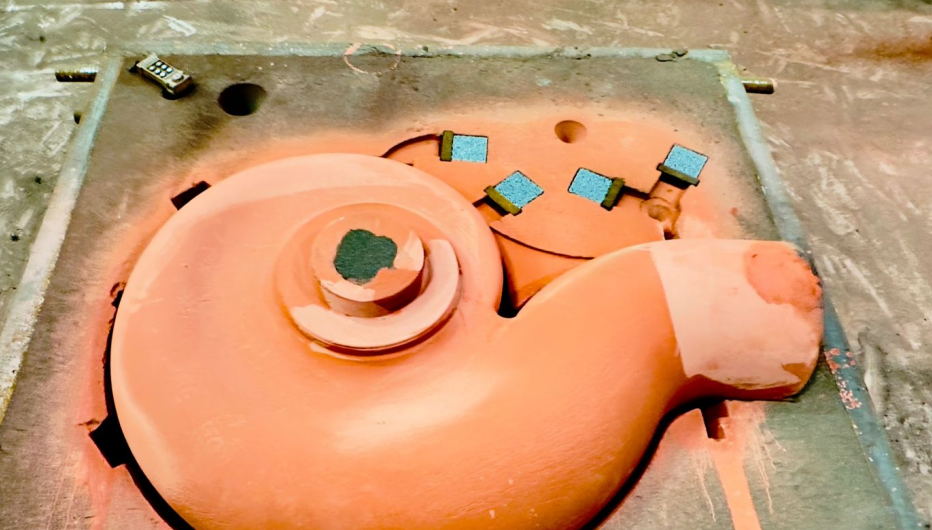
Picking the wrong filter material can drain your casting operation — or worse, hurt the quality of every pour. The price gap between fiberglass mesh and ceramic filters is significant. But the real question isn’t which one costs less upfront. It’s which one saves you more money once you factor in performance, lifespan, and fit for your application.
So how much cheaper is fiberglass mesh vs. ceramic filters — and does that price difference change anything for your operation? We break down the real numbers, show where each material’s costs come from, and give you a clear framework to make the smarter buy for your specific casting needs.
Fiberglass Mesh Filters: Real Cost Breakdown
At scale, fiberglass mesh filters are priced low — $0.03 to $0.08 per piece on industrial orders of 500+ units, or $2 to $23 per square meter on bulk orders. Most procurement managers take a second look at those numbers.
But the per-unit price doesn’t tell the full story.
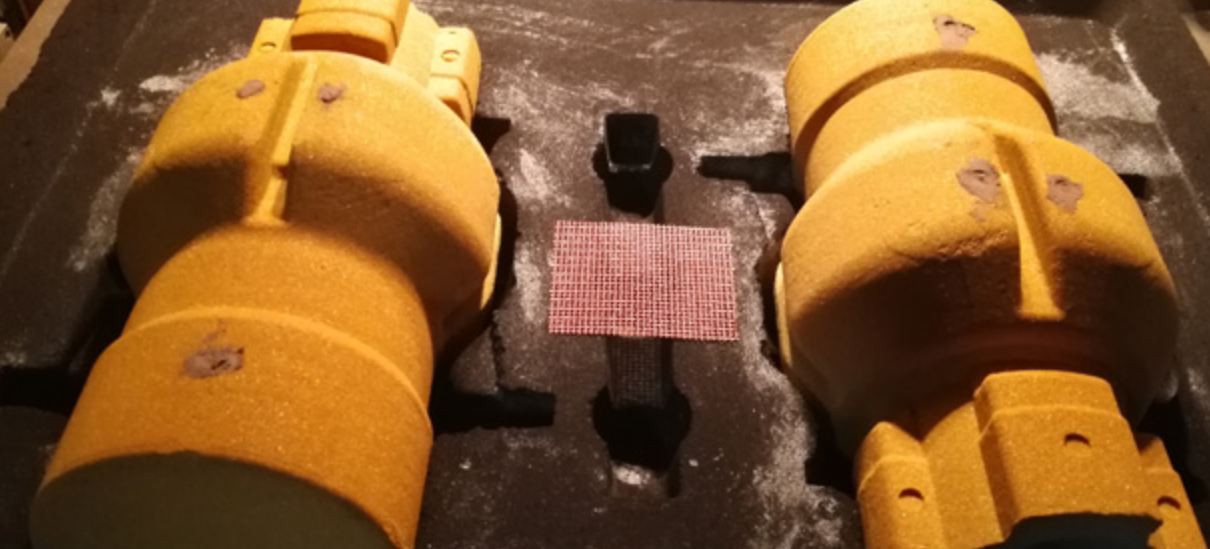
What Drives the Price
Several factors push fiberglass mesh costs up or down:
-
Layer configuration — more layers, more filtration, higher price
-
Mesh count and micron rating — finer filtration needs more precise manufacturing
-
Size and shape specifications — custom cuts add fabrication time
-
Material type — mini mesh costs more than standard square mesh due to higher labor input
-
Post-weaving processes — surface treatments and coatings add to the base cost
Temperature rating plays a role too. Standard silica glass fiber filters (rated 700–900°C) sit at the lower end of the price range. They work well for aluminum casting. High-silica variants rated for 1,400–1,600°C cost more — but steel and iron applications have no other viable option.
Where the Real Savings Show Up
The upfront price is almost beside the point. The operational savings are where fiberglass mesh earns its value:
-
Lower back pressure cuts energy consumption across production runs
-
Reduced scrap rates can recover the filter’s full cost in a single pour
-
Cleaner surface finishes reduce downstream machining expenses by a clear margin
-
Zero fiber migration removes casting defects that lead to expensive rework
Premium-grade fiberglass filters cost more upfront. Their longer service life and lower defect rates produce a lower total cost of ownership than budget alternatives — that gap adds up fast.
Ceramic Foam Filters: Where the Price Premium Comes From
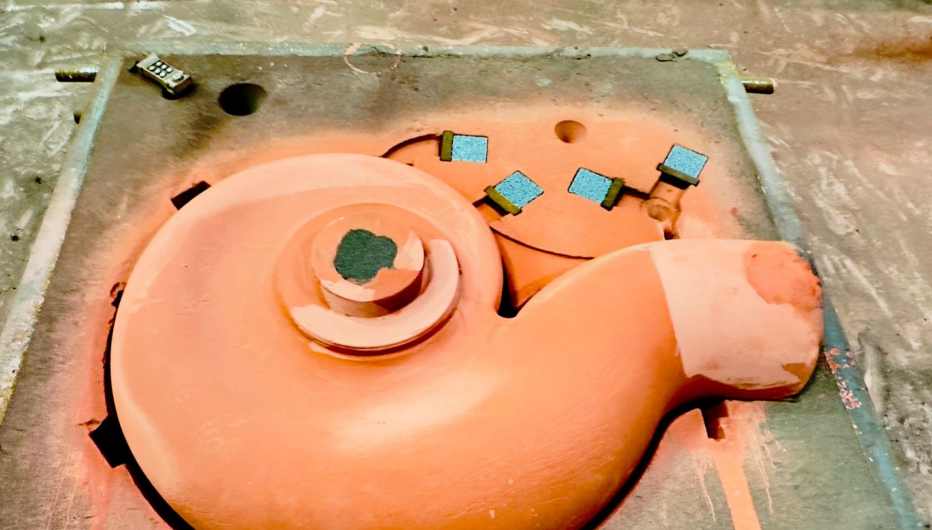
Ceramic foam filters cost more — and there are concrete, structural reasons why.
Direct from Chinese manufacturers, standard aluminum foundry pieces run $0.10–$3.00 per piece at volume. Retail small lots push that to $1.00–$25.00 per piece. Per cubic meter, you’re looking at $1,400–$3,000 from Chinese suppliers. Indian factory pricing runs a bit higher: $0.20–$3.00 at factory level, up to $10.00 retail.
That’s already a meaningful step up from fiberglass mesh. And that’s before you factor in PPI rating, material type, or brand tier.
PPI Rating: The Hidden Cost Multiplier
Pores per inch (PPI) shapes how complex the production process gets. Using 30 PPI as the baseline:
-
10–20 PPI: 8–10% cheaper — lower density, less material waste during manufacturing
-
40 PPI: 10–18% more expensive — higher density means more production scrap
-
50 PPI: 22–35% premium — complex processing and elevated reject rates push the cost up hard
The finer you go, the more you pay. Simple as that.
Material and Brand Tier: Where Premiums Stack Fast
Material choice adds another layer. SiC filter costs more than alumina due to raw material pricing. Zirconia filter can run 10–20× the cost of standard metal foam. It’s reserved for extreme-temperature applications where nothing else holds up.
The Real-World Cost Justification
Here’s the number that changes how you look at this: on a $50 casting, one rejected part pays for 62 ceramic foam filters. The filter isn’t the expense. The scrap it stops is.
Several factors are pushing ceramic premiums higher right now. EV production demand is tightening supply on premium grades. Raw material costs for SiC and alumina have spiked. Sustainability certifications add compliance costs — and reputable suppliers pass those through to buyers.
The price premium on ceramic foam filters is real. So is the reason it exists.
Direct Cost Comparison: Fiberglass Mesh vs. Ceramic Filters (Side-by-Side)
The numbers don’t lie — and side by side, they’re striking.
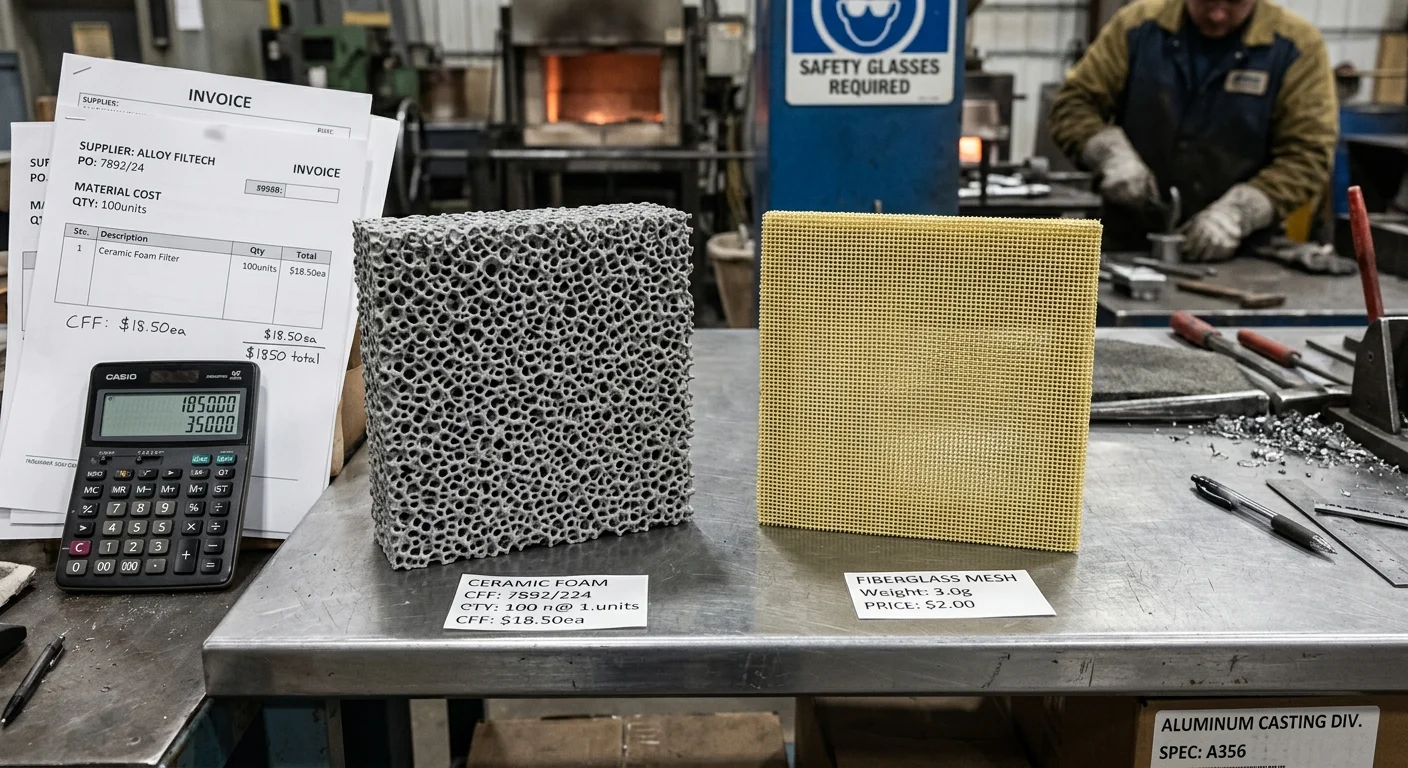
Ceramic foam filters run 5x to 15x the unit cost of fiberglass mesh filters. That’s not a rounding error. That’s a real pricing gap. You see it every time you place an order, run a production batch, or add up your consumables budget at quarter-end.
Here’s what that looks like in a single table:
|
Cost Factor |
Fiberglass Mesh |
Ceramic Foam Filter |
|---|---|---|
|
Unit Cost |
$0.03–$0.08/piece (bulk) |
$0.10–$3.00/piece (volume) |
|
Cost Multiple |
Baseline |
5x–15x higher |
|
Bulk Price (per m²/kg) |
$2–$23/m² |
$1,400–$3,000/m³ |
|
Replacement Frequency |
Application-dependent |
Application-dependent |
|
Primary Cost Driver |
Layer count, mesh rating |
PPI rating, material type |
The gap is real. What matters more is how that gap plays out once your operation is running.
Upfront Savings vs. Long-Term Value
Fiberglass mesh wins on sticker price — every time, no exceptions. In high-volume, lower-temperature applications like aluminum casting, that cost advantage adds up fast. You’re buying a true low-cost consumable, not a premium component.
Ceramic foam filters cost more per unit for a reason. Tighter PPI ratings, more involved manufacturing, stricter QC — all of it feeds into the price. For applications where melt cleanliness is critical, that higher price is earning its keep.
Here’s the practical breakdown:
-
Fiberglass mesh cuts your per-unit consumable spend by a wide margin — the right choice for aluminum and non-ferrous operations running at scale
-
Ceramic foam earns its price through scrap reduction in high-stakes pours — one rejected casting can wipe out the savings from dozens of cheaper filters
-
The 5x–15x price gap shrinks once you factor in defect rates, rework costs, and how well the filter fits the application
So how much cheaper is fiberglass mesh vs. ceramic filters? A lot cheaper upfront — and sometimes the smarter choice overall. It comes down to what you’re pouring and what a bad cast costs your operation.
Where Fiberglass Mesh Wins on Cost (and Why)
The math is simple — fiberglass mesh costs less, and that gap grows across a full production run.
At the unit level, savings show up right away. But the cost story goes beyond the purchase order. Several built-in advantages keep fiberglass mesh affordable across its full service life.
The Attributes That Drive the Cost Advantage
Here’s where fiberglass mesh pulls ahead of other options:
-
Tensile strength — High load-bearing capacity means fewer filter failures mid-pour. Fewer failures mean fewer stopped production runs. Less unplanned downtime. That’s a direct impact on your output and bottom line.
-
Corrosion and chemical resistance — Fiberglass holds up where metal-based alternatives break down. You’re not buying replacements every few months because the material gave out.
-
Lightweight construction — It installs faster. Faster installation means lower labor costs per unit. That’s a real number on your cost sheet — not a marketing claim.
-
No rust, no combustion risk, weather-stable — These properties cut out entire categories of maintenance costs. Other materials carry those costs as hidden expenses. Fiberglass mesh doesn’t.
Where Roll Purchasing Changes the Equation
Buying in 50–150 ft rolls drops your cost-per-square-foot. The difference versus smaller lot purchases is real and measurable. For operations running steady volume, the roll format itself is a cost tool — not just the material inside it.
Standard grades run $0.10–$0.30 per square foot. Heavy-duty variants sit at $0.50–$1.00. Specialized formulations — UV-resistant, water-resistant — top out near $1.50+. Now compare that to ceramic foam filters at $0.10–$3.00 per piece. For the same filtration volume, you’re looking at a very different spend profile. Fiberglass mesh comes out ahead on total cost, especially at scale.
The Real Win: Fewer Downstream Costs
Most people focus on the upfront price gap between fiberglass mesh and ceramic filters. That’s fair — it’s noticeable. But the bigger win is what fiberglass mesh doesn’t cost you. No heavy maintenance spend. No corrosion-driven replacement cycles. No labor drag from heavier, less flexible materials.
Those savings don’t show up on one invoice. They build up across the year — and by year-end, the total is hard to ignore.
Where Ceramic Filters Justify the Higher Price
Ceramic filters don’t cost more because of branding. The engineering behind them is different — and in the right application, that difference pays for itself many times over.
The lifespan alone changes the math. High-quality ceramic filter plates run 5,000 to 12,000 production cycles with proper maintenance. Every cycle you get from one filter is a replacement you didn’t buy. It’s a production stoppage that didn’t happen. It’s a maintenance hour that stayed in your pocket.
The Applications Where Ceramic Holds Its Ground
Not every environment is forgiving. Chemical processing, mining operations, pharmaceutical production, wastewater treatment — these environments destroy cheaper materials fast. Polymer alternatives crack. Lower-grade filters wear down under aggressive solvents, high pressures, or repeated heat cycles. Ceramic holds up.
Here’s how the material specs break down against the price:
|
Material |
What It Survives |
Why the Price Holds Up |
|---|---|---|
|
High-grade alumina / zirconia |
Acids, alkalis, aggressive solvents, high pressure |
Hard surface, chemical resistance, wear resistance |
|
Silicon carbide |
Thermal shock, molten metal contact |
High flow rate, long service life in extreme heat |
|
Zirconia |
Sub-micron precision filtration (~0.2 microns) |
Blocks bacteria and protozoa without chemicals or electricity |
The Real Calculation
Four factors decide whether the ceramic price premium earns its keep:
-
Expected production cycles — longer runs mean the durability advantage builds up faster
-
Chemical exposure and slurry abrasiveness — harsher environments speed up the cost advantage
-
Pressure and temperature ranges — extreme conditions that break cheaper filters are where ceramic performs best
-
OEM support and warranty coverage — procurement risk drops when the supplier stands behind the product
Ceramic foam filters held 42.9% of the industrial filtration market share in 2025 — pushed by durability and thermal stability in high-temperature manufacturing. That adoption isn’t accidental. Your application demands it. The higher price isn’t a cost. It’s an investment with a clear return.
Total Cost of Ownership: Which Is Cheaper Long-Term?
The purchase price starts the conversation — it doesn’t end it.
Many procurement managers have switched filter materials based on unit cost alone. Most of them regret it. The sticker price of fiberglass mesh vs. ceramic filters tells you very little about which one costs less after six, twelve, or twenty-four months of real operation.
TCO reframes the whole calculation.
Build the Real Number From the Ground Up
Total cost of ownership isn’t complicated. Most buyers skip it because it takes more than thirty seconds to work out. Here’s what it includes:
-
Acquisition cost — unit price, shipping, import duties, taxes, and any fees at the point of purchase
-
Operational costs — energy draw, labor to install, and production time lost per filter change
-
Maintenance and replacement — how often the filter fails, gets swapped, or drops below usable performance
-
Indirect costs — production downtime, scrap from filtration failures, rework hours, and casting defects that slip through
Add those up across a full production cycle. That is what your filter costs.
Where the Gap Closes (or Doesn’t)
Fiberglass mesh filters win on acquisition cost — and it’s not close. A 5x–15x unit price advantage is real money at scale.
Acquisition cost is the smallest lever in the TCO equation. The bigger drivers are scrap rate, replacement frequency, and downtime. One rejected casting on a high-value pour can wipe out the savings from dozens of cheaper filters in a single event. The math shifts against the budget option fast when the application demands tight melt cleanliness.
Here’s a clean breakdown:
|
TCO Factor |
Fiberglass Mesh |
Ceramic Foam |
|---|---|---|
|
Acquisition Cost |
Low |
High (5x–15x) |
|
Replacement Frequency |
Application-dependent |
Lower in demanding environments |
|
Scrap/Defect Risk |
Higher in critical pours |
Much reduced |
|
Downtime Exposure |
Lower in standard ops |
Lower in high-stakes ops |
|
Long-Term TCO Winner |
High-volume, non-ferrous |
Precision, high-temperature casting |
The Decision Framework
Two questions settle this:
What does a bad cast cost you? Scrap on a single pour can run $50–$500. Ceramic foam filters pay for themselves fast at that rate. One rejected part can cover the cost of 60+ ceramic filters at volume pricing.
What are you pouring, and how often? Aluminum casting at scale with standard cleanliness requirements? Fiberglass mesh delivers a lower TCO — lower unit cost, lower energy draw from reduced back pressure, and no real performance gap for that application.
The straight answer to “how much cheaper is fiberglass mesh vs. ceramic filters” long-term: it depends on which cost categories your operation feels most. Choose by TCO. Not by the number on the invoice.
How to Choose Based on Your Budget and Casting Requirements
Budget decides the conversation. Casting requirements close it.
Run your TCO numbers first. Then the decision comes down to two things you control: what you’ll spend per filter, and what your casting application demands. Those two factors point you to the right material every time.
Start with your temperature range and metal type.
-
Aluminum and non-ferrous casting at standard temperatures? Fiberglass mesh handles the job. The 5x–15x cost gap works in your favor.
-
Steel, iron, or high-temperature alloys above 1,000°C? Ceramic foam is the only viable choice. The price reflects that engineering reality.
Then test your scrap tolerance.
One rejected casting costs your operation $50 or more? Ceramic filters pay for themselves fast. Here’s the math: at volume pricing, a single scrapped part covers the cost of dozens of ceramic foam filters. Precision pours need clean melt. The cheaper filter option ends up costing you more.
Working with a tighter budget? Fiberglass mesh gives you room to optimize:
-
Buy in bulk rolls to lower your cost-per-unit
-
Put savings toward higher mesh counts where filtration precision matters most
-
Use the cost difference for downstream quality control
The bottom line: match your filter material to your metal type and defect tolerance first. Price follows function — not the other way around.
Conclusion
The numbers don’t lie — fiberglass mesh filters can cost 60-80% less than ceramic foam filters upfront. That makes them the clear choice for high-volume, lower-stakes casting runs where budget efficiency matters most.
But cheaper isn’t always cheaper. Casting aerospace-grade aluminum or complex iron components is a different story. One inclusion defect can scrap an entire batch. In those cases, ceramic filters earn every dollar of that price premium. You get better filtration precision and stronger heat resistance.
Here’s the bottom line: match the filter to the job, not to your gut feeling.
Not sure which option fits your casting requirements and production volume? Use the cost comparison framework from this guide to run your own numbers. Your metallurgist and your accountant will both thank you.
The right filter doesn’t just catch impurities. It protects your margins.