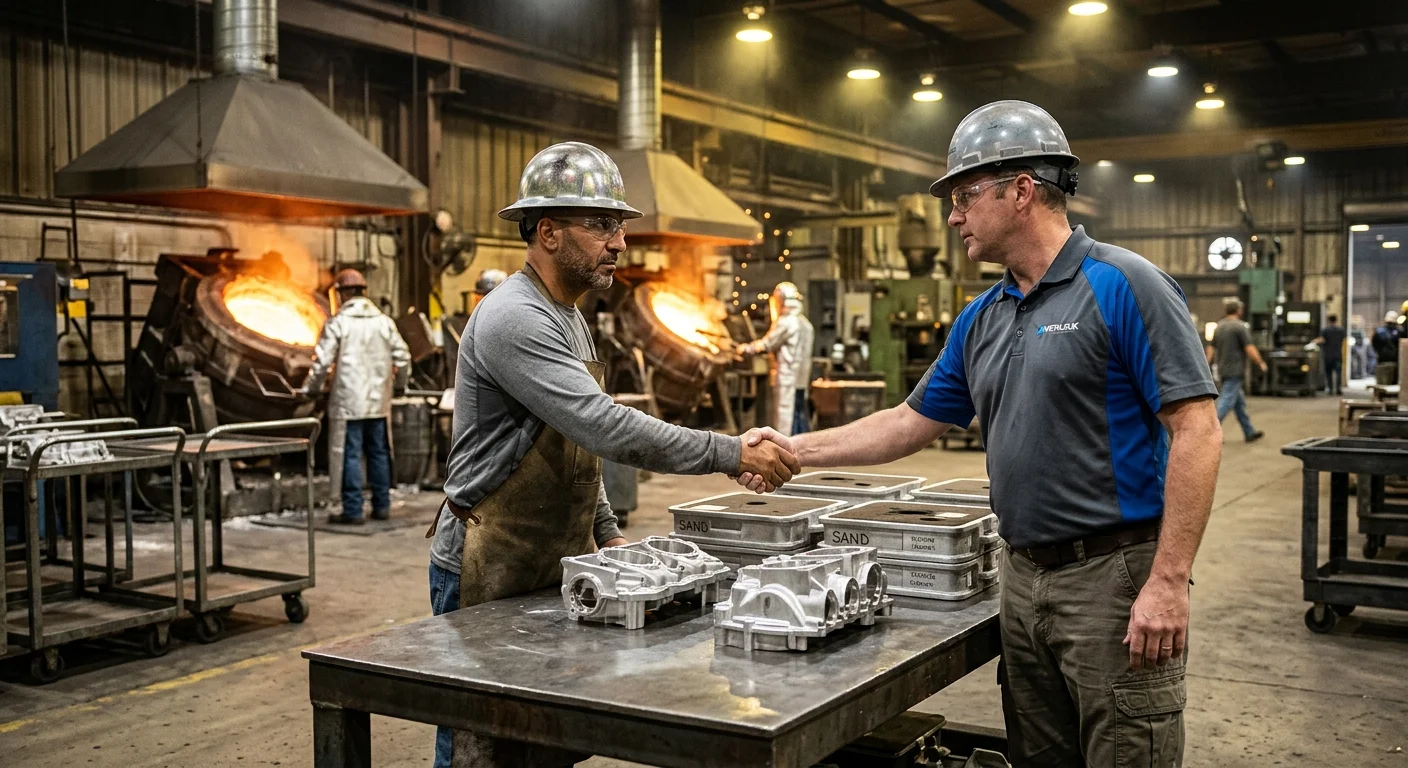
Scrap rates are climbing. Customers are sending back castings with inclusions. And somewhere in your mind, you know the filtration setup hasn’t changed in years.
More aluminum foundries are switching to Ceramic filters right now — not because it’s trendy. The numbers stopped making sense for doing nothing.
This guide covers the practical side of ceramic filtration:
-
How ceramic filters work at the melt level
-
What real yield improvements look like in practice
-
How to match the right filter to your specific alloy
-
What separates the suppliers worth calling from the ones worth skipping
Why Traditional Filtration Is No Longer Enough
Traditional filtration looks cheap on paper. It isn’t.
The real cost hides in plain sight — in the scrap pile at the end of a shift, in the castings that come back with inclusions, in the customer who takes their business elsewhere without a word.
Most foundries running older filtration setups are sitting on a simple math problem they haven’t solved yet:
-
Single-point filtration covers one stage of the process. Contaminants introduced at other stages pass through untouched.
-
Cartridge-based systems need replacement every few months. Miss that window, and you’re not filtering — you’re going through the motions.
-
Upfront costs look manageable until you count the downstream damage: rejected parts, rework hours, and accelerated equipment wear from contaminated melt.
The pattern is clear. Low maintenance investment now leads to higher repair and replacement costs later. Inclusions that slip through don’t show up right away. They appear as porosity, surface defects, and structural failures — after the part has left the floor.
The hidden cost isn’t the filter. It’s everything the filter failed to catch.
Ceramic filtration tackles this head-on. You get broader contaminant removal and more consistent performance across a full production run. The cost structure makes sense too — once you account for yield, not just purchase price.
How Ceramic Filters Work — And Why the Mechanism Matters
The mechanism isn’t complicated. But once you understand it, you’ll see every scrapped casting differently.
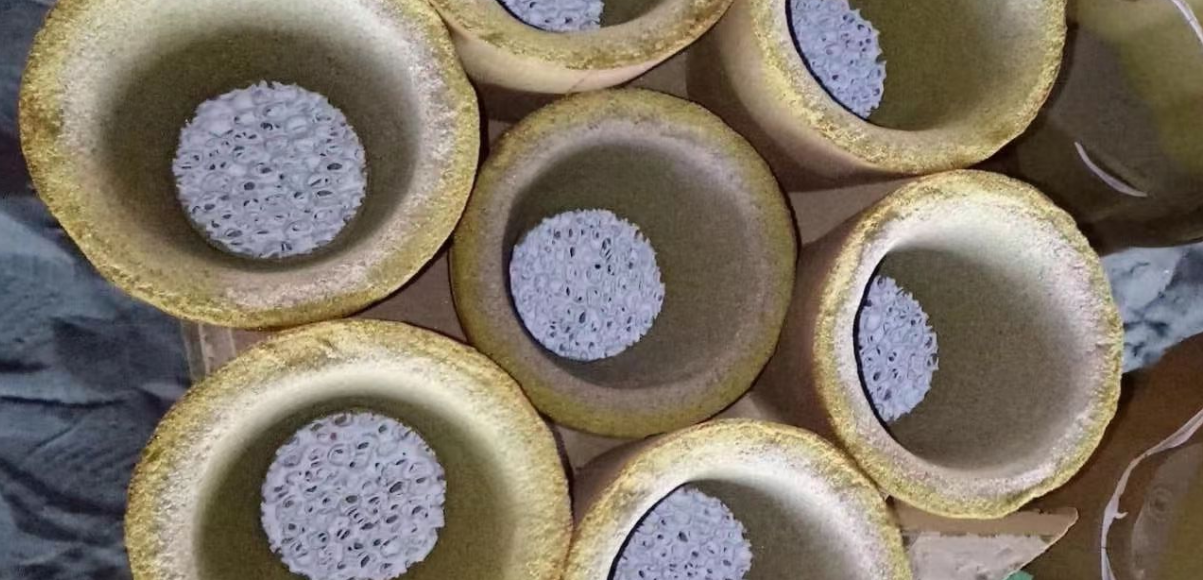
Ceramic filters work through physical sieving — not chemistry, not reaction rates, not anything that breaks down mid-run. The ceramic shell holds a dense maze of micro-pores. Each one forces molten aluminum through sharp, angular passages. Inclusions don’t dissolve. They don’t get neutralized. They get stopped. Blocked and held in place.
Most foundry managers underestimate how much that distinction matters.
What’s Happening at the Micro Level
The pore structure operates at 0.5 microns — half a micron. Particles larger than that don’t pass through. The geometry simply won’t allow it.
As the melt moves through the ceramic matrix, three things happen at once:
-
Oxide films and inclusions get trapped and held in the pore network
-
Turbulence drops, cutting the chance of new oxides forming downstream
-
Melt flow stays consistent across the filter face — no channeling, no bypass
The ceramic shell is reusable. Backflushing reverses the flow to push out trapped solids. This restores full performance without swapping the filter. That’s a real operational advantage over disposable media, which loses performance between replacements — and you won’t notice until it’s too late.
Why Physical Filtration Beats Chemical Alternatives
Chemical filtration depends on reactions. Those reactions need the right temperature, timing, and melt chemistry. In a production environment, those variables shift all the time.
Physical sieving doesn’t work that way. The pore is either smaller than the particle or it isn’t. No conditions to manage. No variables to chase.
|
Mechanism |
Reliability |
Key Limitation |
|---|---|---|
|
Physical sieving (ceramic) |
Consistent, absolute barrier |
Requires correct pore sizing for alloy |
|
Chemical/flux treatment |
Variable, condition-dependent |
Reaction efficiency drops with melt changes |
|
Disposable media |
Acceptable early, drops off late |
Performance loss between replacements goes unnoticed |
Precision micro-pore filtration is why more aluminum foundries are moving to ceramic filters — not as a trend, but as a direct response to what the mechanism delivers: an absolute barrier, run after run, without the variables that make other methods unreliable at scale.
Casting Quality Improvements Foundries Are Seeing Right Now
The scrap pile doesn’t lie. Ceramic filtration goes in, and the first thing most foundry managers notice isn’t on a report — it’s the pile getting smaller.
That’s not anecdotal. The American Foundry Society tracked it: high-quality castings extend automotive parts lifespan by up to 30%. That number holds only when inclusions, porosity, and oxide films stop reaching the final part. Ceramic filters do that work at the melt level. Defects get stopped before they have a chance to form downstream.
The Three Quality Shifts That Show Up First
Foundries that switch to ceramic filtration report improvements in the same three areas, and they show up fast:
Surface finish tightens up. Turbulence during pouring is a primary driver of oxide formation. Ceramic filters calm the melt before it reaches the mold cavity. Less turbulence means fewer air pockets and fewer impurities carried through. The surface finish stops needing the same level of rework. Castings come out cleaner. You can see it on the floor within the first production run.
Internal defects drop. Shrinkage and porosity don’t always surface at inspection. Sometimes they show up at the customer’s facility — which is the worst possible moment. Automated X-ray and ultrasonic testing catch what the eye misses. Foundries running ceramic filtration report measurable drops in the internal defect rates those systems flag. Cleaner melt going in means fewer voids forming as the part solidifies.
Mechanical properties improve. Controlled melt flow through the ceramic matrix supports more uniform cooling. That matters more than most people factor in. Uniform cooling produces consistent grain structure throughout the casting. Consistent grain structure means fewer internal stresses, less warping, and less cracking. Mechanical properties end up meeting spec — not just barely clearing it.
What’s Driving the Consistency
These improvements don’t happen in isolation. They’re connected, and the chain runs in one direction.
-
Cleaner melt reduces turbulence.
-
Reduced turbulence improves fill.
-
Better fill supports uniform solidification.
-
Uniform solidification protects grain structure.
Ceramic filtration enters that chain at the start — the one point where it makes sense to intervene.
The quality gains more aluminum foundries are switching to ceramic filters for aren’t separate wins. They’re a sequence. Fix the melt, and the rest follows.
Yield, Scrap Rate, and the Real ROI Calculation
Here’s a number most foundry managers never look at: the gap between final yield and first-time yield.
They’re not the same thing. A 98% final yield sounds like a well-run operation. But if 90% of your parts needed rework to get there, you didn’t run a clean process — you ran a rescue operation at scale. Every hour of rework is labor you paid twice. Every scrapped unit is raw material you bought and burned.
The math gets uncomfortable fast.
What the Numbers Are Telling You
Yield and scrap rate measure two sides of the same problem.
Yield tells you what percentage of started units came out as salable product:
Yield (%) = (Good Units Produced ÷ Total Units Started) × 100
Scrap rate tells you what percentage of your raw material input ended up as waste:
Scrap Rate (%) = (Scrap Amount ÷ Total Raw Materials Used) × 100
A factory running 10,000 units with 450 defective parts carries a 4.5% scrap rate. That number alone looks manageable. Price it out, and it stops looking manageable.
The Real Cost Hidden Inside a “90% Yield”
Take a line running at 90% first-time yield (FTY), with rework pushing the final number to 98%. To deliver 10,000 finished units, the line has to start 11,112 parts. At $5,000 per part, that gap costs $5.6 million per year — in scrap alone. That’s before rework labor. Before handling. Before downstream fallout.
Improving FTY by just 1.1% — from 90% to 91.1% — cuts out the need for that rework. Same output. Lower cost. The lever is smaller than most people expect.
That’s where ceramic filtration enters the calculation. Cleaner melt produces fewer defective parts on the first pass. First-time yield goes up. Scrap rate comes down. The ROI isn’t theoretical — it’s the gap between what you’re losing now and what you stop losing.
Running the ROI the Right Way
ROI = (Total Proceeds − Total Cost) ÷ Total Cost × 100
Count everything on the cost side:
– Filter cost
– Installation
– Maintenance
– Process adjustments
Then measure the gains:
– Scrap reduction
– Rework hours saved
– Rejected-part returns eliminated
Aluminum foundries that track all three metrics — yield percentage, scrap rate, and reasons for scrap — find the same result. The filter pays for itself. What shifts the math is how fast you start counting the right numbers.
Ceramic Filter Material Selection: Matching Filter to Your Alloy and Process
The filter in your gating system is only as good as its match to your alloy. Get that wrong, and you’re not filtering — you’re adding a new failure point.
Material selection comes down to three things: melting temperature, alloy chemistry, and what you need to pull out of the melt.
Alumina Filters: The Standard for Aluminum Alloys
For aluminum foundries, alumina (Al₂O₃) is the default starting point — and for good reason.
alumina filters stay stable up to 1,100°C. The composition runs 70–90% refractory aggregate, bonded with AlPO₄ phosphate. Open porosity sits at 80–90%. That opens up three distinct capture mechanisms working at once:
-
Mechanical interception — large inclusions stop at the inlet face
-
Filter cake formation — a secondary barrier builds as particles stack up
-
Deep adsorption — electrostatic capture pulls inclusions down to the tens-of-micron range
Here’s a chemistry detail worth knowing: running A356 alloy? Specify a low-silica alumina formula. Free SiO₂ reacts with magnesium. That reaction breaks down the filter and contaminates your melt — the exact opposite of what you need.
Matching Material to Alloy: A Quick Reference
|
Alloy Type |
Recommended Material |
Max Temp (°C) |
Open Porosity (%) |
|---|---|---|---|
|
Aluminum Alloys |
Alumina (Al₂O₃) |
1,100 |
70–90 |
|
Grey / Ductile Iron |
Silicon Carbide (SiC) |
1,500 |
75–85 |
|
Steel / High-Temp Alloys |
Zirconia (ZrO₂) |
>1,700 |
70–80 |
Pore Size, PPI, and the Selection Sequence
PPI — pores per inch — determines what gets stopped and what passes through. Higher PPI means finer filtration. Finer filtration means slower flow rates. That tradeoff has to be a deliberate choice, not an accident.
Work through the selection in this order:
-
Match material to casting temperature — thermal fit comes first. Everything else follows.
-
Confirm chemical inertness — no reactive compounds with your specific alloy chemistry
-
Select PPI based on target inclusion size — the pore size must be smaller than the particle you want to catch
-
Preheat the filter — 15 to 30 minutes at molten metal temperature. This removes moisture and steadies flow.
Skip the preheat step and you get thermal shock plus erratic flow from the very first pour. That single mistake causes more early-run defects than most foundries ever trace back to the filter.
The right ceramic filter for your alloy isn’t a catalog decision. It’s a process decision. Chemistry, temperature, and pore geometry all need to line up before the first ladle moves.
Common Switching Mistakes That Undermine Results
Switching to ceramic filters is the right call. But getting the switch wrong is easier than most foundry managers expect.
The filter is not the problem. The problem is everything around it — decisions made before the first ladle pours, assumptions nobody questioned, process gaps nobody mapped because everyone thought someone else had.
Here’s where foundries lose the gains they should have locked in:
Choosing the filter before choosing the process. Someone opens the catalog, picks a PPI rating, and drops the filter in. That’s a purchasing decision. Filter selection is a process decision. Thermal fit, alloy chemistry, and pore geometry need to be resolved first. Skip that step, and the filter adds new variables instead of removing them.
Skipping preheat and calling it a time save. It isn’t. Fifteen to thirty minutes of preheating pulls out moisture and steadies flow from the first pour. Skip it, and you get thermal shock, erratic fill, and early-run defects. Those defects get blamed on the Casting process. The real cause is the skipped preheat.
Declaring success after the first clean run. One good shift doesn’t confirm the switch worked. Old habits come back fast — inconsistent melt temperatures, skipped filter checks, maintenance windows that slip. The gains don’t hold unless the behaviors hold. Attention that shifts too soon pulls the whole process back to where it started.
Tracking final yield instead of first-time yield. A 98% final yield built on heavy rework is not a win. It’s a rescue operation on repeat. The measurement system needs to separate first-pass good parts from reworked parts. Without that split, the filter’s real impact stays hidden — and so does the reason to keep it.
The switch isn’t done when the filter goes in. It’s done when the process behind it holds steady.
How to Evaluate Ceramic Filter Suppliers Before You Commit
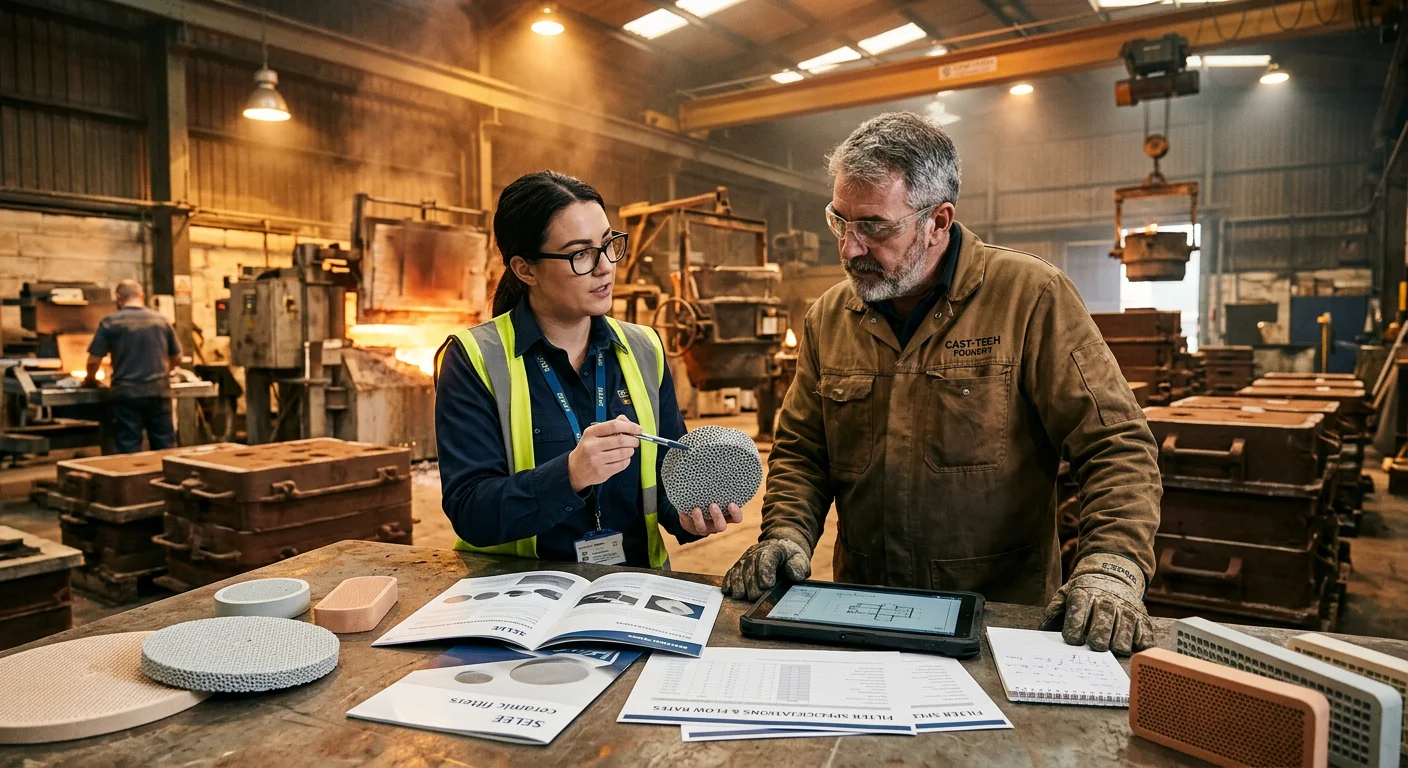
Most supplier conversations start the same way — a sales rep, a brochure, a price. None of that tells you whether the filter will perform on your floor, with your alloy, at your production volume.
Here’s what separates reliable suppliers from the ones who disappear after the invoice clears.
Ask for Proof, Not Promises
Claimed experience means nothing without documentation. Request case studies from foundries running similar alloys and production conditions. Ask for live client references — not testimonials on a website. A supplier who hesitates at that request is already telling you something.
Verify Quality Before You Trust It
Marketing copy doesn’t stop inclusions. Audited manufacturing processes and full production traceability do. Ask for documentation that covers material sourcing and product testing records. In regulated environments, that paperwork is what keeps your castings in compliance.
Confirm Customization Depth
A supplier with a narrow product range becomes a problem fast. Check whether they can configure media type, micron rating, and housing dimensions to fit your process. Standard catalog options are not enough. You need a supplier who works around your specs, not theirs.
Test Before You Commit
A spec sheet is not your production floor. Request filter testing data validated against your casting conditions, including FPI evaluation for inclusions. Suppliers who believe in their product will say yes without hesitation. Those who stall or push back are showing you their limits early.
Ceramic filters deliver results only if the supplier behind them can be held to a standard. That standard starts with the first conversation.
Conclusion
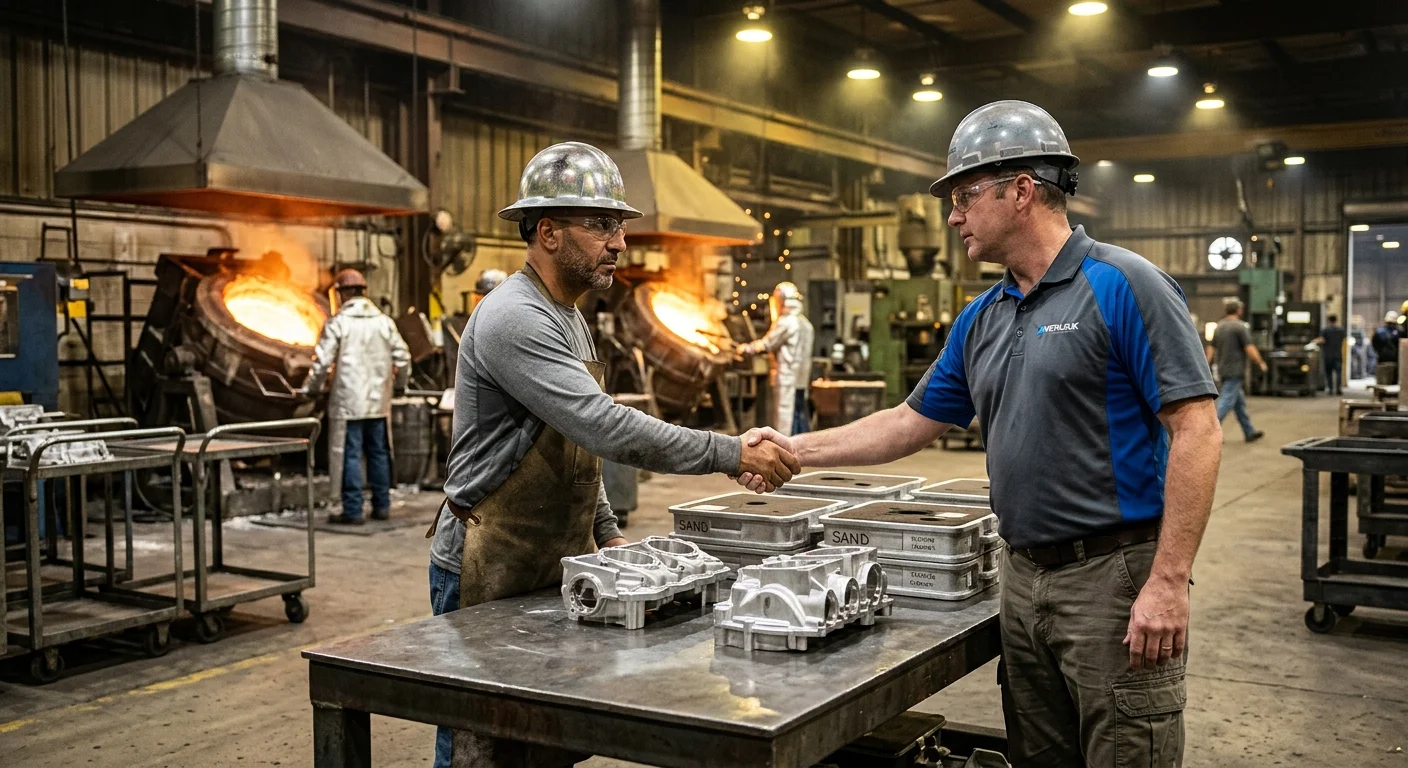
Foundries making the switch aren’t doing it because ceramic filtration is trendy. They’re doing it because the numbers are clear. Cleaner metal means fewer rejects. Fewer rejects mean better margins. Better margins mean you compete on quality — not price.
But the filter is only half the picture. The wrong material choice, a mismatched supplier, or a poor implementation can wipe out every advantage before you cast a single part. Foundries winning with ceramic filters treat it as a process decision. Not a purchasing decision.
So here’s your next move: audit your current scrap rate. Trace it back to inclusion-related defects. That number shows you what switching to ceramic filtration is worth to your operation.
Foundries that figured this out five years ago aren’t looking back. The question is whether you’ll be saying the same thing five years from now.