
Wrong foundry materials don’t just slow production. They hurt your casting quality and cut into margins before you spot the problem.
Riser sleeves are central to shrinkage control in metal casting. Yet most procurement teams still build supplier lists from outdated directories and word-of-mouth tips.
We’ve evaluated and ranked the top 10 riser sleeve & foundry material suppliers in the USA right here. Skip the guesswork. Go straight to the suppliers worth your budget.
This guide covers both established industry leaders and newer challengers worth your attention. You get the insight to make a sharper sourcing decision — faster.
What Are Riser Sleeves & Why They Matter in Metal Casting
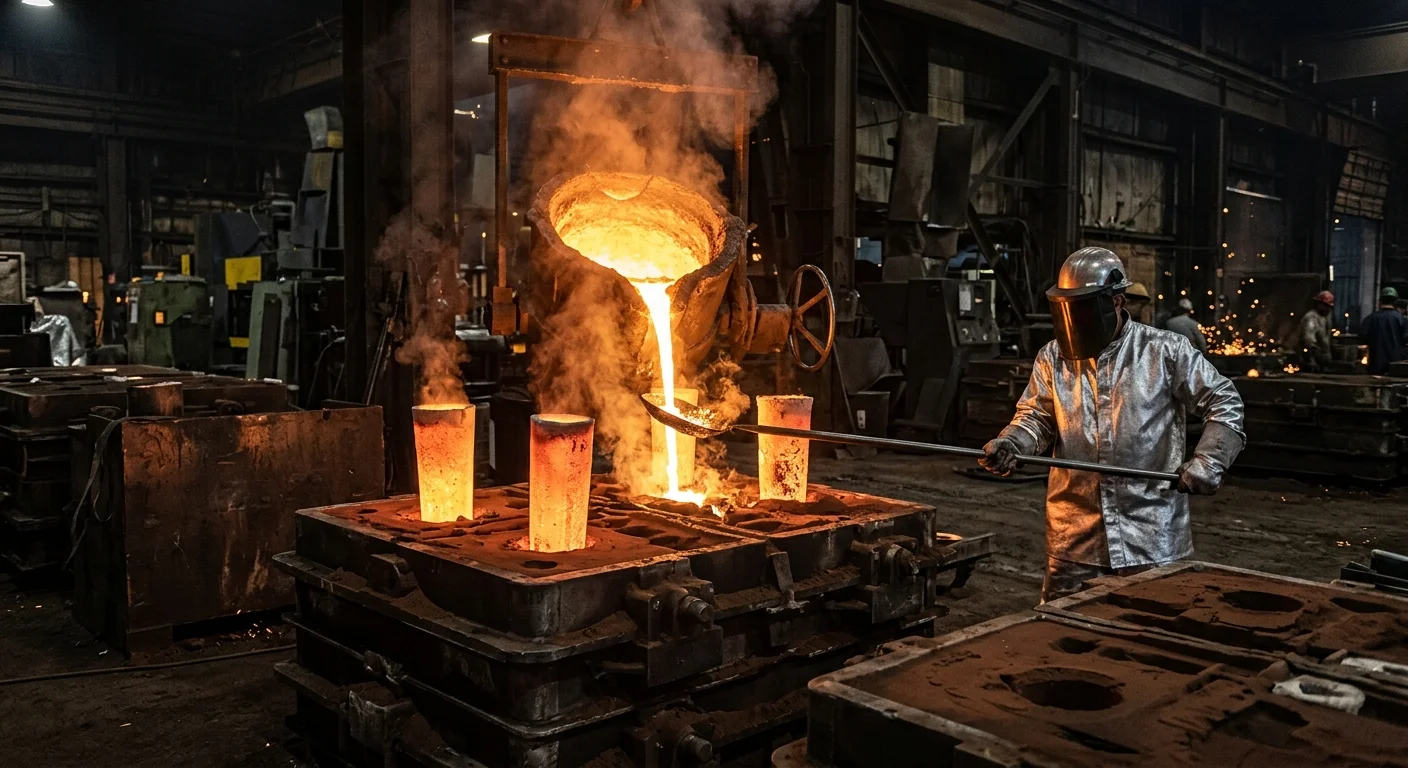
A riser sleeve is one of the most overlooked components in metal casting — yet it controls whether your final part is sound or scrap.
Here’s the core job: riser sleeves act as molten metal reservoirs. They feed shrinkage as castings solidify. Steel and iron shrink 2–7% by volume during solidification. A riser that isn’t working right turns that shrinkage into internal cavities. Cavities become rejected parts. Rejected parts become margin loss.
Feeding isn’t the only function, though. Riser sleeves also:
-
Regulate cooling rate through insulating or exothermic properties, promoting uniform directional solidification
-
Vent trapped gases at the riser top, cutting porosity defects
-
Maximize casting yield via the Modulus Extension Factor (MEF) — a higher MEF means more usable metal per pour
That yield impact is real. 80% of steel castings depend on riser sleeves to keep metal molten longer. Oversized risers without sleeves can add 10–30% waste to poured weight. Optimized sleeves pull that waste below 10%.
Three primary sleeve types cover most US foundry applications:
|
Type |
Best For |
Key Advantage |
|---|---|---|
|
Insulating |
Steel, iron, non-ferrous |
Extends solidification time |
|
Exothermic |
Steel/iron heavy sections |
Keeps riser molten 2–3× longer |
|
Collapsible |
Iron/steel |
Reduces post-processing grinding |
Pick the wrong type for your application, and you’re not just losing yield. You’re adding grinding time, remelt costs, and defect risk on every pour.
How to Choose the Right Riser Sleeve Supplier: Key Evaluation Criteria
Most foundry buyers make the same mistake: they evaluate suppliers on price and lead time alone. That leaves the most critical performance variables off the table.
Here’s what separates a reliable riser sleeve supplier from one that slowly erodes your yield.
Demand Hard Performance Numbers
Any supplier worth your time should hand you Volumetric Feed Efficiency (VFE%) data upfront. That means test plate dimensions and equivalent sand riser sizes included. No vague claims. No marketing language.
Also check the Modulus Extension Factor (MEF). The target range is 1.07–1.27. Exothermic and insulating properties both influence MEF, but neither one boosts yield on its own. MEF is what drives casting output.
Sleeve thickness matters just as much. Scale it to riser diameter:
-
0.2x diameter for chunky castings → yield gains up to 40%
-
0.1x diameter for rangy castings → yield gains around 8%
-
Below 0.1x → performance drops below viable threshold
Verify Technical Support Depth
A strong supplier doesn’t just ship product. They give you engineering input based on your casting design, alloy type, and process format — green sand, cold-box, or high-pressure molding.
Ask for thermophysical property data: density (ρ), thermal conductivity (k), and specific heat (cp). These values go straight into simulation models. You can predict yield before pouring a single part.
Custom sleeve configurations matter here too. Sleeves that don’t match your casting geometry create defect risk. That’s true no matter how good the base material is.
Check Compliance and Traceability
For heavy-section steel work, confirm your supplier’s exothermic sleeves meet SFSA 31T-65 specifications. Two grades are available under this standard. Cross-check against IS 15865 (2009) for full performance validation.
On the supply side, check batch numbering and manufacturer markings on every container. Traceability isn’t a bureaucratic checkbox. It’s how you isolate variables once a defect appears mid-run.
Bottom line: demand VFE%, confirm MEF range, scale thickness to the right ratio, stress-test their engineering support, and lock down compliance documentation. That five-step filter cuts through supplier noise fast.
Carpenter Brothers, Inc.
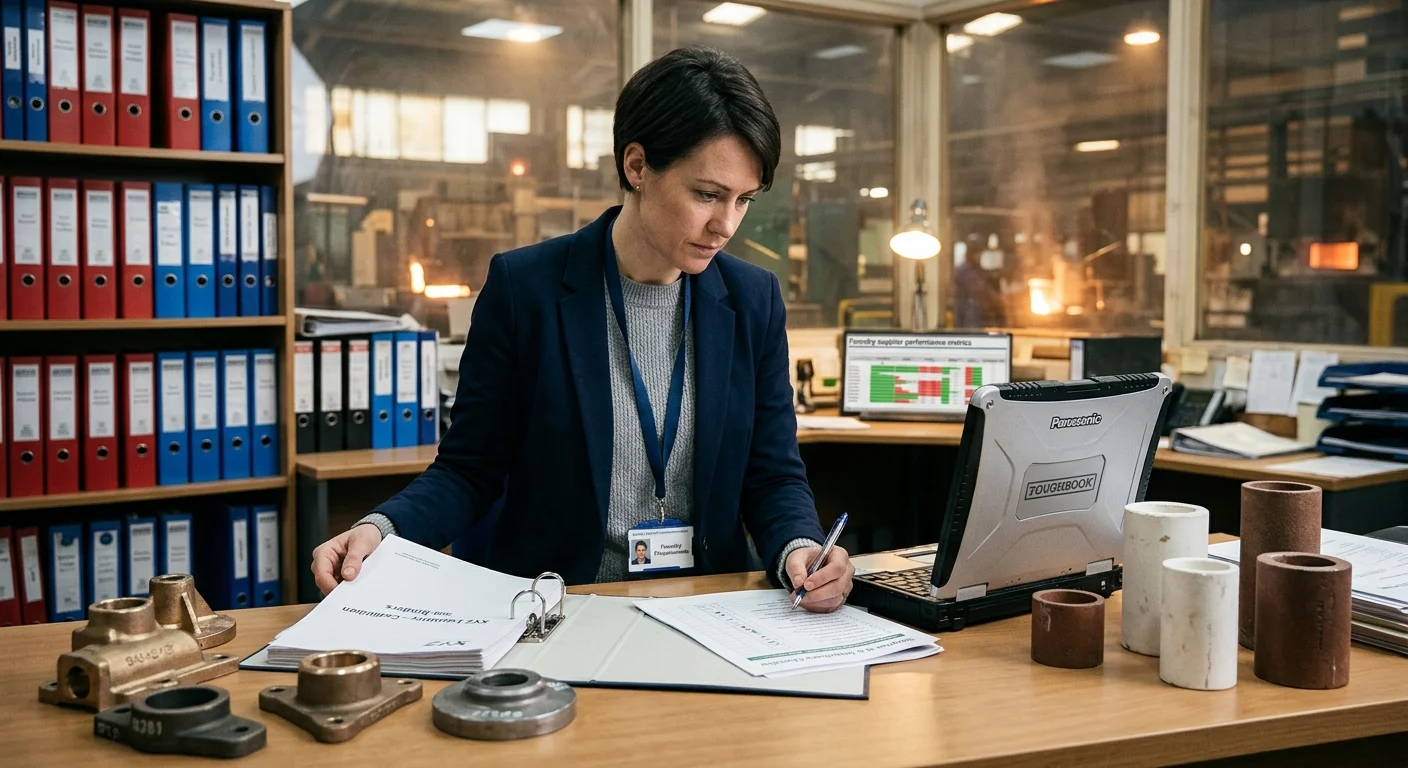
Over a century in the foundry supply business isn’t a marketing claim — it’s a track record that’s hard to fake.
Carpenter Brothers has been running since 1917. That makes them one of the oldest foundry equipment and consumables distributors in the United States. They’re based in Mequon, WI, with locations in Michigan, Minnesota, and Kentucky. Together, these sites form a real multi-state distribution network. Shipments move by truck, rail, and air.
Their product lineup covers the full foundry floor:
-
Sand heaters, coolers, and reclaimers
-
Continuous mixers and mullers
-
Automated core and molding machines
-
Natural bonded molding sand
Revenue sits around $9.4 million. That puts them in the focused, mid-market specialist range — not a sprawling generalist trying to cover everything. President/CEO Thomas R. Gaeding also works in technical sales. So you get real answers from someone who knows the products, not a standard sales pitch.
US foundries need reliable equipment and consumables. They also need a supplier who knows the industry from the inside. Carpenter Brothers checks both boxes.
Contact: (414) 354-6555 | carpenterbrothersinc.com
FoundryMax

FoundryMax has been in the foundry materials business since 2003. Their long track record shows — they work with some of the largest foundries and steel plants in the world.
Every product they ship carries ISO-certified quality backing. That’s not a small thing. Strong quality control is what separates suppliers who grow with you from ones who cause problems at higher volumes.
The riser sleeve lineup covers a wide range of shapes. You’ll find straights, neck downs, blind risers, spheres, and domes — with custom IDs up to 30 inches. They work with all major molding systems.
Insulating grades (Type J, Type M, CFNF) cover non-ferrous and cost-sensitive applications too.
You can also fine-tune sleeve performance with add-on options. Choose breaker cores at 40% or 50% contact, fiberglass screens, or post impregnation for extreme hardness. These let you match sleeve performance to your exact casting shape.
Contact: info@foundrymax.com
ASK Chemicals (US Operations)
ASK Chemicals runs its US foundry operations out of Dublin, Ohio. The numbers here are worth a close look.
North America volumes grew +9% year-over-year in Q1 2025. That beat the company’s global growth rate of +5%. The gap is real. US foundry demand for their materials is picking up faster than all their other markets put together.
The parent group hit $665.8M in revenue for 2024. Operating cash climbed to €36.3M. These aren’t just headline numbers. They show a supplier with the financial strength to:
-
Keep inventory stocked
-
Put money into R&D
-
Handle supply chain pressure without pushing problems onto buyers
Their Metallurgy segment covers foundry-facing products. It accounts for 13% of group revenue. That’s a focused vertical — not a side business they run on the margins.
US foundries sourcing riser sleeves and specialty foundry materials at scale get something useful here. ASK Chemicals combines global infrastructure with a local presence in the US. That mix is hard to come by.
Contact: askchemicals.com
Midvale Industries
Midvale Industries has been in the foundry business since 1901. That’s over 120 years of hands-on experience built into their supplier roots.
They’re based in St. Louis, MO with a second location in Tulsa, OK. They’re an active AFS member serving foundry, metal finishing, aerospace coating removal, and industrial cleaning markets. Revenue runs $5.9M–$7M, so they stay lean and focused on what they do best.
Their top product for foundry buyers is Green Diamond Foundry Sand. It’s a silica-free synthetic olivine sand built for green sand molding and coremaking.
Here’s why that matters:
-
Zero crystalline silica — meets OSHA silica PEL limits without question
-
Low thermal expansion — cuts expansion defects and reduces the need for cushioning additives
-
Mined and manufactured in the USA
Foundries dealing with silica exposure compliance pressure will find this a real advantage. Few suppliers can offer a silica-free alternative with this level of domestic sourcing and a track record stretching back over a century.
Contact: midvaleindustries.com
Lancaster Foundry Supply Co.
Lancaster Foundry Supply Co. is based in Lancaster, PA. It’s a small, region-focused supplier that serves the foundry industry from one location.
They fall under SIC Code 33 (Primary Metal Industries) and 332 (Iron and Steel Foundries). That tells you where their focus is. This isn’t a general industrial distributor spread across multiple verticals. Foundry supply is the core business — full stop.
Revenue sits under $5 million. That’s a lean operation by design. Focused inventory, tight processes, and direct access to the people who run the business day to day.
Key contact details:
-
Address: 2314 Norman Dr., Lancaster, PA 17601
-
Phone: 717-394-0753
-
Email: info@lancasterfoundrysupply.com
-
Hours: Monday–Friday, 8:00 AM – 4:30 PM
Pennsylvania foundries sourcing specialty materials will find Lancaster Foundry Supply a solid nearby option. Add them to your shortlist.
Contact: lancasterfoundrysupply.com
Inproheat Industries
Inproheat Industries is not a manufacturer. That distinction matters more than most foundry buyers expect.
They’re based in Vancouver, BC, with a US office in Ferndale, WA. Inproheat runs as an authorized ASK Chemicals distributor. That partnership is the real story.
You get full access to ASK Chemicals’ foundry portfolio through a local supplier with real engineering staff. The product range covers:
-
Riser sleeves
-
No-bake binders
-
Cold box binders
-
Mold washes
-
Refractory castables
One product stands out: ASK’s INOTEC Gen 6 inorganic binder system. Here’s what the specs look like:
-
Cold strength: 375–400 N/cm²
-
Moisture stability: validated at 30°C/60% RH
-
No lithium salts required
That’s a solid spec advantage for aluminum low-pressure diecast operations running cylinder heads or motor housings.
Mid-size foundries in Western Canada or the Pacific Northwest get the most value here. You need technical support alongside product supply — Inproheat delivers both. Pure bulk buyers focused only on the lowest price? This isn’t the right fit.
Contact: (360) 306-1985 | info@inproheat.com | inproheat.com
SEFU Ceramic
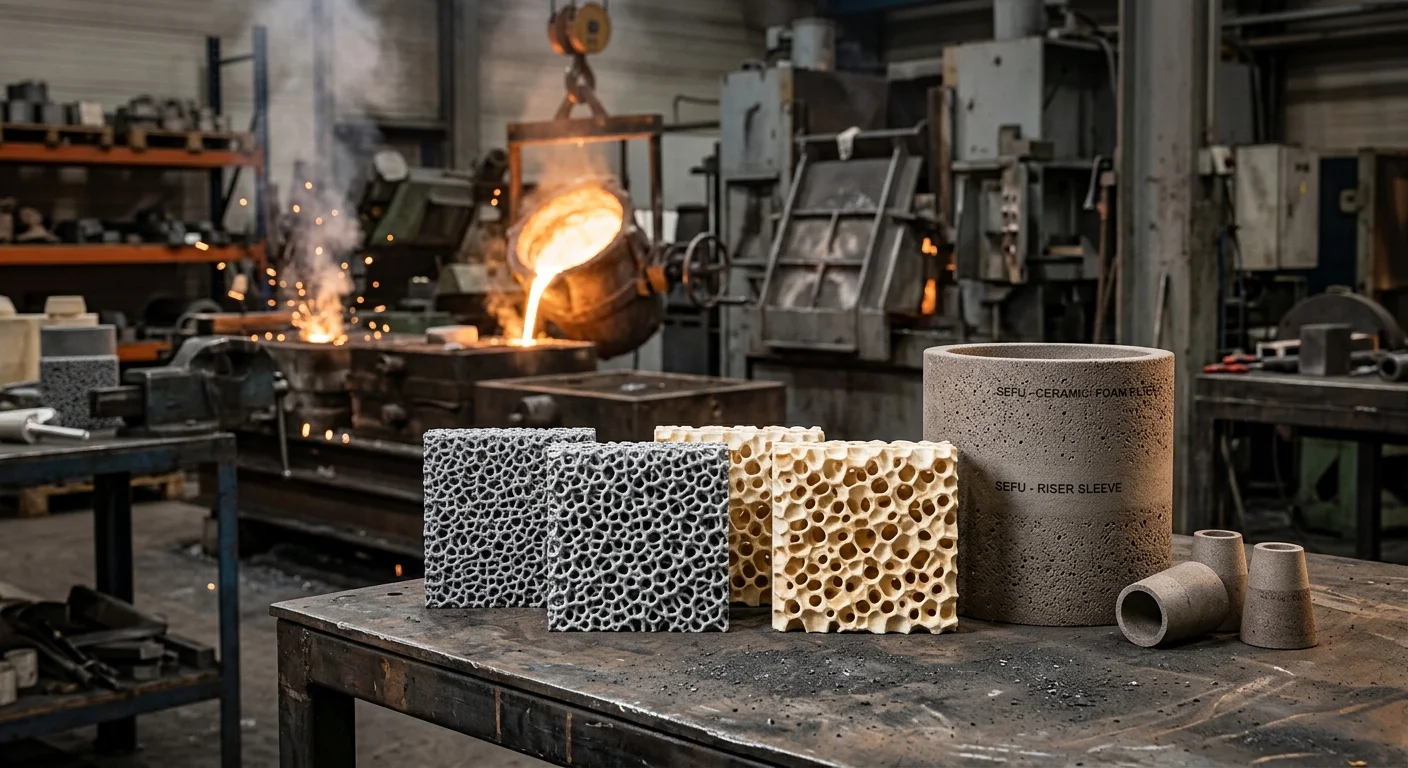
SEFU Ceramic doesn’t fit the typical riser sleeve category — and that’s what makes them worth a look for foundry buyers sourcing ceramic-based thermal materials.
They’ve been a global manufacturer and distributor for over a decade. The focus stays on casting materials and ceramic foam filters. Their product line leans toward high-temperature ceramic solutions, not exothermic sleeves.
Where SEFU stands out is thermal performance data:
-
Ceramic fiber plates handle temps up to 1450°C with thermal conductivity as low as 0.085 W/m·k at 400°C
-
Vacuum formed ceramic fiber shapes keep shrinkage on heating at ≤3% — tested across 800°C, 1000°C, and 1280°C cycles
-
Alumina ceramic foam filters reach 80–90% porosity with thermal shock resistance across 6 cycles from 1100°C to room temperature
Those foam filter numbers matter for aluminum and aluminum alloy operations. You get cleaner removal of slag, sand, and metal oxides from your melt.
All product lines support custom sizing and configurations. So if your operation has specific dimensional needs, they can work with that.
Contact: sefuceramic.com
Thank You America LLC (TYA)
Thank You America LLC (TYA) is a Houston-based metal solutions company. They’re not a typical riser sleeve distributor. TYA handles casting, forging, machining, and fabrication all under one roof.
That setup makes a real difference. You don’t need to juggle three or four vendors. Investment casting, precision machining, fabrication, and fasteners all run through one global network. Less friction. Fewer handoffs. Faster turnaround on precision parts.
TYA’s investment casting covers ferrous stainless steel. Their custom forging handles high-stress, demanding applications. The reverse engineering division is a practical bonus. No original specs? They can still reproduce legacy parts.
What TYA brings to the table:
-
Full-cycle capability from prototyping to product launch
-
Digital tools for automating custom part sourcing
-
Auto parts and industrial machinery component manufacturing
-
Spring-loaded lock washers in all sizes
Need one domestic partner to handle multiple metal processing needs? TYA is worth a direct conversation.
Contact: 1-281-949-6123
Emerging & Honorable Mention Suppliers
The foundry supply landscape is shifting. The suppliers who didn’t make the top eight are not ones you should ignore.
Two trends are reshaping who earns a spot on serious procurement shortlists right now. Digital transformation spending in industrial supply chains is crossing $700B by 2027. AI adoption is speeding up fast — 80% of manufacturing executives are putting more than 20% of their budgets into it. Suppliers moving into these shifts now are building real advantages. Those gaps will be hard to close later.
What does that mean for your sourcing decisions?
Watch for regional specialists putting money into reconfigurable production lines. Already, 52% of forward-thinking manufacturers are doing this. Defense and infrastructure reshoring is pushing localized foundry demand into new regions. Suppliers close to those demand clusters respond faster. They also stock more precisely for what you need.
The practical move: keep a live shortlist.
-
The top eight in this guide are proven options
-
The next tier is where sharp procurement teams find real leverage
-
Think better pricing, faster response times, and suppliers who are hungry to solve your specific problems
The next tier is not a backup plan. It is where you find partners who work harder for your business.
Riser Sleeve Types Comparison: Insulating vs. Exothermic vs. Collapsible
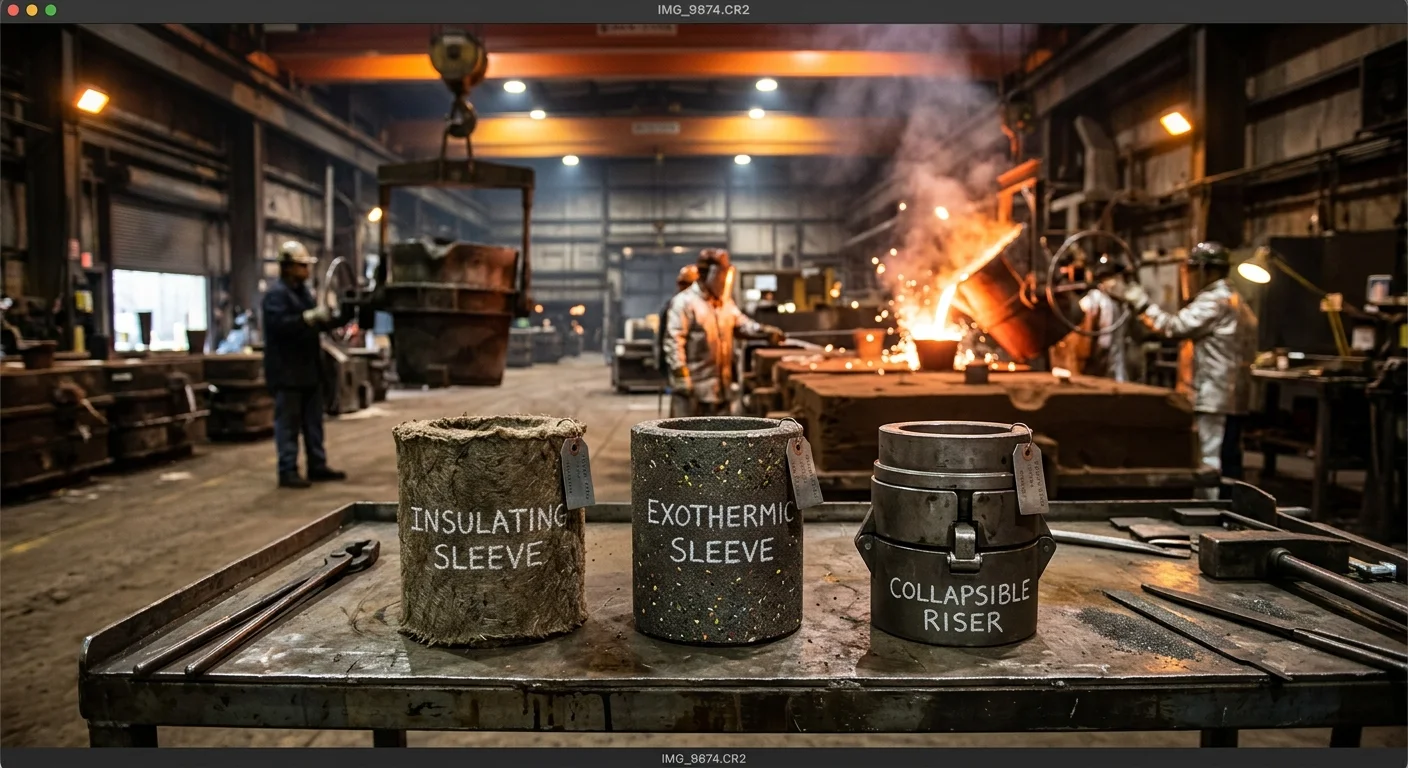
Three sleeve types dominate US foundry applications. Each one works in a different way, carries a different cost, and fits different casting conditions. Pick the wrong type and the damage doesn’t stop at one pour — it stacks up across every batch.
Here’s the breakdown you need.
How Each Type Works
Insulating sleeves slow heat loss through thermal insulation. No chemical reaction. No heat generation. They hold temperature longer by limiting how fast heat escapes into the surrounding mold. These sleeves hold 66.23% of the riser sleeve market — valued at $387.2M in 2024. That market share comes down to one thing: broad applicability across metals. Ductile iron alone makes up 39.26% of application share.
Exothermic sleeves go a step further. A chemical reaction generates heat inside the sleeve itself. That produces 30–35% more heat retention versus an unsleeved riser. Solidification time extends by up to 50%. This makes exothermic sleeves the right call for heavy steel sections and thick-wall castings — cases where insulation alone can’t keep the riser molten long enough.
Collapsible sleeves work from a different angle. They collapse after solidification. This cuts contact volume and reduces post-processing grinding time. Less mechanical work per casting adds up to real labor savings at scale.
The Comparison You Need Before Buying
|
Factor |
Insulating |
Exothermic |
Collapsible |
|---|---|---|---|
|
Heat mechanism |
Passive insulation |
Active heat generation |
Structural collapse |
|
Riser volume reduction vs. sand |
25–40% |
40%+ |
Tied to MEF |
|
Best metal fit |
Ductile iron, non-ferrous |
Steel, heavy iron sections |
Iron/steel |
|
MEF range |
1.07–1.27 |
1.07–1.27 |
Same |
|
Max yield gain |
40% (chunky castings) |
40%+ |
Thickness-dependent |
Most buyers overlook this: MEF range is identical across all three types. Exothermic chemistry boosts the reaction, but it does not push yield beyond what the MEF produces on its own. Start by matching the sleeve to your casting geometry and alloy. Then dial in thickness.
Thickness Rules That Move the Numbers
Sleeve thickness is the most overlooked variable in foundry procurement. The rules are straightforward:
-
0.2× riser diameter for chunky castings → yield gains up to 40%
-
0.1× riser diameter for rangy castings → yield gains around 8%
-
Below 0.1× → performance drops below any useful threshold
Most commercial sleeves ship undersized. That gap between spec and reality is where yield bleeds away, batch after batch.
Choosing the Right Type for Your Application
-
Thick-wall steel castings, high pour temperatures: Exothermic — the 50% solidification extension makes the difference
-
Ductile iron, non-ferrous, cost-sensitive runs: Insulating — dominant market share exists for good reason
-
High grinding-cost operations: Collapsible — labor savings stack up fast at volume
-
Sand molds: Both insulating and exothermic cut riser volume 25–40% versus sand equivalents
-
Metal molds: Exothermic wins — active heat generation offsets the faster mold chill
The global riser sleeve market is moving from $561.6M (2023) to $846.4M by 2031 at a 5.4% CAGR. Demand keeps climbing. So does the cost of choosing the wrong sleeve type.
Where to Buy Riser Sleeves in the USA: Direct vs. Distributor
US foundries spend $38 million every year on riser sleeves. How you buy them determines how much of that spend converts to real value.
Two channels dominate: direct from manufacturer, or through a distributor. Neither one wins every time. The right choice depends on your volume, timeline, and how much customization you need.
Direct purchasing cuts unit costs by 10–20% on bulk orders. You get custom specs and faster engineering support. The tradeoff is real — MOQs run 500–2,000 units, and lead times stretch 4–8 weeks.
Distributors change that equation. MOQs drop to 100–500 units. Delivery shrinks to 1–2 weeks. Credit terms help your cash flow. You pay a 15–25% markup for that flexibility, and customization options shrink.
Where to Find Verified Suppliers
-
Online platforms: ThomasNet, Foundry-Planet, and direct portals from ASK Chemicals and Vesuvius USA
-
Distributors: HAI International and Foseco US branches — together they cover 40% of North American sales
-
Trade shows: CastExpo (April, annual) closes 30% of deals on-site
Conclusion
Picking the right riser sleeve supplier isn’t just a procurement call. It’s a quality control decision you make before the metal ever gets poured.
The top riser sleeve and foundry material suppliers in the USA — from Carpenter Brothers to ASK Chemicals to newer players like TYA — each bring different strengths. The right fit depends on your alloy type, production volume, and sleeve chemistry (insulating, exothermic, or collapsible). You’ll also want to decide whether direct sourcing or distribution works better for your supply chain.
Here’s what to do next:
-
Shortlist 2-3 suppliers based on your casting specs
-
Request samples or trials before locking in volume orders
-
Compare total cost, not just unit price — shrinkage defects cost far more than a price difference
The best foundries don’t just buy materials. They build real supplier relationships. Over time, that translates into consistent yields, less scrap, and stronger margins.
That’s not a small edge. In metal casting, that’s everything.