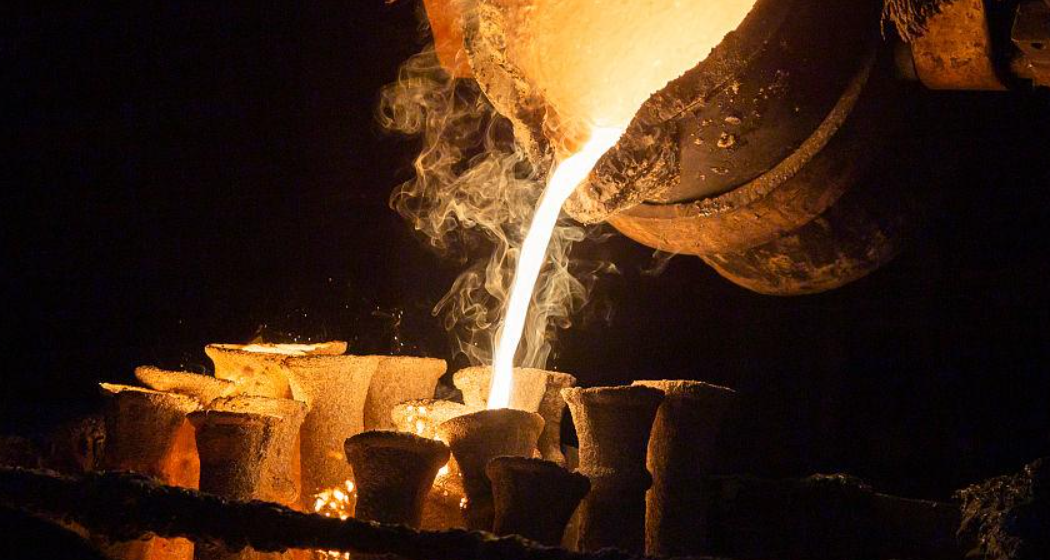
Choosing the wrong Casting process can cost you thousands — scrapped parts, missed tolerances, and production delays add up fast. Both investment casting and shell molding produce precise metal components. But they’re built for different jobs.
What is the difference between Investment casting and shell molding? It goes beyond process steps. You need to match the right method to your part geometry, your budget, and your production volume — before a single mold is made.
Here’s what we’ll cover:
-
How each process works
-
Where each one has a clear edge over the other
-
How to choose the right method for your project
What Is Investment Casting? (The Lost-Wax Process Explained)
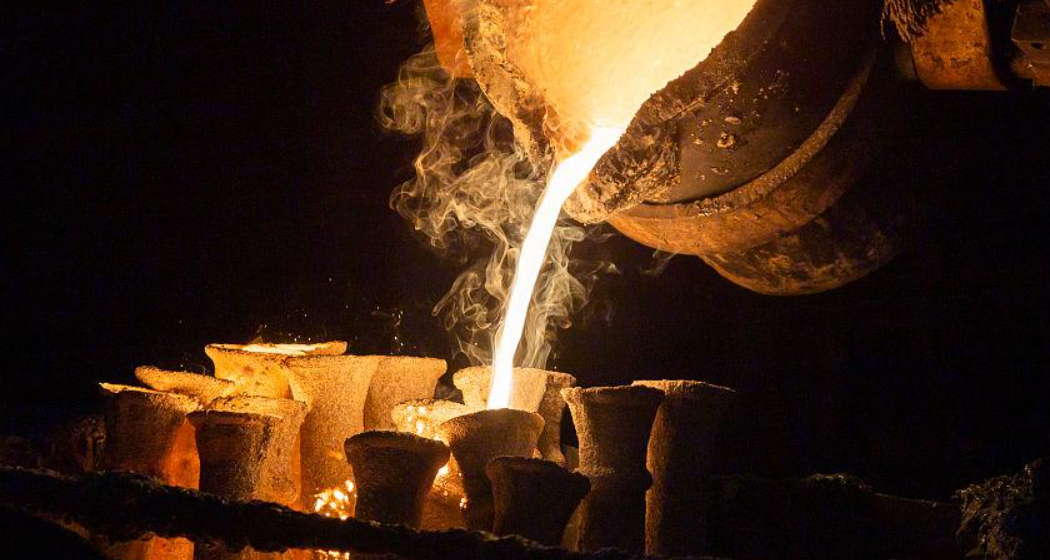
investment casting is one of the oldest manufacturing processes still in use. The logic is simple: build a wax version of your part, encase it in ceramic, melt the wax away, and pour metal into the hollow space left behind.
That’s why it’s also called the lost-wax process. The wax pattern doesn’t survive. The part does.
How the Process Works
Here’s the sequence, step by step:
-
Wax pattern injection — Wax with a melting range of 60–93°C gets injected into a metal mold. Once cooled, workers eject the wax piece and attach it to a central sprue. Multiple pieces join together to form a “tree” of parts.
-
Ceramic shell building — The tree goes into a silica slurry bath, then gets coated with stucco sand. This dipping process repeats 6–8 times over 24–36 hours. The result: a solid, self-supporting ceramic shell, 5–10mm thick.
-
Dewaxing — The shell enters an autoclave at 120°C steam pressure. The wax melts out. More than 90% of it gets collected and reused.
-
Preheating — The mold fires to 1000°C+ before the metal pour. This cuts thermal shock during casting.
-
Metal pour — Gravity, vacuum, or centrifugal force fills the cavity with molten alloy.
-
Shell removal — After cooling, workers quench and vibrate the ceramic shell off. Parts get cut from the tree and finished.
As-cast tolerances land at ±0.05–0.13mm per inch. Surface finishes reach Ra 1.6–3.2μm — smooth enough to skip most post-machining.
What Materials Work With Investment Casting
The process handles a wide range of alloys:
|
Material |
Key Property |
Common Application |
|---|---|---|
|
Stainless Steel |
Corrosion resistance |
Valves, medical implants |
|
Aluminum Alloy |
Lightweight (2.7 g/cm³) |
Aerospace structures |
|
Nickel Superalloys |
High-temp up to 1,200°C |
Turbine blades (±0.05mm) |
You also get design features that other processes can’t deliver. Think thin walls down to 0.5mm, complex internal geometries, and parts that need zero welding. So you’ll find investment casting in jet engines, surgical implants, and fine jewelry alike.
What Is Shell Molding? (The Resin-Sand Process Explained)
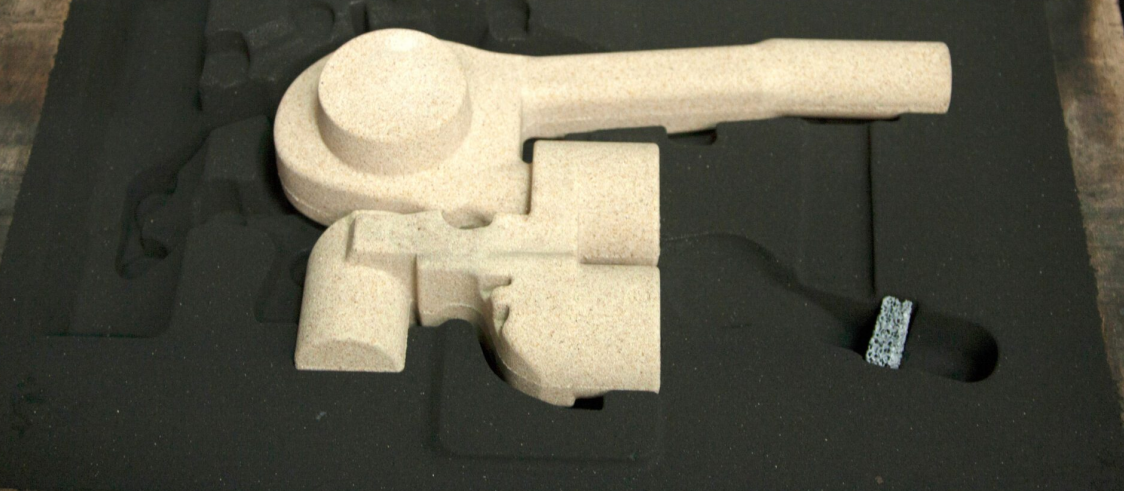
Shell molding works on a straightforward idea: press resin-coated sand against a hot metal pattern, let the resin cure into a rigid shell, and you’ve got a mold. It holds tighter tolerances than conventional Sand casting — and none of the hassle that comes with ceramic molds.
The key ingredient is resin-coated sand (RCS) — fine silica with an AFS fineness rating above 100, blended with 2–6% phenolic resin and a hexamethylenetetramine hardener. That grain is finer than the 60–80 AFS sand used in green sand casting. Finer grain produces smoother cavity walls. Smoother walls give your finished part a better surface finish.
How the Process Works
The whole sequence runs fast once the metal pattern is hot:
-
Heat the pattern — The metal die reaches 230–340°C. Then you coat it with calcium stearate so the sand doesn’t stick.
-
Coat with RCS — A box of resin-coated sand dumps onto the pattern. The resin melts on contact and starts cross-linking, building a uniform shell 6–10mm thick.
-
Strip the excess — Invert the box. Loose, uncured sand falls away. The cured shell stays put on the pattern.
-
Oven cure — The shell bakes at 475–525°F, reaching a tensile strength of 350–450 psi. A well-cured shell turns dark yellow to light brown.
-
Assemble and pour — Two shells pair together, sand or shot supports them, and molten metal fills the cavity.
-
Break out — After the metal solidifies, the resin binder collapses. Part removal is clean and easy.
Where Shell Molding Makes Sense
Metal patterns hold up across hundreds to thousands of cycles — a real edge over single-use molds. That lifespan spreads tooling costs across medium production runs. That’s the volume range where shell molding fits best. Think automotive connecting rods, valve bodies, and aluminum aviation components under 30 pounds.
It’s not built for tiny prototype runs or ultra-high-volume production. For medium batches that need consistent dimensional accuracy, though, the resin-sand process delivers repeatable results that green sand can’t touch.
Head-to-Head Comparison: Precision & Surface Finish
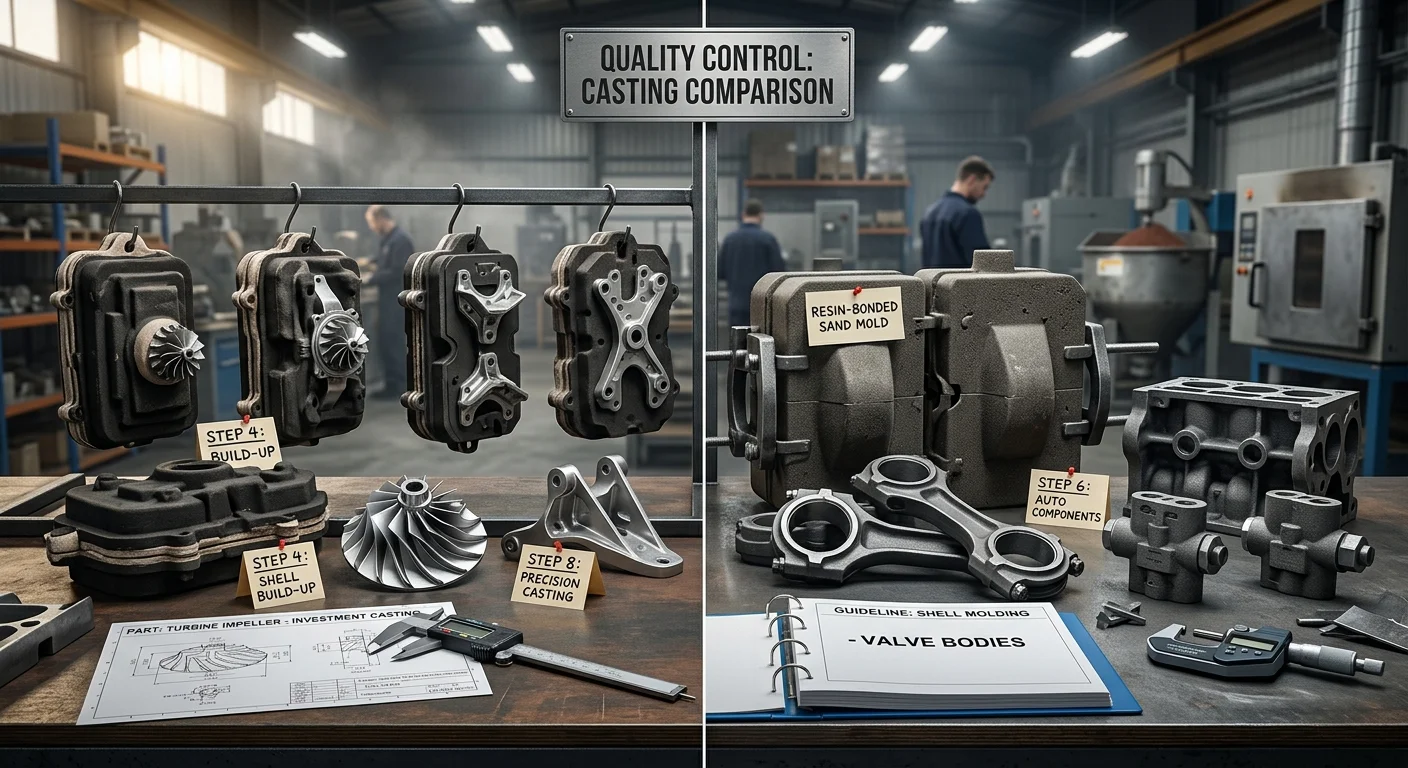
Numbers don’t lie. Put investment casting and shell molding side by side on a spec sheet. The gap between them is hard to miss.
Tolerances: Where the Gap Gets Real
Investment casting holds ±0.005–0.01 in. (0.127–0.254 mm). Shell molding runs at ±0.015–0.06 in. (0.381–1.524 mm). That’s a 3–6x difference. In precision manufacturing, that gap isn’t just cosmetic. It’s structural.
Take a thin-wall turbine blade at 0.03 in. thick. Investment casting holds ±0.007 in. The aerofoil stays seated within a 0.01 in. gap. Use shell molding at ±0.03 in. on that same blade, and you get a 0.06 in. mismatch. That means 20–30% material grind allowance and a 15% scrap risk. For aerospace, that’s not a tolerance problem. That’s a production failure.
Surface Finish: The Post-Machining Cost You Don’t See Coming
Investment casting delivers 125–250 μin Ra (3.2–6.35 μm). Shell molding produces 300–500 μin Ra (7.62–12.7 μm) — about twice as rough.
|
Process |
Ra (μin) |
Ra (μm) |
Finishing Grade |
|---|---|---|---|
|
Investment Casting |
125–250 |
3.2–6.35 |
N8–N9 |
|
Shell Molding |
300–500 |
7.62–12.7 |
N9–N10 |
Here’s what that looks like in real production. Shell molding triggers CNC post-machining in 70% of precision applications. Investment casting triggers it in just 20%. A valve seat cast at 400 μin Ra fails leak tests at 0.5 ml/min. Grinding it down to 125 μin adds $0.50 per part. Scale that across a full production run, and the “cheaper” process stops looking cheap fast.
Wall Thickness and Draft Angles: Design Freedom on the Line
Investment casting hits 0.02 in. minimum wall thickness. Shell molding stops at 0.12 in. — six times thicker. That limit cuts design options by 40% and adds 15% part weight. In components like impellers, thin 0.02 in. ribs can boost fluid flow by 25%. Shell molding can’t get there.
Draft angle requirements tell the same story. Shell molding needs at least 1°. That adds 0.1 in. of stock per side on curved geometries. Investment casting works at 0.5° or lower. You get integrated fins and undercuts that would need expensive multi-part tooling in shell molding — up to 25% more in tooling cost.
The Decision Thresholds
Three cutoffs matter most:
-
Tolerance under ±0.01 in. — Investment casting is the only option. It hits a 95% success rate at that spec.
-
Surface finish under 200 μin Ra — Go with investment casting direct. Shell molding needs polishing plus 0.002 in. stock removal to get there.
-
Wall thickness under 0.05 in. — Investment casting is the clear choice. Shell molding crack rates reach 40% at that thinness.
Your part falls into any of those three zones? The process decision is already made.
Head-to-Head Comparison: Cost, Lead Time & Production Volume
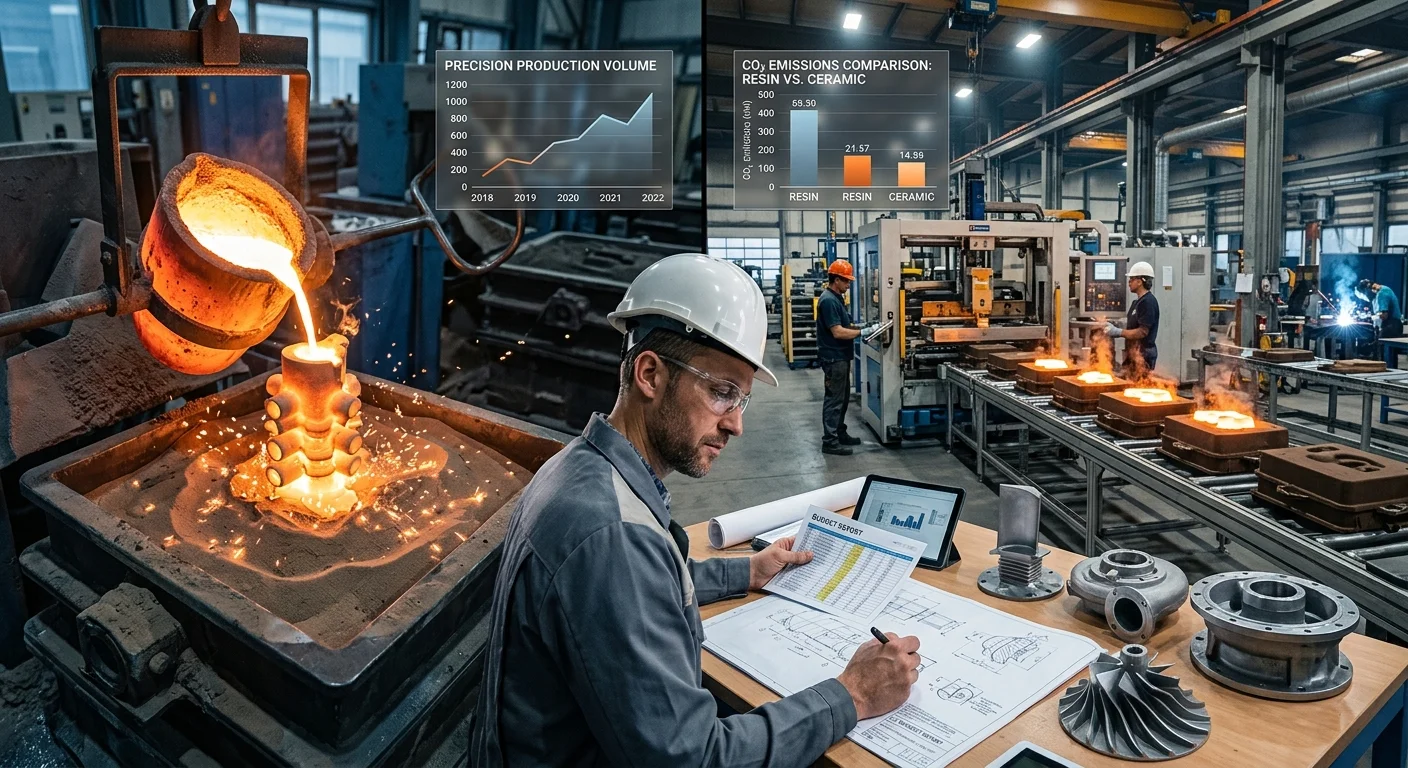
Precision costs money. So does waiting. The real question isn’t which process is “better” — it’s which one fits your budget at the volume you need.
Tooling Cost: Where the Money Goes First
Investment casting tooling runs $1,000–$10,000 per die. That’s not a typo. The ceramic shell process needs precision wax tooling, and that doesn’t come cheap. Shell molding metal dies sit in a similar range — $3,000–$30,000 — but they’re built to last. A shell mold die holds up through hundreds to thousands of production cycles before any real degradation shows up.
Here’s what that means in practice:
-
Investment casting absorbs tooling cost through single-use ceramic shells. Each production run rebuilds that shell from scratch.
-
Shell molding spreads the die cost across the full run. The longer you run, the cheaper each part gets.
For a 500-piece run, shell molding’s tooling cost per unit can drop 30–40% below investment casting. At 50 pieces, the math flips the other way.
Lead Time: How Long Before Parts Are in Your Hands
Investment casting is slower. Ceramic shell building alone takes 24–36 hours — and that’s before dewaxing, preheating, pouring, or finishing. Full lead time from design sign-off to first article runs 4–6 weeks for a new part.
Shell molding cuts that window down. Pattern heating, sand dump, cure, assemble, pour — the cycle is mechanical and fast. New tooling to first parts lands closer to 2–4 weeks. For repeat production runs, shell molding can turn orders in days.
Your supply chain has a tight delivery window? That two-week gap matters more than you’d think.
Production Volume: Matching the Process to Your Run Size
|
Volume Range |
Better Process |
Reason |
|---|---|---|
|
1–100 parts |
Investment Casting |
Lower tooling entry cost; geometric complexity justified |
|
100–10,000 parts |
Shell Molding |
Die amortization; faster cycle times; consistent output |
|
10,000+ parts |
Shell Molding |
Volume economics dominate; speed wins |
Investment casting fits low-volume, high-complexity parts best. These are parts where geometry is the hard constraint, not quantity. Think turbine blades, surgical instruments, and aerospace brackets with internal channels you can’t machine after casting.
Shell molding is a production workhorse. Connecting rods. Valve bodies. Aluminum housings for automotive drivetrains. You need thousands of identical pieces at consistent tolerances — and you need them on schedule. Shell molding delivers that.
The wrong match burns tooling budget on one end, or kills throughput on the other. Volume isn’t just a number. It’s the key variable that tells you which process belongs in your production plan.
Head-to-Head Comparison: Part Complexity & Design Flexibility
Geometry is where these two processes split apart — and picking the wrong one leads to an expensive redesign.
Internal Geometry: What Each Process Can Build
Investment casting uses ceramic cores placed inside the wax pattern. That gives you enclosed internal passages, hollow chambers, and undercut features — geometry with no exit path for a rigid pattern. The ceramic slurry coats every surface of the wax tree through multiple dip layers. It picks up detail that resin-bonded sand cannot match at that resolution.
Shell molding works on a different principle. The metal pattern must separate from the cured sand shell. So every surface needs a draft angle to release. Complex internal passages? Not practical. The process is built around external geometry that a two-piece die can reproduce — not complex internal architecture.
The numbers confirm this. Investment casting has no real draft angle requirement. Shell molding needs at least 1° on all pulled surfaces. That one constraint rules out an entire category of part designs before a quote ever reaches your desk.
Part Size and Where Each Process Hits Its Ceiling
Both processes share a similar weight ceiling — 50 lbs (23 kg) — but they get there for different reasons.
Investment casting is limited by ceramic shell strength. Larger parts bring more thermal mass, more stress on the shell during dewaxing and preheat, and higher distortion risk on the ceramic. The multi-layer shell sintered at ~1,000°C gives strong dimensional stability for small, detailed parts. Push the size too far, and that stability advantage breaks down.
Shell molding hits its ceiling through a different path. The 5–8 mm resin-bonded sand shell has limited thermal mass. Large, thick-section pours put stress on the shell beyond what it can handle. Broad flat surfaces are the weak point — the shell can flex or shift during the metal pour. That introduces dimensional error right where your drawing demands flatness.
Investment casting’s post-sintering ceramic shell holds firm against that distortion. The wax pattern transfers flat faces without sand grain interference. For any part where flat surface accuracy matters, that’s a real advantage.
Design Modification: Early Flexibility vs. Late Efficiency
Here’s a tradeoff you won’t see on most process comparison charts.
Investment casting wax patterns can be 3D-printed or hand-formed in early development. You can adjust geometry without touching hard tooling. Design changes cost time and material — not a full remachining cycle on a metal die. For R&D parts, surgical device prototypes, or aerospace components still in qualification, that freedom saves real money.
Once a shell molding metal pattern is cut, design changes mean remachining. That said, shell molding’s simpler geometry makes those changes faster and cheaper than reworking an investment casting die with detailed cavity geometry. Once the design is locked, shell molding’s efficiency takes over. A single metal pattern produces multiple mold shells per cycle. Sand reclamation rates hit ≥90%, cutting material cost by up to 20% across a production run.
The practical split:
– Design still changing? Investment casting keeps your options open longer.
– Design locked, volume is the goal? Shell molding’s pattern economics pull ahead.
|
Factor |
Investment Casting |
Shell Mold Casting |
|---|---|---|
|
Internal complexity |
High — ceramic cores enable it |
Limited — draft required for release |
|
Draft angle requirement |
None / minimal |
Minimum 1° on all pulled surfaces |
|
Flat surface distortion risk |
Low — rigid sintered ceramic shell |
Higher — resin shell can flex during pour |
|
Design modification (early stage) |
Lower cost — wax/3D-print iteration |
Higher — metal pattern remachining |
|
Typical part size ceiling |
~50 lbs |
~30–50 lbs |
|
Alloy range |
Broad, including superalloys |
Steel, iron, aluminum |
The gap between investment casting and shell molding goes beyond process steps. It comes down to what shapes each one can actually produce.
Investment Casting vs Shell Molding: Which Process Should You Choose?
Four variables drive this decision: tolerance, geometry, volume, and budget. Work through each one, and the right answer becomes clear fast.
The Two-Question Filter
Start here before anything else:
Can your part tolerate ±0.030″ across the parting line? Yes — shell molding is in play. No — shell molding is out. Any drawing that calls for tighter than ±0.030″, or Ra values under 125 μin, rules it out. Investment casting is the one process that hits those specs without adding a CNC finishing pass. That extra pass wipes out your cost savings.
Does your part have internal passages, thin walls under 0.05 in., or near-zero draft requirements? That’s investment casting territory. Shell molding’s metal pattern needs at least 1° of draft to release. That single constraint cuts out complex internal geometry from the process completely.
Match the Process to Your Industry
Here’s where each process tends to land:
-
Aerospace — Investment casting. Complex cavities, ±0.005″ tolerances, high-temp superalloys. No substitute exists here.
-
Automotive — Shell molding. Connecting rods, valve bodies, aluminum housings. Medium volumes work well, ±0.030″ is fine, and faster cycle times keep your line moving.
-
Medical devices — Investment casting. Ra 63–125 surface finish, fine details, minimal post-processing. Clean-room standards require it.
-
Industrial equipment — Depends on the part. Large-run, medium-precision components fit shell molding. Precision valves, pumps, and rotors go to investment casting.
Where Shell Molding Earns Its Place
Shell molding sits between green sand and investment casting. That middle position is useful in practice. Green sand gives you large parts at low tooling cost, but tolerances are rough. Investment casting gives you precision. Shell molding gives you speed and repeatability at medium volume — without the ceramic shell overhead.
Production target in the hundreds to low thousands? Geometry is straightforward? ±0.030″ closes your tolerance window? Shell molding is the right call. Not a compromise — the practical choice.
Conclusion
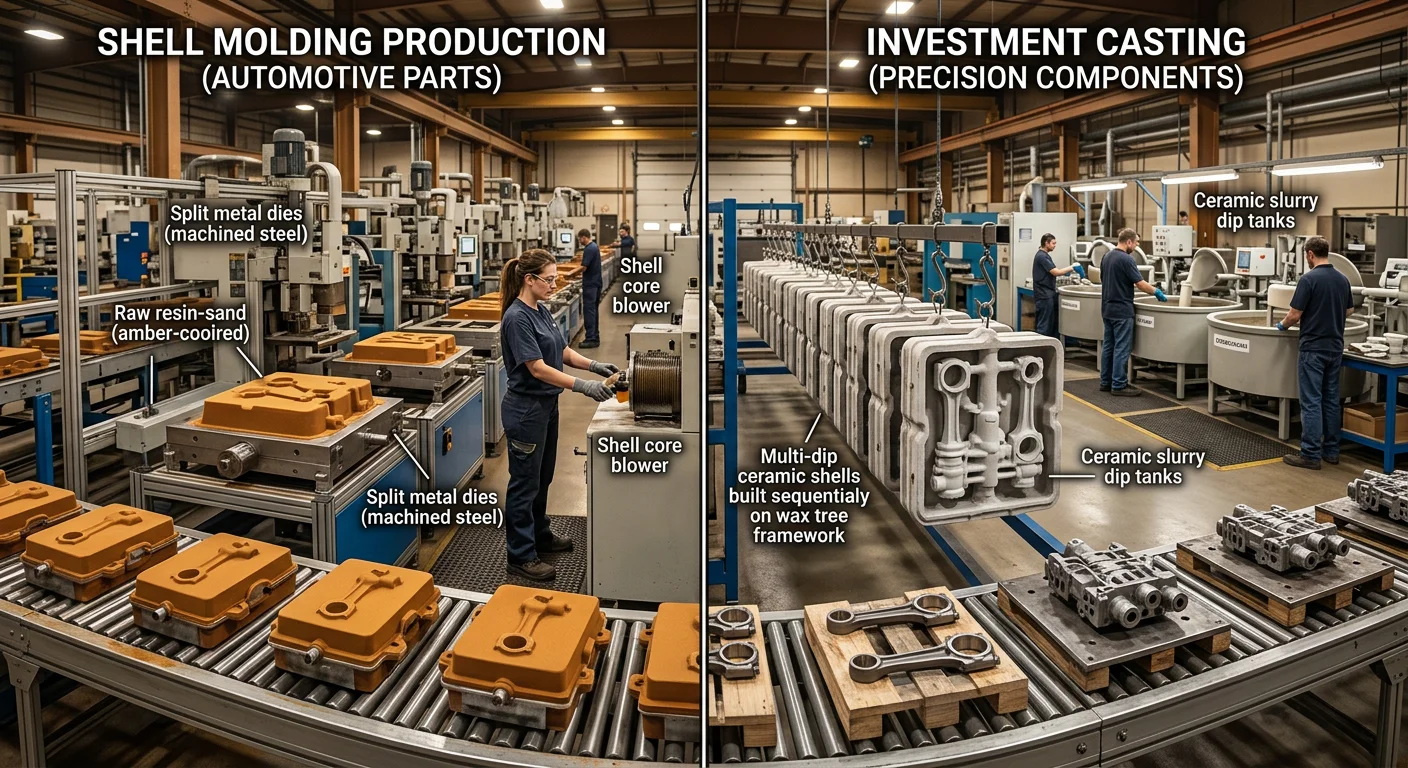
Picking between investment casting and shell molding isn’t about which process is better. It’s about which one fits your part, your volume, and your budget.
Your design needs extreme precision, complex geometry, or a clean surface finish right out of the mold? Investment casting is the right call. You’re producing mid-to-high volumes of simpler, solid parts and want to keep unit costs low? Shell molding is built for that.
It comes down to one straight question: what does this part need? Answer that, and the right process becomes clear.
Don’t guess — get it right the first time. Share your part drawings and production requirements with a qualified casting engineer. Let the specs drive the decision.
The best Casting Process is the one that never makes you second-guess yourself in production.