Sourcing the wrong mesh filter for a metal casting application isn’t just a quality problem — it’s a cost problem, a downtime problem, and sometimes a customer problem.
Dozens of suppliers are scattered across India’s foundry belts. Knowing who delivers versus who just claims to is harder than it should be. This guide cuts through the noise.
We’ve mapped the top 10 mesh filter companies in the Indian metal casting industry. Each one is evaluated on real capabilities, specializations, and what makes them worth your attention — or not.
Qualifying a new vendor? Benchmarking your current one? You’ll walk away with a clearer, sharper shortlist either way.
How to Choose a Mesh Filter Supplier for Metal Casting Applications
Not every supplier who sells mesh filters actually understands metal casting. That gap matters more than most buyers expect — until a bad batch ruins a pour.
Start by knowing what your process demands. Work through these four dimensions before you shortlist anyone.
Match the Filter Material to Your Alloy
Your alloy drives the decision. Start here.
|
Alloy |
Recommended Filter |
Key Consideration |
|---|---|---|
|
Aluminum |
Fiberglass mesh (most cost-effective); 1.5×1.5mm for thick sections |
Price-sensitive; throughput matters |
|
Iron / Steel |
Ceramic foam or wire mesh |
High slag load; needs strong flow control |
|
Copper / Brass |
Wire mesh or cloth filters |
Non-metallic inclusion prevention |
|
Magnesium |
Supported micron mesh |
Structural strength is non-negotiable |
Running aluminum at high volumes? A supplier hitting the same specs at even a sub-1% price difference is worth a conversation. At scale, those margins add up fast.
Evaluate Four Supplier Capabilities — Not Just Price
Production capacity. Fewer than 150 available mold types is a red flag. You’ll hit a wall fast during scale-up or a sudden pivot. Look for in-house CAD and prototyping capability — that’s where flexibility comes from.
Customization depth. Standard shapes don’t optimize flow well. A good supplier adjusts filter dimensions and placement to encourage laminar flow and cut out air entrapment or metal splashing. Generic off-the-shelf options leave defects on the table.
Temperature rating. Fiberglass works for aluminum’s lower pouring temperatures. Mullite handles intermediate thermal shock. For high-heat or extreme conditions, specify zirconia-based or magnesia-stabilized zirconia filters. Anything below that spec is a risk you don’t want to carry.
Quality documentation. Ask for material test certificates upfront. ISO compliance is a starting point, not proof of quality — but a supplier who can’t show it is telling you something.
RajFilters — India’s Largest In-House Mesh Weaving Facility
RajFilters has been weaving wire mesh since 1976. That’s five decades of doing one thing. No other Indian manufacturer has matched that scale.
Their in-house weaving facility produces 72,000 meters of mesh per month. That number isn’t a marketing claim. Machines run 24 hours a day, 7 days a week. A dedicated air-conditioned weaving hall keeps output precise and consistent.
For metal casting buyers, the range matters as much as the volume.
Mesh specifications:
– 3 to 1400 mesh per square inch across standard materials
– 3 to 500 mesh for stainless steel grades, with wire diameters from 0.025mm to 1.6mm
– Weaving widths from 2 feet to 5 meters, in custom lengths
Material options include stainless steel grades 304, 304L, 316, and 316L. You also get specialty alloys — Titanium, Monel, Nickel, Inconel, Copper, Phosphor Bronze, and Brass.
Six weave patterns available: Plain, Twill, Plain Dutch, Dutch Twill, Reverse Dutch, and Five Heddle. Each one suits different flow control and filtration needs in casting applications.
Quality control runs at every production stage. Video Measuring Machines check dimensional accuracy at each step. What leaves the facility matches what you ordered.
The team runs 100 strong. Manufacturing sits in Vadodara, Gujarat, operating Monday through Saturday. The infrastructure is solid. The experience runs deep. At 72,000 meters a month, the capacity speaks for itself.
Indo German Wire Screen Co. — High-Temp Multilayer Filter Specialist
Most wire mesh suppliers hand you a single layer and call it a filter. Indo German Wire Screen Co. takes a different approach.
Their Multi-Layer Cylindrical Wire Mesh Screens follow a clear logic: coarser outer layers catch larger particles, while finer inner layers handle the smaller ones. You get high dirt-holding capacity. Pressure drop stays low. High porosity keeps flow moving, and the long service life cuts down replacement costs over time.
The thermal and mechanical specs hold up where it counts:
-
Temperature resistance: Built for high-heat environments — suited for iron, steel, and die casting applications
-
Pressure tolerance: Handles high differential pressure without structural compromise
-
Thickness: Under 12 Gauge (2.68 mm); opening size under ¼ inch; mesh range 1–10
Material options cover 19 stainless steel grades — from 304L to 316 to 347 — plus carbon steel, MS, GI, and aluminum.
Customization is wide open. Choose from cylindrical, circular, or ring/disc configurations. Go single or multiple layers, spot welded or bound. Sizes reach up to 365 cm. Weave options include Plain, Twill, or Dutch. Minimum order? One piece.
For plastic extrusion lines, oil strainers, and high-pressure casting environments, the compact cylindrical and ring designs slot straight into automated production setups. No workarounds needed.
Siriram Filters — Pioneer Since 1972 with CPF Candle Filter Expertise
Fifty-plus years of making wire mesh teaches you things no product brochure can. Siriram Filters started in 1972 with stainless steel wire mesh and filter elements. In 2016, they added CPF candle filters to the lineup. That move expanded what they could offer metal casting and polymer processing buyers.
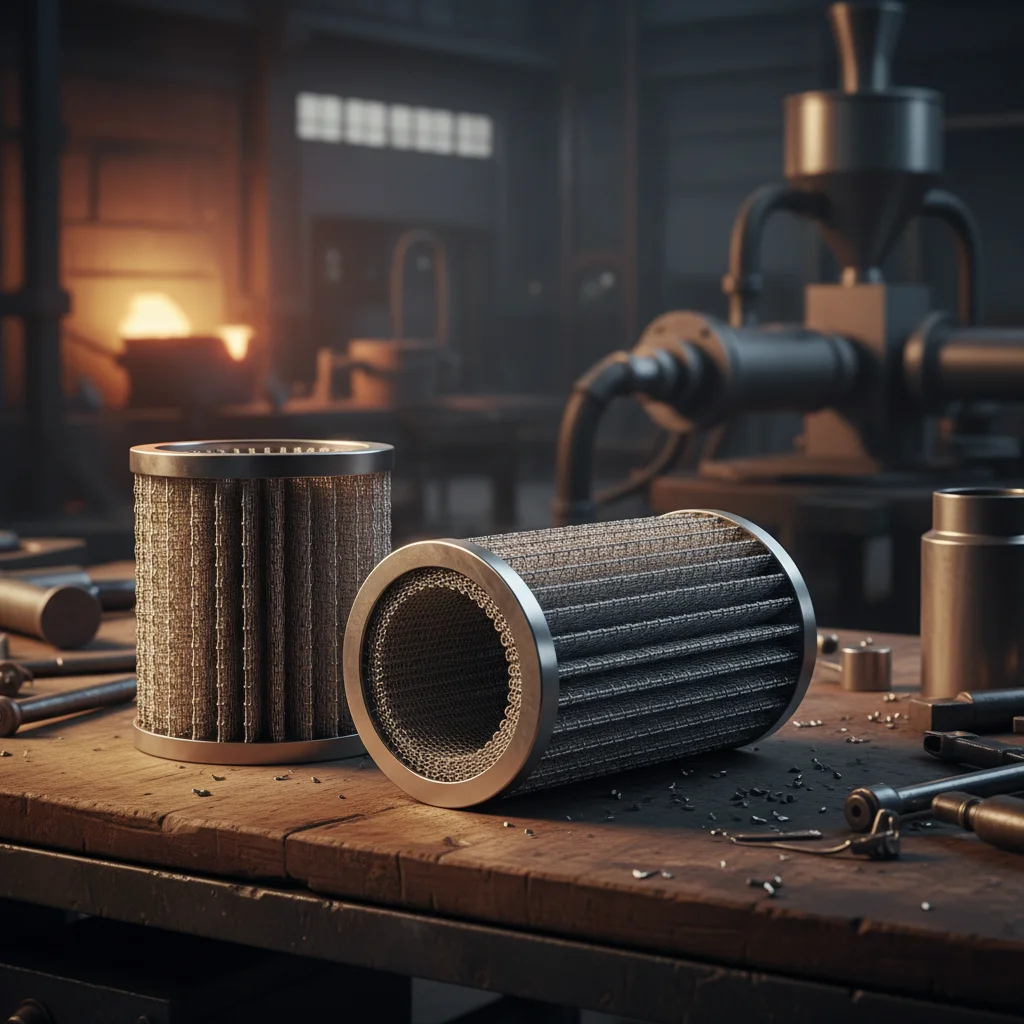
Their candle filters cover pore sizes from 5 to 80 microns. Each filter uses non-woven sintered metal fibre and Dutch twill weave. The pleated construction is worth paying attention to. Folding the wire mesh back on itself increases filtration area and dirt-holding capacity. You get this without raising machine pressure.
Two core candle filter types are available:
-
Pleated wire mesh candle filters — built to customer specs in all sizes, spot or seam welded, multi-layer construction using in-house pleating machines
-
Pleated sintered fibre candle filters — uses high-temperature setting, lamination, and lapping processes; stainless-steel fibres come in varying lengths and minimum diameters for extended candle life
Length range runs 100–1600 mm, with custom lengths available on request. Filtration precision spans 3–150 µm for sintered felt and 1–500 µm for stainless steel wire mesh. That’s a wide band covering most casting and polymer melt requirements.
In-house wire mesh production keeps their supply chain tight. It also holds operating costs lower than suppliers who source mesh from outside.
FoundryMax
Twenty years inside molten metal’s demands leaves marks on a manufacturer — in the best possible way.
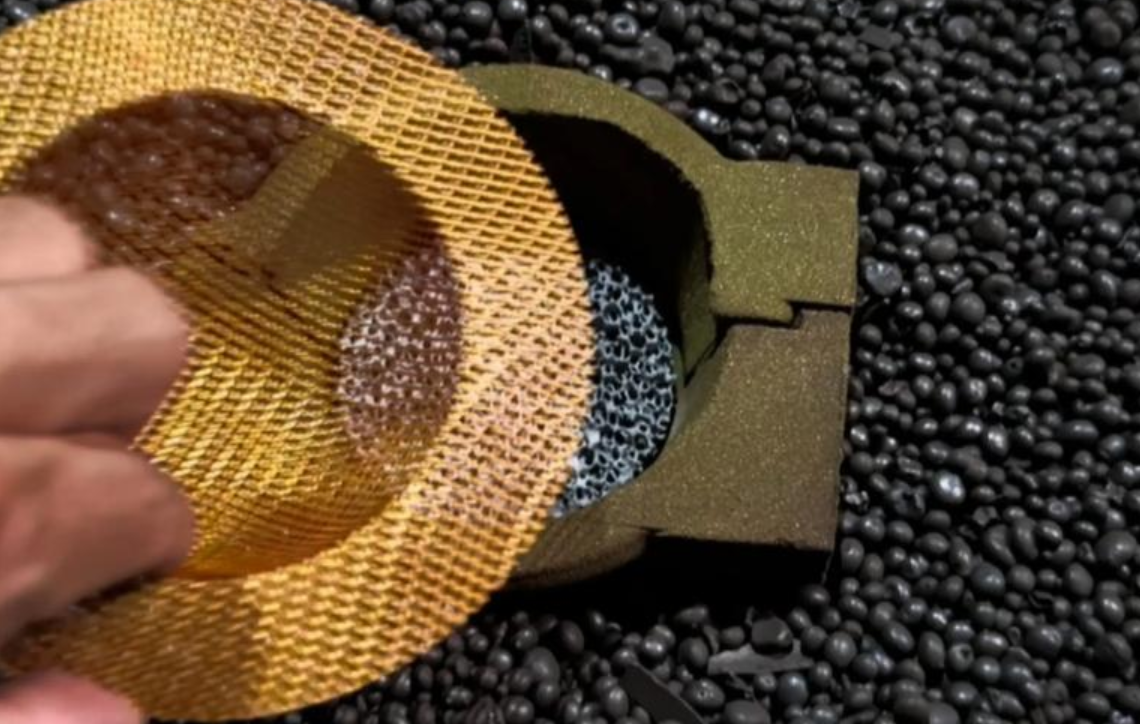
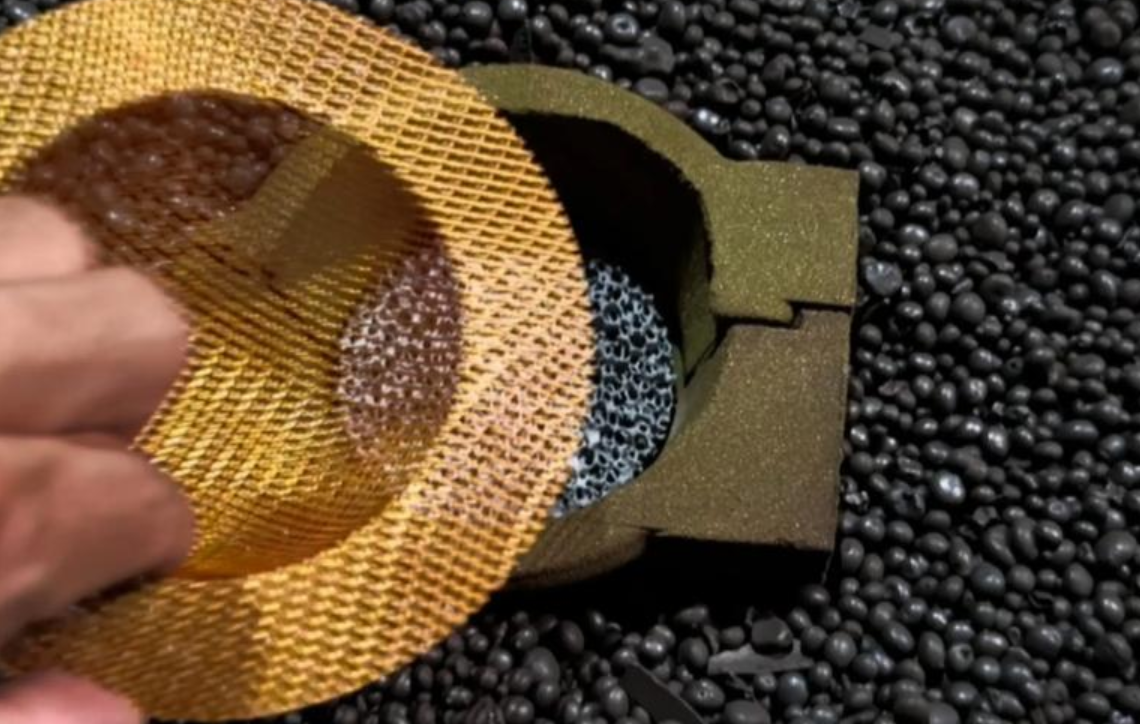
FoundryMax has spent two decades sharpening ceramic foam filters and refractory solutions for the global metal casting industry. The headline number: 95% inclusion removal efficiency, capturing particles down to 10–50μm. For iron casting, that ultra-fine capture range is hard to match.
Consistent output comes from infrastructure, not luck:
-
Automated foam processing lines hold density control to ±0.5% and dimensional accuracy to 0.3mm
-
Computer-controlled ceramic slurry systems keep viscosity and particle distribution precise across every batch
-
A linear facility layout — raw materials in one end, finished product out the other — cuts cross-contamination before it starts
The quality lab runs laser confocal microscopes, particle size analyzers, and automated compression testing stations. Every batch gets verified. Not sampled — verified.
Three years of R&D built their zirconia-based filter technology for steel casting. That line later anchored a full capacity tripling when a new production line came online.
ISO 9001:2015 certified. Technology, Production, and Business departments work as cross-functional teams. They’re built around customer project needs — not internal silos.
Micron Air Filter & Equipments Pvt. Ltd. — Pune Casting Cluster’s Go-To Supplier
Location matters in filtration sourcing. Your foundry sits inside the Chakan or Pimpri Chinchwad automotive belt. A supplier based in Talwade isn’t just a convenience — it’s a real edge over competitors.
Micron Air Filter & Equipments Pvt. Ltd. built its reputation on that closeness. Founded in 2015 and GST-registered since 2017, this Pune-based manufacturer serves the casting clusters of Chakan, Talegaon, Bhosari, Ranjangaon, and PCMC. These are the exact areas where automotive casting demand is highest.
What they bring to casting applications:
-
Metallic filters for hydraulic oil lines and industrial use
-
Pre-filters with low initial pressure drop and high dust-holding capacity — washable and cleanable
-
Fine filters and primary filters for AHU and general air systems
-
HEPA filters — each one leak-tested to IEST RP-CC 34.1, housed in 69mm aluminium casing
Micron goes beyond just supplying products. They handle site testing, commissioning, installation, and warranties too. That last point is worth noting. On-site technical support inside an active casting facility is a different level of service. It changes how problems get solved, and how fast.
Small team — 26 to 50 people — but their focus stays on the Pune industrial corridor.
Enviro Tech Industrial Products — High-Rated SS Mesh for Industrial Casting
Washable. Reusable. Certified to ASTM and BSS standards. If you run a small to medium foundry and watch every cost, those three points matter a lot.
Enviro Tech Industrial Products builds its SS 304 stainless steel mesh filters on a simple idea. A filter you can clean and reuse saves you money over time. You can wash it with water or blow it out with back air pressure. Either way, it goes right back into service.
Here’s what the specs look like:
-
Mesh range: 4 to 500 mesh, with polished finishing
-
Filtration efficiency: 65% at 20 microns; up to 85% when oil-wetted
-
Operating temperature: Above 80°C capable
-
Initial pressure drop: ~1mm WG; recommended final drop of 5–10mm WG
-
MOQ: 12 pieces — a low entry point for smaller operations
You can choose from GI, aluminum, or stainless steel frames, in flange or box type. Pricing is tiered. You pay ₹558 per unit for construction-grade use. Premium setups run up to ₹18,500.
The product line goes well past casting too. Enviro Tech also covers AHUs, paint shops, and cement factories. That tells you this is a full-scale manufacturer — not a single-niche supplier.
Balaji Electroformers — Precision Nickel Electroformed Mesh for Fine Casting
Electroforming isn’t weaving. That difference matters. Your casting application may demand aperture tolerances tighter than any loom can hold — and a loom simply won’t get you there.
Balaji Electroformers builds nickel mesh through an electrochemical deposition process. The specs look nothing like woven alternatives. Aperture tolerance holds to ±2μm. Hole edges come out sharp, burr-free, and stress-free. Open area reaches up to 98% transmission. These aren’t small upgrades. They’re core structural advantages built into how the product forms.
Key specifications worth knowing:
-
Aperture range: 0.04–0.34mm, with conical slot options from 0.04–0.12mm
-
Thickness: 3–200μm
-
Nickel purity: 99.5–99.98% (grades N2 through N8)
-
Tensile strength: Up to 780 MPa at 10μm thickness
-
Hardness: 900–1,000 HV for fine casting grades
At 100μm thickness, electroformed nickel delivers 570 MPa tensile strength. That beats annealed equivalents at the same dimension by a clear margin.
Indian foundries sourcing close to home will find the mirror-smooth conical-slot screens a natural fit for Atmanirbhar Bharat procurement goals. You get local supply — and precision stays intact.
Veekay — Cost-Effective SS304/316 Mesh Solutions for Standard Casting Needs
Budget constraints are real. Veekay gets that.
Small and medium casting plants running standard alloys under standard conditions — this is Veekay’s core market. Their SS304/316 mesh strainers come in at ₹4,000–₹8,500 per piece. That’s 20–40% below premium-tier alternatives. And the specs hold up just fine.
Here’s what the numbers look like:
-
Wire diameter: 0.68–3.10mm, tensile strength 700–1,100 N/mm²
-
Aperture tolerance: ±0.01mm on finer grades
-
Micron range: 50–3,000 µm, customizable to your debris profile
-
Pressure capacity: up to 40 bar; temperatures to 300°C
-
Free straining area: ≥6× pipe cross-section — flow stays clear, no bottlenecks
Sizes run ½” to 24″ (up to 1500 NB), stocked and ready for urgent dispatch. You get basket and Y-type strainers. Flanged options follow ASME/DIN standards. Threaded versions come in BSP/NPT.
Material selection is simple. SS304 suits milder casting environments where keeping costs down is the priority. SS316 steps in where chlorides or acids are part of the process. Veekay stocks both, so you’re not waiting on special orders.
Foundries that don’t need exotic alloys or ultra-fine precision will find Veekay a practical fit. You get reliable mesh. It ships fast. It fits the budget. No complications, no drama — just solid performance for standard casting work.
Micro Mesh India — Custom Wire Diameter & Mesh Size Engineering
Wire diameter looks like a minor spec — until it becomes the reason your design fails. Micro Mesh India built their entire operation around getting it right.
Their production range covers 0.3mm to 16mm wire diameter. That’s one of the widest spans from any single Indian manufacturer. Mesh counts run from 0 to 100 per inch, across SS304, copper, brass, mild steel, and spring steel. That range exists by design. It’s built for engineers who won’t settle for “close enough.”
Custom fabrication covers a lot of ground:
– Six crimp types: double crimp, intermediate, dovex, lock crimp, and more
– Edge preparations: K-1 through K-7, S, and U profiles
– Production range: 0.5mm to 150mm opening sizes
– Weave options: twill, welded, electric, crimped
Open area benchmarks fall between 46.2% and 79.6%. The exact number depends on mesh count and wire diameter. These figures matter most when you need to balance flow rate against inclusion capture.
Casting engineers working on custom gating systems or non-standard filter shapes will find real value here. Micro Mesh India works across multiple materials — including copper and brass — with full cut, shape, bend, and weld capability. You get a vendor that builds to your exact spec. They won’t push you toward a standard catalog item just because it’s easier for them.
Kumar Process — Pleated Metallic Mesh Filter Leader
Flat filters do one job. Pleated filters do it several times better. Kumar Process built their entire metallic mesh line around that single engineering truth.
The pleated design multiplies filtration surface area compared to flat or candle alternatives. More surface area means particulate load spreads across the filter evenly. Pressure drop stays low. Clogging slows down. Service life extends. In high-volume casting lines, downtime is expensive — so that math matters.
Porosity runs from 2 to 150 microns. Standard lengths — 10″, 20″, 30″, 40″ — are available, with custom dimensions on request. Materials include SS 304/316, SS 316L, and Hastelloy C-22/C-276. You get 5, 7, or 10-layer sintered and pleated constructions to choose from.
Their model range covers serious ground:
-
PMF-3 — inside support, outside-to-inside flow
-
PMF-4 — polymer melt, inside-to-outside flow
-
PMF-7/8 — hydraulic and lube oil, threaded connections
-
PMF-9 — flange-mount liquid filtration
Sintering, pleating, and welding all happen in-house. That keeps pricing controlled. Plus, you get real flexibility on customization — not just a checkbox option.
Conclusion
Picking the right mesh filter supplier goes beyond procurement. It’s a quality decision. You see it in every pour, every casting, and every finished part that leaves your facility.
India’s metal casting industry has plenty of capable suppliers. But capable and right for your application are two very different things. RajFilters brings large-scale output. Balaji Electroformers delivers micron-level precision. Kumar Process excels in pleated filter performance. The best mesh filter company in the Indian metal casting industry is the one built for your specific alloy, temperature, and tolerance requirements.
So here’s your next move:
-
Don’t shortlist on price alone
-
Request technical datasheets
-
Ask about lead times
-
Run a trial batch
The top mesh filter companies in India’s metal casting industry have put in the work to build real expertise. Your job now is to match that expertise to your production line — and let quality take care of the rest.