Ask ten suppliers for a fiberglass mesh Filter quote, and you’ll get ten different prices—none of them accurate. That’s because most buyers send a request with half the specs missing, forcing suppliers to guess at mesh count, material grade, or coating requirements just to put a number on paper. That guesswork costs you time, and it almost always costs you money.
This guide fixes that. We break down exactly what a supplier needs to see in your Fiberglass mesh filter RFQ—from mesh opening size and material composition to thickness, coating, and cutting tolerances—so the first quote you get is the one you can actually work with. Whether you’re sourcing a one-off batch or setting up a recurring bulk fiberglass mesh purchase, you’ll walk away with a ready-to-use template and the confidence that nothing critical got left out.
Product Application & Basic Specifications (Product Application & Basic Specifications)
Metal type decides everything else. Before you talk mesh count or thickness, the supplier needs to know what you’re pouring. The wrong filter melts, sags, or fails mid-pour.
Match your application to the right filter family:
-
Aluminum / aluminum alloy casting → Standard fiberglass mesh filter. Works at 700–800°C, softens around 900°C, handles short peaks up to 850–900°C. It’s perfect for automotive wheels and structural aluminum parts. Push it past that window and you’re asking for trouble.
-
Iron casting (ductile, gray, white iron) → High-silica fiberglass mesh filter. Rated for 1000–1200°C, some grades hold to 1400–1450°C.
-
Steel casting (carbon, stainless) → High-silica only, in thick or reinforced versions rated 1600–1620°C with a softening point near 1700°C. Standard mesh won’t survive this.
-
Localized filtration (small steel parts, gate-end filtering) → Cap-style filter, built for tighter installation and concentrated impurity capture.
Rule of thumb: higher pour temperature = higher silica content required. Using standard mesh on iron or steel is guessing with your production line.
Typical mesh openings run 1.5×1.5mm, 2.0×2.0mm, 2.5×2.5mm. Steel applications usually start at 1.5mm. Continuous working time varies too: aluminum filters last 10–20 minutes, iron around 10 minutes, steel closer to 5 minutes depending on coating and structure.
Get this metal-to-material match wrong in your RFQ, and every quote that follows is built on a bad assumption.
Mesh Opening & Material Composition
Six numbers control your filtration outcome: 0.8, 1.0, 1.2, 1.5, 2.0, and 2.5mm. That’s the full range of mesh sizes suppliers actually stock. Pick the wrong one and you bleed inclusions through or choke your pour speed.
Match opening size to filtration goal:
-
0.8–1.2mm (fine) — Use for thin-wall castings, precision parts, or anything where surface finish matters more than throughput.
-
1.5mm (standard) — The industry default for automotive wheels and general casting. Balanced flow-to-filtration ratio.
-
2.0–2.5mm (coarse) — For heavy castings and high-tonnage pours where fast fill time is the priority. Lower risk of clogging, higher throughput.
Material composition splits into two camps. E-glass fiberglass runs 58–65% SiO2 and handles up to roughly 800°C. It costs less and works best for standard aluminum work. High-silica base hits 96%+ SiO2 and softens near 1700°C. It survives long continuous pours without degrading. Expect to pay 1.5–3x more for high-silica, depending on weight, width, and coating.
Weave pattern also matters. Plain weave gives uniform square openings for consistent flow. It’s the standard choice for most filter mesh applications. Leno weave locks edges tighter, resists distortion, and holds its shape better under thermal stress. Specify it if dimensional stability is non-negotiable.
For your RFQ, state opening size, SiO2 percentage, and weave type together. Leave one out and the supplier fills the gap with their default, not yours.
Coating, Thickness & Weight Specifications
You’ve got four coating options, and each one solves a different survival problem. Pick wrong and your filter mesh either underperforms or costs more than it needs to.
Match coating to your thermal and erosion demands:
-
No coating — Bare mesh, lowest cost, lowest added weight. Fine when the substrate handles the heat alone and no secondary protection is needed.
-
Phenolic resin coating — Carbonizes under heat to form a carbon skeleton. That carbon layer boosts room-temperature strength and helps the mesh hold shape once it’s hot. Phenolic resins typically make up 3–5 wt% of the coating mix in refractory applications.
-
Heat-resistant resin — Built for mid-to-high heat where you need structural stability under thermal load, not maximum carbon residue.
-
Carbonized refractory resin — The top-tier option. Handles severe thermal shock and heavy slag or metal erosion. The carbon network formed after carbonization gives it that resistance.
Thickness follows metal flow rate, not preference. Standard filters run 0.35–0.6mm, good for low-to-moderate flow and shorter contact time. High-silica filters run 0.65–0.85mm for high-flow, high-erosion pours. Rule of thumb: low or intermittent flow gets 0.35–0.45mm, continuous medium flow gets 0.45–0.60mm, high-flow or long-duration pours need 0.65–0.85mm.
Weight scales with thickness. Light filters (150–200 g/m²) are cheap and dry fast but wear faster. Mid-range (200–280 g/m²) balances coverage and durability for most jobs. Heavy filters (280–350 g/m²) handle high heat and long runs but demand tighter drying control to avoid cracking.
Size, Shape & Cutting Requirements
Rolls come in fixed formats until you ask otherwise. Standard supply runs 0.9m or 1.0m roll width (±1cm tolerance) with 100m, 150m, or 200m roll length. Beyond those defaults, suppliers offer wider industrial patterns: 0.914m, 1.2m, 1.5m, 1.6m, 1.8m, and 2.0m widths, with 200m, 500m, or even 1000m lengths.
Shape decides the cutting method. Two categories cover most jobs:
-
Rectangular sheets or panels. If your downstream process needs fixed blanks or trim-to-size feedstock, this is the standard route.
-
Round for circular or disk-based parts. Cutting systems need a diameter, not width and length.
Custom sizing has limits, but they’re wider than most buyers assume. Some converters slit down to 0.5mm width depending on the material. Width and length get negotiated against MOQ, material weight, and shipping constraints.
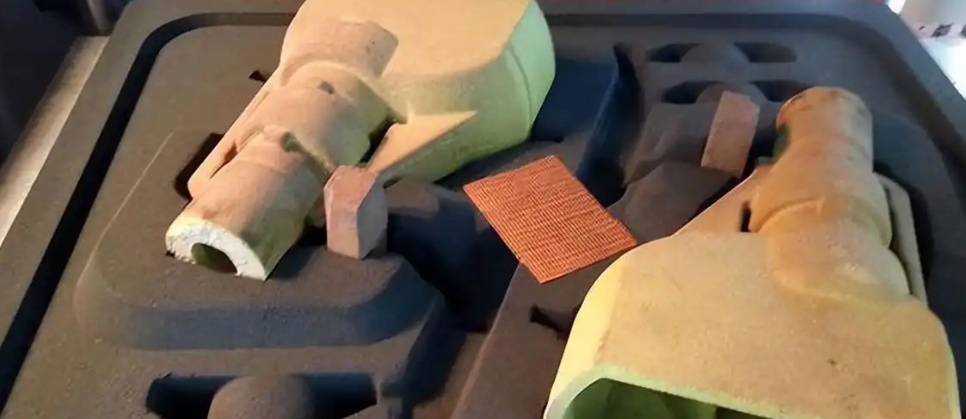
For custom dimensions, you submit the target width, length, and shape, confirm the material and tolerance, and the supplier cuts to spec. The quote reflects MOQ and handling, and production ships to your exact requirement. Skip any step and the order stalls before it starts.
Performance Requirements & Technical Parameters (Performance Requirements and Technical Parameters)
Numbers win arguments. When a supplier questions whether your filter mesh can survive real production conditions, technical parameters settle it.
Tensile strength grades by load level:
-
Low load: 12–15 kgf/cm²
-
Medium-to-high load: 35–50 kgf/cm²
-
High-strength applications: 80–130 kgf/cm²
Grade selection isn’t about picking one number in isolation. Suppliers look at mechanical impact, thermal shock, load-bearing demands, and installation method together. Iron and steel filtration under high heat almost always calls for the upper bracket.
Gas evolution and burn-loss limits matter just as much. Gas evolution ≤30–40 cm³/g keeps pinholes, porosity, and surface defects out of your castings. Loss on ignition (LOI) ≤3% means low volatile content, which gives you better dimensional stability at high temperature. Industry testing burns samples to constant weight between 950–1025°C to verify this.
Metal flow pressure resistance separates casual filters from workhorse filters. For iron and steel, look for 45–150 kg/cm² pressure tolerance. That works out to about 4.41–14.71 MPa after conversion (1 kgf/cm² = 98.0665 kPa). Anything above 90–130 kgf/cm² is built for harsher steel and iron conditions. Filters below that range risk cracking or metal penetration under flow.
Continuous working duration also caps performance. A rating like <20 minutes @700–800°C means the filter is made for short-contact or intermittent use, not extended pours. Know this before you order. Otherwise you’re solving a durability problem after production starts, not before.
Quantity, Pricing & MOQ Considerations (Order Quantity, Price, and Minimum Order Quantity)
Pricing units aren’t interchangeable, and mixing them up wrecks your comparison before it starts. Fiberglass mesh filter suppliers quote three ways: pieces, m², or rolls. Pieces work for standardized finished units; expect roughly $2/pcs at MOQ 300 pcs. Square meters suit continuous roll-cut material, with ranges spanning $0.42–0.53/m² (MOQ 1 m²) up to $7.23/m² (MOQ 200 m²). Rolls fit packaging logistics better, typically $0.45–$35/roll depending on MOQ tier.
MOQ signals what you’re actually buying: 1 m² or 1 roll means standard spec, sample or trial run; 20–300 rolls means regular batch production; 100–10,000 m² means custom color, coating, or non-standard width.
Volume drives price down fast. Public quotes show swings from $0.95/roll (MOQ 10) to $0.076/roll (MOQ 65,000)—scale matters that much. Standardizing width, thickness, and packaging typically unlocks 3–10% negotiation room.
Calibrate your target price with this formula: base material cost + processing + packaging + freight/duty estimate + 5–15% quality buffer. Convert every quote to the same unit before comparing.
Logistics, Packaging & Trade Terms (Logistics, Packaging and Trade Terms)
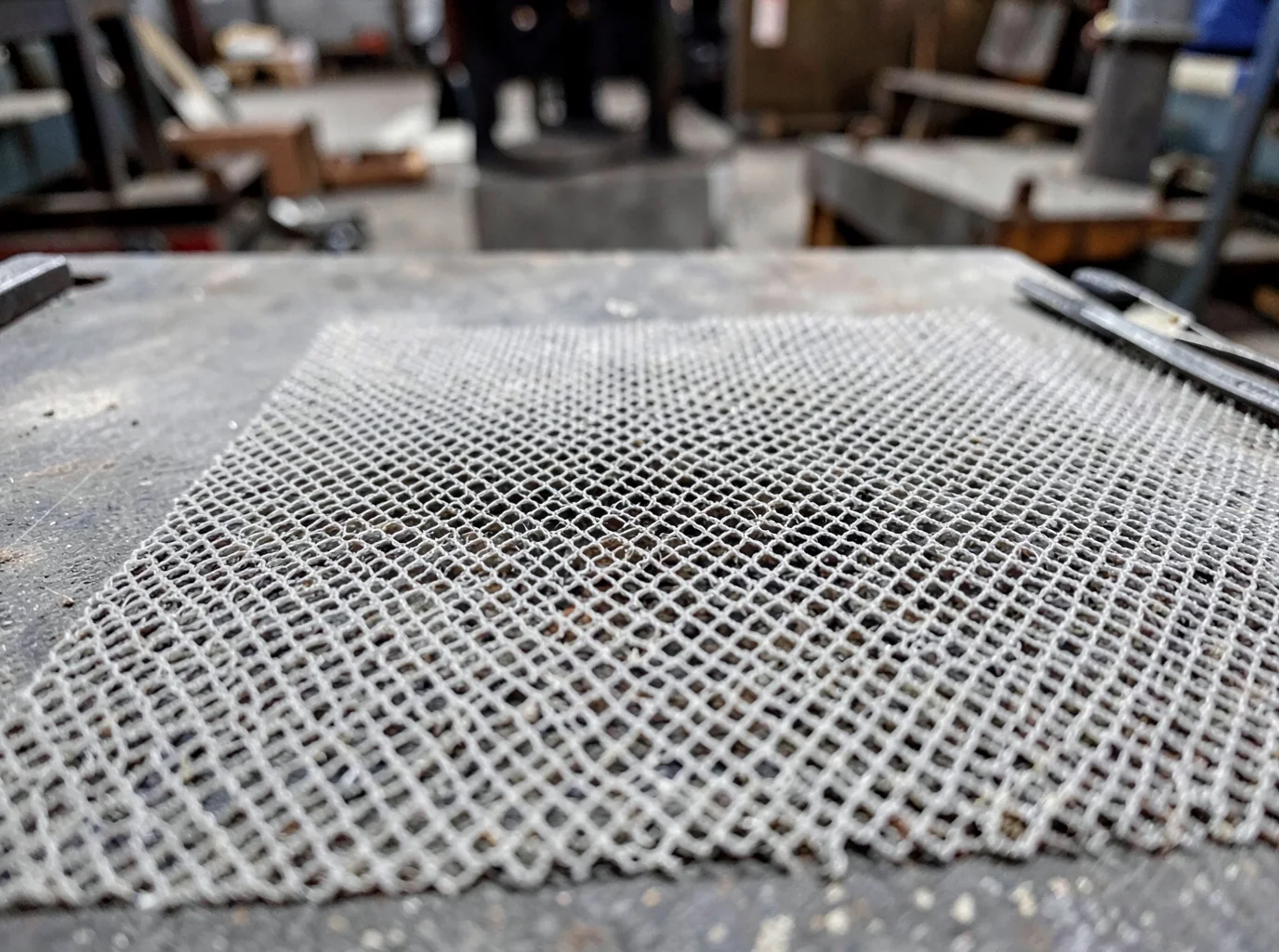
Packaging choice depends on product fragility. Standard packing—boxed, palletized, uniform marking—works for bulk fiberglass mesh orders with low breakage risk, and it keeps both cost and lead time down. Custom packing earns its price for high-value, oversized, or moisture-sensitive filter mesh shipments. Decide in this order: fragility, then shipping method, then destination inspection rules, then order volume.
Trade terms change your real cost. EXW looks cheapest on paper but stacks freight, export clearance, and insurance onto your side. FOB puts the supplier on the hook through loading, giving you clearer rate comparisons. CIF bundles freight and minimum insurance, but risk transfers at loading regardless. One public case priced EXW and FOB both at $7,800, versus $8,250 for CIF. Wrong Incoterm selection can inflate total import cost by 15–30%.
For lead time, split the request into two windows: administrative (quote, approval, documentation) and transit (pickup, shipping, customs, delivery). State your hard deadline, acceptable partial-shipment ratio, and backup freight method upfront.
Certification, Documentation & Sample Request (Certification Documents and Sample Request)
Paperwork wins or kills a deal before a single piece ships. Request these upfront: Certificate of Conformance (CoC), Mill Test Report (MTR), Certificate of Analysis (CoA), and EN 10204 material certificates. EN 10204 has three tiers: 2.2 covers non-specific batch testing, 3.1 adds manufacturer-authorized verification for standard orders, and 3.2 requires third-party inspection for high-risk or export-grade filtration jobs. If the shipment crosses borders, also ask for ISO certificates, Certificate of Origin, and DoC/DoP.
Every document should include a heat/lot/batch number, the material grade, dimensions, actual chemical and physical test data, and a signed, dated authorization.
When requesting samples, ask for a sample that matches the production material, coating, and drawing revision. Also request the CoC/MTR and full test reports alongside the sample, plus price tiers, MOQ, lead time, and packaging spec.
A qualified sample matches spec, ships with complete documentation, traces to a verifiable batch, and hits stated performance numbers under test.
Ready-to-Use RFQ Template for Fiberglass Mesh Filter
Copy-paste this template instead of scrolling back through six sections every time you email a new supplier. Here’s the condensed version, ready to drop into any inquiry:
Please quote fiberglass mesh filter for metal filtration. Application: [aluminum / iron / steel / copper casting] Material: [standard silica / high-silica / E-glass], coating: [none / heat-resistant resin / carbonized] Mesh opening: [0.8×0.8 / 1.0×1.0 / 1.5×1.5 / 2.0×2.0 mm], weave: [plain / leno] Size: width [ ], length [ ], thickness [ ], gsm [ ] Working temperature: [ ]°C Quantity: trial qty [ ], annual usage [ ] Please include: MOQ, lead time, certificates, packing, and Incoterms [EXW/FOB/CIF/DDP]
Send this as-is, and suppliers stop guessing. That’s the whole point of a proper fiberglass mesh filter RFQ.
Frequently Asked Questions About Fiberglass Mesh Filter Quotation (FAQ)
Buyers ask the same five questions before they ever hit send on an RFQ. Here’s what matters.
Does copper filtration need different specs than aluminum?
Yes. Copper runs at 1200°C with roughly 10 minutes of continuous working time, closer to iron than aluminum. aluminum casting typically pours at 680–760°C, which lines up with the standard filter’s 700–800°C working range. State your actual pour temperature when you send the RFQ. “Aluminum” or “copper” alone doesn’t give the supplier enough to work with.
Why do prices swing from $0.115/m² to $20/m²?
Material grade and coating do that. high-Silica mesh with SiO₂ ≥96% and refractory coating costs more but survives longer pours. Small custom-cut samples sit near the low end; specialty coated rolls hit the high end.
Is the filter reusable?
No. Fiberglass mesh filters partially carbonize once metal flows through them, so they’re single-use consumables. Budget your order quantity against per-pour usage, not reuse cycles.
How fast can custom sizes ship?
Custom cuts from 30mm to 600mm are common, and many suppliers turn quotes around in 24 hours if you provide full specs upfront.
Conclusion
Preparation gets you a fast, accurate quote for fiberglass mesh filters. When you walk into a fiberglass mesh filter RFQ with clear mesh count and micron rating specs, defined application requirements, and realistic quantity expectations, you turn a guessing game into a same-day quote request.
The suppliers who respond fastest and price most competitively are the ones who receive complete information upfront. Skip a detail like material composition, thickness, or certification needs, and you’ll wait days for clarification emails instead of production timelines.
Use the checklist and RFQ template above before reaching out. Suppliers will compete for your order.
Fill out our quick RFQ form with your specs, and FoundryMax’s team will get back to you with a detailed, no-nonsense quote, usually within 24 hours. Your next casting run shouldn’t wait on paperwork.