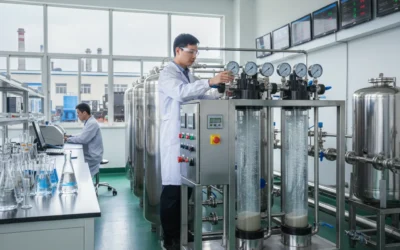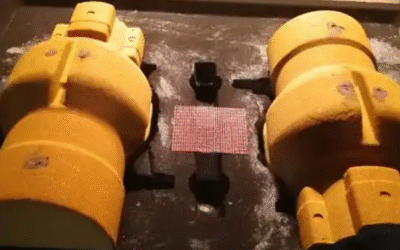
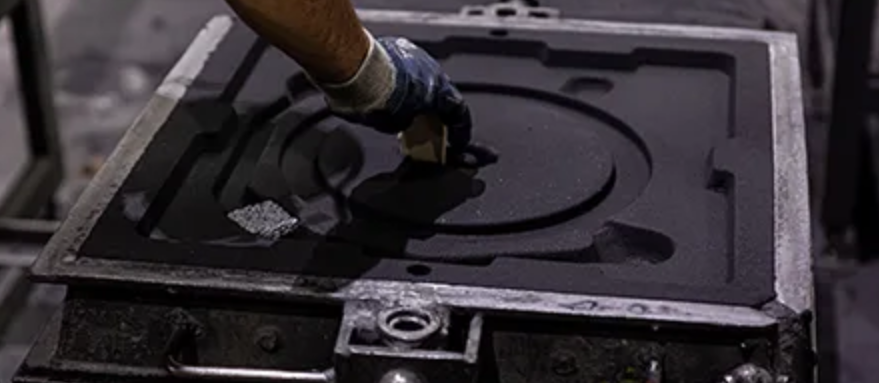
Molten metal demands trust. Every casting depends on sand holding its shape under intense heat, pressure, and time. Most engineers don’t think twice about it — until something goes wrong.
What foundry sand is used for runs much deeper than “it holds the mold together.” From precision automotive parts to heavy industrial castings, the right sand makes the difference between a flawless part and a rejected one. Poor sand management means scrapped parts, lost time, and real money.
But one thing often gets missed: filtration. Once sand is spent, what happens next decides whether it becomes a liability or a resource.
This guide covers:
- The core applications of foundry sand
- The science behind sand performance
- Why filtration is a quality strategy, not just a maintenance task
What Is Foundry Sand? Definition and Core Characteristics
Foundry sand is not the sand from a construction site. It’s engineered — uniform, clean, and built for one job: forming the mold cavity that gives molten metal its shape.
Foundry sand is high-quality silica (SiO₂) at its base. Each grain is graded to a precise size, so it holds up under pressure and heat without surprise. That consistency sets it apart from bulk construction sand, which is irregular, variable, and built for no specific purpose.
A typical green-sand mix breaks down like this:
- 75–85% silica sand — the structural backbone
- 5–10% bentonite clay — the binder that holds everything together
- 2–5% water — activates the clay and controls plasticity
- ~5% sea coal — a carbonaceous additive that improves casting surface finish
Each component earns its place. Nothing is filler.
The sand must handle several jobs at once:
- Hold shape when packed, inverted, and exposed to molten metal
- Allow gas to escape through its permeability — trapped gas means defects
- Resist heat without collapsing or fusing to the casting
- Reproduce fine detail from the pattern surface with precision
In the U.S., ferrous metals — iron and steel — account for 95% of foundry sand use. The rest goes to aluminum, copper, and brass castings.
After enough cycles, the sand becomes spent foundry sand. It’s still mostly silica, but now it carries a coating of burnt carbon and leftover binders. What happens to it at that point matters more than most people think.
Primary Industrial Uses: Sand Casting and Core Making
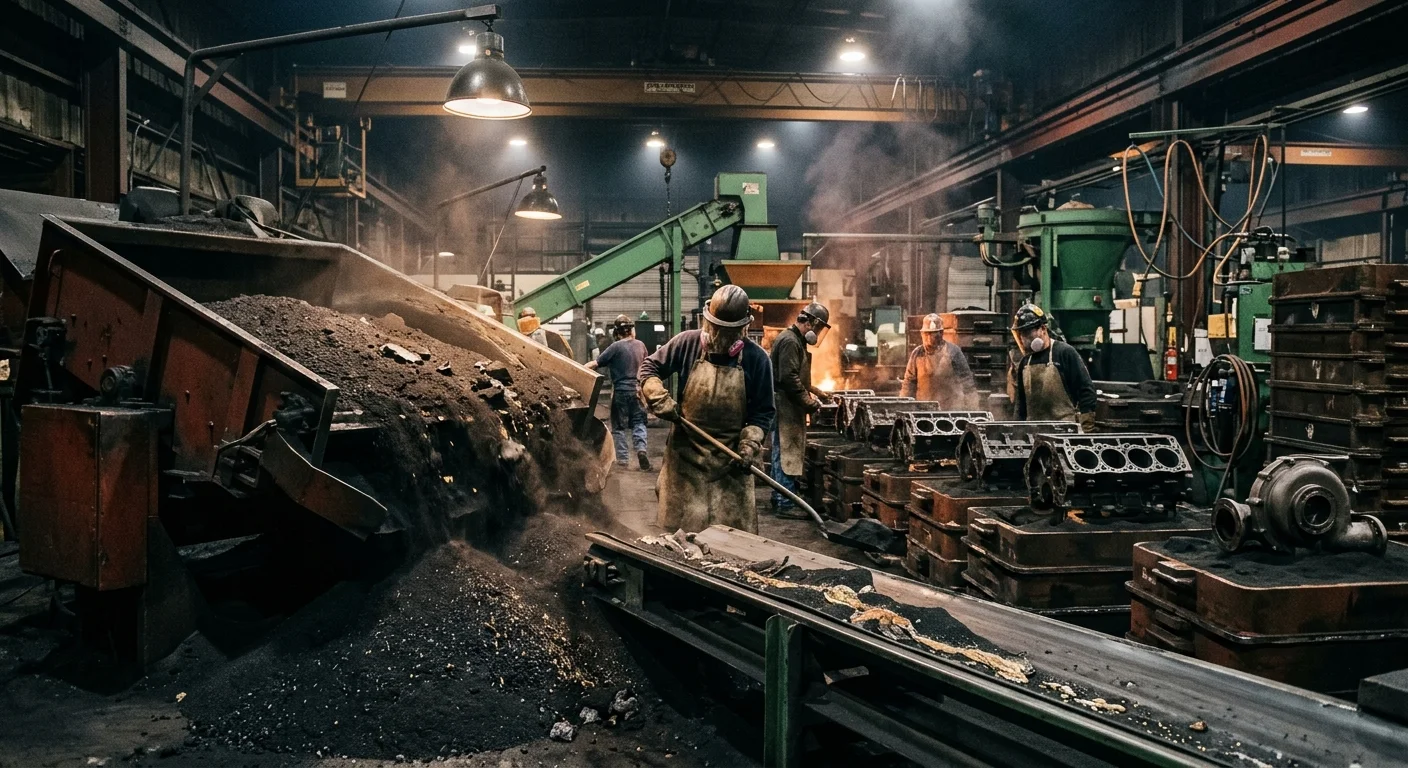
Sand casting accounts for more than 60% of all metal castings produced worldwide. That’s a big number. Think about it — more than half of every metal part you can name started as loose sand packed around a pattern. Engine blocks, pump housings, boiler components — all of them.
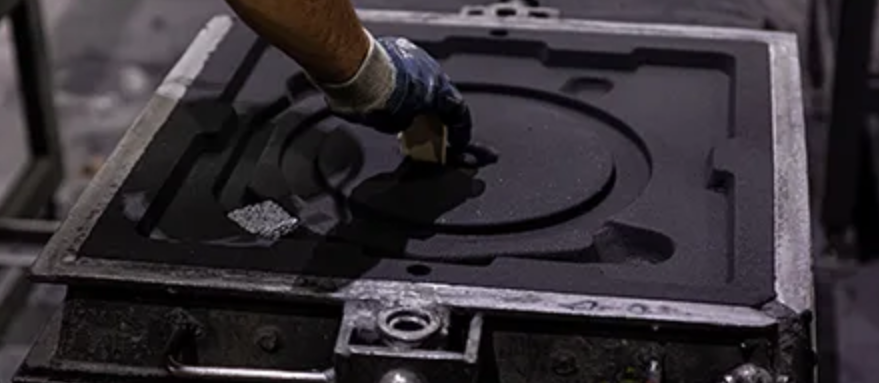
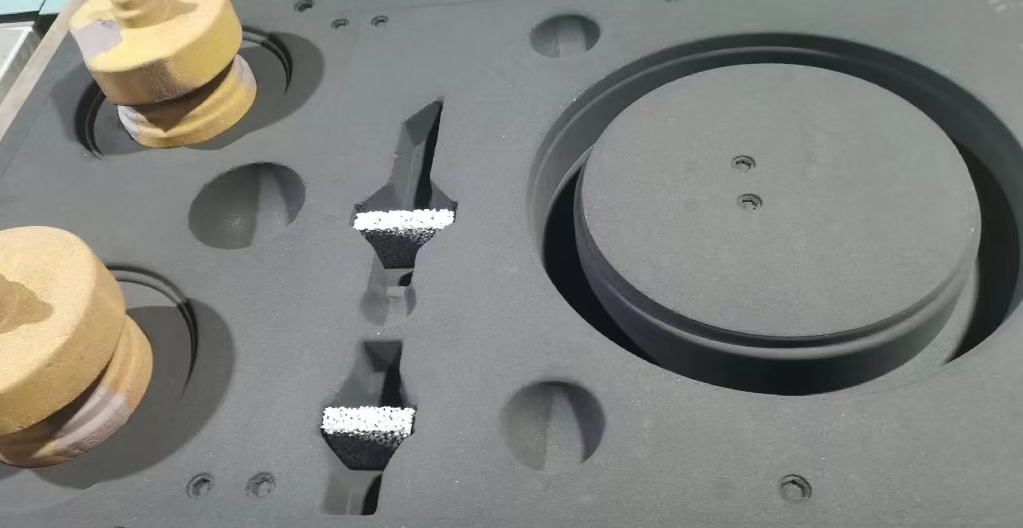
The process is simple at its core. A pattern — a physical replica of the finished part — gets pressed into prepared foundry sand. That forms a cavity. The pattern comes out. Molten metal goes in through a gating system of runners, sprues, and risers. The metal cools, solidifies, and takes the exact shape of that cavity. Then the sand breaks away, and the casting comes out.
That sequence makes a wide range of parts possible:
- Engine blocks, cylinder heads, pump housings, valve bodies, machine tool bases
- Parts with thick walls, complex shapes, and tight dimensional tolerances
- Castings in steel, iron, and aluminum — plus high-melting-point alloys like titanium and nickel
Sand casting scales in ways most other processes can’t. A fist-sized valve body or a multi-ton machine base — the same basic method handles both without any change in logic.
How Core Making Changes Everything
External shape is half the problem. Many industrial parts need internal passages — coolant channels, oil galleries, hollow chambers — that no outer mold can form on its own.
That’s what core sand solves.
Cores are separate sand structures. You place them inside the mold cavity before pouring the metal. The metal solidifies around them. Pull out the sand, and those cores leave behind the internal geometry — the negative space — that gives the part its function.
The practical workflow runs in sequence:
- Press the pattern, form the cavity
- Set up sprues, runners, and risers for controlled metal flow
- Place finished cores at every spot where an internal void is required
- Pour, cool, break, clean
Engine blocks need cores. So do pump housings, cylinder heads, and valve bodies — any part where the interior matters as much as the exterior. Core making isn’t a secondary step. It’s what separates a functional industrial casting from a solid lump of metal.
Types of Foundry Sand and Their Specific Applications
Not all foundry sand is the same. Your choice of sand affects part precision, process cost, and whether your casting passes quality inspection or gets scrapped. Three categories dominate industrial practice — and each one serves a distinct purpose.
Green Sand: The Workhorse
More than 80% of iron and steel castings in the U.S. come out of green sand molds. That number alone tells you how dominant this material is.
Green sand isn’t a single ingredient. It’s a system built from multiple components:
– Silica sand as the structural base (85–95%)
– Bentonite clay as the binder (up to 12%)
– Water as the activator (2–5%)
– Carbonaceous additives like coal powder or anthracite (2–10%) to improve surface finish
Each variable has a tolerance window. Push outside it, and you get sand that’s too wet, too dry, too weak, or too dense.
Where green sand wins: – High-volume production runs — gray iron, ductile Iron, carbon steel, low-alloy steel – Parts where moderate dimensional accuracy works fine: pump housings, valve bodies, machine bases – Cost-sensitive operations — green sand tooling and recycling infrastructure is cheap and proven
Where it hits a wall:
– High-precision surfaces — green sand can’t match shell mold or resin sand on Ra values
– Large steel pours above 1,600°C — metal penetration and sintering become real failure risks at that heat
– Complex internal cavities — those require core sand with a chemical bond to do the job right
Sodium Silicate Sand: The Middle Ground
Water glass sand — sodium silicate (Na₂O·nSiO₂) at 3–7% by mass — works differently. Harden it with CO₂ gas, and it forms a rigid shell in seconds. No organic resins. No heavy VOC emissions. You get better dimensional stability than green sand, without the fume control burden of resin systems.
This material is built for medium-to-large steel castings — machine bases, large valve bodies, heat-resistant alloy parts. It handles high pour temperatures without the sintering problems that hit green sand on big steel jobs.
The tradeoff is rough on the back end. Reclamation is difficult. The hardened binder bond is strong but brittle. That makes shakeout and core removal expensive. Complex thin-walled cavities can trap residual sand that’s hard to clear out.
Resin Sand: When Precision Is Non-Negotiable
Resin-bonded sand costs 1.5 to 3 times more than green sand per ton, all-in. Foundries pay that premium for a clear reason — scrapping high-value castings or carrying excessive machining allowances costs even more.
Three forms of resin sand matter in practice:
- Shell molding sand — a thin rigid shell (5–12mm) forms by heating phenolic resin-coated sand against a metal pattern. Typical surface finish reaches Ra 3.2–6.3 μm. Use this for precision gears, connecting rods, and complex thin-walled aluminum parts
- Resin-coated core sand — cold box or shell core process. Produces complex internal cores for cylinder heads, water jackets, and intake/exhaust passages
- No-bake (air-set) resin sand — furan or phenolic resin cures at room temperature with an acid catalyst. No heat required. Good for mid-to-large high-precision molds: hydraulic valve blocks, pump bodies, machine components
The economic logic most foundries use: run the outer mold in green sand or sodium silicate, then switch to resin-bonded core sand where internal complexity demands it. Full resin systems make sense only where part value justifies the cost — aerospace alloy castings, high-spec automotive engine components, precision hydraulic assemblies where tolerance failure isn’t an option.
Pair resin sand with high-refractory base sands — chromite or zircon — and you push the system into high-nickel and high-alloy steel territory. Standard silica sand fails under that thermal load. These specialty base sands don’t.
Spent Foundry Sand Reuse: High-Value Secondary Applications
Spent foundry sand doesn’t have to be a disposal problem. In the U.S., 2.6 million tons of it gets reused off-site every year. Iron, steel, and aluminum casting sands make up 96% of that volume. The EPA reviewed the data and confirmed one clear finding: pollutant levels in these sands fall below health and environmental benchmarks across a range of secondary applications. That’s not a loophole. That’s a green light.
The question isn’t whether reuse works. It’s which application fits your sand profile and your location.
Four Pathways That Work
Asphalt concrete fine aggregate is the most practical starting point for most operations. Spent silica sand replaces a portion of virgin fine aggregate — up to 15% by standard industry practice. The sand sits inside the asphalt matrix, making this a closed, stabilized use. It clears environmental compliance reviews faster than open-soil applications.
Flowable fill and CLSM — controlled low-strength material — is another high-volume option. Mix spent sand with fly ash and water. You get a self-leveling, self-compacting backfill material built for trench work, void filling, and underground utility projects. MDEQ lists this alongside Portland cement concrete and masonry mortar as compatible end uses.
Portland cement kiln feed is where the numbers stand out. Research cited by the American Foundrymen’s Society found that Portland cement blended with up to 13% spent foundry sand produced higher compressive strength than standard product. Set time and other key performance indicators showed no drop-off. That’s not a marginal tolerance. That’s a measurable upgrade.
Manufactured soil and potting media sit in the lowest-penetration, highest-upside category. About 14% of beneficial reuse volume goes into soil-related applications today — even with EPA and USDA support behind this pathway. Spent sand works as a compost additive and topsoil extender. The market gap is real, and it’s wide open.
The Environmental Math
The EPA put hard numbers on what beneficial reuse delivers across road and soil-related applications each year:
- Powers the equivalent of 800 homes for a full year
- Removes the equivalent of 840 cars’ worth of emissions
- Saves 7.8 million gallons of water
These aren’t soft sustainability talking points. They’re measurable inputs you can use in project feasibility reviews.
One Constraint That Overrides Everything
Transportation cost.
CRC CARE is direct about this: most beneficial reuse pathways make economic sense only when the foundry and the end-use site are close to each other. A 13% cement replacement rate means nothing if trucking costs flip the economics negative. Distance kills the deal before the sand ever gets weighed.
Before committing to any reuse pathway, run through this checklist:
- Characterize your sand’s contaminant profile and physical properties first
- Match the characterization results to application requirements — not the other way around
- For open-environment uses (soil, horticulture), run site-specific assessments
- For stabilized-product uses (asphalt, concrete, cement), verify engineering performance specs and local regulatory limits
- Segregate spent sand streams from day one — mixed, contaminated stockpiles cut you off from high-value markets
The foundries pulling real value from this aren’t doing anything complicated. They separate cleanly, hold consistent quality, and match end uses to actual data. That’s the whole system.
Why Filtration Matters: Removing Contaminants Before Reuse
Spent foundry sand looks clean enough. That’s the problem.
Sand coming off the shakeout line after a pour carries invisible baggage. You’ve got burnt carbon coatings bonded to grain surfaces. Residual binders that haven’t broken down. Fine clay particles that have lost all structure. Metal fragments small enough to slip past a visual check. None of this is obvious. All of it matters.
Filtration isn’t about making sand pure. It’s about making it predictable. The goal is moving spent sand from “contaminated unknown” to “material with consistent, known properties” — stable enough to evaluate, controlled enough to reuse.
What’s in Spent Sand — and Why It Causes Problems
Each contaminant type fails in its own way:
- Metal fragments — Iron chips and fines speed up wear on downstream screening equipment. They also push magnetic inclusions into reused material. Copper and brass castings produce non-ferrous metal fines that are harder to catch and carry higher leaching risk.
- Thick carbon coatings and residual binders — These push up loss on ignition (LOI) values and weaken refractory performance. They also release organic volatiles that cause gas defects and surface pitting in recast molds.
- Fine particles and slimed grains — These break up particle size distribution, block permeability, and cause uneven compaction. In wet processing systems, they add straight to sludge load.
- Soluble salts and organic residues — Binder breakdown products that aren’t removed raise leachable contaminant levels. In copper and brass foundry sands, this creates real environmental migration risk during storage or open-environment reuse.
A single screening pass catches the visible debris. It does nothing for the carbon film sitting on every grain.
The Right Processing Sequence
Running filtration steps out of order wastes money and still leaves contamination behind. Sequence matters:
| Step | Target Contaminants | Why It Comes Here |
|---|---|---|
| Screening | Wood scraps, clumps, coarse metal fragments | Protects downstream equipment; clears gross contamination first |
| Magnetic separation | Ferromagnetic chips and fines | Removes wear sources before thermal or wet stages |
| Thermal reclamation | Carbon coatings, organic binders, additives | Restores grain surface cleanliness; needs clean feed to run well |
| Wet scrubbing / classification | Fine particles, soluble salts, surface-adhered residues | Final clean-up on leachable contaminants and particle distribution |
Skip magnetic separation before thermal reclamation, and metal fragments damage the rotary equipment. Skip thermal reclamation and go straight to wet scrubbing, and the carbon layer stays intact — wet washing can’t strip it.
The Compliance Logic
For beneficial reuse pathways — asphalt aggregate, CLSM, cement kiln feed — regulators aren’t asking for zero contamination. They’re asking for concentrations below set thresholds. In the U.S., that means meeting EPA leachate testing protocols and individual state standards for recycled industrial byproducts.
Adequate filtration is how you get there. Foundries that run full pretreatment sequences — screening, magnetic separation, and thermal or wet reclamation where the sand profile calls for it — bring down soluble metal content, LOI values, and fine particle loads to levels that clear those benchmarks. The results show up reliably, not just occasionally.
The rule is simple: the more complete the filtration, the more stable the reuse outcome. Strength consistency in CLSM, surface quality in asphalt, and leachate compliance in open-soil applications all trace back to how well the sand was cleaned before it left the foundry gate.
One screening pass is a start. It is not a filtration strategy.
Filtration’s Role in Maintaining Sand Permeability and Casting Quality
Permeability is fragile. It doesn’t fail all at once — it erodes batch by batch, until your castings start showing you something is wrong.
The mechanism is simple. Fine particles and clay build up in recycled sand. As fines content rises, the pore channels between grains get narrower. Gas from a metal pour has no way out. The result is gas porosity — voids trapped inside the casting — plus a growing rate of inclusions and dirty castings. Sand that looked fine on the shakeout floor starts producing scrap.
The acceptable limits are clear:
- Below 3% fines in stockpiled sand
- Below 5% fines in sand currently in use
- ~7% clay content is enough to make a sand bed fully impermeable
That last number is the one foundry managers miss. Seven percent. A single-digit contamination level sounds minor. At that point, though, permeability doesn’t slowly degrade — it collapses.
Keeping Fines Under Control
The control process runs in a fixed sequence. The order matters:
- Pre-screen and classify — pull out coarse debris and clumps before they break down further
- Wash, de-dust, and filter — cut silt and clay levels in the working sand fraction
- Recondition moisture and binder balance — avoid adding excess fines during the reconditioning step itself
- Control compaction and handling — over-compaction breaks down sand particles and creates the same fines you just removed
That fourth step catches many operations off-guard. Your handling protocol has a direct impact on gradation stability. Specifying equipment type, pass count, and moisture control during placement isn’t extra caution — it stops reclaimed sand from losing its own permeability before it reaches a mold.
For a useful benchmark, ASTM C33 concrete sand is the closest reference for a stable, permeable sand fraction in most reuse systems. It gives you consistent gradation, low fines loading, and proven hydraulic performance.
Recycled sand showing rising fines or measurable permeability loss? The priority is clear: restore the clean sand fraction before reuse. Surface finish, dimensional accuracy, and binder performance all depend on gas having a path out. That’s the single strongest lever for cutting porosity and inclusion defects. And it comes down to one variable: how clean the sand is.
Practical Considerations: Choosing the Right Filtration Strategy
No single filter works for every foundry. Your filtration strategy comes down to three variables: your alloy, your defect risk, and what you plan to do with reclaimed sand.
Match the Filter to the Metal
Iron, aluminum, and copper alloys each need a different approach.
- Iron castings produce heavy slag and dross at high pour temperatures. You need ceramic or foam-type filter media that can take thermal stress without cracking mid-pour.
- Aluminum castings are more about oxide films than bulk inclusions. Removal performance matters more than pore-size specs here. Check what the filter actually captures — not just what the datasheet says.
- Copper-alloy castings fall between the two. Focus on heat resistance and steady flow under higher-density metal. The goal is gating cleanliness and trapped inclusions — not fine chemical removal.
The Decision Sequence
Test your sand stream first. Then pick the filter based on what you find.
- Solid debris or inclusions? Start with a high-capacity physical separation stage.
- Chemical contamination? Use a technology certified for that specific class. Particle filters don’t touch chemicals. Those are two different problems.
- Whole-loop system? Flow rate is a hard design limit. Single-stream setups? Capacity and replacement cost take priority.
Check performance claims through third-party certification — NSF, WQA, or equivalent. A spec sheet claim is not proof of results.
Track These Metrics to Know If It’s Working
Measure your closed-loop sand filtration system against real numbers:
- Reuse rate (%) of reclaimed sand back into production
- Annual virgin sand reduction in tons
- Waste disposal reduction in both tons and dollars
- LOI (loss on ignition) — lower means cleaner grain surfaces
- Clay and fines content post-cleaning
- Filter change frequency and associated downtime
The ROI Calculation Is Simple
Payback period = equipment cost ÷ annual savings.
Annual savings comes from four places: less purchased virgin sand, lower disposal costs, reduced transport, and higher reclaimed-sand value. Better reuse rates cut your input costs and your waste costs at the same time. The return builds from both ends.
Low-capex systems aren’t always the cheaper choice. Frequent consumable replacement eats into margins fast. Run the full lifecycle cost before you commit.
Conclusion
Foundry sand isn’t just a disposable industrial input — it’s a precision material. It earns its place in the Casting process through managed properties that must stay consistent. Protect those properties with smart filtration, and sand stops being a one-time resource. It becomes something worth recovering, reusing, and putting back to work across construction, agriculture, and civil infrastructure.
The through-line is simple: quality in, quality out. Contaminated sand produces defective castings. Unfiltered spent sand creates liability, not value. Foundries that treat filtration as a core process — not an afterthought — get better product consistency. They also build a sustainable material loop that keeps paying off.
Auditing your current spent sand composition is a smart first step. Look at what’s in it, what’s contaminating it, and what filtration gaps exist in your operation. The answer to what is foundry sand used for isn’t just casting. It’s whatever your filtration system is strong enough to make possible.