Toss a piece of metal into a furnace, and you’ve got heat. Build an entire operation around that heat, and you’ve got a foundry. Simple enough — except the two terms get tangled together, even by people working in metal industries every day.
The difference between furnace and foundry isn’t just about words. A furnace is a single tool. A foundry is an entire system built around that tool. Those are two very different things.
Sourcing industrial equipment? New to metalworking? Trying to make sense of a supplier’s pitch? Getting this distinction right matters. Here, we’ll break down what sets them apart, how they work together, and what that means for real-world operations.
What Is a Furnace? (Core Definition & Function)
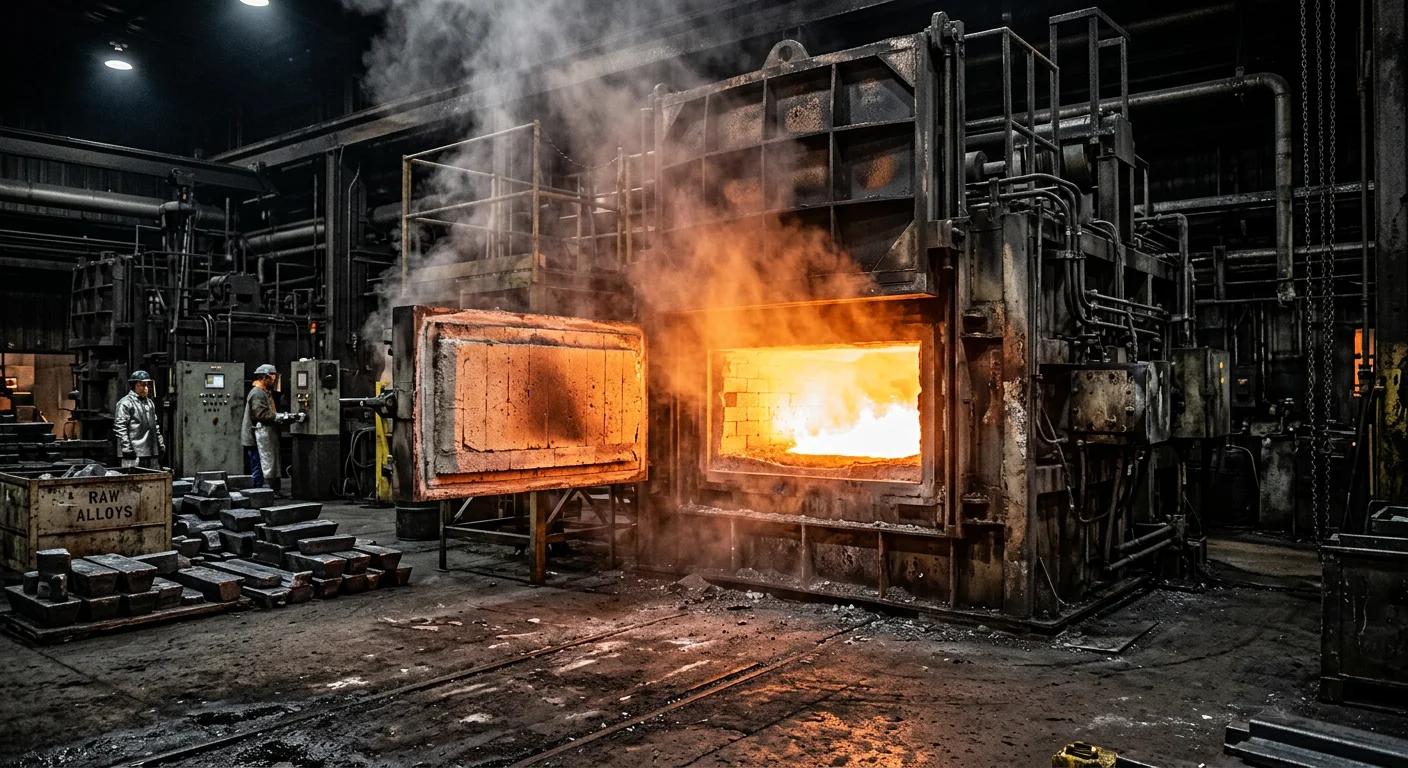
A furnace is an enclosed heating chamber — and that’s the whole job. It takes in raw metal, applies intense heat, and outputs molten material or a superheated charge. No finished parts come out. No casting happens inside. Just heat, applied with precision.
That single-purpose focus is what makes furnaces so powerful in industrial settings.
How a Furnace Generates Heat
Most modern industrial furnaces run on one of three heat sources: electric induction, gas combustion, or electric resistance. Induction is the dominant choice today — and for good reason.
Here’s the basic sequence:
-
Alternating current flows through a copper coil
-
That current generates a shifting magnetic field
-
The field induces eddy currents inside the metal charge
-
Resistance converts those currents into heat, melting the charge from within
The result is rapid, uniform heating. You get no open flame, near-zero particulate emissions, and energy conversion efficiency of 70–90%. Fuel-based furnaces sit at 40–60%. The gap is hard to ignore.
Core-Type vs. Coreless — Two Different Tools
Not all induction furnaces work the same way. The two main designs serve different needs:
|
Core-Type (Channel) |
Coreless |
|
|---|---|---|
|
Best for |
Holding large volumes, single alloy |
Small batches, flexible alloy changes |
|
Cold start? |
No — needs a molten heel to operate |
Yes — starts from cold |
|
Capacity |
Tons-scale, stable superheating |
Smaller, more agile |
|
Used in |
Automotive, aerospace steel melts |
Electronics, aluminum/copper prep |
Core-type furnaces handle high-volume steel operations well. They’re built for scale and stability. Coreless furnaces give you more flexibility. They work better for alloy switching or precision-critical environments like semiconductor manufacturing.
What a Furnace Delivers
The output is always the same: molten metal or a heated charge, ready for the next stage of processing. A furnace hits the melting point of iron and steel at 1,538°C, copper at 1,085°C, and aluminum at 660°C. Induction models hold temperature control within ±1–5°C.
That precision matters. It’s what a foundry depends on.
What Is a Foundry? (Scope, Process & Output)
A foundry is where the furnace’s work turns into something useful.
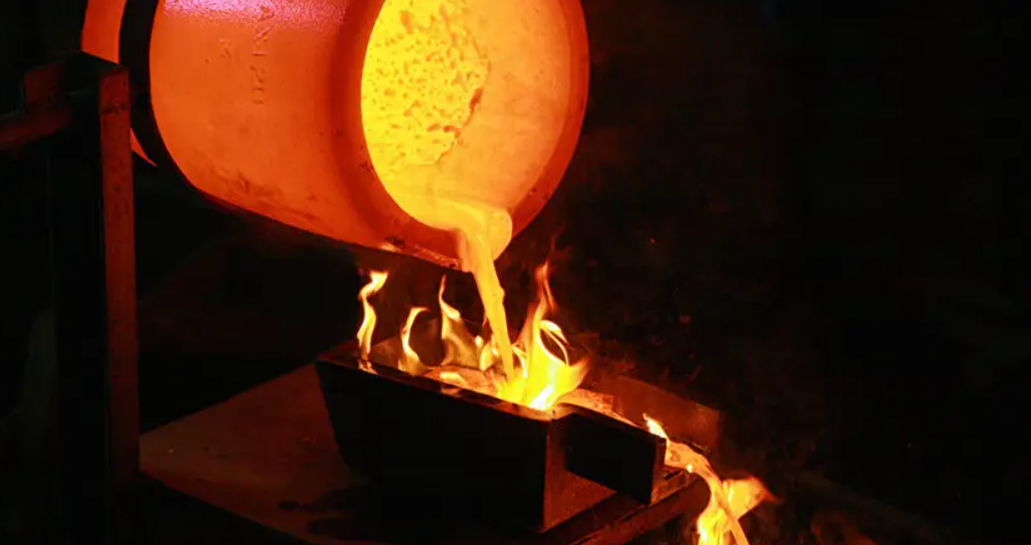
The furnace melts the metal. The foundry takes it from there. That’s the key difference between a casting facility and a simple heating operation. A foundry controls the full chain — mold-making, pouring, cooling, and finishing — from raw charge to finished part.
That scope is wide. Small foundries process 1–10 tons per day. Large aerospace operations push through over 1,000 tons per day. The global industry produces 110 million tons of castings per year. China accounts for about half that output. These are not niche numbers.
How a Foundry Works
The process runs in a clear sequence:
-
Melting — Workers charge metal into an induction or electric arc furnace and bring it to a liquid state
-
Mold preparation — Workers form sand or casting molds and design gating systems to direct metal flow
-
Pouring — Workers cast molten metal into the mold using gravity or pressure methods
-
Cooling — The metal solidifies over hours or days. This phase causes the most defects
-
Post-processing — Shakeout, fettling, heat treatment, and inspection bring the part to spec
Raw inputs are recycled at high rates — 80% scrap metal on average, with 90% of sand reusable between cycles. Parts produced cover a wide range. You’ll find turbine blades and engine housings in titanium alloys. You’ll also see Ductile Iron railway wheels in the 500–1,000kg range. High-volume farm machinery gears run at 10,000+ units per year.
Output Quality — The Numbers That Matter
Traditional foundry defect rates run 5–15%. Yield lands around 70–90%. Add AI-assisted defect prediction and gating redesign, and the numbers shift fast. Defect rates drop below 2%. Yield climbs past 95%. Rework costs fall by 30–50%. The core process stays the same. What changes is the intelligence built around it.
Furnace vs Foundry: The 5 Core Differences (Side-by-Side Analysis)
Five distinctions. That’s all it takes to lock these two concepts apart in your head.
The difference between furnace and foundry isn’t about memorizing definitions. It’s about seeing how one thing sits inside the other — and why that changes everything about scale, scope, and output.
Difference 1: Tool vs. System
A furnace is a piece of equipment. A foundry is the operation built around that equipment.
A furnace melts metal. That’s its job. A foundry melts metal, shapes it, cools it, finishes it, and ships it. Those are not the same job. One is a single step. The other is the whole staircase.
Difference 2: Single Function vs. Full Production Chain
Furnace job: Apply heat. Produce molten metal. Stop.
Foundry job: Melt → mold → pour → cool → post-process → inspect → deliver a finished part.
A blast furnace can run for several years without a shutdown. That’s serious endurance — but it still does one thing. A foundry runs multiple furnace types at once. It coordinates melting rate with mold preparation, pour timing, and cooldown cycles all at the same time. Melting rate is just one of four performance factors a foundry manages. The others are product quality, cost, and overall efficiency.
Difference 3: Equipment Specifications vs. Facility-Level Decisions
Furnaces have specs. Foundries make choices.
A cupola furnace stands 30–80 feet tall with a diameter of 5–13 feet. It layers iron ore, coke, and limestone. Hot air blasts through bottom nozzles. The resulting carbon monoxide reduces iron oxide into molten iron. That’s a fixed mechanical process — it doesn’t change.
A foundry decides which furnace to use based on the metal, the batch size, and the final part needed:
-
Electric arc furnaces — for scrap steel
-
Crucible furnaces — lined with tungsten, graphite, or ceramic, used for aluminum and brass where direct heat contact would contaminate the melt
-
Coreless induction furnaces — for cast iron and stainless steel, where larger melting chambers push faster output
The furnace answers to physics. The foundry answers to production requirements.
Difference 4: Energy Profile vs. Operational Overhead
Furnace efficiency is measurable and specific. Fuel-fired furnaces with heat recovery systems save up to 25% energy over conventional designs. Closed swing lids during holding phases cut power use by up to 50%. Induction furnaces produce fewer emissions and less waste than combustion-based options.
A foundry carries all of that — plus the energy costs of mold preparation, mechanical handling, fettling, and heat treatment further down the line. The furnace’s efficiency gains matter, but they’re just one variable inside a much larger cost equation.
Difference 5: Output Type
|
Furnace |
Foundry |
|
|---|---|---|
|
Output |
Molten metal / heated charge |
Finished cast components |
|
Examples |
Liquid iron, refined scrap steel |
Engine blocks, turbine blades, railway wheels, architectural hardware |
|
End user |
The foundry itself |
Automotive, aerospace, construction, agriculture industries |
A furnace hands off. A foundry delivers.
That handoff is where the difference becomes real and tangible. Everything upstream — the refractory brick lining, the magnesia, alumina, and silica — exists to produce reliable molten metal. Everything downstream — the molds, the finishing, the inspection — exists to turn that metal into something a customer can use.
One piece of equipment. One complete industrial system. Not the same thing.
Types of Furnaces Used in a Foundry (With Applications)
Not every foundry runs the same furnace. The metal you’re melting, the batch size you need, and the part you’re producing all point to a different piece of equipment. Four furnace types do most of the work.
Induction Furnace — The Modern Standard
Induction furnaces dominate modern foundry floors. The numbers make it clear. A single charge can handle anywhere from 1 kilogram to 100 tons, with heavy-duty steel operations loading up to 65 tons at once.
The physics is straightforward. Alternating current runs through a copper coil. This creates a reversing magnetic field. That field pushes eddy currents into the metal itself. The metal heats from within. No open flame touches the charge. Oxygen stays out. Oxidation stays low.
That has a big impact on final part quality. Steel, iron, brass, aluminum, copper — induction handles all of them. You get precise temperature control and minimal contamination. Running a modern ferrous or non-ferrous operation at serious scale? This is the furnace doing the heavy lifting.

Crucible Furnace — Small Batches, Clean Melts
Crucible furnaces work on a different principle. The metal never touches the heat source. A ceramic or refractory crucible holds the charge above the burner or resistance element. This keeps the melt away from contamination.
Temperature range runs from 600°C to 2,000°C depending on design. That’s enough to handle aluminum, brass, bronze, titanium, copper, and zinc. Sizes range from a small cup to kiln-scale units. They come in fixed, tilting, and movable configurations.
The business case is straightforward:
– Low capital cost
– Easy to operate
– Reliable results for low-volume non-ferrous work
Crucible furnaces aren’t built for tonnage. They’re built for jobs where batch flexibility and melt purity matter more than output speed.

Electric Arc Furnace — Scrap Steel at Scale
Electric arc furnaces have one job: turning scrap steel into refined liquid metal at industrial volume. Carbon electrodes generate an arc hot enough to melt heavy ferrous scrap fast. Operators then add lime to form slag. The slag pulls impurities out through a chemical reaction.
EAFs aren’t flexible — they’re powerful. Large-scale steel production from recycled inputs is their territory. They own it.
Cupola Furnace — A Declining Workhorse
Cupola furnaces have a long history in cast iron production. The design is vertical. A clay and brick-lined cylinder holds layers of coke, ferroalloys, limestone, and iron charge stacked from top to bottom. Gases rise. Charge descends. Slag floats impurities to the surface.
The problem is emissions. Coke combustion creates significant pollution. Stricter environmental standards have pushed most foundries toward cleaner options. Cupolas still show up in traditional large-scale iron operations, but their footprint is shrinking. Induction technology has taken over most of their ground.
Quick Reference
|
Furnace Type |
Capacity |
Temp Range |
Key Metals |
Notes |
|---|---|---|---|---|
|
Induction |
1kg–100t |
Up to 2,000°C |
Steel, Al, Cu, brass |
Highest efficiency, low maintenance |
|
Crucible |
Small–kiln scale |
600–2,000°C |
Al, brass, bronze, titanium |
Low cost, small batches |
|
EAF |
Large-scale |
Arc-level heat |
Steel scrap |
Refining + scale |
|
Cupola |
Large |
Coke-fired |
Cast iron |
High emissions, declining use |
Three of these are growing. One is fading. Knowing which is which keeps you from picking the wrong equipment at the start of a project.
How to Choose the Right Furnace for Your Foundry Operation
The wrong furnace never announces itself at the start. You see it later — in melt loss percentages, rising energy bills, and parts that fail inspection.
Three things matter most before any other decision: how fast you need to melt, what metal you’re running, and how much you’re moving per batch.
Start With Your Melting Rate
Your peak demand sets the floor. Crucible furnaces handle aluminum up to 900 kg/hour and magnesium up to 1,350 kg/hour. Need more than that? Shaft furnaces push past 5,000 kg/hour. Match the furnace to your transfer rates and ladle size — not just the metal type.
Know Your Metal and Your Batch
Aluminum, zinc, and magnesium each pour at different temperatures. Each also reacts differently to alloy changes. High-purity work — reactive alloys or aerospace specs — needs a vacuum or inert-gas EAF. That type of unit can reach 3,000°C.
Batch size is the other hard constraint. Move more than 30,000 lbs (15 tons) in a single charge, and you need a circulation pump. Skip it, and you lose consistency, melt speed, and refractory life.
Run the Numbers on Energy Cost
Efficiency matters, but it’s not the whole picture. The real target is lowest cost per pound poured — not the top-rated furnace on a spec sheet.
Here’s how the main types compare:
-
Induction furnaces — strong on melt loss, metal quality, and emissions compliance
-
Cupolas — move iron fast, but carry higher operating costs and stricter emissions oversight
-
EAFs — built for extreme temperatures, but they consume a lot of energy
Fossil fuel is cheap and easy to source in some regions. There, it can still beat electric in total cost. Run the full comparison before you commit to either.
Use a Scoring Matrix Before You Buy
Score each furnace option across 10 criteria:
-
Production requirements
-
Thermal efficiency
-
Metal quality
-
Melt loss
-
First cost
-
Maintenance
-
Cleaning
-
Safety
-
Physical fit
-
Operator comfort
Score each one from 0 to 10. Total the columns. Put suppliers side by side on the same sheet.
This isn’t just a formality. It gives you a clear record to defend your decision if problems come up later. Plus, it’s the most reliable way to avoid picking the wrong equipment before you spend the money.
Common Misconceptions: Furnace vs. Foundry
The confusion is everywhere — and it costs real money.
Search “home foundry setup” and most results are about furnace selection: which heating unit to buy, how to wire induction coils, whether carbon arc fits a garage shop. People use “foundry” when they mean “furnace.” The two words blur together. Decisions go wrong from there.
Here’s where it gets expensive in B2B procurement:
-
Wrong equipment for your scrap: Arc furnaces handle diverse, unprocessed scrap — the charge sits in the arc. Induction furnaces are locked to final steel grade from the start. Mix these up in a quote request, and your supplier ships the wrong machine.
-
Phosphorus specs nobody mentioned: Arc furnaces are strong at dephosphorization. They hit below 0.015% P through hot slag chemistry. Induction furnaces run cold slag and can’t match that. Your spec requires low phosphorus? This difference decides the whole purchase.
-
Batch size misalignment: Arc furnaces are built for 25,000kg+. Induction works best between 500–20,000kg. Buy outside your range and costs jump 2–5x.
-
Supplier quote mismatch: A supplier quotes a cupola furnace for iron casting. The buyer expects a general heat-treat furnace. Result: 20–50% efficiency loss in melting rate and output quality. Neither side caught the gap until production started.
“Foundry furnace” has a specific meaning. It refers to specialized melting equipment — cupola, crucible, induction, vacuum — built to bring metal to 1,200–1,800°C for mold pouring. That’s not the same as a general arc or induction furnace used in steelmaking. One targets melt uniformity for casting. The other focuses on metallurgical refinement.
Keep those two ideas separate. That’s what stops procurement decisions from going off track.
Conclusion
The distinction is simpler than it looks: a furnace is a tool, and a foundry is the entire workshop built around it.
Understanding the difference between furnace and foundry goes beyond terminology. It shapes better sourcing decisions, cleaner communication with suppliers, and fewer operational mismatches. Specifying equipment, evaluating a manufacturing partner, or designing a metal casting workflow — getting this right has real consequences.
Here’s your next move: audit the language your team uses in-house. Are “furnace” and “foundry” being used as the same word? That’s worth fixing. Loose language reflects loose thinking, and loose thinking costs money.
Know your tool. Know your system. Know what you’re buying before you start that conversation.