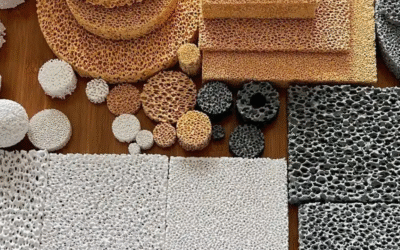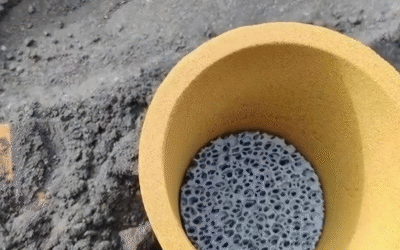
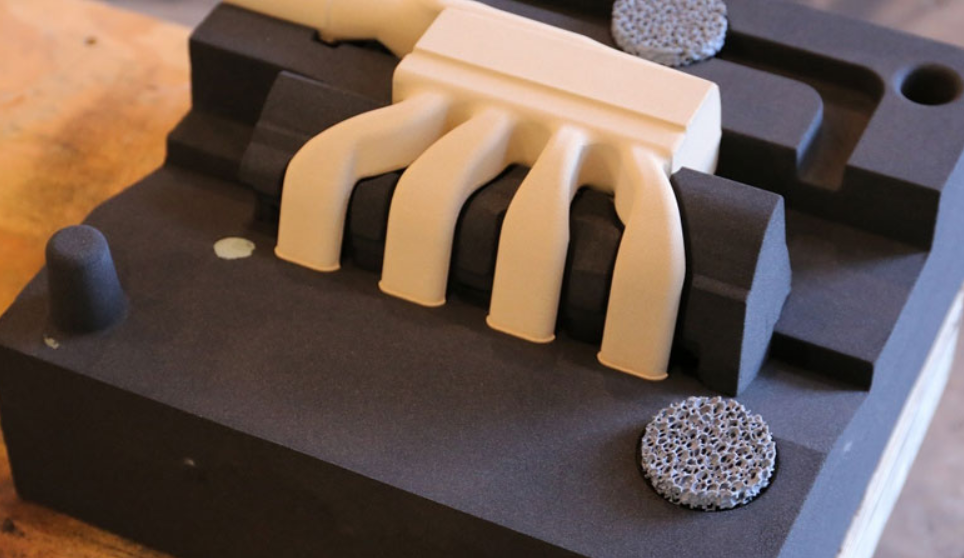
A single bad batch of Ceramic foam Filters costs more than money. It brings hours of downtime, a spike in rejected castings, and an angry production manager asking why nobody caught it sooner. If you’re sourcing molten metal filtration systems for aluminum, iron, or steel casting, the supplier you choose matters as much as the filter itself.
This guide breaks down what separates reliable industrial filter manufacturers from the ones that leave you scrambling mid-pour. You’ll learn how to match filter porosity and mesh count to your alloy, which certifications prove quality versus the ones that look good on paper, and the red flags that signal a supplier cannot scale with you.
Induatrial Filter Technology for Metal Casting
Ceramic foam filters trap impurities throughout an open-cell network made of alumina (Al₂O₃), Silicon carbide (SiC), or zirconia (ZrO₂). As molten metal winds through the pores, repeated turns give inclusions regular chances to get caught.
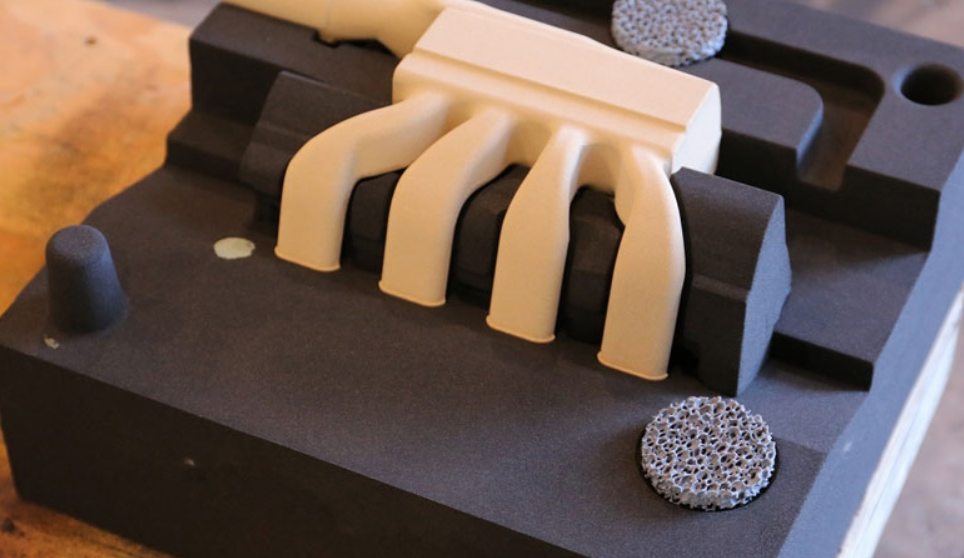
The ceramic captures material in four ways:
Mechanical screening: Oxides and slag larger than the pores are blocked immediately.
Inertial impaction: Heavy particles cannot navigate sharp turns, striking the ceramic struts and sticking.
Surface adhesion: Oxide films and fine particles cling directly to pore walls.
Deep-bed filtration: Particles continue to be trapped throughout the internal depth of the body.
Foam filters outperform flat screens because they collect debris across the surface and throughout the interior.
Matching PPI to Your Alloy
|
Metal |
Typical PPI |
Why |
|---|---|---|
|
Aluminum |
20–30 (up to 40–50 for thin-wall) |
Catches double-oxide film defects |
|
Gray iron/copper alloys |
15–20 |
Balances flow and inclusion capture |
|
Ductile iron |
10–15 |
Reduces clogging in viscous melts |
|
Steel/stainless |
Zirconia, ≥1.2 MPa |
Handles high-temp thermal shock |
Pore density (10–60 PPI) controls filtration fineness. A higher PPI traps smaller particles, but it also increases pressure drop. Porosity (typically 80–90%) governs flow capacity, while breaking strength (0.8–1.5 MPa) prevents cracking during handling and metal impact.
Sizing the Filter Correctly
Effective filter area should be 2–4 times your gating system’s choke area (Af = k·Ac). Aluminum and other flow-sensitive alloys often require the full 4x.
For a 500 mm² choke area, plan for 1,000–2,000 mm² of effective filter area. Calculate this using the open pore area remaining after accounting for frames and seals, rather than the raw outer dimensions.
Undersized filters cause pressure drops, incomplete mold filling, and filter breakage mid-pour.
Matching Filter Material to Your Alloy Type
Choosing the wrong ceramic chemistry is like using a coffee filter to strain motor oil. It might work for a minute, but it fails fast. Alloy type dictates your filter material just as much as pore count.
Alumina (Al₂O₃) is the workhorse for aluminum casting. It stays stable against molten aluminum, resists erosion, and handles temperatures up to 1,200°C. High-purity grades run 90–99% alumina. This is the go-to filter across most aluminum foundries.
Silicon carbide (SiC) steps in where iron, copper, bronze, and brass create harsher conditions. It survives up to 1,500°C (some specs list 1,530°C) and shrugs off high-impact metal flow and chemical corrosion. That makes SiC the standard choice for iron casting, and it works across copper-alloy applications too.
Zirconia (ZrO₂) handles the toughest jobs, including carbon steel, stainless steel, and high-temperature alloys. Rated up to 1,700°C, it withstands the aggressive corrosion that breaks down lesser ceramics. In a steel casting line, zirconia is the only material built to survive the heat.
Always select a temperature rating above your actual pour temperature, never equal to it, no matter what the PPI chart says. That safety margin protects against thermal shock failures mid-pour.
Verifying Supplier Quality Certifications and Testing Capability
A certificate on a website means nothing until you check it. Fake and expired certifications slip through more often than buyers expect in global foundry filtration technology sourcing.
Search IAF CertSearch using the supplier’s legal name or certificate number to confirm the status is active, not suspended or expired. Check that the certified scope covers “porous ceramic filter manufacturing” at the factory address shipping your order, rather than a corporate office or trading address.
Don’t stop at ISO 9001. It proves process control and traceability, but says nothing about inclusion removal in casting performance, porosity, or thermal shock resistant filters capability.
What to Demand Instead
Ask for batch-specific test reports covering:
Breaking strength: sample size, load direction, failure mode
Porosity: open vs. total porosity, test medium
Permeability: flow rate, pressure drop, test fluid
Thermal shock: cycle count, crack behavior, strength retention after cycling
Request traceability back to the raw material lot, kiln batch, and mold number. Push for data from 3+ consecutive production batches rather than a single cherry-picked run. Suppliers running mercury porosimetry and furnace-position sampling (front, middle, back of each firing) demonstrate genuine quality control.
Evaluating Technical Support and Engineering Capability
Real engineering support comes down to math. A supplier worth keeping backs every PPI and filter area recommendation with numbers tied to your alloy, pour temperature, metal flow rate, and minimum channel cross-section.
Check these ratios before you commit: – Gray iron: 20 PPI baseline, gate-to-filter area ≥1:2 – Ductile Iron: gate-to-filter area ≥1:3 – High-alloy iron (Ni-Resist, SiMo): filter frontal area ≥4x choke area – steel castings: filter front area ≥3x choke area, plus ~30% exit-side support to stop breakage under pressure
A good supplier asks for your casting weight, pour time, gate dimensions, and mold drawings before quoting anything so they can calculate the right setup.
Ask for before-and-after case data showing they have adjusted PPI, filter position, or area to cut inclusion defects on real gray Iron, ductile iron, steel, or aluminum jobs. Without a cross-alloy case history, they have no proven engineering muscle.
Assessing Manufacturing Capacity and Supply Stability
Capacity numbers on a sales sheet are marketing. Capacity numbers you verify are procurement.
Send the same RFQ to at least three industrial filter manufacturers. Ask for monthly standard capacity, full-load capacity, current operating rates, machine count, daily output per machine, shift patterns, raw material stock days, and committed monthly supply volume, not an unverified “maximum capacity” claim.
Run a three-stage order test:
Stage 1: Small trial order. Check response speed on quotes, samples, and documentation.
Stage 2: Order 30–50% of your target monthly volume with a fixed delivery date.
Stage 3: Scale to full target volume over 2–3 months. Watch whether they still deliver on time, in full.
Request weekly split deliveries instead of one bulk month-end shipment. A target of 100,000 units per month becomes 25,000 per week, and weekly batches expose scheduling conflicts and raw material bottlenecks faster than a single deadline ever will.
Ask suppliers to hold a 10–20% capacity buffer during peak season. Quoted capacity should never equal maximum capacity.
Demand hard evidence:
-
Equipment nameplates, daily production logs, and shipping records from the last 3 months
-
12-month rolling OTIF (on-time, in-full) data targeting ≥95%, with peak-season OTIF dropping no more than 5 points below normal months
-
Raw material sourcing: at least two qualified suppliers per critical material, 30–60 days safety stock, and no single source above 70%
Red flags: suppliers who quote only “annual capacity,” cannot produce a 12-month OTIF history, run equipment above 90% capacity while promising big volume increases, or provide capacity, shipment, and procurement data that fail to align. Walk away from any Molten Metal Filtration systems supplier who can’t back their numbers with paper.
Conducting Sample Testing and Batch Consistency Checks
Numbers on a spec sheet mean nothing until you test them yourself. Pull at least 3 production batches from both your current supplier and any candidate (30 units per batch if budget allows, 10 minimum if it doesn’t). Every batch must match on length, width, thickness, PPI, material, and porosity. Demand the lot number, kiln batch, dimensional report, breaking strength, porosity, and permeability data for each one. Take random samples. If a supplier hand-picks their “best” units, they are hiding something.
Run four groups side by side:
-
Current filter (batches 1–3)
-
Candidate filter (batches 1–3)
-
No-filter control (measures inclusion removal in casting)
-
Blank/equipment control (rules out contamination)
Hold alloy grade, pour temperature, pour weight, gating, and preheat time constant across every run.
Track These Metrics
Filtration efficiency: (C-before − C-after) ÷ C-before. Foam filters at 20 PPI often claim >95% removal of inclusions above 20 µm. Treat that figure as a benchmark, not a guarantee.
Pressure drop: 0.1–0.2 bar in typical industrial runs. Flag early clogging or overflow.
Breaking rate: Target 0%. Any cracking, edge chipping, or foam shedding into the casting is a critical failure.
Batch-to-batch CV: ≤10% for efficiency, ≤10–15% for pressure drop.
In one foundry, switching filters cut the defect rate from 4.5% (45/1000 castings) to 1.8% (18/1000)—a 60% reduction. Track inclusion removal and final casting defect rates as distinct metrics. Treating them as interchangeable hides real risk.
Comparing Commercial Terms: Pricing, MOQ, and Warranty Policy
A single “price per piece” number tells you nothing. Real quotes break down like this:
Unit Price = Base Material Cost × PPI Factor × Size/Thickness Factor × Quality Grade − Volume Discount + Packaging/Certification Fees
|
Variable |
Typical Range |
|---|---|
|
Material |
Alumina/SiC: $0.10–5/pc; Zirconia: $5–30/pc |
|
PPI |
10–60; higher PPI = higher price |
|
MOQ |
25–500 pcs standard; custom runs 100–300 pcs |
|
Tooling |
$100–500/set standard; $500–2,000 complex shapes |
|
Payment |
30% deposit, 70% before shipment (industry norm) |
Your warranty needs to cover 12 months from the delivery date, provide a 7–15 day inspection window, specify covered defect categories (wrong material, broken batches, poor sintering), and guarantee a full replacement or refund instead of credit toward your next order.
Chinese suppliers offer lower prices ($0.80–3.50/pc) and scale well for bulk MOQs. Western distributors make more sense for urgent, low-volume runs where you need 1–5 day local delivery and simpler returns.
Reviewing After-Sales Support and Technical Troubleshooting
Good suppliers don’t disappear once the invoice clears. The real test starts when your first trial pour hits the mold.
Demand a structured trial process instead of vague promises:
-
Baseline first. Log the alloy, wall thickness, pour temp, gating design, and defect rate across 3–5 batches before swapping filters.
-
On-site or remote support during the first installation, pour, and casting cutout. Someone needs to track pressure drop, blockage, and defect locations in real time.
-
Root-cause analysis. A reliable supplier works through 5 Why and fishbone diagrams across five failure categories: material (cracks, PPI mismatch), installation (wrong orientation, edge bypass), pouring (turbulence, interrupted flow), mold design (undersized gating), and melt quality (oxide film, inclusions).
-
Documented evidence for every root cause, backed by photos, fracture analysis, pour video, and temperature curves.
Set a response clock. Require preliminary feedback within 24 hours and an 8D or RCA report within 3 business days. Define closure criteria upfront, such as three consecutive batches with zero breaking rate and inclusion rejects back under baseline.
If a supplier can’t commit to that timeline in writing, they’re not equipped to handle inclusion removal in casting problems at scale.
Step-by-Step Supplier Selection Procedure

Seven steps separate a lucky guess from a qualified supplier. Skip one, and you gamble with casting defect rates. Follow all seven, and you have a clear paper trail protecting your production line.
Step 1: Build a Controlled RFQ Specification
Vague RFQs get vague answers. Spell out the alloy grade (ASTM A216 WCB, AISI 1045, AlSi7Mg), Casting process, pouring temperature range, and casting weight, alongside part geometry in 3D STEP files. State your cleanliness requirements in measurable numbers: maximum inclusion size, radiographic defect class, porosity percentage, and leak-test pressure. Require material certs, dimensional reports, and traceability records with every quote.
Step 2: Score Candidates on a 100-Point Scale
|
Criterion |
Weight |
|---|---|
|
Alloy/process/size match |
25% |
|
Quality certification |
20% |
|
Testing/inspection capability |
20% |
|
Casting experience |
15% |
|
Capacity and delivery |
10% |
|
Commercial competitiveness |
5% |
|
Communication and corrective action |
5% |
Treat ISO 9001 as a baseline. Verify the certificate number and registered scope yourself.
Step 3: Send Identical RFQ Packages
Send every candidate the same CAD files, mechanical specs, cleanliness criteria, and quotation template. Require itemized pricing covering piece cost by volume tier, tooling, prototype cost, and inspection fees. Expect an initial acknowledgment within 24–48 hours.
Step 4: Audit Before Tooling Approval
Shortlist 2–4 suppliers. Review their scrap rates from the last six months, NCR history, and traceability systems, then log all findings as critical, major, or minor.
Step 5–7: Approval Gates to Production
Work through the gate sequence: DFM review, tooling freeze, T1 samples (3–10 parts), and an engineering trial (10–50 parts). Complete full testing and FAI/PPAP sign-off, followed by two repeat-batch validations before final production release.
Write these thresholds into your quality agreement: OTIF ≥95%, PPM defective ≤1,000, Cpk ≥1.33 on critical dimensions, and NCR containment within 24 hours.
Installation Best Practices to Avoid Filtration Failures

Even the best ceramic foam filter fails when installed incorrectly. Bad seating, improper orientation, or skipped preheating will ruin casting quality just as quickly as a defective filter.
Follow these fundamentals on every pour:
-
Keep filter inclination within 5° of the specified plane to avoid rocking, lifted edges, or gaps.
-
Orient the filter face perpendicular to metal flow. Direct impact erodes the ceramic and cracks the edges.
-
Maintain 75–100 mm of metal head above the filter (aluminum benchmark) for proper priming.
-
Use a fresh ceramic-fiber gasket, 3–6 mm thick, with full perimeter contact. Never reuse an old one.
-
Limit edge clearance to ≤1 mm per side. Larger gaps allow bypass flow and carry unfiltered inclusions into the casting.
-
Preheat filters to 300°C minimum, and up to 400–600°C depending on the alloy, so thermal shock does not crack cold ceramic.
Before mold closure, confirm:
-
Filter sits centered, flush, and does not rock
-
Gasket shows no folds, tears, or compression damage
-
No sand or loose debris sits trapped underneath
-
Runner entry delivers metal evenly across the face rather than in a direct jet
Undersized filters cause clogging and misruns, while oversized ones waste money without adding filtration benefits. Aim for a 4:1 filter-to-choke ratio, then add a 30–50% margin to account for progressive blockage.
Red Flags: Warning Signs of Unreliable Filter Suppliers
Marketing copy sells filters, but data proves them. Watch for the gap between the two.
Walk away if a supplier:
Can’t trace a batch. They have no batch number, raw material lot, or kiln record tied to your shipment. If a defective filter hits the floor, they cannot tell you how far the problem spreads.
Hands you a certificate instead of data. A Certificate of Conformance is useless without batch-specific XRF results, compressive strength, porosity, and dimensional tolerances.
Defines PPI as a micron rating. PPI measures pores per inch, not a precise filtration cutoff. Suppliers using it as a micron rating skip the pore-size distribution and cross-section imaging needed to prove performance.
Hides pressure drop curves. They provide no data on flow rate, metal throughput, or clogging time at your pour temperature and filter thickness.
Refuses a factory audit. They block access to furnace temperature logs, compression testers, and incoming material records.
Ships samples that don’t match production. The actual order arrives with a different PPI, thickness, or edge finish.
Marketing Phrases That Should Trigger Follow-Up Questions
|
Claim |
What to Demand Instead |
|---|---|
|
“100% inclusion removal” |
Removal rate by alloy, sample size, test method |
|
“Ultra-high efficiency, zero clogging” |
Pressure drop curve, max metal throughput |
|
“30 PPI = fixed micron rating” |
Test method, average pore size, range, cross-section micrograph |
|
“Aerospace-grade material” |
Material grade, chemistry, certification scope, PPAP data |
|
“ISO certified, stable quality” |
Certification body, scope, 3+ consecutive batch reports |
|
“30% cheaper than competitors” |
Cost per 1,000 good units, breaking rate, scrap rate, claim history |
Treat any performance claim missing test conditions, test standards, batch numbers, and raw results as marketing rather than a technical commitment.
Conclusion
Choosing the right supplier determines whether your castings pass inspection or end up scrapped. Reliable industrial filter manufacturers back their ceramic foam filters with real certifications, consistent batch quality, and engineers who answer the phone when you need troubleshooting help.
Suppliers worth your time prove it through verifiable testing data, transparent commercial terms, and molten metal filtration systems that perform the same way on order #1 and order #100.
Before committing to volume orders, request samples, check certification documents, and run your own batch consistency tests rather than relying on spec sheets alone.
FoundryMax has spent years helping foundries avoid these pitfalls. If you are evaluating filter suppliers right now, let’s talk. Your next casting run shouldn’t be a gamble.