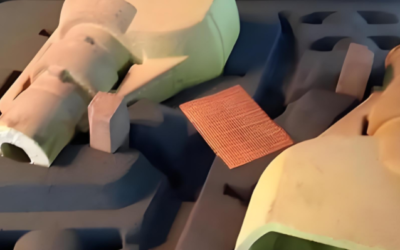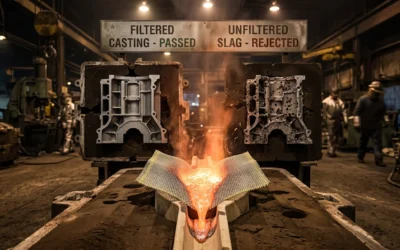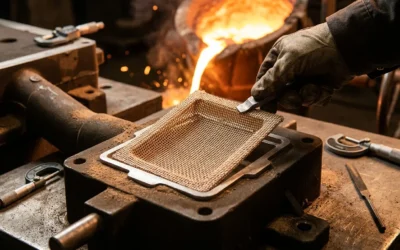
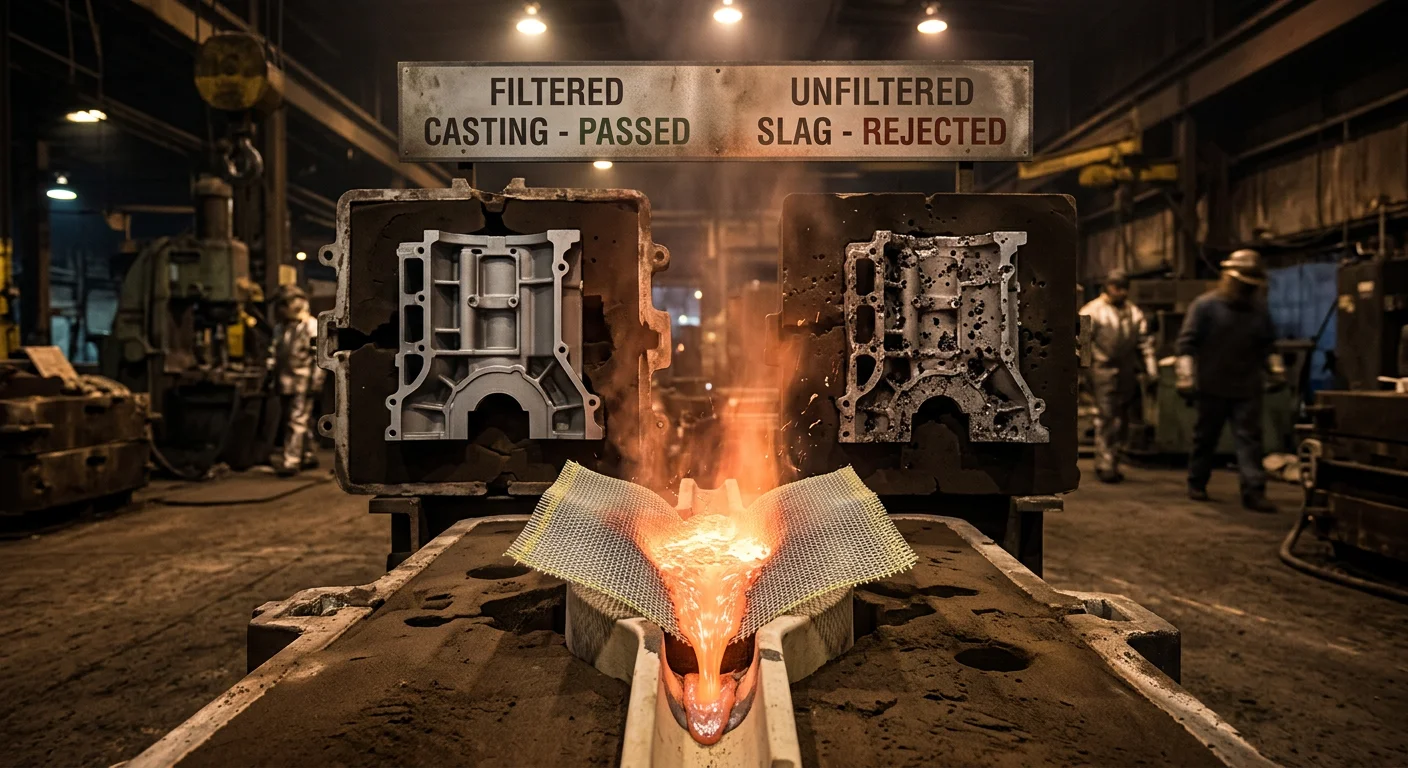
If you’ve ever lost a batch of aluminium castings to slag inclusions, you know the filter is only as good as the mesh behind it. Fiberglass mesh filters are now the go-to choice for Indian foundries chasing cleaner melts and fewer rejects. But sourcing the right one is trickier than it sounds, especially when quality, lead times, and pricing vary wildly between suppliers in India and China. So we put together this breakdown of the 7 best fiberglass Mesh Filter suppliers for Indian aluminium casting, from local names like Shivam Filters to established Chinese manufacturers like SEFU and Explorer. We’ll also walk through the decision factors—mesh count, thermal stability, certifications—that separate a reliable partner from a costly gamble.
Shivam Filters (Local Indian Supplier – Vadodara, Gujarat)
Shivam Filters was founded in 2008 and has spent over a decade and a half building its manufacturing base in Vadodara, Gujarat. That’s the kind of local footprint Indian foundries actually care about when lead times matter more than glossy brochures. The company is an ISO 9001:2015 certified manufacturer and exporter, run by Vijay Bhalariya (Proprietor and CEO). You’ll find their operations listed under two addresses—Makarpura GIDC and Patel Estate GIDC Por—both in Vadodara, which suggests multiple production or display sites across the city.
Product Lineup for Aluminium Casting
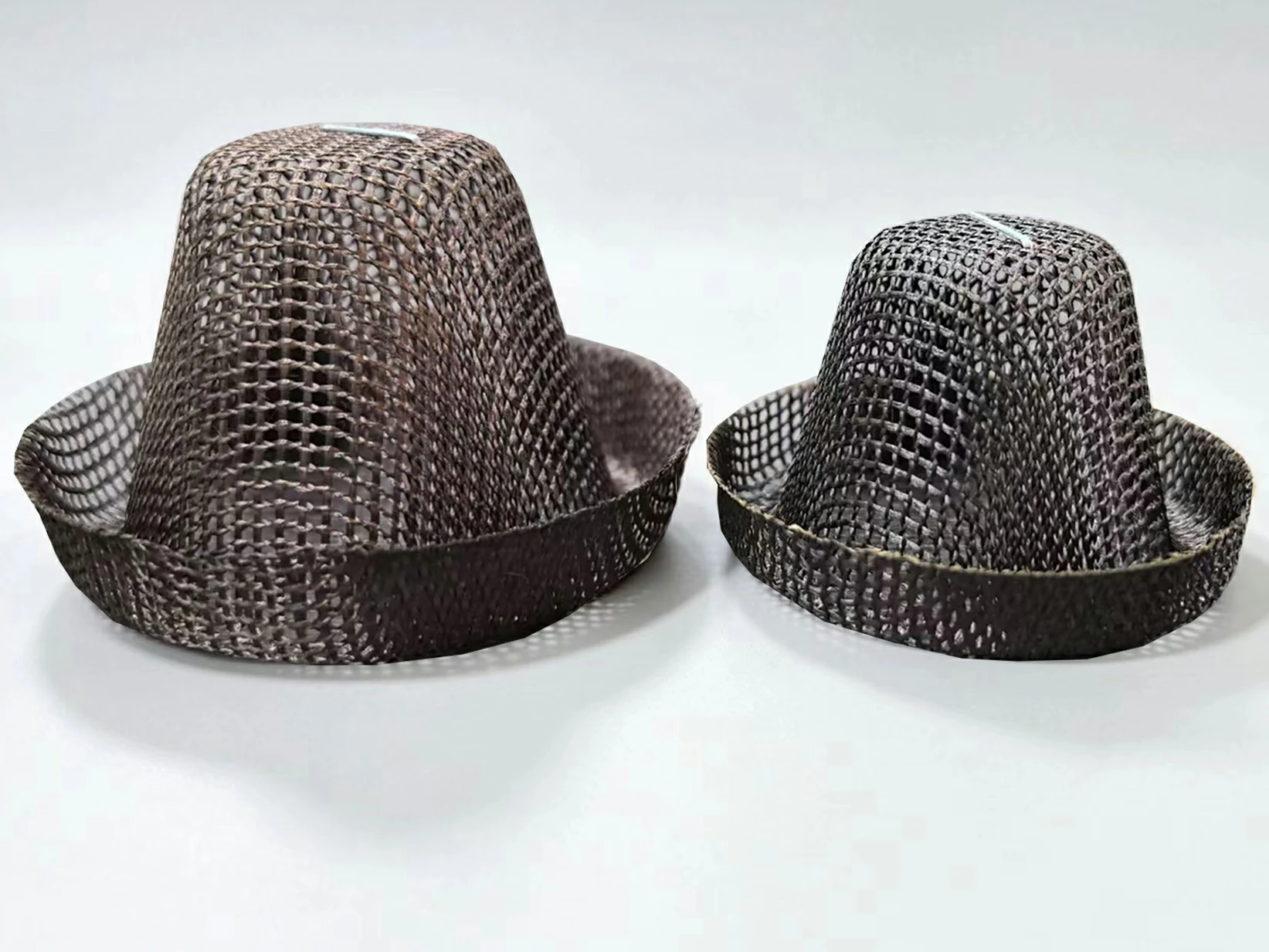
Shivam’s catalog is broad, spanning Fiber glass filter Bags, Dust Collector Filter Bags, and Hyd Oil Filters. The key product for aluminium casting is their aluminium casting fiberglass filtration basket, alongside molten aluminium filtration fabric and TF combo bags.
Specs for the filtration basket:
- Material: Fiberglass
- Working Temperature: 1000°C
- Work Time: 150 minutes
- Mesh Specifications: 5 to 25 mesh, with customization available
- Listed Price: ₹350 per piece
That price point makes it a solid benchmark for foundries wanting to test a small batch before committing to bulk orders.
Why Local Sourcing Still Wins
The math changes when you buy from a Vadodara-based supplier instead of a Chinese manufacturer. Shorter shipping chains mean faster delivery within India. Communication happens in English, in your timezone, without the back-and-forth delays that come with international sourcing. Shivam has built its reputation on being customer-friendly and timely, which TradeIndia backs up by listing them as a verified seller and one of Vadodara’s top suppliers.
Before placing an order, though, you’ll want answers on a few things: box-level MOQ, pore tolerance, and whether their 1000°C threshold actually matches your furnace conditions. Their public listings don’t spell out every technical detail, so a direct inquiry via email or phone is your best next step.
Explorer Company / foundryfilters.com (Tianjin, China – Direct Manufacturer)
Twenty years in business tends to separate real manufacturers from middlemen. Explorer (Tianjin) Import and Export Co., Ltd. falls squarely into the first category. Founded in 2004, the company operates out of Tianjin, China, and runs its business through foundryfilters.com, a site that states everything sold is manufactured in-house. No outsourcing, no dropshipping from a third-party factory. That distinction matters when you’re figuring out who controls quality on the production floor.
Scale and Product Focus
The numbers show steady, focused growth. Explorer runs 30 production lines with a team of 50 employees, producing more than 30 product variants centered on glass fiber and high-silica fiber filtration. Their location near Tianjin Port gives a genuine logistics advantage for shipping to India, whether you’re moving LCL or a full 20-foot container.
Performance Claims Worth Verifying
Explorer’s public materials cite a 98% impurity removal rate for their molten aluminum filtration products. That’s a strong number, but the site doesn’t break down the testing conditions, like melt temperature, alloy grade, flow rate, or sample duration. Worth asking for before you commit to an order.
Customization for Aluminium Casting
For foundries with specific gating system requirements, Explorer offers customization ranging from 30mm to 600mm. They also provide 24-hour quote turnaround, which speeds up initial sampling. No published MOQ, so start with a small trial order and then move to bulk pricing once specs are confirmed.
Contact: Technical Inquiry: [email protected] | WhatsApp: +8613303168090
CangChen / foundryfiltration.com (Shijiazhuang, Hebei, China)
Two production lines. 1 million square meters of fiberglass mesh filters per month. 4.5 million Ceramic foam Filters per month. Those are the numbers Hebei CangChen Imp. & Exp. Trade Co., LTD publishes on its site, and they put this Shijiazhuang-based manufacturer in a different weight class than smaller regional players.
Product Range and Aluminium-Specific Options
CangChen’s catalog covers fiberglass filtration mesh, ceramic Foam filters, and Zirconia Ceramic filters. For aluminium casting, their TF Combo Bag (Fiberglass Filtration & Shunt Combo Bag) is the standout product. It’s built for molten aluminum flow-splitting and inclusion capture, rated to work at ≤1000°C.
Standard sizes include:
- 13″ × 5″ × 6″
- 18″ × 5″ × 6″
- 18″ × 10″ × 6″
Mesh options run from 5 to 25 mesh, and the product page states plainly that special specifications can be customized. That’s useful if your Gating System doesn’t match off-the-shelf dimensions.
They also list a High Silica Fiberglass Fabric Filter suited for gray iron, Malleable Iron, white iron, ductile iron, non-ferrous aluminum alloys, and copper-based alloys, plus small steel castings.
Track Record and What’s Missing
CangChen claims over 10 years of production and export experience, and the site includes a dedicated certificate page, though specific certification numbers aren’t listed in the public summary. No India-specific case studies appear on the site either. What you do get is a genuine export setup: English product pages, a dedicated email (andy@foundryfiltration.com), and WhatsApp contact (+86 158 3011 4065) for direct technical inquiries.
SEFU (Cangzhou Sefu Ceramic New Materials Co., Ltd., sefunm.com)
A decade of production history, and they claim to ship to 300+ brands across 20 countries. That’s the pitch Cangzhou Sefu Ceramic New Materials brings to the table. Worth unpacking before you add them to your shortlist for Indian aluminium casting supply.
Company Snapshot
- Founded: 2010
- Location: Guanting Industrial Park, Cangzhou City, Hebei, China
- Phone: +86-317-5521986
- Certification: ISO 9001
- Focus: High-performance industrial ceramics and refractory materials for foundry, metallurgy, and environmental protection sectors
- Main products: Ceramic foam filters, honeycomb ceramic filters, casting thermocouples, ceramic fiber products
No India-specific case study shows up in public materials, so treat the “20 countries, 300+ brands” figure as evidence of general export activity, not proof of Indian foundry experience.
Technical Specs That Matter
For aluminium melt filtration running at 700–800°C, Sefu’s Ceramic foam filters carry a comfortable safety margin:
| Working temperature | ≤1100°C to 1200°C |
| Refractoriness | below 1580°C |
| Porosity | 80–90% |
| Pore range | 8–60 PPI, with some listings up to 10–70 PPI |
| Bending strength | roughly 0.6–1.0 MPa+ |
| Compressive strength | around 0.8–1.2 MPa |
| Thermal shock resistance | 6 cycles from 1100°C to room temperature |
Sizing runs from square blocks (40×40×22mm up to 150×150×25mm) to round formats (Dia50×22 up to Dia90×22). A 100×100×25mm filter at 10 PPI handles roughly 160 kg at 9 kg/s. That’s useful for benchmarking against your own gating volumes.
Selection by Casting Thickness
- Thin-wall castings: 20–30 PPI, smaller formats
- Medium wall castings: 20 PPI, mid-range sizes
- Thick-wall castings: 10–20 PPI, larger blocks like 125×125×25mm or 150×150×25mm
Before ordering, request their ISO 9001 certificate number, thermal test reports, and any documented shipping records to Indian buyers.
Foundry Max FM-07-AL Series (foundrymax.com)
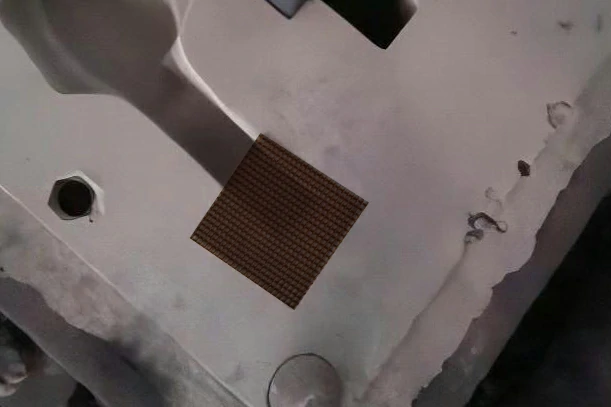
A nearly 40% jump in mold life from removing fine inclusions in aluminium melt. That’s the kind of gain Foundry Max is chasing with its FM-07-AL series, a filter line built specifically for aluminium and aluminium alloy melts running at 700–800°C. Unlike general-purpose fiberglass filters, this one’s engineered around a single job—cleaning up automotive aluminium wheels, aviation aluminium castings, and aluminium alloy structural parts.
What Makes the Material Different
The fabric itself is high-silica glass fiber cloth, with SiO₂ content ≥96%, plus a refractory coating layered on top. Mesh specs run from 0.8×0.8 mm to 2.5×2.5 mm, which is a tighter range than most generic aluminium filters offer. That precision matters when you’re trying to strip out alumina inclusions, oxide film, and slag without choking the flow rate.
Why Wheel Manufacturers Should Pay Attention
Aluminium wheel casting lives and dies by fatigue life and surface finish. Trap the oxide film and micro-inclusions before they hit the mold cavity, and you get both. The FM-07-AL’s temperature range and mesh sizing are tuned for aluminium’s specific fluidity, which cuts down on the pouring instability that comes from mismatched filter resistance. It works across Sand casting, die casting, low-pressure casting, precision casting, and centrifugal casting setups.
Sourcing Details for Indian Foundries
Foundry Max operates out of Guanting Industrial Park, Cangzhou City, Hebei, and markets itself as a 20+ year filtration manufacturer. Comparable fiberglass rolls in this category typically ship at 50–300 m lengths, 0.93 m width, and 150–350 g/m² weight. For a first order, request short rolls or sample sheets to validate flow and inclusion removal before scaling to a full wheel production line.
Explorer (tianjin) Import And Export Co.,ltd.
Explorer wears two hats, and that’s what separates it from a pure filter shop. Public materials describe the company as an OEM/ODM casting partner, not just a filtration supplier. Its listed capabilities cover Investment casting, sand casting, die casting, forging, sheet metal fabrication, and precision machined parts. The company describes its own growth as moving “from a single precision casting factory to a comprehensive mechanical product supplier,” which matches the broader product range on its site.
Filter-Specific ODM/OEM Options
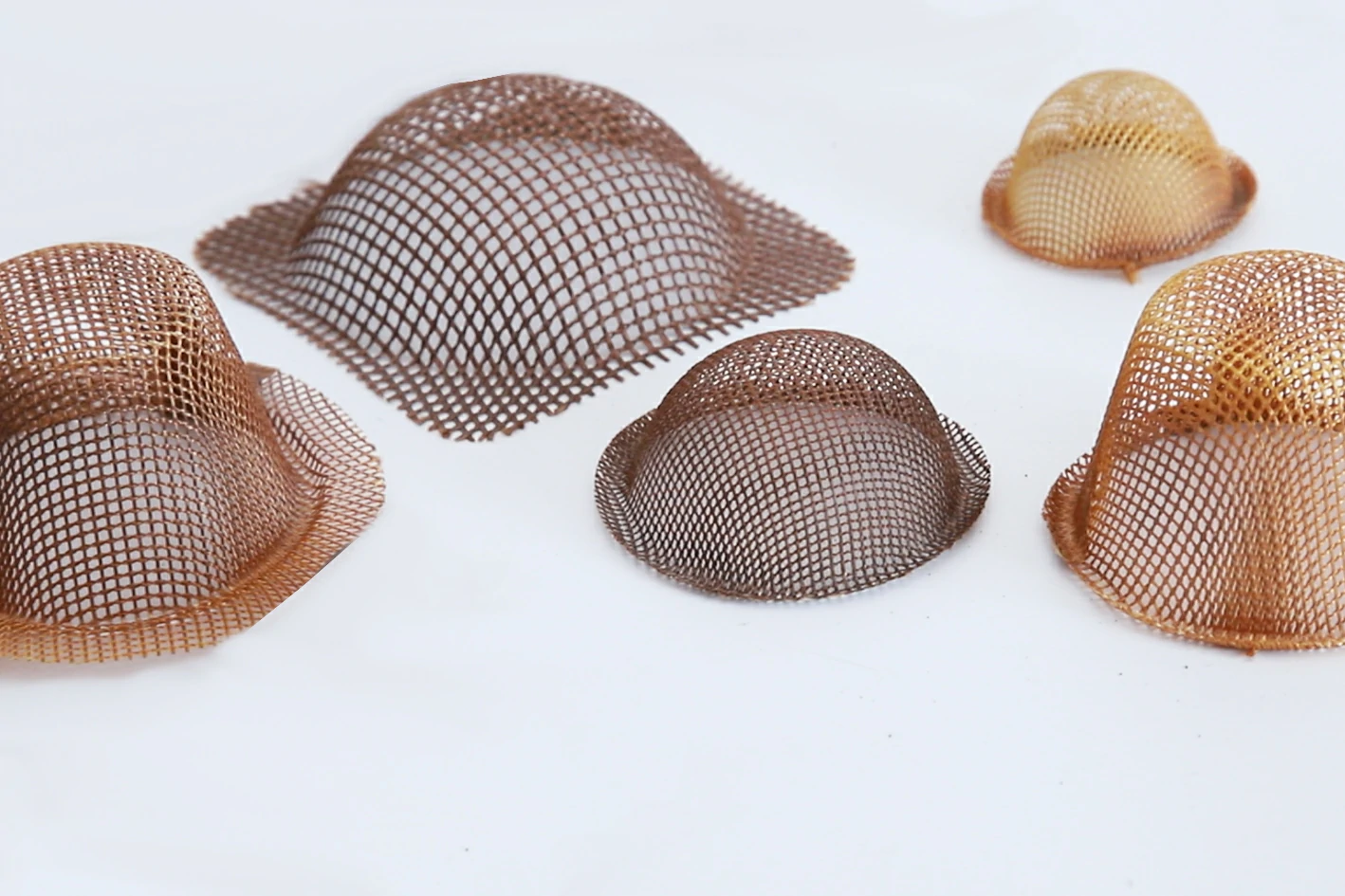
For Fiberglass mesh filters, Explorer lists an ODM Cap-Style High Silica Fiberglass Casting Filtering Mesh plus an OEM Fiberglass Mesh Filter for molten aluminum filtration. A separate product line covers molten steel filtration, with the site stating plainly that “each filter is customizable.” That’s useful if your gating system runs outside standard dimensions.
What to Verify Before Ordering
MOQ: Not published; comparable OEM casting suppliers typically run 10–100 pieces for trial orders.
Sample fees: Confirm whether costs are creditable against bulk orders, and whether tooling is included.
IP protection: Push for an NDA, drawing-use restrictions, and mold ownership terms in writing.
Certifications: Request ISO 9001 documentation, material certificates, and shipment inspection reports.
The site promises quote confirmation within 48 hours of inquiry, which speeds up early-stage comparisons if you’re shortlisting suppliers before committing to samples.
How Indian Foundries Pick a Fiberglass Filter Supplier
Temperature compatibility decides everything else. Get this wrong, and mesh count, price, or supplier reputation won’t save the batch.
Match the Mesh to Your Melt Temperature First
Standard fiberglass mesh filters run in two common bands: 700-800°C and 700-900°C, with a softening point typically listed at 900°C. High-silica variants push further, handling 1000-1200°C with a softening point of ≥1600°C.
For Indian foundries, typical pouring temperature for aluminium melts sits at 650-740°C. Holding and melting setups commonly run 700-760°C, and some processes reach 720-800°C. Standard fiberglass mesh in the 700-800°C range covers most aluminium filtration needs. You only need high-Silica mesh for special alloys running hotter, or for extended melt contact time.
Practical selection rules:
Standard aluminium pouring (650-740°C) — stick with 700-800°C working temperature / 900°C softening point mesh.
Running closer to 760-800°C with longer holding times — check the maximum application time spec. Some products cap out at under 20 minutes at 700-800°C, so test against your actual line cycle.
High-temp steel or special alloys — standard fiberglass won’t hold up. Use high-silica mesh rated for 1000-1200°C.
Local vs. Chinese Suppliers: What the Data Shows
Shivam Filters (India) holds ISO 9001:2015 certification, was founded in 2008, and has manufacturing addresses in Mahuva, Bhavnagar, and Vadodara. Their aluminium filtration baskets carry a Made in India label, run 5 to 25 mesh, and support custom specifications.
Chinese suppliers typically publish tighter technical detail upfront: 700-800°C / 700-900°C work temperature, 900°C softening point, and sometimes exact fabric thickness like 0.5mm. They also list direct email and phone contact for fast quoting.
Delivery speed favors local sourcing, though none of the public listings quote fixed lead times. Chinese suppliers make up ground through factory-direct pricing and standardized product pages, which work well when you’re buying off-the-shelf specs rather than custom builds.
Total Cost, Not Just Unit Price
Nobody publishes full landed cost. Build your own comparison using factory price, freight, import duty, port and clearance delays, and rework or return costs. Chinese imports carry the freight and duty stack. Indian suppliers reduce friction on reorders and communication turnaround.
Where OEM/ODM Capability Matters
EV component casting, precision parts, and thin-wall castings need more than standard 5-25 mesh. They need customization on mesh count, bag/frame shape, dimensional tolerance, and sustained heat exposure time. Shivam already advertises custom spec support, useful when your gating system doesn’t match a catalog size. For standard aluminium filtration, confirm four things with any supplier: mesh count, width/diameter, weight per unit area, and continuous temperature tolerance.
Risk Points Worth Verifying Before You Order
MOQ — rarely published. Get it written into the quote, and ask about trial-batch and mixed-batch allowances.
Quality claims — a “98% impurity removal” claim means nothing without backup. Request pre/post filtration weight differentials, inclusion counts, or microscopy or third-party reports.
Sample testing sequence — request samples, run a small furnace test at 700-740°C, track rupture time, flow rate, inclusion reduction, and slag shedding, then follow with 1-2 full production shifts. If the spec sheet caps application time under 20 minutes at 700-800°C, verify your actual contact time doesn’t exceed it.
Batch consistency — for standard product, monitor working temperature, softening point, thickness, mesh range, and lot-to-lot variation. For custom orders, lock in drawing approval and sealed sample references before scaling.
The Practical Selection Order
Standard aluminium casting — filter for 700-800°C working temperature, 900°C softening point.
Frequent reorders, tight lead times — favor local suppliers with domestic manufacturing and custom-spec capability.
Price-sensitive, comfortable with import logistics — benchmark Chinese standard-spec pages on temperature, thickness, and dimensions.
Special alloys or high-heat conditions — skip standard fiberglass entirely and compare high-silica options directly.
Conclusion
Choosing the right fiberglass mesh filter supplier protects casting quality, cuts scrap rates, and keeps your production line running without unplanned interruptions. Across these 7 best fiberglass mesh filter supplier options for Indian aluminium casting, three patterns emerged. Chinese manufacturers like SEFU, CangChen, and Explorer lead on price-to-performance ratio and technical certifications. Domestic suppliers like Shivam Filters win on logistics speed and local support. And product lines like Foundry Max FM-07-AL show that filtration efficiency and cost are not mutually exclusive.
The supplier that matters is the one that matches your alloy grade, pour temperature, and filtration porosity requirements batch after batch.
Request samples, run a trial batch, and verify certifications before committing to bulk orders. Your casting quality and bottom line depend on it.