Pick the wrong riser sleeve supplier in India, and you’re looking at Shrinkage defects and scrap rates that spiral out of control. Get it right, and your castings come out clean.
The Indian foundry market is packed with options. Some are excellent. Others rely on vague claims and catalogs that haven’t been updated in years.
This guide cuts through that noise.
We’ve done the legwork on the top 10 riser sleeve suppliers for Sand casting in India. It doesn’t matter if you run a high-volume grey iron operation or a precision steel casting facility — this list covers you. We looked at real capabilities, product quality, actual pricing, and the red flags most buyers don’t spot until after the order is placed.
What Are Riser Sleeves and Why They Matter in Sand Casting
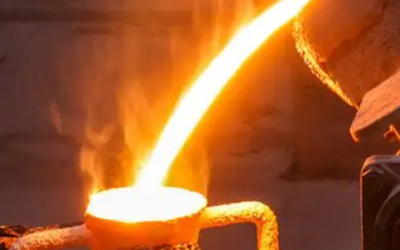
Molten metal shrinks as it solidifies — that’s physics, and no foundry escapes it.
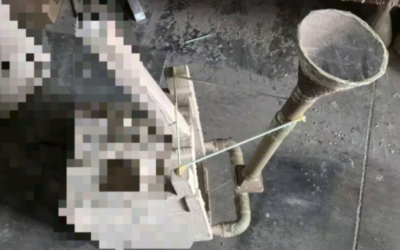
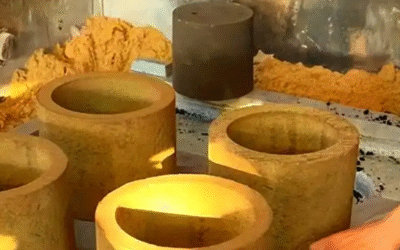
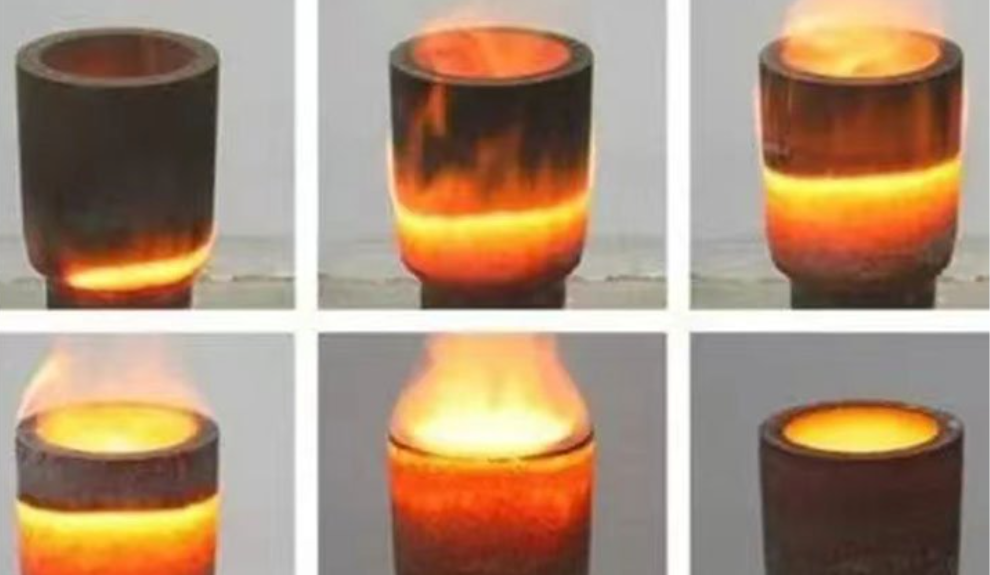
A riser sleeve is how you fight back. It’s a hollow cylinder, vacuum-formed or cold-box produced, placed inside the sand mold to hold a reserve of molten metal. The casting cools and contracts. That reserve keeps pushing metal into the cavity. Skip it, and you get shrinkage defects and piping — the kind of failures that kill batches and damage reputations.
Two main types exist, and the difference matters:
|
Type |
How It Works |
Best For |
|---|---|---|
|
Insulating |
Reflects thermal energy back into the melt, slowing heat loss |
Moderate feeding requirements |
|
Exothermic |
Generates real heat through aluminum oxidation |
Iron and steel castings needing aggressive feeding |
Exothermic sleeves do more than slow heat loss. Their resin-bonded mix of sand, aluminum, and oxidizer generates heat to keep the riser molten longer. Take rotor rim casting as an example. Half-inch-thick exothermic sleeves around perimeter risers stop the metal from solidifying too soon. That matters across a heavy thermal mass — one that would otherwise cut off metal feed before the cavity fills.
The business case is simple: smaller risers mean higher casting yield, less remelting, and easier knock-off. Better sleeves improve quality. They also cut material and labor costs at the same time.
Key Selection Criteria: How to Evaluate a Riser Sleeve Supplier in India
A competitive quote means nothing if the product fails under molding pressure. Not every supplier can back up their pricing with real performance.
Here’s what separates a serious supplier from one who’ll cost you more in scrap than they ever saved you on unit price.
Technical Performance — The Numbers That Matter
Start with the specs. Ask for documentation. Never accept catalog claims alone.
-
Exothermic efficiency: Iron and steel castings need sleeves that hit >60% heat generation efficiency. Below that, you’re not getting the aggressive feeding those alloys require.
-
K-value (insulation): Target K <1.0 W/mK. Lower values keep the riser molten longer. That’s the goal.
-
Compressive strength: Look for a minimum of >10 MPa. Sleeves that deform under molding pressure fail without warning. You won’t catch it until you crack open the casting.
-
Collapsibility: Require >80% volume reduction post-feeding. The 180 ND series, for example, cuts gas cutting requirements by 20–30%. That’s real labor and time saved on every batch.
Service Capabilities and Supply Flexibility
India’s foundry sector is growing fast. Automotive alone drove 22% production growth over the past three years. Not all suppliers have scaled their service capabilities to match that pace.
Probe these areas:
-
Customization: Can they produce round, oval, and side-gate configurations? Check the full size range. A credible supplier covers everything from 8″×12″ open-top sleeves (10,550–10,575g weight range, modulus ~60.5–61) down to smaller trial formats.
-
MOQ: Most Indian suppliers floor at 500–1,000 units. For trials, push back. A supplier who believes in their product will work with you on smaller initial runs.
-
Lead times: Standard is 2–4 weeks. Raw material costs are up 12–15% due to tariff pressure. Ask them straight — how are they managing supply chain risk? Vague answers are a red flag.
How to Score and Choose
Run a weighted scorecard. Use this framework built around India-specific market conditions:
|
Criterion |
Weight |
|---|---|
|
Price / TCO |
30% |
|
Product Quality |
25% |
|
Delivery Reliability |
20% |
|
Certifications / Compliance |
15% |
|
Innovation / Customization |
10% |
Score each shortlisted supplier out of 10 per category. Apply the weights. Compare the totals. This takes gut feel out of the equation — and gut feel is how buyers end up locked into the wrong supplier for two years.
Shah Metal And Alloys (Ahmedabad, Gujarat)
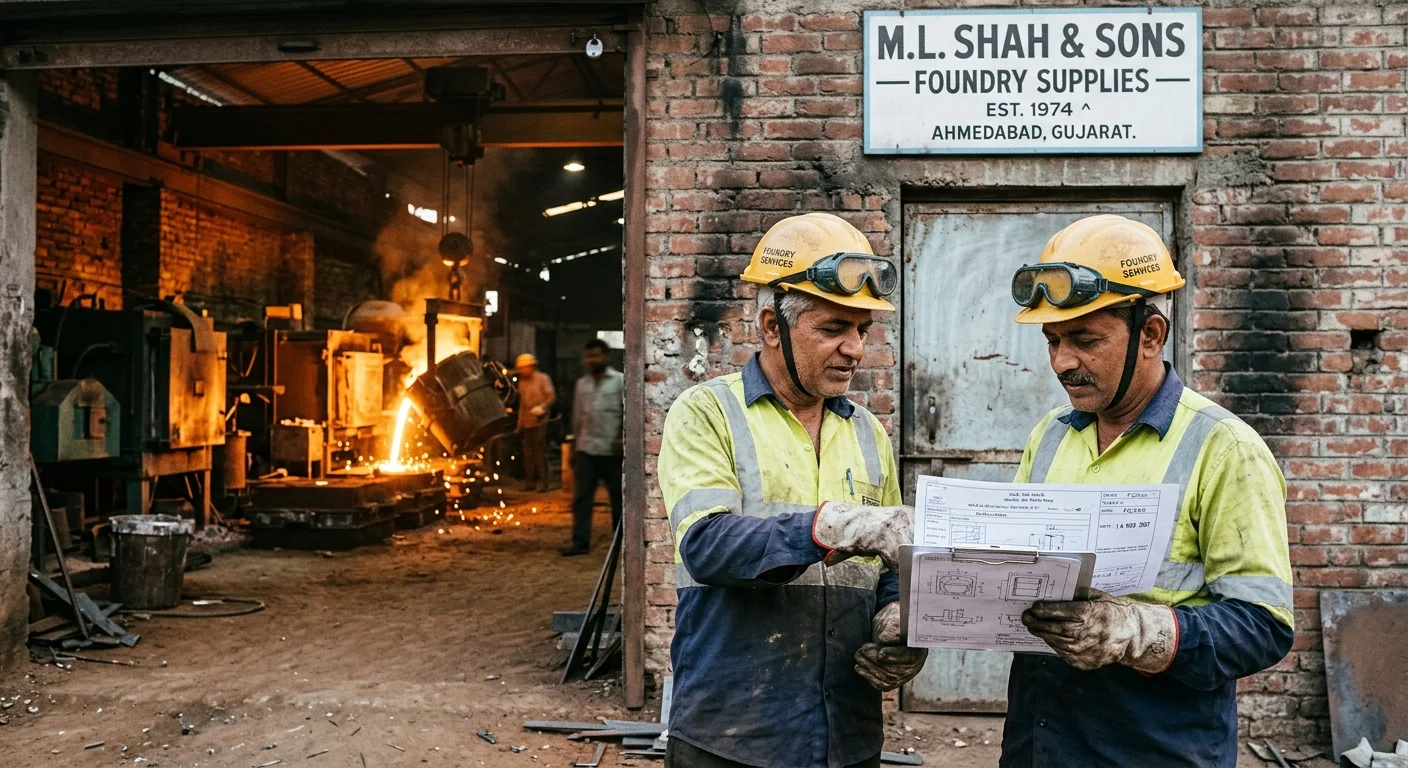
Forty-five years in steel and foundry — that kind of experience leaves a mark. Shah Metal And Alloys has been running out of Ahmedabad for decades. Many of today’s foundry buyers weren’t even born yet when they started. That depth shows in how they work.
They hold Government-recognized Star Export House status. This isn’t a marketing badge. It reflects verified export volume, a clean compliance history, and operational credibility that Indian trade authorities audit directly.
For sand casting, their core offering covers:
-
Exothermic sleeves
-
Exothermic powder
-
Core binders
You can also add immersion foundry pyrometers to your order — useful for temperature monitoring alongside your consumables.
What sets them apart is scope. They’re not a single-product supplier. Your facility may also need specialty pipe, fittings, or superalloy scrap — Inconel, Hastelloy, Incoloy. Shah Metal handles all of that under one vendor relationship. Less back-and-forth, fewer accounts to manage.
Contact: +91 2764 352929 | info@shahalloys.com
Magna Ferrochem
Three manufacturing plants. All proprietary. All under one roof. You don’t see that often in the Indian foundry consumables space — and Magna Ferrochem Pvt Ltd knows it.
The company focuses on ferrous foundries. That focus matters more than it sounds. Suppliers who spread across every alloy and every process rarely build the deep technical knowledge that ferrous casting demands. Magna keeps it tight: cast iron with flaky and spheroidal graphite, and cast steel. That narrow focus is a strength.
Their core lineup covers the key bases:
-
Exothermic sleeves — high-density, built for minimal defects and precise metal feed control
-
Insulating feeder sleeves — designed to boost casting efficiency and extend riser life
-
Direct pouring sleeves — for applications where placement precision is non-negotiable
-
Inoculants — completing the ferrous consumables package
The in-house R&D backing sets Magna apart. Their technical team runs continuous lab research. It’s not just fixing problems after they happen. So if you’re working to improve casting yield through high-density sleeve selection, Magna can have that conversation. Most suppliers can’t. This team can sit down with you, dig into the problem, and help you find a real solution.
Exochem / Akriti International

Akriti International runs under the Exochem brand. In India’s riser sleeve market, that dual identity is worth knowing before you place an order.
The product line falls in the exothermic sleeve category. These sleeves use thermite-reaction chemistry to deliver real feeding performance. The core ingredients: aluminum powder as fuel, iron oxide as oxidizer, silica as refractory filler, and furan resin or water glass as the binder. Get the formulation balance right — the industry benchmark is around 48% Fe₂O₃, 32% Al, 10% binder — and you get a sleeve that generates heat on its own, not one that just slows heat loss.
That difference is critical in sand casting. A sleeve that only insulates is doing half the job.
What to verify before ordering:
-
Tier classification — Standard, High, and Ultra exothermic grades each target different alloys. Grey iron works fine with Standard. Steel castings need High or Ultra.
-
Sleeve geometry — Check that cylindrical, neck-down, and side-entry configurations are available for your mold layout.
-
Technical support depth — Ask their team whether they can help with riser modulus calculations. Product selection alone is not enough.
Open sources offer very little data on Exochem / Akriti International. That is a signal worth taking seriously. Ask for current technical datasheets and independent test results before you commit to volume orders.
Inproheat Industries (ASK Chemicals Partnership)
This partnership is worth your attention. Inproheat Industries is the official Indian distributor for ASK Chemicals — a global foundry chemical company founded in 1917 with operations across 25 countries.
That history matters when you’re sourcing riser sleeves. You’re not buying from a regional middleman. This is a platform built on a 50-50 joint venture between Ashland Inc. (USA) and Süd-Chemie AG (Germany). Rhône Capital later acquired the company for $350M. R&D centers across the Americas, Europe, and Asia feed into what Inproheat puts on your shelf.
What Inproheat supplies from ASK:
-
Riser sleeves
-
Cold box binders
-
No-bake binders (resin + catalysts — cures without post-cure heat, so you get faster strip times and rapid core box turnover)
-
Mold washes for iron, steel, and non-ferrous sand casting
The no-bake binder systems deserve a closer look. They cut out post-cure additives. That reduces production delays without weakening bond integrity.
ASK’s eco-line stands out too. You get emission-free molding options, fluorine-free feeders, and solvent-free release agents. Your facility faces emissions compliance pressure? That product range has real, practical answers.
One caveat: direct India pricing data isn’t available to the public. Factor in import-channel margins before comparing against local alternatives.
JD Mart & Venttup Ventures: Platform vs Manufacturer Comparison
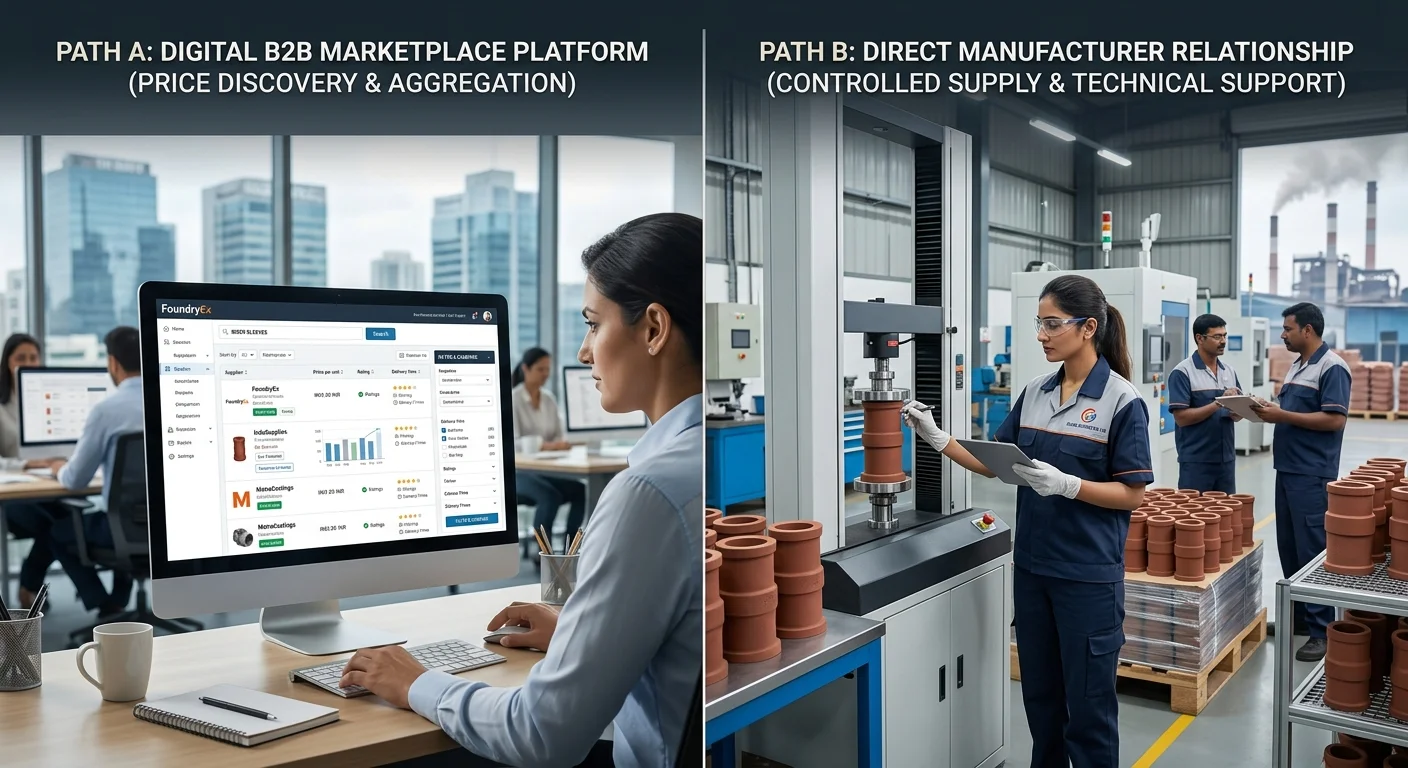
These two are very different. Mixing them up is a procurement mistake — and it costs real money.
JD Mart is a platform. JustDial launched it in February 2021. It’s a B2B wholesale aggregator, built in Mumbai, set up to compete with IndiaMart and Udaan. You get multiple suppliers, competitive price discovery, and wide category coverage under one portal. That’s genuinely useful. Procurement teams need to benchmark riser sleeve pricing before locking a contract? JD Mart handles that well. Small foundries want to run trial orders with no commitment? Same answer.
But the platform model has real limits. It cannot give you:
-
Guaranteed spec compliance across 50+ listed suppliers
-
Exothermic reaction temperature verification
-
Collapsibility index testing per batch
-
Technical support tied to your actual casting geometry
Venttup Ventures works differently. It’s a direct manufacturer. Single source. You get material data sheets, batch test reports, and an engineer who actually understands riser modulus calculations — not just a product listing.
For sand casting, that gap matters a lot. Wrong sleeve chemistry leads to inadequate feeding. Inadequate feeding causes shrinkage porosity. And shrinkage porosity doesn’t show up until you’ve already wasted the entire batch.
|
Dimension |
JD Mart |
Venttup Ventures |
|---|---|---|
|
Model |
Multi-vendor aggregator |
Direct manufacturer |
|
Price |
Competitive via bidding |
Volume-negotiated, stable |
|
Quality consistency |
Supplier-dependent |
Controlled, traceable |
|
Technical support |
None |
Casting-process aligned |
|
Best fit |
Price discovery, trial runs |
Long-term strategic supply |
Platform buyers often report 10–20% cost savings compared to traditional offline channels. That number looks good on paper. It stops looking good once your scrap rate climbs 2% because a listed supplier shipped sleeves that failed K-value specs.
The smart procurement sequence:
-
Use JD Mart to find candidates, collect samples, and check pricing
-
Run Venttup Ventures through controlled casting trials
-
Move to a single manufacturer for volume, consistency, and real technical support
Use the platform to scout the options. Then move on from it.
Emerging & Niche Suppliers Worth Watching in India’s Foundry Market
India’s foundry market is on track to hit USD 45.98B by 2032. That kind of growth doesn’t just benefit the big players. It opens real doors for smaller, sharper operators who move faster and focus on tighter specializations.
A few names are worth your attention.
Gujarat Metal Cast Industries is based in Gujarat — one of India’s most concentrated casting clusters. They’re regional. They’re niche. That’s the whole point. Regional specialists tend to offer shorter lead times and more direct technical support than large national distributors stretched across ten product lines.
Bharat Forge’s Baramati facility tells a different story. Their Maharashtra plant runs AI-assisted mold-fill systems. Rejection rates stay below 1%. Orders ship within the same week. In September 2024, they opened a USD 18M R&D center focused on aluminum-lithium alloys and additive manufacturing. That’s not a small upgrade — it’s a fundamental change in what Indian foundry suppliers can bring to the table.
Kirloskar Ferrous and Electrosteel Castings are also moving fast. After the January 2025 tariff increase pushed basic customs duty to 40%, Mahindra and Tata Motors shifted business away from Chinese suppliers. These two companies absorbed 12,000 tonnes of that housing business. That volume isn’t going back to China.
Looking for suppliers in this space? Start with Foundrybiz.com. It’s more foundry-specific than IndiaMart. You’ll get cleaner results on new entrants and niche product lines — less noise, better leads.
The pattern is clear: import pressure is pushing domestic suppliers to build real technical depth. The ones investing now — in AI systems, advanced alloy research, faster delivery — are the names to track before everyone else catches on.
Price Comparison & Cost Analysis: What to Expect Buying in India
Pricing in India’s riser sleeve market doesn’t follow one logic. It follows several. Understanding each one saves you money before you place an order.
The baseline numbers look reasonable on the surface. But surface-level data is not where procurement decisions belong.
What Drives the Final Price
Unit cost is the starting point, not the finish line. In India, the total cost of ownership (TCO) for riser sleeves covers more than one line item:
-
Base unit price — changes by sleeve type (insulating vs. exothermic), size, and chemistry
-
Service charges — logistics, handling, and packaging markups that don’t show up in catalog quotes
-
MOQ thresholds — most Indian suppliers start at 500–1,000 units; go below that and you pay a premium
-
Promotions and seasonal discounts — these exist, but they’re not consistent; you need to track them to benefit
The number on the datasheet is not what you pay. Add up every cost before you sign anything.
How to Build a Real Price Comparison
India’s procurement culture rewards buyers who put in the work upfront. More than 80% of serious industrial buyers check multiple sources before committing to a supplier. The same approach works for riser sleeve sourcing:
-
Request quotes from at least three shortlisted suppliers at the same time
-
Pull specs alongside price — grade, K-value, compressive strength — not price alone
-
Sort by total payable cost, not unit cost
-
Calculate your savings: Amount Saved = Highest Quote − Lowest Comparable Quote
-
Track price movement over 60–90 days before locking in annual agreements
Negotiation Is Expected — Use Data to Drive It
Negotiation is standard in Indian B2B sourcing. Show up with documented price comparisons and competitor quotes. Suppliers expect this. Historical pricing trends and competing bids give you real leverage — not just the confidence to ask, but the numbers to support your position.
Volume-based agreements tend to bring 8–15% reductions off standard catalog pricing for repeat orders.
How to Verify and Audit a Riser Sleeve Supplier Before Placing an Order
A catalog looks good until the casting doesn’t.
Verification isn’t paperwork. It’s the gap between a supplier’s promises and your scrap rate.
Start With Documentation — Not a Sales Call
Ask for these before anything else:
-
ISO 9001 certification — check the expiration date, not just the logo
-
Internal audit records — how often do they audit themselves? Quarterly shows commitment. “We do it often” does not
-
PFMEA documentation — no process failure analysis means they haven’t seriously considered what can go wrong
-
Previous compliance findings — ask straight. Evasion is an answer too
Strong suppliers send sample inspection reports with dimensional charts and photos. No nudging needed. That’s the difference between professionals and order-takers.
Score Them With Numbers — Drop the Gut Feel
Use a five-category scoring model. Above 80/100: qualified. Between 60–80: improvement plan required. Below 60: walk away.
The five categories to score:
-
Process control
-
Quality management
-
Workforce training
-
Production planning systems
-
Preventative maintenance documentation
After the Audit, Verify the Fix
Most buyers audit once, file the report, and move on. That’s half the job. An audit isn’t closed until you confirm that corrective actions removed the problem — not just documented a response to it.
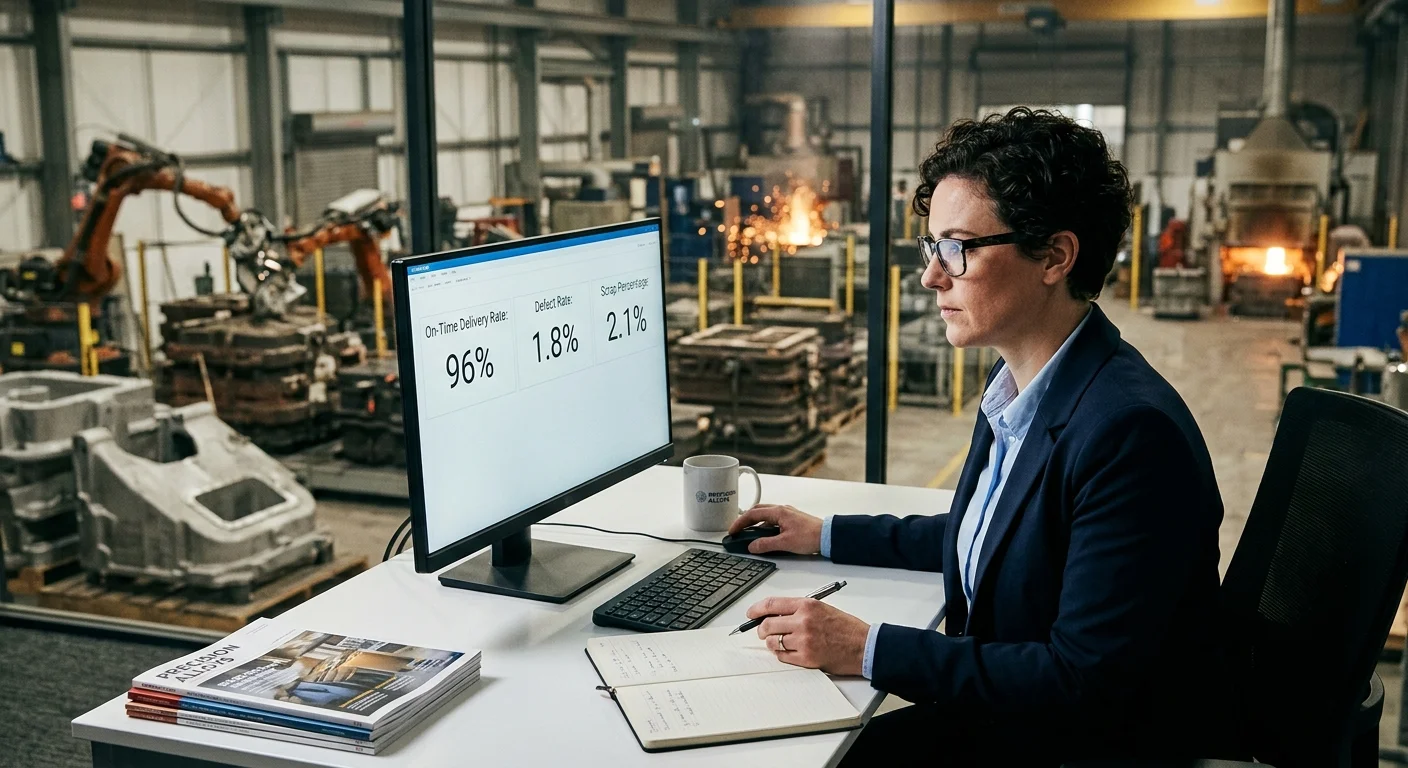
Re-audit critical suppliers each year. Check poor performers more often. Track three numbers for every supplier: on-time delivery rate, defect rate, and scrap percentage. Those three figures tell you more than any site visit whether the relationship is holding up.
Conclusion
Picking the right riser sleeve supplier is more than a procurement call — it’s a quality decision. One that shows up in every casting you produce.
India’s foundry supply market has grown strong. Ahmedabad’s established names like Shah Metal And Alloys sit alongside specialized partners like Inproheat’s ASK Chemicals-backed solutions. The top riser sleeve suppliers in India offer real competition across price points, chemistries, and lead times.
But a supplier list alone won’t save your castings. Verification does.
Start with the audit checklist covered above. Request samples before you commit to volume. Ask direct questions about thermal performance data and batch consistency. A sleeve that underperforms at the feeding stage costs you far more than its per-unit price shows.
Your next step is clear:
-
Shortlist three suppliers from this guide
-
Request trial samples from each
-
Let your scrap rate tell you who’s worth keeping
The best riser sleeve supplier for sand casting in India isn’t the cheapest one. It’s the one that makes shrinkage a non-issue.