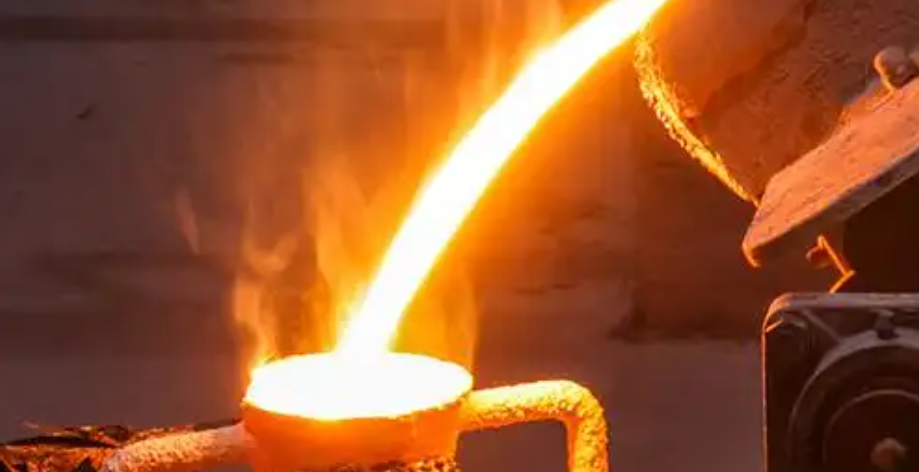
Picking the wrong ceramic pouring cup supplier doesn’t just slow down production — it puts every casting at risk. Molten metal runs past 1,600°C. Tolerances leave zero room for error. The supplier you trust with this one consumable carries more weight than most buyers expect.
This guide breaks down the best 7 ceramic pouring cup suppliers for Investment casting — ranked on the factors that matter most: material formulation, size flexibility, alloy compatibility, and real-world durability.
Sourcing for aerospace components? Running a high-volume foundry? Either way, you’ll finish this guide knowing who to call first.
What Makes a Ceramic Pouring Cup Critical in Investment Casting
The ceramic pouring cup is where everything begins — and where everything can go wrong.
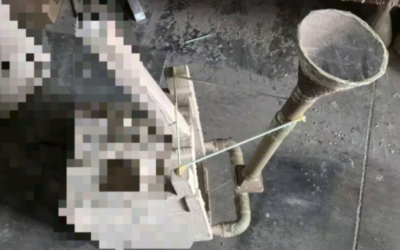
Molten metal doesn’t ease into the sprue system. It impacts. It pressurizes. It tests every weak point in your shell. A well-engineered ceramic cup absorbs that punishment. A cheap one fails without warning — contaminating your casting before the pour is even finished.
Here’s what the right cup does:
-
Eliminates shell-breakage inclusions — ICP cups bond to the wax down sprue, becoming a structural part of the ceramic shell itself
-
Reduces re-oxidation — double-cup designs let trapped air escape through the up sprue during casting
-
Lifts qualified casting rates by over 10% — sintered sprue cups cut defects including dirty surfaces, cracking, and low-strength failures
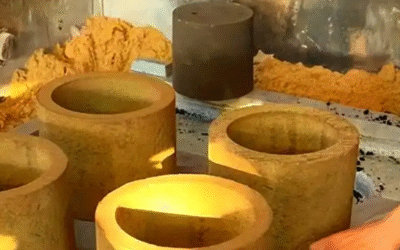
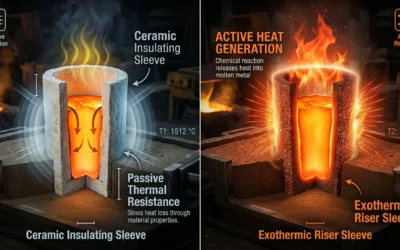
The materials behind these results are specific: mullite, fused silica, and high-alumina silicate. They operate at 1,650°C. Flexural strength exceeds 10 MPa. Refractoriness runs between 1,580–1,770°C.
That thermal stability is built in by design. These cups go through high-pressure, high-temperature pressing. The result is consistent thermal shock resistance with minimal reactivity. You get compatibility across ferrous, nickel, aluminum, bronze, and superalloys — no material switching required.
Get the cup wrong, and the rest of your process pays for it.
Key Factors to Evaluate Before Choosing a Supplier
Not every supplier who claims to handle investment casting ceramics understands what happens inside a pour. The gap between a capable supplier and a reliable one shows up fast — at the worst possible moment.
Before you shortlist anyone, run every candidate through these five dimensions:
Quality Certification and Defect Tolerance
ISO 9001 certification is the baseline. Non-negotiable. Beyond that, push for documented defect rate data. The industry benchmark sits below 0.1%. Any supplier who can’t confirm that number in writing is already a risk. Ask for QMS audit records and part tolerance history. These aren’t bureaucratic boxes. They’re proof that quality is managed, not just claimed.
Total Cost of Ownership — Not Just Unit Price
The quoted price is not the real price. Factor in switching costs, minimum order requirements, hidden logistics fees, and the cost of defects that slip through. Price should carry about 30% of your overall evaluation. That keeps it relevant without letting it override performance. Cheap cups that crack mid-pour cost far more than premium cups that hold up.
Capacity and Delivery Reliability
Target suppliers with on-time delivery rates above 95%. Make sure they can handle rush orders without dropping output quality. Your foundry runs lean inventory? Just-in-time capability isn’t a bonus — it’s a requirement.
Financial Stability and Scalability
A supplier who can’t grow with your volume puts a ceiling on your operation. Check their financial health before signing any long-term agreements. The right partner grows as you grow.
Compliance and ESG Standing
Most procurement scorecards weight ESG at around 15% — labor standards, environmental practices, and regulatory compliance all included. For aerospace and precision casting clients, this isn’t about image. It’s basic due diligence.
High Temp Inc. — Best for Custom Sizes & Mullite Formula
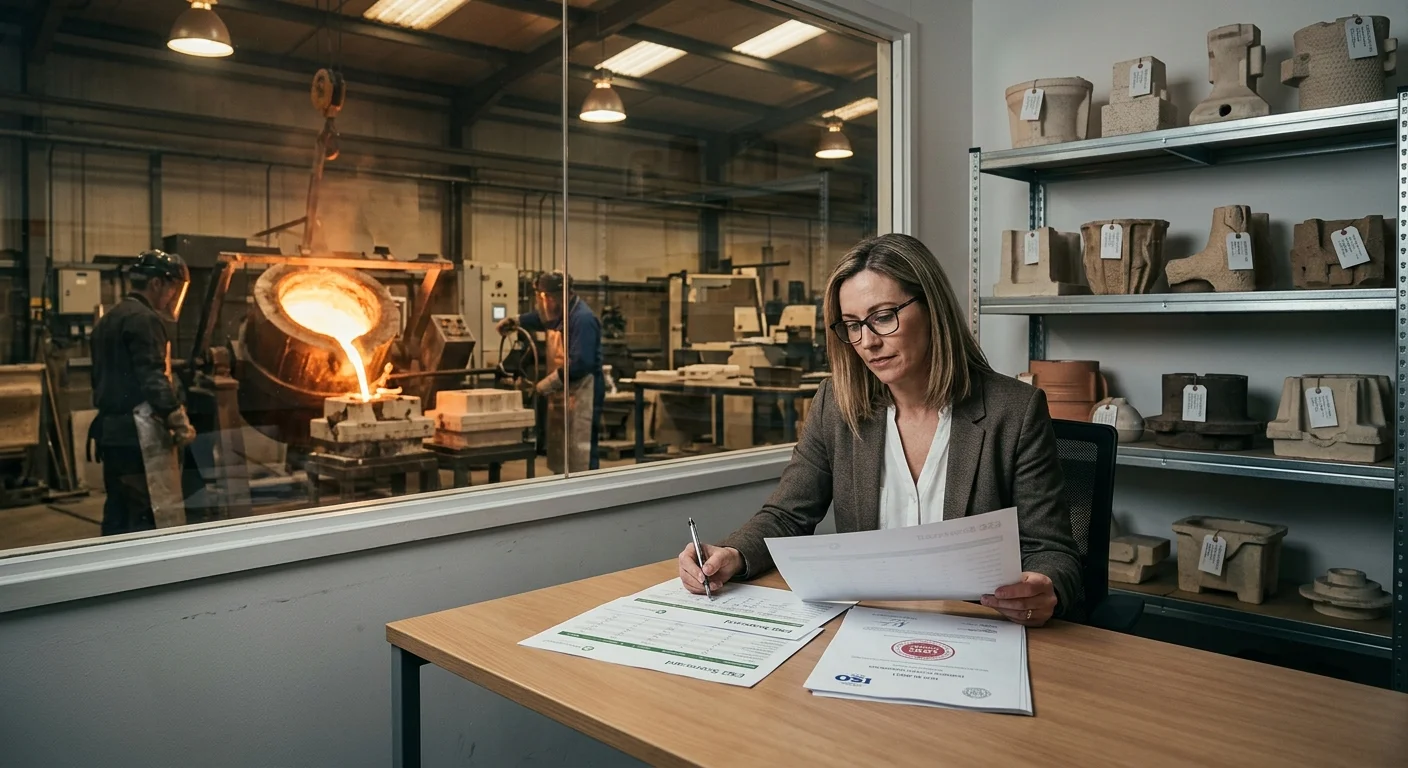
High Temp Inc. built its reputation on one thing most ceramic suppliers avoid: saying yes to the difficult order.
Their core product line centers on Mulcoa Mullite Grog. You get multiple mesh sizes and alumina content levels to choose from. A popular option is the 47% alumina variant, priced between $15.00 and $50.00 per unit. Low dust. Precise sizing. Every batch comes out uniform. For investment casting operations that depend on refractory aggregate quality, that consistency isn’t a selling point — it’s the whole game.
What sets High Temp Inc. apart from generic mullite suppliers is their custom manufacturing depth. They produce and warehouse custom refractory products in-house. That includes scaling up to 15,000 lb precast deltas for the steel industry. That production ceiling matters. It shows real engineering infrastructure — not just catalog flexibility.
Their dimensional precision meets industry-standard custom benchmarks. Diameter tolerances are comparable to the ±0.003″ (0.076 mm) standard set by leading technical ceramics manufacturers.
Best fit for: Foundries that need:
– Non-standard pouring cup geometries
– Mullite-formula consistency at scale
– Custom mullite-based refractory builds that off-the-shelf suppliers won’t touch
REMET — Best for Aerospace-Grade Alloy Compatibility
Aerospace casting doesn’t forgive guesswork. You’re pouring superalloys at the limits of what materials science can handle. Your ceramic shell system performs to spec — or it doesn’t. And “doesn’t” means scrapped components, wasted pours, and a conversation nobody wants to have.
REMET built its product line around that exact pressure point.
Their refractory sands and flours cover all alloys cast in the investment casting industry. No carve-outs. No alloy-specific exclusions. That range starts with standard ferrous and non-ferrous metals. It goes all the way up to the most demanding aerospace-grade superalloys in production today.
Take UDIMET® 188 as an example. It’s a cobalt-nickel superalloy — Co 38%, Ni 22%, Cr 22%, W 14%. Its oxidation resistance pushes past 1,300°F (700°C). REMET’s materials hold structural integrity against that thermal load. No compromise.
The compatibility list goes further:
-
Aluminum alloys: Al 2024, 7075, 7068
-
High-strength steels: AerMet® 100 and 310, reaching 2,069–2,170 MPa UTS
REMET’s materials work across both primary face coat and secondary backup slurry applications in ceramic shell building. That dual-layer coverage matters. You build one complete shell from a single supplier — no mixing, no gaps.
Their technical documentation covers wax rheometry and pattern dwell time in fast-form processes. It gives you the data to hold precise tolerances on parts where failure is not acceptable.
Best fit for: Aerospace foundries running fatigue-resistant, high-strength alloy castings that need a single ceramic shell supplier with zero compatibility gaps.
IPS Ceramics — Best for Full Investment Casting Consumables Package
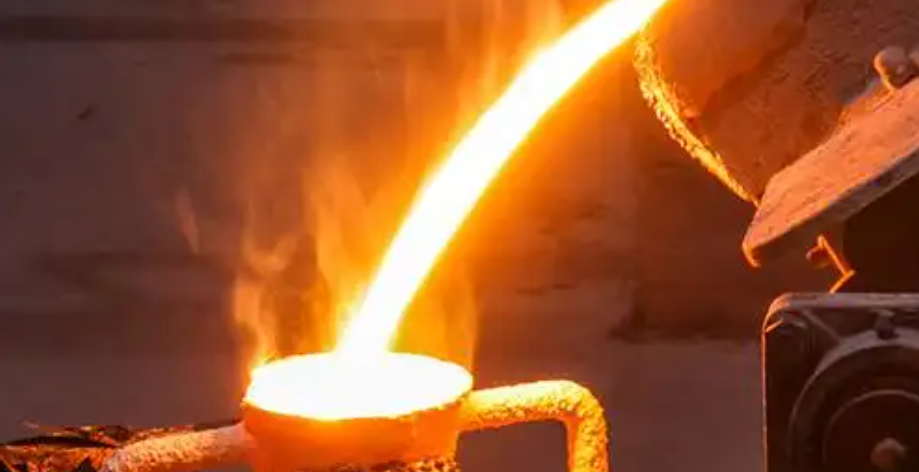
Most suppliers hand you a pouring cup and call it done. IPS Ceramics hands you an entire system.
The investment casting consumables package covers three components built to work together: pouring cups, vent plugs, and support rods. Every piece hits the same thermal ceiling — 1,650°C (3,000°F). That’s not a coincidence. It means your consumables don’t fight each other mid-pour.
The material specs tell the real story:
-
Pouring Cups (Mullite): 65% Al₂O₃, modulus of rupture at 20 MPa, bulk density 2.2 g/cm³
-
Vent Plugs (Mullite): 50% Al₂O₃, modulus of rupture jumps to 50 MPa — built to hold under assembly pressure
-
Support Rods (Corundum): 95% Al₂O₃, zero open porosity, modulus of rupture at 250 MPa — a completely different strength class on its own
That range matters. Sourcing from one supplier gives you matched thermal expansion values and consistent bulk density across all product lines. You cut out a hidden defect source most foundries never pin down — mismatched consumables.
IPS developed their vent plugs alongside established foundries. They’re priced to compete and proven in the field.
Best fit for: Operations looking to bring pouring, venting, and structural support under one supplier — without giving up material performance.
Contact: enq@ipsceramics.com | ipsceramics.com
Anderman Ceramics — Best for Broad Ceramic Product Ecosystem
Anderman Ceramics has been at this since 1947. Most ceramic suppliers sell individual products. Anderman does something different — they build a complete support system around metal production.
That difference matters more than it sounds.
Their product range covers:
-
Crucibles
-
Atomising nozzles
-
Filters
-
Tundishes
-
Pour cups
-
Metal distribution systems
-
Full custom-design technical ceramics
You get all of that from one supplier. So if you’re running an investment casting operation with multiple ceramic consumable relationships, this cuts through a lot of supplier management headaches fast.
The materials cover oxides, nitrides, carbides, and composite materials. The operating range runs from 800°C to 1,900°C. Superalloys, iron and steel, non-ferrous, precious metals, powder metallurgy — all handled without sourcing from a second supplier.
Global reach backs it up too. Anderman runs operations across the UK, France, USA, China, and Southeast Asia, with local warehousing in all three Western markets. There’s no minimum order quantity either. That’s a real plus for foundries dealing with variable volume or trying out new production setups.
Best fit for: Operations that want one ceramic partner across multiple metal production applications — not just pouring cups, but everything around them.
Contact: Gary Hateley, Sales Director — gary.hateley@andermanceramics.com | +44 (0) 1299 252480
Akron Porcelain & Plastics Co. — Best for Wide Standard Size Selection
Akron Porcelain & Plastics Co. has been building inventory since 1890. Back then, other suppliers were still sorting out their product lines. That kind of staying power doesn’t happen by accident. It comes from delivering the standard sizes foundries need — no custom-order delays, no hoops to jump through.
You run predictable geometries and need parts on demand? Akron’s standard molded ceramics catalog covers you well.
What’s in the standard range:
-
Water filtration spheres (multiple sizes)
-
Extruded ceramic tubes — standard electrical grades
-
Compression molded electrical ceramic tubes
-
Ceramic spool insulators
-
Cable rack insulators — off-the-shelf availability
Tolerances are where Akron’s precision reputation gets built. Pressed ware holds ±0.015″ per inch. Injection molded ceramics come in tighter at ±0.005″ per inch — three times more precise. Add a glazed surface and budget an extra ±0.005″. These are not rough estimates. They are documented manufacturing benchmarks, published and repeatable.
Best fit for: Foundries that put off-the-shelf availability ahead of custom lead times, with steady geometric requirements across production runs.
Contact: sales@akronporcelain.com | (330) 745-2159 | 2739 Cory Ave., Akron, OH 44314, USA
SF Foundry — Best for High-Impact Resistance Applications
70% of casting failures come down to one root cause: wrong resin selection. SF Foundry built its entire material approach around solving that problem.
The focus on high-impact resistance starts at the material level. Ceramic composition, resin type, and fiber geometry all work together under extreme heat. Each choice affects how the filter holds up under real production stress.
Silicon carbide foam Ceramic filters lead the lineup. They run continuously above 1,600°C. They hold their structure under thermal shock and mechanical impact at the same time. Cheaper filters expose their weaknesses within the first pour. These don’t.
For complex mold shapes, SF Foundry uses silicon nitride (Si₃N₄). It offers high fracture toughness and strong thermal shock resistance. You can run repeated temperature cycles without building up damage over time.
Resin selection goes just as deep:
-
Phenolic and furan resins are the go-to for high-impact use — thermal stability from -40°C to 200°C, high tensile strength, and solid chemical resistance
-
Silicone resin pushes the cold limit down to -60°C and adds flexibility
-
Thermoplastic resin brings recyclability across repeated casting cycles
Fiber reinforcement geometry plays a real role here too. Hooked steel fibers beat crimped versions for energy absorption — even at smaller length-to-diameter ratios. The reason is straightforward: three-directional reinforcement spreads stress across the material. First cracks take longer to form because the material absorbs more energy before anything breaks.
Best fit for: Foundries running high-stress, high-cycle operations where impact failure is not a theory — it’s a problem that shows up in production data.

FoundryMax — Best for High-Volume
Scale breaks most Ceramic filtration systems before it breaks the foundry.
FoundryMax targets operations where high volume is the daily norm, not the exception. Their filtration range runs from 600 CFM up to 2,500,000 CFM. This isn’t a product line for occasional large pours. It’s infrastructure built to hold up across full industrial output, every shift.
The ceramic foam filter specs back that up:
-
Pore sizes: 10–60 PPI standard, up to 90 PPI available
-
Inclusion capture: 10–50μm molten metal particles
-
Porosity: 80–90%
-
Compression strength: ≥1.0 MPa
-
Filtration rate: Up to 95% on finest filter grades
Filter size controls throughput in high-volume Aluminum Alloy pours. A 7-inch filter handles 22–56 kg/min. Step up to 12 inches and that range jumps to 50–156 kg/min — with no loss in filtration integrity.
PPI selection matters at scale. Most high-volume operations run at 20 PPI. That’s the industry standard — it balances inclusion capture against flow rate. Need finer filtration? Move to 25–30 PPI. You’ll need enough metallostatic head to support it, but the cleaner output is worth it.
Speed your top priority over fine filtration? FoundryMax’s mesh filters are the answer: 0.8 mm standard mesh, 300 g/m² density, rated to 700–800°C with specialty grades reaching 1,700°C. Cost less than foam filters. Built for thin, fast-flowing melts.
Best fit for: High-output foundries where filtration capacity needs to match production volume — not limit it.
Side-by-Side Supplier Comparison: Which One Is Right for You?
Seven suppliers. One decision. Here’s how they stack up.
|
Supplier |
Best For |
Material Strength |
Alloy Compatibility |
Key Advantage |
|---|---|---|---|---|
|
High Temp Inc. |
Custom sizes |
Mullite (47% Al₂O₃) |
Broad |
Non-standard geometries at scale |
|
REMET |
Aerospace alloys |
Refractory sands & flours |
All alloys, incl. superalloys |
Zero compatibility gaps |
|
IPS Ceramics |
Full consumables package |
Mullite + Corundum |
Up to 1,650°C |
Matched thermal expansion across all parts |
|
Anderman Ceramics |
Broad ceramic ecosystem |
Oxides, nitrides, carbides |
800°C–1,900°C |
Single supplier, no MOQ |
|
Akron Porcelain |
Standard size availability |
Pressed & injection molded |
Standard investment casting |
Off-the-shelf, documented tolerances |
|
SF Foundry |
High-impact resistance |
SiC foam, Si₃N₄ |
High-cycle, high-stress |
Impact-first material engineering |
|
FoundryMax |
High-volume output |
Ceramic foam filters |
Aluminum alloys |
600–2,500,000 CFM filtration range |
Match Your Operation to the Right Supplier
Three questions cut through most of the noise:
What’s your volume? High-output foundries running continuous shifts are a strong fit for FoundryMax. Mid-volume operations with variable runs suit Anderman better. No MOQ, global stock — that flexibility counts.
How specialized is your alloy? Superalloy and aerospace work points to REMET. Standard ferrous and non-ferrous casting opens up more choices. IPS Ceramics and High Temp Inc. both hold up well here.
Are you sourcing one product or building a system? Single-product buyers get solid value from Akron’s standard catalog. Clear specs, off-the-shelf availability, no guesswork. Operations pulling together multiple consumables get more out of IPS Ceramics or Anderman — fewer vendors, better coordination.
The top ceramic pouring cup suppliers for investment casting don’t all compete on the same ground. Each one has a clear strength. Pick the supplier whose strengths match where your process tends to break down.
How to Request Quotes and Vet a Ceramic Pouring Cup Supplier
Most foundries waste weeks on supplier talks that go nowhere. The reason? They start without a clear brief.
Before reaching out to anyone on this list, prepare three things:
-
Your target quantity — the bulk pricing benchmark is 2,000 pieces
-
Your material spec — mullite, ceramic fiber, or high-alumina
-
Your tolerance requirements
Go in with those ready, and the conversation moves fast.
Submitting Quote Requests
Give your company name, role, and volume upfront. High Temp Inc. takes direct calls at 503.737.0345. Most others — including TKG Industrial Ceramics — use structured quote forms on their website.
Vetting Supplier Responses
Score every supplier on four things:
-
MOQ flexibility — the acceptable range is 300–2,000 pieces
-
Mechanical spec compliance — look for pressure-formed cups (made in a sealed mold under uniform force), chemical purity above 99%, and a smooth surface finish
-
Certification status — check for high-temp resistance ratings and export compliance documents
-
OEM/ODM support — this tells you whether real customization is on the table, not just catalog picks
Get at least three quotes and compare them side by side. Delivery reliability and compliance carry just as much weight as unit price.
Conclusion
Picking the right ceramic pouring cup supplier goes beyond purchasing. It’s a quality control decision that affects every casting you produce.
The seven suppliers here each lead in a specific area: custom geometry, aerospace-grade compatibility, high-volume throughput, and impact resistance. “Best” in general terms means nothing. What matters is who fits your alloy, your tolerances, and your production reality.
Start narrow. List your non-negotiables first:
-
Temperature rating
-
Size range
-
Chemical compatibility
Then use the comparison table to shortlist two or three candidates. Request samples before placing bulk orders. Any supplier worth your business will welcome that step.
Foundries that hit tight dimensional tolerances don’t cut corners on consumables. Your ceramic pouring cup supplier is part of that equation — and it shows in the final output.
Get the right partner in place. Precision follows.