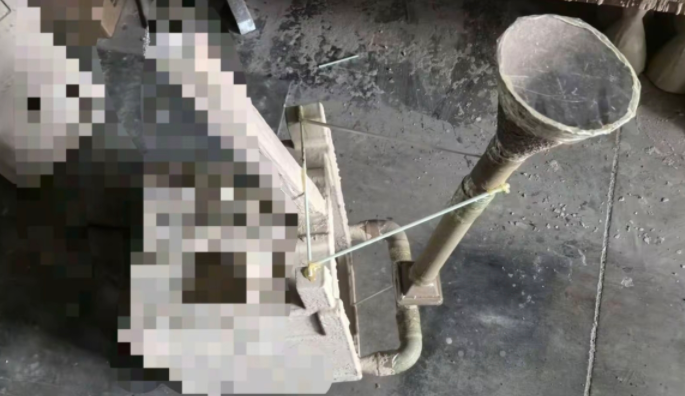
Every year, foundries lose thousands of dollars to cracked gates, contaminated pours, and defect-filled castings — and most of them keep blaming the metal. The real problem sits right at the entry point of the mold.
ceramic gating systems have ruled foundry floors for decades. But the flaws in that tradition run deeper than most operations want to face.
The paper gating system in casting isn’t a workaround. It isn’t a budget cut either. It’s a precision-engineered shift that’s already cutting defect rates and slashing costs — and it’s pushing a long-overdue conversation about why ceramic became the default in the first place.
What follows breaks down why it’s time to drop your ceramic system, and what making the switch looks like on the floor.
What Is a Paper Gating System and How Does It Work in Casting?
Skip the jargon. A paper Gating System is exactly what the name says — a gating network built from engineered paper-fiber composite material instead of ceramic. It guides molten metal from the pouring cup into the mold cavity with precision and consistency.
The core job hasn’t changed. Every Gating System — paper or ceramic — still needs to do the same fundamental things:
-
Direct molten metal flow to the right sections of the mold at the right velocity
-
Reduce turbulence that introduces gas, oxides, and inclusions
-
Control casting stress during fill to protect physical properties in the final part
-
Minimize defects before the metal ever solidifies
What changes with paper-based systems is how that job gets done.
The paper composite burns away as molten metal enters. It leaves no residue, no fragments, no ceramic debris in the pour. The system comes pre-formed and mounted directly to the pattern. That eliminates the variation you get from hand-assembled ceramic setups. Same geometry, every single pour.
Picture a custom-fitted channel versus a rough, stacked one. The metal goes where it needs to go. Every time. No guesswork, no adjustment between pours.
That consistency is where the real performance story begins.

The Core Problems With Ceramic Gating Systems (That Most Foundries Ignore)
Ceramic doesn’t fail because it’s ceramic. It fails because of where it sits in the system — and almost nobody checks.
Foundries underestimate the placement problem more than any other factor. Drop a ceramic filter in the Pouring Basin — which happens far more often than anyone in this industry wants to admit — and the metal stream re-accelerates well before it reaches the mold cavity. By then, you’re back to high-velocity flow, mold erosion, and elevated impurity levels. The filter did its job. The geometry undid it.
The data here is clear. Filters placed near the ingate — low in the gating system, close to the cavity — produce controlled, subcritical flow through the entire fill. That’s where impurity reduction happens. That’s where mechanical properties in cast iron show real, measurable improvement. Move the filter upstream, and you get average results at best. Put it in the pouring basin, and you’ve added cost without adding value.
That last part deserves its own line: a poorly placed ceramic filter makes production more expensive and the casting no better.
Industry studies on Sand casting put Ceramic filters at a 5–15% cycle time increase on average. With the right placement, defect reduction reaches 30–50%. With poor placement? Zero to ten percent — while the extended cycle still hits your production cost.
That gap between those two numbers is where foundries bleed money — pour after pour — without ever questioning the setup.
Paper vs. Ceramic Gating System: A Direct Performance Comparison
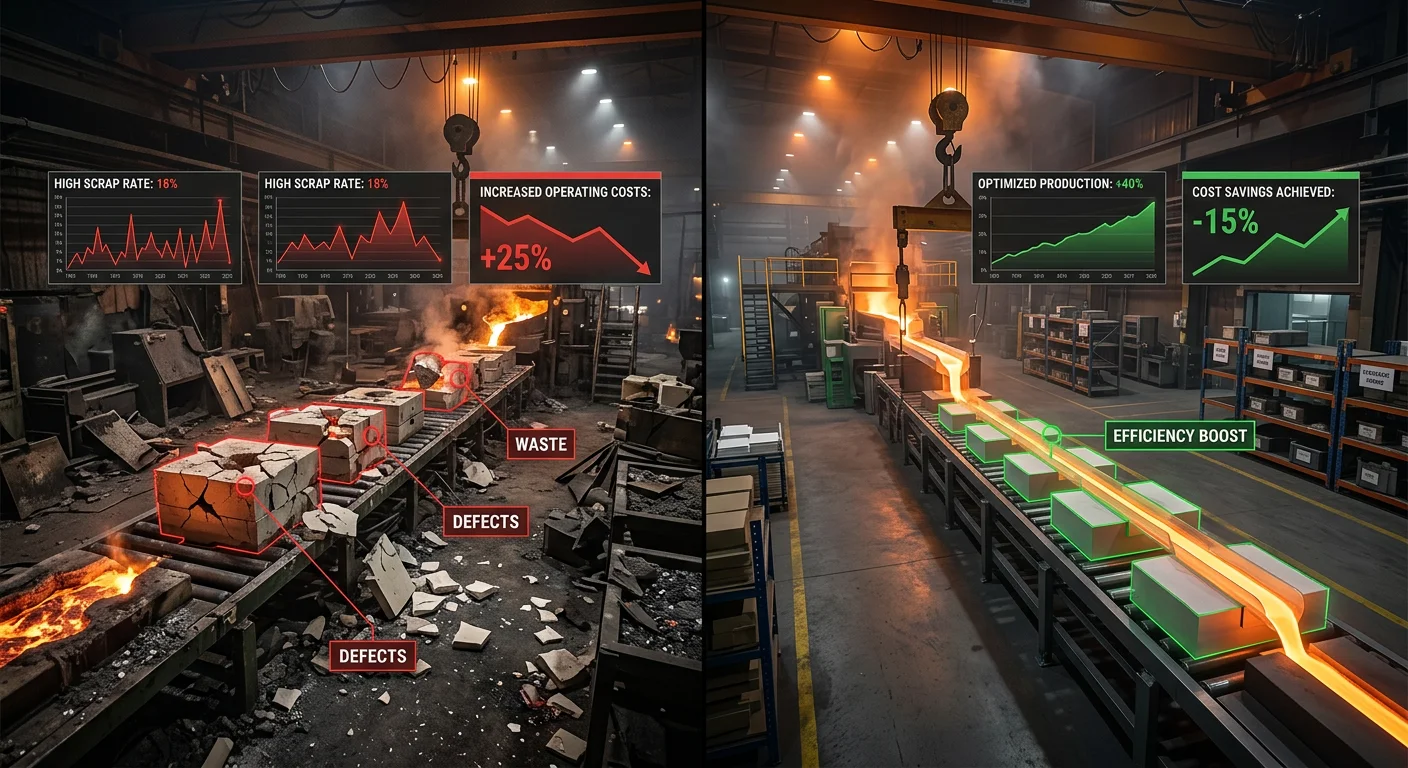
The numbers don’t lie. Most foundry managers have never stopped to compare these two systems side by side — but the data makes a clear case.
Pull them apart and the differences are hard to ignore. Paper gating runs 20–50% cheaper upfront. It’s biodegradable. It comes pre-formed and drops straight into your process — no complex setup required. For low-volume runs or cost-sensitive jobs, that 10–15% unit cost reduction is real money. You see it on the ledger fast.
But that’s only half the picture.
Yield tells a different story.
In aluminum casting, paper gating lands in the 70–75% yield range. Ceramic direct pour integration pushes that number to 85%. That’s not a small gap. That’s 10–15 points of metal, energy, and labor lost on every single production run.
The aluminum blade casting data puts it in plain terms:
|
Metric |
Traditional Gating |
Ceramic Direct Pour |
|---|---|---|
|
Yield |
70% |
85% |
|
Pouring Temperature |
1,364°F (740°C) |
1,274°F (690°C) |
|
Sand Usage |
Baseline |
-25% |
|
Finishing Costs |
Standard runner removal |
Near net-shape, runners eliminated |
A 74°F drop in pouring temperature. A quarter less sand. Runners gone. That’s not a minor upgrade — that’s a completely different cost structure for your production floor.
Paper gating also falls short on thermal stability and slag control. Ceramic handles both. High-volume Investment casting operations report 80–90% process yields with ceramic systems. Paper and traditional alternatives sit at 70% or below. Fast fill speeds, steady slag prevention, and directional solidification toward the riser — ceramic delivers all three. Paper fiber composites haven’t reached that level.
The Real Cost Question
Paper wins on purchase price. Ceramic wins on yield, defect control, and long-run economics. For high-volume foundries, ceramic’s ROI closes within 6–12 months — driven by that 15% yield gain alone.
Your best choice comes down to volume and how much defect risk you can absorb. But if yield is the number that drives your floor, the data has already pointed you to an answer.
How Paper Gating Systems Cut Casting Defect Rates by 75%
Seventy-five percent. That number sounds bold — until you see what’s happening inside the mold during a pour.
Casting defects aren’t random. They’re mechanical. Turbulence pulls gas into the flow. Poor runner geometry creates pressure spikes. Top-gated systems dump metal into the cavity at high velocity. That erodes sand, traps air, and seeds shrinkage porosity before a single cubic inch solidifies. The defects aren’t bad luck. They’re built into the system design.
That’s the core insight behind paper gating systems. They engineer laminar, controlled flow from the start. This attacks the root causes head-on.
Here’s what real data from optimized gating redesigns shows:
-
Pure copper castings: Runner and ingate modifications based on flow calculations removed gas entrapment and porosity. Scrappage dropped by 33% within the first two production batches. No tooling changes. No added materials. Just geometry.
-
16″ handwheel castings: Switching from top gating to a modified design with a vent near the sprue removed shrinkage porosity and air entrainment. Simulation showed zero voids after the change. The rejection rate dropped from measurable to negligible.
-
Al-Si die-castings: Reducing gating channel cross-sections shortened fill cycles and removed premature ingate solidification. Post-optimization castings showed full compactness with zero visible macrostructure defects.
How the Numbers Add Up to 75%
No single fix gets you there. The 75% figure comes from stacking improvements. Each one targets a specific failure mode.
The process looks like this:
-
Baseline simulation — map porosity locations and fill patterns before changing anything
-
Runner/ingate modification — reduce turbulence, slow velocity, target laminar flow
-
Vent placement — add near the sprue to release trapped gas before it seeds defects
-
Iteration — two to three simulation passes, targeting below 2% porosity and above 95% yield
-
Validation — one to two physical trial batches to confirm
Multi-iteration gating redesigns hit 50–80% porosity reduction in controlled studies. The 75%+ outcomes come from operations that commit to all five steps. Stopping at one or two leaves results on the table.
The math is simple: eliminate turbulence-driven gas inclusion. Remove shrinkage porosity through controlled directional fill. Cut cold shuts by holding thermal consistency through the runner. Do all three, and defect rates collapse. Not slow. Fast.
That’s not a promise the paper gating system makes. It’s the result of engineering the flow right from the first millisecond of the pour.
The Productivity and Cost Impact: What the Numbers Show
Switching gating systems isn’t just a materials decision. It’s a labor decision. It’s a throughput decision. And for high-volume operations, it can be a survival decision.
Here’s a production reality most foundry managers never put a number on: the average worker is productive for less than three hours of an eight-hour shift. That’s not an opinion. That’s 2026 workforce data. Add complexity to your gating system — hand-assembly steps, placement checks, post-pour debris removal — and you’re piling unproductive minutes onto a workforce already running at 60% capacity.
Every ceramic setup that needs manual adjustment eats into that window. Paper gating’s pre-formed, pattern-mounted design cuts out those steps. Fewer touchpoints. Less handling time. More pours per shift.
The labor cost side is just as direct.
U.S. manufacturing hourly compensation rose 6.1% in Q1 2026. Unit labor costs climbed 2.4%. Real manufacturing output grew 3.3%. That gap — between what labor costs and what it produces — is the pressure every foundry manager feels, but few trace it back to process inefficiency.
Rework cycles, scrap pulls, and defect investigations don’t produce castings. Those labor hours absorb cost with zero output value. A 75% defect reduction doesn’t just save metal. It recaptures those hours and puts them back on the production side of the ledger.
What This Looks Like on the Floor
The math is straightforward:
-
Fewer defects = fewer rework cycles = fewer labor hours lost to non-productive tasks
-
Pre-formed paper gating = eliminated assembly steps = more pours per shift
-
Consistent pour geometry = predictable cycle times = reliable throughput forecasting
-
No post-pour ceramic debris cleanup = faster mold turnover = higher daily output
Operations running 300 workers can bleed over $5 million annually in productivity losses from process friction alone. Gating system inefficiency isn’t the sole source — but it’s one of the few you can fix in a single production changeover.
The paper gating system in casting doesn’t promise a revolution. It delivers something more useful: compounding, measurable gains that show up in throughput reports, not just defect logs.
Environmental and Sustainability Advantages Driving Industry Adoption
The foundry industry rarely leads environmental conversations. Yet the shift toward paper gating systems is pushing it ahead of industries that talk sustainability far louder.
Biodegradability is the starting point — not the finish line. Paper fiber composite burns clean during the pour. No ceramic fragments. No hazardous debris. No disposal problem. That alone cuts a compliance cost foundries have carried as a fixed expense for decades.
The deeper value runs through the entire operation.
Supply chains carry 50–70% of a company’s total emissions. Green procurement choices — including material substitution at the gating level — chip away at that number. Switching to paper gating isn’t a symbolic gesture. It’s a documented reduction in your input footprint, pour by pour.
The operational payoff builds from there:
-
Energy efficiency: Sustainability-integrated operations gain 15–30% in energy efficiency. Lower pouring temperatures — already proven in ceramic direct pour comparisons — push results into that range
-
Cost reduction: 60% of operational studies link sustainable material standards to measurable cost savings and fewer process accidents
-
Market access: 73% of studies connect sustainable practices to better market positioning and price premiums
Seventy-three percent of global consumers change purchasing behavior to support lower-impact products. That pressure hits B2B supply chains faster than most foundry managers expect.
Companies that move now — without waiting for regulation — build an advantage that’s hard to close later. Paper gating systems in casting aren’t the whole sustainability story. But for foundries that want a concrete, measurable first step, it’s a strong one.
How to Implement Paper Gating Systems Without Disrupting Your Current Process
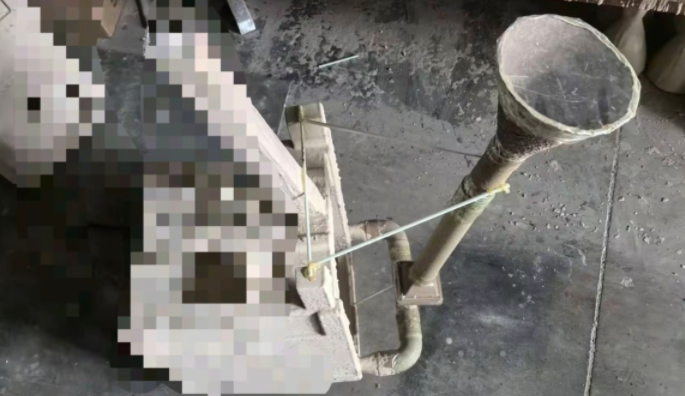
The switch doesn’t have to be a shutdown. That’s the first mistake foundry managers make — they treat a gating change like a full retool. It’s not. It’s closer to a swap.
Paper gating systems mount onto your existing patterns. Your mold boxes stay. Your pouring sequence stays. Your crew needs one shift of familiarization — that’s it. The geometry changes. The material changes. The process around it stays the same.
Here’s how to move through it without breaking production rhythm:
Start with one pattern, one pour run.
Pick your highest-defect job — the one bleeding you dry in scrap and rework. That’s your test case. Run paper gating on that pattern for a single batch. Track defect rates, cycle time, and mold turnover speed against your ceramic baseline. You’ll have real numbers within 48 hours.
Don’t touch your pour parameters yet.
Keep pouring temperature, metal velocity, and fill timing the same as your current setup on the first run. Let the geometry do the work. You see cleaner fills and fewer inclusions? Then dial back temperature. The paper system needs less thermal input — that difference shows up on its own.
Sequence your rollout by job complexity.
Start with simple geometries. Run high-volume, repeatable parts first. Your team builds confidence on straightforward jobs. Then move paper gating into complex multi-cavity or thin-wall work once they’re comfortable.
Cut the ceramic debris step right away.
The moment you run paper gating on any job, pull the post-pour fragment inspection off that line. You get that labor time back on day one — visible, measurable, and right in front of you.
The paper gating system in casting fits into your floor the same way any process refinement does. One controlled step at a time. Data confirms each move before the next one starts.
Choosing the Right Paper Gating System for Your Casting Application
Not every paper gating system fits every job. Match it wrong and you’ve traded one problem for another.
Four variables drive the decision: alloy type, part geometry, process type, and target yield.
Alloy first. Aluminum needs low-turbulence ingates. Keep ingate velocity below 1 m/s. This holds down hydrogen porosity and oxide film buildup. Dirty melts need upstream spin traps or filters. These should pull out 90%+ of inclusions before metal reaches the cavity.
Geometry second. Thin-wall sections need larger flow areas and shorter runners. Use a runner-to-ingate area ratio of 4:1. Thick sections work fine with top gating. Thin walls don’t — side or bottom configurations keep velocity in check.
Match the gating type to the work:
|
Application |
Right Choice |
|---|---|
|
Thick sections |
Top gating |
|
Large castings |
Bottom gating — 60–70% yield baseline |
|
Medium parts |
Side gating — ingate velocity under 1.5 m/s |
|
Multi-cavity molds |
Step gating with runner bar distribution |
Simulate before you commit. Gradient search optimization produces 10–20% better designs than standard layouts. Target ingate velocity below 3 m/s, zero air entrapment, and fill time under 30 seconds for 10mm wall sections. Run two to three simulation passes. Then back it up with physical trials and radiography.
Get those four variables right and the paper gating system performs the way it’s built to.
Conclusion
The evidence is clear. The math doesn’t lie. A paper gating system in casting delivers fewer defects, lower costs, faster cycle times, and a sustainability story your customers now demand — with no process disruption to worry about.
Ceramic gating had its era. That era is ending.
Foundries that make the switch solve more than a materials problem. They gain a real competitive edge — one that grows stronger with every pour. A 75% reduction in defect rates is not a rounding error. It’s a fundamental shift in what your operation can produce.
So here’s your next step: audit one process line. Run the numbers against what you’ve read here. The comparison speaks for itself.
Foundries still holding on to ceramic are not just falling behind on technology. They’re losing profitability, one flawed casting at a time. Don’t be that foundry.