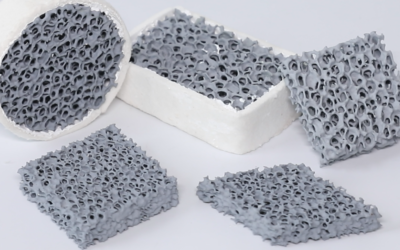
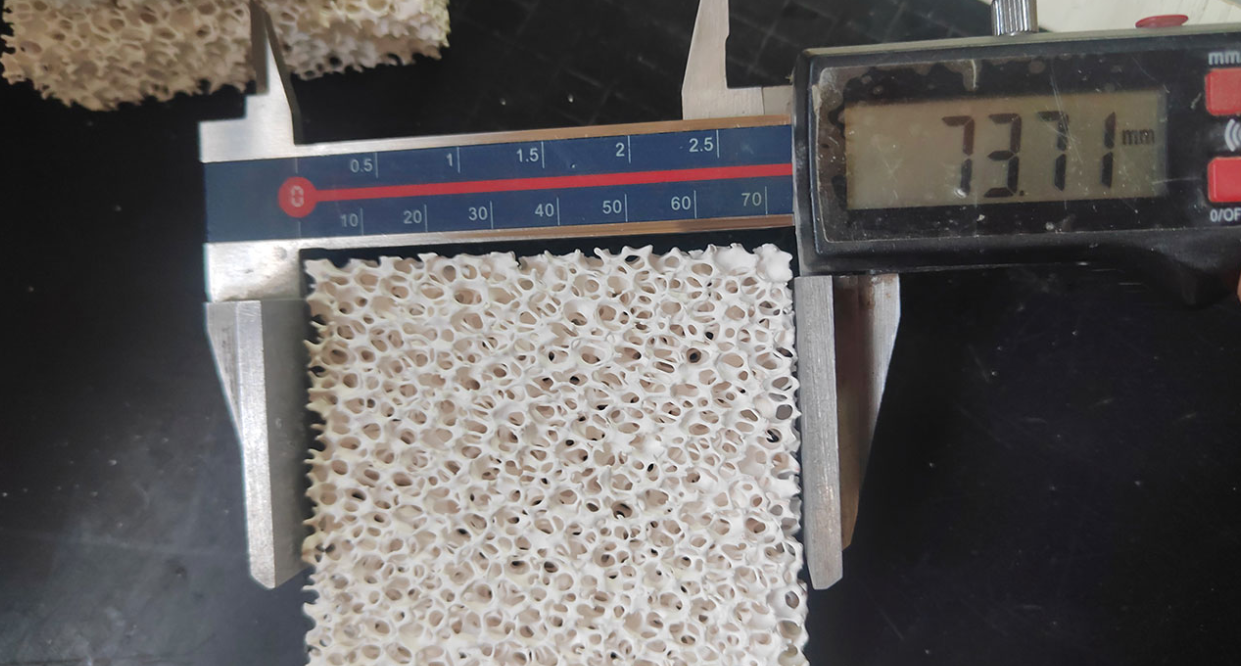
You send an email to a foundry filter supplier asking for a quote, and three days later you are still waiting because they had to write back asking for your pore count, dimensions, and alloy type. That back-and-forth burns production time and procurement budget you didn’t plan for.
Providing the complete details upfront eliminates the delay. Whether you are sourcing Ceramic foam Filters, Fiberglass mesh, or Honeycomb ceramic options, getting your foundry filter specifications right the first time—including PPI selection, filter dimensions for casting, material type, and order quantity—means suppliers can quote fast and accurately without guesswork.
This guide walks through what to include in your request, how to structure it, and what buyers often forget until it is too late.
Filter Type and Casting Process Information
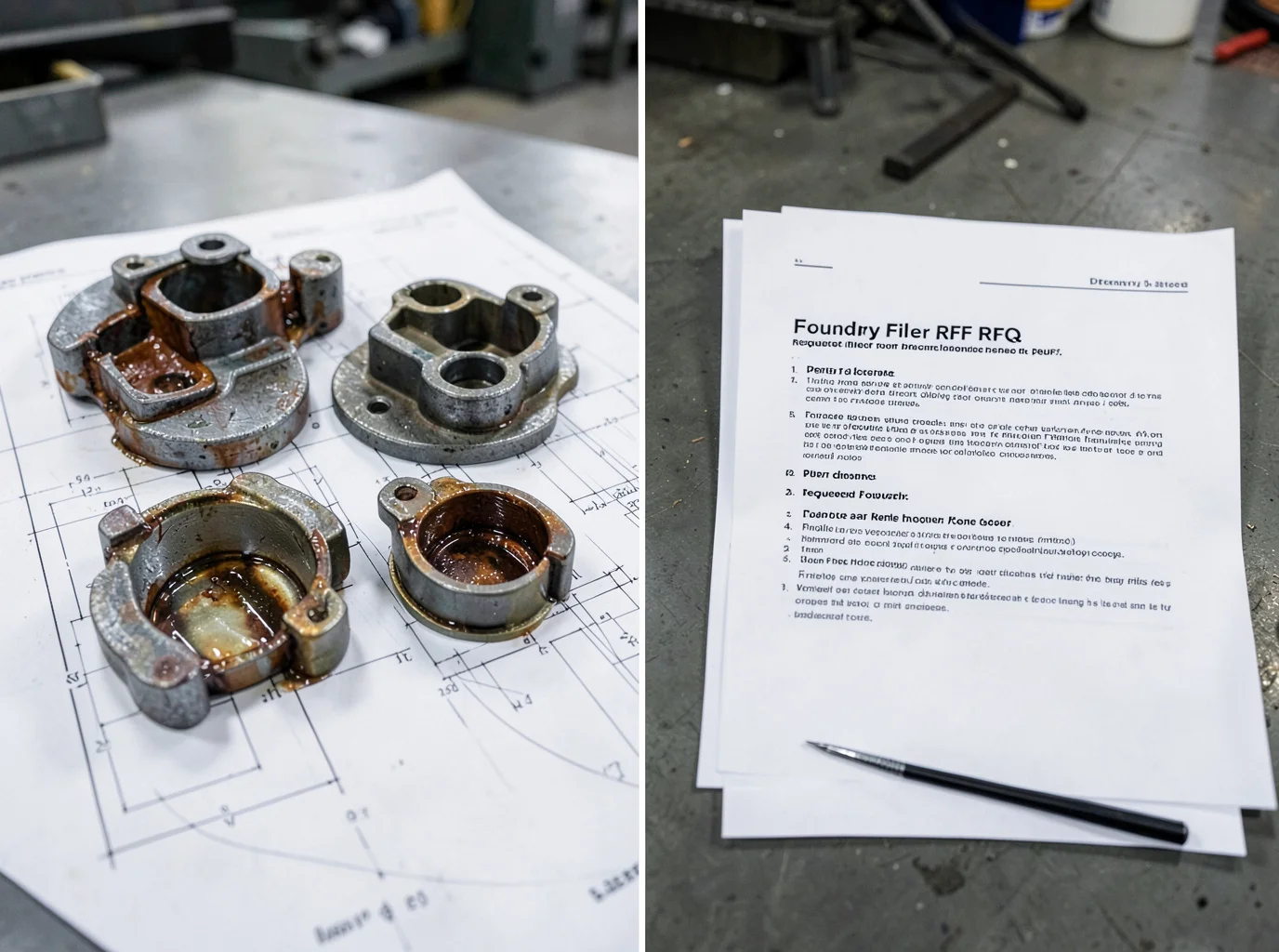
Not every filter works for every metal. That is the first thing suppliers need to know, and it is where most RFQs fall apart.
Ceramic Foam filters (CFF) dominate the market, but the base material matters. Alumina (Al₂O₃) handles aluminum and aluminum alloys—A356, A380, ADC12, and 6061—at pouring temperatures around 660–780°C, with supplier ratings reaching 820–1,250°C. Silicon carbide (SiC) steps up for copper, brass, bronze, gray iron, and Ductile Iron, tolerating up to 1,500–1,530°C. Gray iron usually pours at 1,300–1,400°C, while ductile iron runs hotter at 1,380–1,450°C. Zirconia (ZrO₂) costs more, but it handles carbon steel, stainless, and nickel- or cobalt-based alloys, holding up at 1,550–1,650°C and occasionally past 1,700°C. Magnesia (MgO) suits alkaline slag environments and specific steel melts, rated near 1,750°C.
Honeycomb ceramic comes in two forms. Extruded versions offer straight-through channels, low pressure drop, and steady flow for gravity, sand, and continuous casting. Pressed versions cost more per piece, but they adapt better to irregular shapes, gating systems, and high-pressure flow paths.
fiberglass mesh filters fit low-melting-point metals like aluminum, magnesium, and zinc in sand or Gravity casting. They are cheap and easy to cut, but they lack the heat and erosion resistance needed for molten steel or high-speed die casting.
Match Filter to Process
Sand/gravity casting: ceramic foam, honeycomb, or fiberglass mesh depending on alloy
Low-pressure casting: ceramic foam or honeycomb, prioritizing low pressure drop
Die casting: high-strength ceramic components only (specify max flow rate and pressure)
Continuous/ingot casting: deep-bed or honeycomb systems built for sustained filtration
Tell your supplier which process you’re running. It changes everything about the quote.
Filter Specifications: Material, PPI, and Dimensions
PPI confuses more buyers than any other spec on the sheet. Pores Per Inch measures how many openings sit along one linear inch of filter face. Higher PPI delivers finer filtration, but it also creates higher pressure drop and slower flow. Get this wrong and you either flood your mold with inclusions or choke your pour before the metal fills the cavity.
Match PPI directly to your casting weight:
Above 500 kg: 10 PPI. You need maximum flow and minimum resistance.
50–500 kg: 20 PPI. This is the workhorse setting for general aluminum and iron castings.
Under 50 kg or thin-wall parts: 20–30 PPI, with added filtration area to compensate for the slower flow.
Precision small castings: 50–60 PPI. Confirm your metal head pressure and fill time first, because high PPI without adequate head pressure causes misruns.
A 75×75×22 mm alumina filter at 10 PPI handles roughly 2.5 kg/s and 60–80 kg of aluminum. The same filter at 30 PPI drops to about 1.8 kg/s and 40–60 kg capacity. A 100×100×22 mm, 20 PPI panel pushes closer to 4.0 kg/s and supports 100–150 kg pours. Your supplier needs operating figures like these to size your filter correctly on the first pass.
Specify dimensions with the same clarity. State the shape first (square, rectangular, round, ring, strip, or custom). Then provide length × width × thickness in millimeters for square and rectangular pieces, or outer diameter × thickness for round ones. Common stock sizes run 40×40×15, 50×50×22, 75×75×22, and 100×100×22 mm. Custom orders range from 50×50×15 up to 300×300×50 mm, so check your gating system rather than assuming a standard piece fits.
Beyond raw dimensions, suppliers need your target porosity percentage (typically 80–90% for Ceramic foam, 80–85% for SiC), pore size distribution, effective filtration area, rated flow in kg/s, and maximum allowable pressure drop. Without these numbers, any quote will be guesswork.
Flow Rate, Casting Weight, and Filter Placement Details

Casting weight alone tells a supplier very little. Two foundries pouring the same 100 kg job can require completely different filters if one pours in 60 seconds and the other in 20. The first runs an average flow of 100 kg/min, while the second hits 300 kg/min. That triple jump in flow demand changes the entire quote, including filter size, PPI, thickness, filter box dimensions, gasket material, and tooling modifications.
Flow rate in kg/min matters far more than casting weight by itself. Aluminum alloys usually run at a total metal flow between 90–900 kg/min, with 225 kg/min being a common baseline. Keep local filter loading under 35 kg/(dm²·min), and preferably below 21 kg/(dm²·min), to prevent choking the pour. Standard filter ratings match these limits. A 7-inch filter handles 20–50 kg/min, 9-inch units take 25–80 kg/min, 12-inch filters manage 50–150 kg/min, and 15–20 inch panels cover 80–450 kg/min.
Data Fields to Submit With Every RFQ
Give your supplier these details upfront:
-
Alloy grade and melt temperature
-
Net casting weight per piece (kg)
-
Gating system weight (kg)
-
Total pour weight per mold (kg)
-
Actual pour time (seconds)
-
Average and peak metal flow (kg/min)
-
Production volume per hour, shift, or batch
-
Target PPI, material, thickness, and cleanliness level
Weight-to-Filter-Size Starting Point
Use these ranges as an initial check, then verify against the actual flow rate:
-
Under 10 kg: 50×50 mm filter, 20–25 cm² filtration area
-
10–30 kg: 75×75 mm, 45–55 cm²
-
30–80 kg: 100×100 mm, 80–95 cm²
-
80–200 kg: 150×150 mm, 180–200 cm²
-
Over 200 kg: 200×200 mm or multiple filters, 350+ cm²
High-volume lines run best with standardized, quick-swap filter boxes. Low-volume or multi-variant production works better with universal boxes and flexible sizing.
Placement Matters Too
Specify where the filter sits in the system, whether at the sprue base, runner, ingate, or in a separate filter chamber. Each location requires different sealing methods and flow calculations. Send along filter box drawings, orientation, flow direction, and photos of the current seat if you have them. Sizing filters accurately requires real flow data, so providing these numbers upfront gets the specification right on the first pass.
Quantity, Pricing, and Commercial Terms
Unit prices mean very little without order volume. If a supplier quotes $2.50 per filter before knowing whether you need 300 pieces or 30,000, that price is an unvetted estimate.
Structure your foundry filter order quantity request in three layers:
-
Trial order: 300 pieces to start
-
Steady-state demand: 1,000–5,000 pieces per quarter
-
Annual forecast: 12,000–60,000 pieces per year
Request tiered quotes at 300, 1,000, 3,000, and 10,000 units rather than settling for a single price point. This shows where the supplier’s cost breaks sit and where production capacity starts to pinch.
MOQ Breakdown
Confirm minimum order quantities across each category:
-
Standard product MOQ
-
Per-size or per-material MOQ (SiC vs. alumina, different PPI)
-
Custom dimension MOQ
-
Packaging MOQ
Below the MOQ, unamortized tooling and setup fees drive up unit costs. Ordering above that threshold spreads fixed expenses and lowers the unit price, but ties up more capital in stock.
Pricing Table to Request
Ask suppliers to price each tier alongside lead times and shipping terms (EXW, FOB, CIF). Make sure they clarify whether packaging, inspection, loading, and export documentation are included in the quote. You will also need net and gross weight per filter, carton dimensions, units per carton, and total shipment weight.
Payment and Quote Validity
Standard commercial terms run 30% deposit before production and 70% before shipment, though established accounts can often negotiate Net 30 or Net 60. Confirm the billing currency, check whether the quote includes tax, and note validity windows—typically 15, 30, or 60 days. Clarify up front how shifts in raw material costs affect the quote before that window expires.
Quality Certifications and Documentation Requirements
Paperwork decides whether a filter batch clears incoming inspection or gets sent right back to the dock. Skip this step in your RFQ, and you will find out the hard way when a shipment arrives without the records your quality team needs.
Start with the Material Certificate (MTC). It should list the material grade, heat or melt batch number, chemical composition, mechanical properties, and heat treatment status, all tied to a recognized standard. Match that certificate directly against the physical labels on the crates. If the batch numbers do not match, the document is useless.
Ask for batch traceability records as well. A reliable system connects the raw material batch, production lot, work order, equipment, operator, inspection results, and packaging carton number into one clear chain. ISO 9001 requires unique identification of outputs wherever traceability matters, so an established supplier should already have this ready.
Request a Certificate of Conformity (CoC) signed by an authorized representative, referencing your PO number, part number, revision, quantity, and test standards. A CoC only confirms general compliance; it does not take the place of a dimensional report or material certificate.
For dimensional inspection reports, require nominal values, tolerances, actual measurements, equipment calibration status, and the sampling plan. Run full dimensional checks rather than spot samples whenever you work with new molds, onboard new suppliers, or handle critical ceramic foam filter specifications.
Don’t overlook PPI and porosity verification data. A “PPI 20” mark on the box proves nothing on its own. You need pore size distribution, open porosity percentage, density, and the specific test method used. Batch-to-batch consistency depends on those numbers, not the label on the box.
If you run high-pressure die casting, ask for flow-pressure curve data measured under matched test conditions—flow rate, pressure differential, and sample thickness. That data lets you compare suppliers on equal footing instead of relying on isolated single-point claims.
Standards and Warranty Terms to Confirm
-
ISO 9001 certification (governs process control, not automatic part compliance)
-
ISO/IEC 17025 for lab testing capability
-
ISO 2859-1 / ANSI Z1.4 for AQL sampling agreements
-
Industry-specific requirements: PPAP for automotive, AS9100/FAI for aerospace
-
Warranty start point (shipment, arrival, or customer acceptance)
-
NCR response timeline: 24-hour containment, root cause within 3–5 days
-
Claim scope: inspection fees, rework costs, line-down charges, and liability caps
How to Structure Your RFQ Submission (Template Format)
Five sections turn a scattered email into a quote-ready document. Miss one, and you are back to the phone-tag cycle that started this whole problem.
Buyer information comes first: company name, contact person and title, email, phone or WhatsApp, ship-to location, destination port, RFQ number, issue date, and required quotation deadline. Include your end application (casting type, component, or production line), estimated monthly or annual demand, and target delivery schedule.
Application details come next. State the metal or alloy (aluminum, copper, brass, bronze, cast iron, steel), the alloy designation if you have one, and your pouring method (launder, tundish, Gating System, or pressure filtration). Note your molten-metal temperature during filtration, whether you run continuous or batch operations, and your expected throughput per filter. If your goal is inclusion removal, better surface finish, less scrap, or improved mechanical properties, say so. It shapes which filter the supplier recommends.
Filter requirement covers material, PPI, dimensions, quantity per shipment, annual forecast, dimensional tolerance, edge configuration (square, chamfered, rounded, or custom), and required thermal-shock resistance. FoundryMax, for reference, lists ceramic foam filters rated up to 1,700°C for copper, brass, and bronze alloys, so check your specs against what the supplier stocks.
Attachments close the technical gap. Send a filter-box or holder drawing in PDF, a 2D drawing with revision numbers, a STEP or IGES 3D model if you have one, launder cross-sections, and photos of your current setup. A complete manufacturing RFQ lists drawing revisions, critical-to-quality dimensions, and material requirements so nothing is left to assumption.
Sample Email Template
Subject: RFQ – Ceramic Foam Filters for [Alloy] Casting – [Part/Project Name]
List buyer info, application data, and filter requirements as bullet points under clear headers. Then ask for: unit price across quantity tiers, MOQ, sample price and lead time, production lead time, tooling charges, recommended material/PPI if different from spec, available certifications, packaging details, Incoterm, payment terms, and quote validity window.
This structure cuts response time to 5–7 business days for standard requests, and 10–14 days for anything needing engineering review. It also signals you’re a serious buyer—suppliers respond to that.
Conclusion
Getting an accurate foundry filter quotation requires solid preparation. When you enter the conversation with clear ceramic foam filter specifications, precise foundry filter size and pore count requirements, and the right casting filter material type for your alloy, suppliers like Foundrymax can return accurate pricing on the first try instead of adjusting estimates over three emails.
This detail means fewer back-and-forth clarifications, faster turnaround on quotes, and purchasing decisions based on verified data. Whether you are sourcing for a single production run or comparing multiple vendors side by side, a complete RFQ signals professionalism and earns immediate attention.
Before you send your next inquiry, run through the checklist once more. Pull your specs, confirm your quantities, and attach your documentation needs upfront. It keeps your supplier informed and your production timeline on schedule.