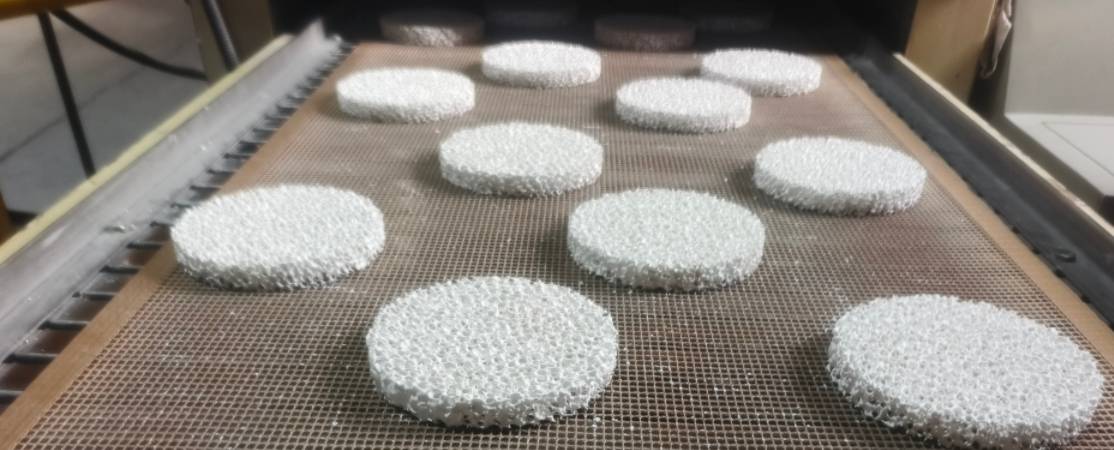
Choosing the wrong ceramic foam filter supplier can cost you more than a bad batch: inconsistent metal cleanliness, unexpected production downtime, and quality complaints from your own customers. And when you’re sourcing from Korea, where technical standards are rigorous but supplier quality still varies widely, the stakes are higher.
Most foundries only discover a supplier’s weaknesses after the contract is signed. That’s a costly way to learn.
The 7 things to consider when choosing a Ceramic foam filter supplier in Korea range from technical specs and ISO certifications to delivery reliability and how well a supplier fits your business needs. Whether you’re switching suppliers or vetting one for the first time, these checkpoints separate a reliable long-term partner from a risky gamble.
Technical Capability & Specifications of Ceramic Foam Filter Suppliers
A supplier’s spec sheet tells you more than their sales pitch ever will. Start there.
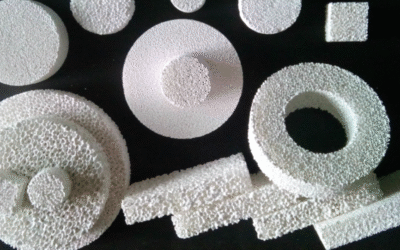
Material match matters first. Most Korean suppliers offer three core materials, each built for a different melt:
- Alumina: Best for aluminum and non-ferrous metals. Typical specs: 10–60 PPI, 80–90% porosity, 1200°C max working temp, ≥0.8 MPa compressive strength, 0.6 MPa flexural strength.
- Silicon Carbide (SiC): Built for iron and ferroalloy filtration. Specs run 10–40 PPI, 80–90% porosity, 1500°C working temp, ≥0.9 MPa compressive strength.
- Zirconia (ZrO2): Used for steel and stainless steel at high heat. Specs top out at 1750°C, with 0.8–1.0 MPa compressive strength and 1.0–1.2 MPa flexural strength.
A supplier that only carries one material is a red flag.
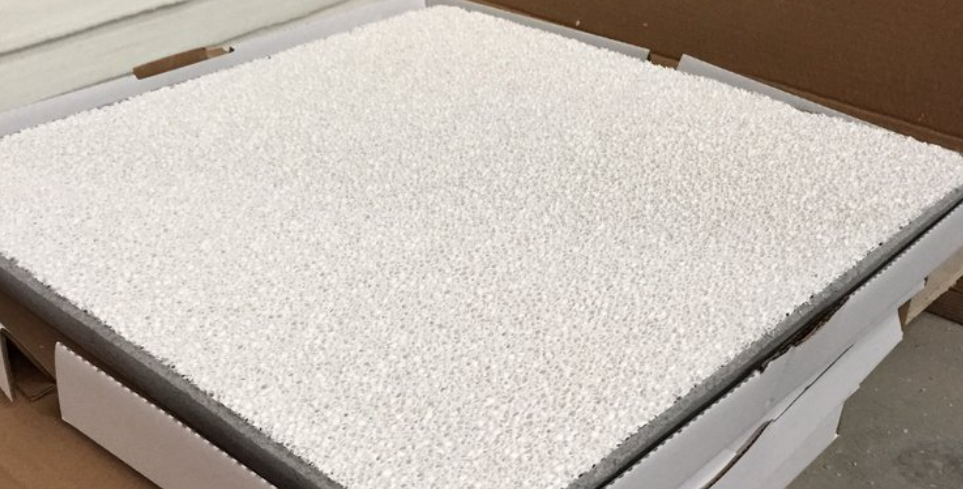
Check PPI range and dimensional consistency. Pore density coverage should span 10–50 PPI depending on material. Look for a published ±0.5 mm size tolerance. This is a standard disclosure point for suppliers confident in their quality control. Some also list open porosity ≥76%, which affects flow rate and cleanliness.
Customization capability separates real manufacturers from traders. Reputable suppliers publish thickness ranges (10–30 mm) and standard sizes (40–200 mm), plus custom options up to 20–600 mm. This covers common formats like 305×305×50 or 584×584×50 for 12-inch and 20-inch filter formats.
Filtration load data reveals real-world performance. Gray iron applications typically cap at ≤4 kg/cm³, Ductile Iron at ≤2 kg/cm³. Steel filtration ranges from 1.0–2.7 kg/cm³ (carbon steel) to 1.0–4.0 kg/cm³ (stainless steel).
Ask for GB/T 25139-2010 compliance. Few suppliers disclose internal testing equipment. Referencing this standard signals a real quality framework.
ISO Certification & Quality Management System Verification
A framed certificate on the wall means nothing if you can’t verify it. Anyone can print a PDF and slap a logo on it.
Start with the certificate itself. Ask for the scanned copy and check four things: certificate number, issuing body, validity period, and certification scope. Then cross-check that number directly on the certifying body’s website or public database. If the status shows inactive, the address doesn’t match, or the scope doesn’t cover Ceramic foam Filters specifically, treat it as invalid.
Push past the paper. A real quality management system leaves a trail. Ask to see:
- Quality policy and objectives
- Procedure documents and work instructions
- Internal audit records
- Management review records
- Corrective action logs
No records, no system. It’s that simple.
Batch traceability is where quality claims get tested. A supplier should link raw material batch numbers to production records, inspection reports, finished batch numbers, and shipping documentation — all the way to your order number. Ask for a Certificate of Conformance (CoC), test reports, and batch release records for their last three shipments. If they can’t trace one batch cleanly, expect mixed batches and untraceable defects down the line.
AQL sampling standards should be spelled out, not assumed. Korean suppliers don’t follow one universal AQL benchmark. It’s usually negotiated per order based on risk and defect classification (Critical, Major, Minor). Confirm whether they follow ISO 2859-1 or a custom framework, and what happens to a rejected batch.
Red flags worth walking away from:
– Certificate number that doesn’t match public records
– Scope that excludes your product category
– No audit or review records available
– CoC and batch numbers that don’t line up
– AQL rules that shift from batch to batch
Product Performance & Durability Metrics
Spec sheets show you the intent. Performance data shows you the truth. If a ceramic foam filter supplier in Korea can’t produce hard numbers on pore uniformity, thermal resistance, corrosion behavior, and dimensional accuracy, you’re buying on faith.
Pore size distribution uniformity is the first thing to demand. Ask for D10/D50/D90 values, coefficient of variation (CV), and pore tolerance in ±mm. A CV under 5-8% signals tight process control. Anything above 10% means inconsistent flow paths and higher blockage risk. Precision-grade filters typically run ±0.1–0.3 mm tolerance. Request batch-to-batch CV drift data in addition to the single test report.
Thermal stability needs four-dimensional data, not a single temperature claim. Don’t settle for “rated to 1400°C” without context. Push for temperature × time × cycle count × strength retention data. A ceramic filter holding ≥80% strength after 1–4 hours at 1400–1600°C, surviving 20-30 thermal shock cycles without crack propagation, tells you far more than a single number.
Chemical resistance against molten aluminum or iron determines real-world lifespan. Request corrosion depth (mm), mass loss percentage, reaction layer thickness (μm), and post-erosion strength retention. The gold standard is SEM/EDS comparison images before and after metal contact. Vague “corrosion-resistant” claims are not enough.
Dimensional tolerance directly impacts sealing performance. Critical fitting surfaces should hold ±0.1–0.3 mm; general assembly components can run up to ±0.5 mm. Filters tightened from ±0.5 mm to ±0.2 mm tolerance often show measurably lower leak rates and more stable pressure drop. Ask for before-and-after leak test data. Tolerance drawings alone won’t confirm sealing reliability.
The Data Package Worth Requesting
- Pore distribution report (D10/D50/D90, CV, batch variance)
- High-temperature performance curve (1400°C+ holding time, strength retention)
- Corrosion report (aluminum/iron erosion depth, reaction layer thickness)
- Dimensional accuracy report (CPK, leak rate, repeat-assembly test results)
Suppliers who hand over this data without hesitation are the ones worth building a long-term relationship with.
Supply Stability and Delivery Capability Assessment
A great spec sheet won’t save you if shipments show up three weeks late. Supply reliability is where most Korean ceramic foam filter suppliers get exposed.
Track two numbers above everything else: OTD and OTIF.
- OTD (On-Time Delivery) = on-time order batches ÷ total delivered batches × 100%. The industry passing line is ≥95%; strong suppliers target ≥98%.
- OTIF (On-Time In-Full) = deliveries that are both on-time AND complete ÷ total deliveries. This is stricter than OTD. It tells you if a supplier actually fulfills orders, not just ships something close to on time.
Also ask for Lead-Time Adherence (orders meeting agreed delivery dates ÷ total orders) and their historical delivery variance. A supplier with low month-to-month fluctuation is far safer than one with occasional fast shipments hiding frequent delays.
Compare Lead Times: Korean Local vs. Cross-Border Suppliers
- Korean local suppliers: Standard products ship in 1–7 days (1–3 days with regional stock); custom orders take 2–6 weeks.
- China/overseas suppliers: Standard products take 7–20 days cross-border; custom orders run 4–10 weeks, longer with sampling, certification, or customs clearance.
Check Local Inventory Capability
Ask directly:
- Do they run a local warehouse, bonded warehouse, or VMI?
- What’s their safety stock coverage — 7, 15, or 30 days?
- Can they support rush shipping, split deliveries, or rolling forecast locking?
MOQ and Flexibility
Record three things for every supplier: MOQ (units/cartons), lead time, and whether mixed-batch orders are allowed. Local suppliers typically flex more on small trial orders; cross-border suppliers usually demand higher MOQs to offset logistics costs.
The Hard Questions Worth Asking On-Site
- What’s your OTD/OTIF over the last 12 months?
- How many shipments were delayed more than 3 days in the past 6 months?
- What was your longest supply disruption last year, and how fast did you recover?
Suppliers who can recover from a disruption within 24–72 hours are the ones worth signing with.
Technical Support and Application Engineering Services
Nobody talks about technical support until a filter fails mid-production and the supplier goes silent. That’s when you find out what you bought.
On-site trial support separates real partners from box shippers. Look for suppliers who offer joint installation, live testing, troubleshooting, and hands-on operator training at your facility or under their guidance. Bonus points if they’ve run joint casting trials, because that means they validated mold parameters, yield rates, cycle times, and defect recurrence under your actual production conditions.
Demand SLA numbers in writing. “Fast response” means nothing on a contract. Push for specifics:
- Response time: 2h / 4h / 24h / 48h
- On-site arrival: 24h / 48h / 72h
- Repair timeline: temporary fix vs. final resolution
- Escalation path: frontline → application engineer → management
A ceramic foam filter supplier in Korea worth signing should hit first response within 24 hours and arrive on-site within 48 hours for critical issues.
Verify case studies before trusting them. Ask for project name, application scenario, implementation date, problem solved, and quantified results — yield improvement, downtime reduction, faster commissioning. Then call the reference directly. Confirm the collaboration was real, matched the scope claimed, and delivered the promised outcome.
Minimum Benchmarks Worth Comparing
- 24-hour first response, 48-hour on-site arrival
- At least one joint trial with retest data
- Minimum 3 verifiable case studies in similar casting conditions
- Complete documentation: RCA, CAPA, acceptance reports
No paperwork, no proof — no deal.
Documentation Completeness & Batch Traceability (Documentation & Batch Traceability)
Paper trails don’t lie, but incomplete ones hide a lot. Judge documentation quality using the ALCOA+ framework: attributable, legible, contemporaneous, original, accurate, plus complete, consistent, enduring, and available. If a ceramic foam filter supplier in Korea can’t check these boxes, their paperwork is decoration, not proof.
Batch traceability needs five core data points minimum: trading partner, product, batch ID, quantity, and time or location. Every inventory event — receiving, moving, storing, consuming, packaging, shipping, scrapping, reworking — should leave a trace.
The Three Documents That Actually Matter
PDS/TDS: Product name, standard or spec number, chemical composition, dimensions, tolerances, packaging specs, MOQ, batch coding rules, and applicable certifications (RoHS, REACH, ISO 9001).
COA/factory test report: Batch number, sample ID, test items, results with units, judgment criteria, date, and verifiable signature.
MTR: Heat number, chemical composition, mechanical properties. The material’s origin story.
Cross-check that report dates fall after production and before shipping. Confirm test items cover your procurement spec’s critical metrics, not just the easy ones.
Independent Batch Sampling Before Bulk Orders
Take stratified samples from different pallets or cartons, not just the top layer. Route samples through an ISO/IEC 17025 accredited lab. Routine physical or dimensional testing runs 3–10 business days; failure analysis or reliability testing takes 2–6 weeks. Budget a few hundred to a few thousand RMB per test item, prioritizing critical parameters first.
No traceable batch means no reliable filter.
Commercial Terms & Korea Market Fit
Price alone won’t tell you which ceramic foam filter supplier in Korea is cheaper. Landed cost will.
Compare EXW/FOB plus freight, duties, local delivery, and rework costs—not just the quoted unit price. Korea’s VAT is 10%, and corporate tax brackets run 10%/20%/22%/25%. Both eat into your real margin. A supplier quoting 10–15% below market but running 3–5% rework costs against revenue is a bad trade. One quoting 10–20% higher with faster lead times and lower defect rates usually wins long-term.
Warranty terms should be contractual, not verbal:
– DOA claims within 7 days of arrival
– 12-month standard warranty, 24-month on high-failure parts
– 24–48 hour first response from local agents
– Seller covers return freight on quality issues; buyer covers the rest
Payment structure starts conservative: 30% T/T upfront, 70% before shipment on first orders, then shifts to 30/70 T/T or sight L/C once trust builds.
Localization checklist: local warehouse access, Korean-language support, customs documentation turnaround under 24 hours, and defect rates held at ≤1–2%.
Conclusion
Choosing the right ceramic filter supplier is a direct investment in your casting quality and production efficiency. Three things matter most: verified technical specifications backed by ISO 9001 certification, proven performance metrics that hold up under real production conditions, and a supplier who treats documentation and traceability as non-negotiable.
The cheapest quote often becomes the most expensive mistake once you factor in inclusion defects, production downtime, and inconsistent batch quality.
When you’re evaluating a ceramic foam filter supplier in Korea, don’t just ask about price and lead time. Ask for test data. Request sample batches. Check their traceability system firsthand.
Start by requesting a technical data sheet and certification documents today.