
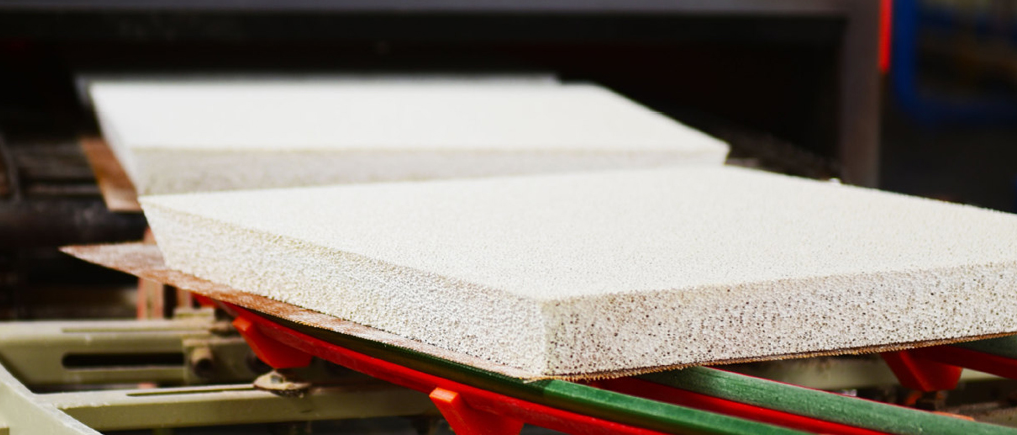
Sourcing a reliable ceramic filter for aluminium liquid protects your melt quality, your casting yield, and ultimately, your bottom line. Vietnam’s foundry sector is growing fast, but not every supplier can deliver the consistency and thermal shock resistance your production line demands. We’ve put together this 2026 guide breaking down the Top 7 ceramic filter suppliers For Aluminium Liquid In Vietnam—vetted for material quality, pore structure, and real-world foundry performance. Beyond the supplier list, you’ll get a practical breakdown of alumina versus silicon carbide filters, how to match PPI ratings to your actual furnace conditions, and the logistics traps that trip up buyers importing filters into Vietnam.
Core Selection Criteria: How to Evaluate Vietnamese Ceramic Foam Filter Suppliers for Molten Aluminum (2026)
Every ceramic filter out there claims to be suitable for molten aluminum filtration, but the gap between certified suppliers and street-level traders shows up the moment your molten aluminum hits the filter media. Before signing a contract with any ceramic foam filter supplier for molten aluminum in the Vietnamese market, run your shortlist through these four checkpoints first.
1. Material System: Al₂O₃ vs SiC vs ZrO₂
Most foundries in Vietnam use alumina (Al₂O₃) foam filters, rated for continuous service at 750–900°C with a safe upper limit of roughly 1200–1300°C, and typically ≥80% porosity. This is the sweet spot for standard aluminum and non-ferrous Metal casting.
SiC filters push the temperature tolerance up to around 1400°C with better thermal shock resistance — overkill for most aluminum lines, but worth it for production setups with high-frequency automated pouring and frequent hot-cold cycling.
Zirconia (ZrO₂) offers the highest fracture toughness of the three and is used for critical first-stage filtration in precision automotive or aerospace castings, at a higher price point too.
Have every supplier confirm exactly which base material they’re quoting, along with hard specs: maximum service temperature, recommended pouring temperature range, thermal shock cycle resistance (≥20–30 cycles is the baseline), and erosion rate (%/hr or mm per pour). If they can produce dross removal data — some tenders require a ≥30% reduction in post-filtration scrap rate — that’s a strong plus.
2. The PPI-vs-Flow Rate Trade-off
PPI (pores per inch) determines the balance between throughput and filtration precision:
- PPI 10–20: High flow, coarse filtration, suited for standard ingot casting
- PPI 30–40: The standard range for general aluminum alloy production lines
- PPI 40–60: Fine filtration for precision components like wheels and engine housings, capable of capturing 30–50μm particles
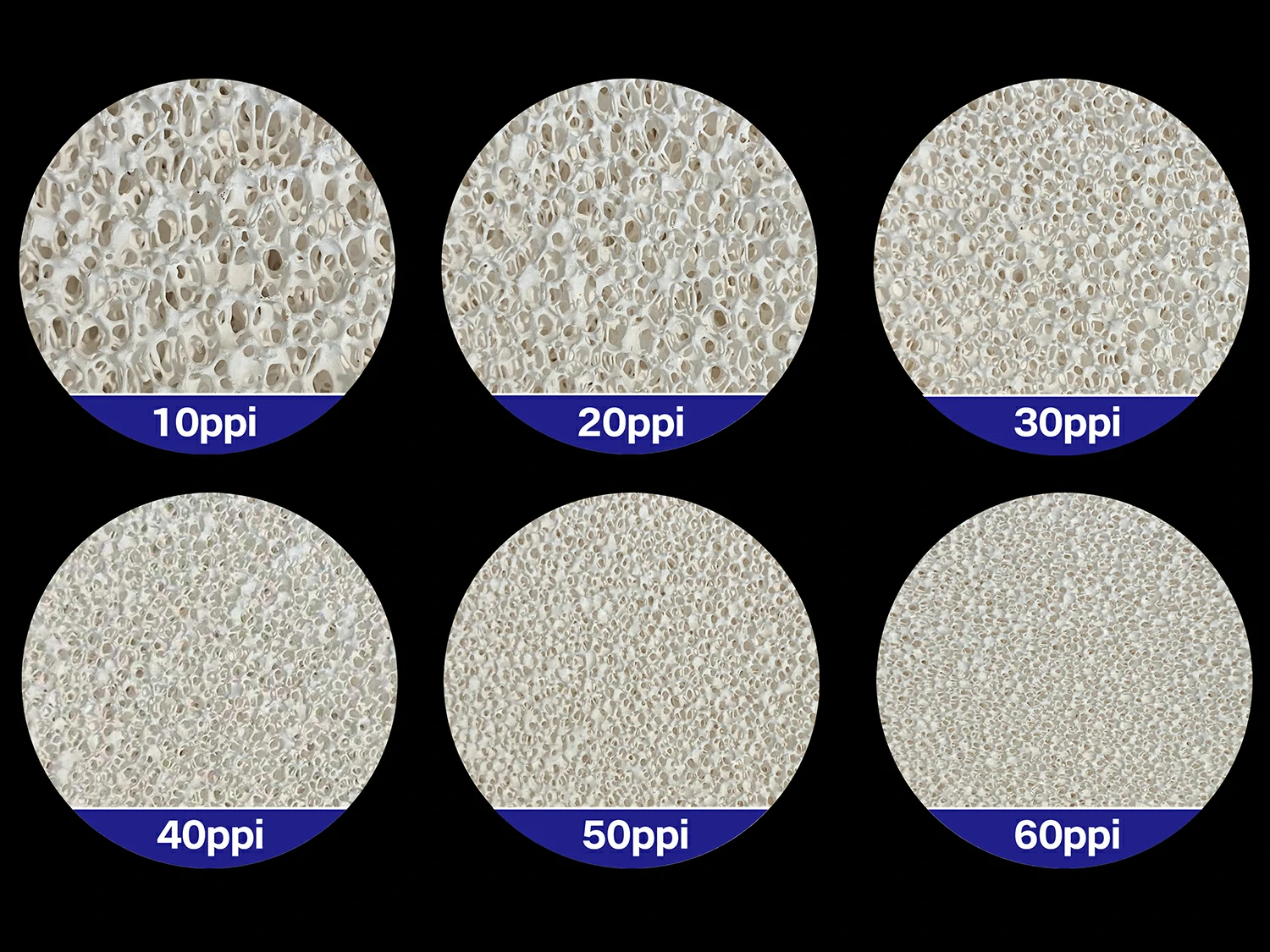
Foam filters generally have porosity in the 60–90% range. Higher porosity means higher flow but lower mechanical strength. Ask suppliers for flow rate data (L/min) and pressure drop (kPa) at standard pouring temperatures (700–760°C). For production lines exceeding 10 tons/hour, going with PPI 20–30 and a larger filtration area is usually the better solution. For defect-sensitive castings, request X-ray inspection pass-rate improvement data — a reliable supplier can show actual records of 20–40% pass-rate improvement after switching to a finer PPI.
Before placing an order, run sample tests: request samples at PPI 30, 40, and 50, trial-pour under identical conditions, and log the defect rate for each.
3. Vietnamese Customs and HS Code Compliance
Ceramic foam filter plates for molten aluminum are typically declared under HS 6909.19.00 for customs clearance. Make sure the declaration explicitly states “ceramic foam filter for molten aluminum” — vague product descriptions are a common cause of import delays.
Vietnam doesn’t mandate CE certification for industrial consumables, but ISO 9001 certification covering “Refractory materials for casting” or “Ceramic foam Filters” is the baseline quality threshold. If your castings feed into automotive or defense supply chains, IATF 16949 is a plus.
Before finalizing anything, ask for sample customs declarations from past shipments to Vietnam, along with packing lists, invoices, and Certificates of Origin (C/O). Cross-check that the entity name on the customs declaration matches your contracted counterparty — a mismatch is often a red flag for shell traders.
4. Export Track Record and Local Distribution Network
Suppliers genuinely active in the Vietnamese market can produce 12–36 months of real shipment records: acceptance reports signed by Vietnamese clients, customs release documents, and bills of lading showing Hai Phong or Ho Chi Minh City ports.
For larger purchase volumes, request a client list: which aluminum plants they’ve supplied, annual supply volume, and years of partnership — relationships spanning 3–5+ years signal reliability.
Also verify their local distribution network: company name, tax ID, address, in-stock inventory for common specs (17×17×2inch, 20×20×2inch), and average lead times. Make a phone call to confirm actual sales volume and whether they genuinely stock the filters they claim to distribute — this small step can save you from a costly procurement mistake.
Foshan Nanhai Luyuan Metal Materials
Luyuan specializes in sintered metal filtration. Based in Guangdong, the company makes sintered stainless steel elements, sintered bronze cartridges, and stainless steel housings. These protect the systems around your melt rather than filtering the aluminium liquid itself.
Where their gear fits into an aluminium line:
- Furnace flue gas filtration: sintered 304/316L stainless elements with a 1–20μm pore range, rated ≤400–500°C and 0.5–0.8 MPa pressure differential, capturing >99% of dust and oxide particles in the 1–10μm range.
- Online refining systems: filters argon/nitrogen and refining-agent lines to 1–10μm, keeping inclusions out of the melt.
- Extrusion press lubrication: sintered bronze cartridges, 10–60μm, ≤250°C, ≤1.0 MPa, built for hydraulic and compressed air circuits.
- Housings: 304/316L shells rated 0.6–1.6 MPa, holding 1–30 cartridges, with flow up to 100 m³/h.
Founded in 2009 and ISO 9001-certified, the company produces roughly 10,000 filter sets and 5,000 housings a month. There are no direct Vietnam listings yet, but their OEM/ODM model matches how EPC contractors typically source flue-gas and refining-line filtration for aluminium plants abroad.
SEFU CERAMIC
Cangzhou Sefu Ceramic New Materials has been making foundry ceramics since 2005, and the export numbers back that up. One NBD trade record from January 2025 shows a single-day shipment to India totaling over 110,000 Ceramic foam filters, including D90×22mm at 10 PPI (6,720 pcs), 40×40×15mm at 10 PPI (24,820 pcs), D40×22mm at 10 PPI (42,000 pcs), plus more. That’s the kind of volume that only makes sense for continuous-line, high-throughput casthouses.
What’s on offer:
- Alumina filters rated to about 1,100°C for aluminum and aluminum alloys
- SiC filters for cast iron and brass
- Zirconia filters for carbon/stainless/alloy steel
- Standard PPI range 10–40, with tight pore-count windows (10 PPI = 7–12 pores/25.4mm; 40 PPI = 38–43 pores/25.4mm)
- Dimensional tolerance held to ±0.5mm in length
Sefu lists Vietnam among its core export markets, alongside the US, Canada, Russia, Turkey, Brazil, and India, and offers free samples before bulk orders. Reach their export desk at info@sefunm.com or WhatsApp +86 13785803358.
FOSHAN TAOYUANXUAN TECHNOLOGIES
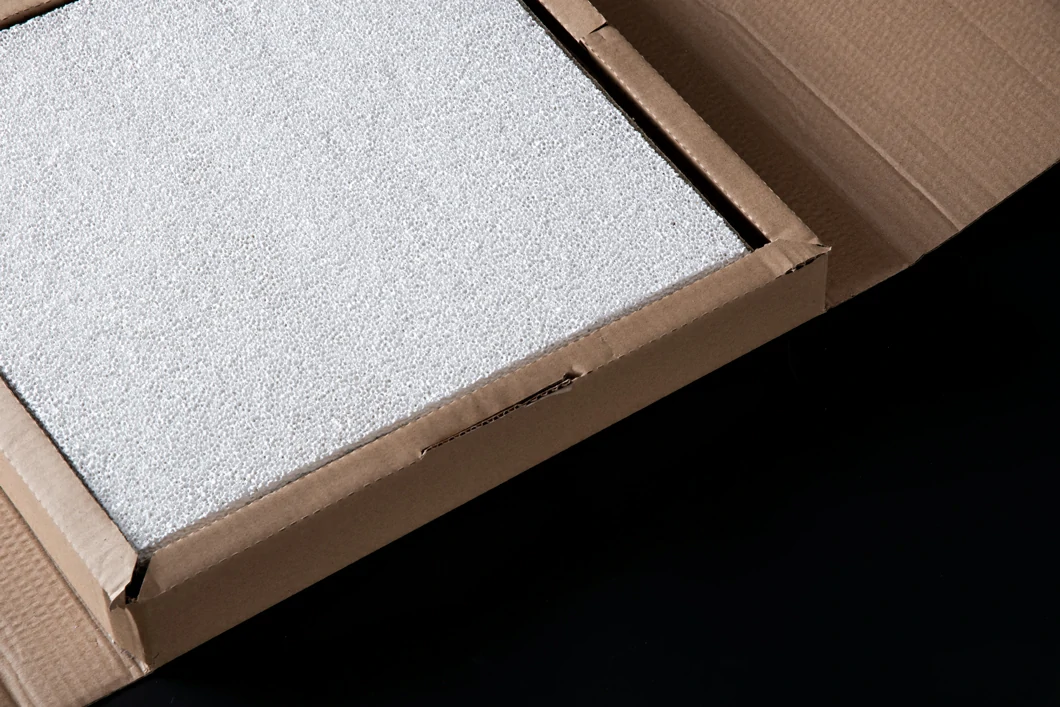
South China’s Foshan region packs an unusual density of ceramic materials manufacturers into a tight radius, and Taoyuanxuan operates in that cluster. Their bread-and-butter product—381×381×50mm ceramic foam filter boards—sits in the mid-size category most Vietnamese aluminium extrusion and casting lines actually need, matched to 400×400mm filter box frames.
Technical specs worth checking:
- Pore range: 10–30 PPI, tunable for different aluminium cleanliness targets
- Working temperature: continuous up to 1,000–1,100°C, spikes tolerated to 1,200°C
- Impurity removal: 60–80% on particles above 20–30μm, over 90% on coarse oxide inclusions
- Flow capacity: roughly 3–5 t/h per board, depending on alloy system and porosity
Production capacity in Foshan-tier factories runs 2,000–8,000 boards/day across multiple specs, backed by 3–6 kiln lines. Domestic delivery averages 7–15 days; Vietnam-bound export orders (production plus shipping) land at 18–30 days.
Pricing reference: domestic ex-factory pricing runs ¥18–35/board for standard porosity, climbing to ¥40–60/board for specialty grades. CIF Vietnam pricing converts to $4–8 USD/board, with 5–15% discounts on orders above 500 boards.
MOQ: export orders require 100–200 boards/model; some accept 20–30 board trial batches at a slight premium.
Before signing, request their inclusion/exclusion data by alloy grade (6063, 6061, A356), average service life in furnace cycles (typically 5–15 cycles), and defect rate targets (crack/breakage under 0.5–1%). Ask whether they’ll send an engineer for first-installation support—many Foshan suppliers include on-site preheating and assembly guidance as standard practice.
Baoding Ningxin New Material
Tang County doesn’t show up on many foundry buyers’ radar. Still, Ningxin has built a full three-tier ceramic filter lineup out of this Hebei industrial zone.
Three material grades handle three temperature ranges. Al₂O₃/SiO₂ filters are rated to 1,100°C, with porosity 78–90%, compressive strength ≥1.0 MPa, and bulk density 0.35–0.45 g/cm³. That’s the standard pick for aluminium and magnesium melt filtration. sic filters are rated to 1,500°C, porosity 80–90%, and survive 2–6 thermal shock cycles between 1,100°C and room temperature. They suit iron, steel, and some magnesium-heavy aluminium blends. ZrO₂ filters are rated to 1,700°C, compressive strength ≥1.5 MPa, and handle 3+ thermal shock cycles at 1,350°C. Those are reserved for high-cleanliness steel and premium automotive castings.
Ningxin’s aluminium-grade boards come in the full standard range—7×7″, 9×9″, 12×12″, 15×15″, 17×17″, 20×20″, 23×23″—across 10 to 60 PPI. Industry benchmark data for this PPI spread shows impurity capture climbing from roughly 85% at 20 PPI (catching ~40μm particles) up to 95% at 60 PPI (down to ~5μm). That gives buyers a clear filtration curve to match against alloy cleanliness targets.
Their product pages in Korean, Portuguese, Arabic, and Italian signal established export routes into Korea, the Middle East, and Latin America, along with listings on B2Brazil and Foundry-Suppliers.com. No dedicated Vietnam page exists yet, but the FOB/CIF quoting structure and small-to-mid board sizing fit the standard shipping pattern into Ho Chi Minh City or Hai Phong through local casting-supply distributors.
Shandong Cast Care New Materials
Zhangqiu District in Jinan has a cluster of ceramic filter factories. Cast Care runs two production sites there—one in Wangdong Industrial Park, the other in Taohuashan Industrial Park.
Cast Care makes all three material grades: Al₂O₃, SiC, and ZrO₂ Foam Filters, plus honeycomb Ceramic filters and riser sleeves. PPI options run from 10 to 50. Porosity is 80–90%. Boards range from 50×50×22mm up to 150×150×25mm, with round and custom shapes that match your pouring cup.
Where SiC pulls ahead for recycled aluminium:
- Working temperature ceiling: ≤1,500°C
- Thermal shock endurance: survives 6+ cycles between 1,100°C and room temperature without cracking
- Filter life: 3–5 furnace runs per board in high-dross recycled aluminium, versus single-use for standard Al₂O₃
That reuse factor matters. Per-tonne filtration cost with SiC drops roughly 20–40% compared to Al₂O₃, even though unit price is 1.3–1.5× higher. For recycled aluminium billet plants and alloy wheel foundries handling heavy oxide loads, that math changes the sourcing decision. Cast Care ships in 1,000–5,000-board batches per model—sized for monthly foundry procurement cycles across Southeast Asia.
FoundryMax
Twenty years in Cangzhou City, Hebei Province, and FoundryMax has the paper trail to prove it works. The company’s Vietnam case study is refreshingly specific: “Today, four pallets of alumina ceramic foam filter plate are exported to Vietnam for aluminium filtration application.” No vague testimonials—just a documented shipment.
Their product line runs 10–60 PPI on Alumina foam Filter plates, wider than most competitors quote. That range covers everything from bulk billet casting to precision automotive parts on a single production platform. FoundryMax also stocks SiC grades for aluminium alloys that run hotter or need better thermal shock resistance.
HongKe Alloy
You won’t find HongKe Alloy’s full specs in public trade databases or export records the way you can for the other names on this list. What you get instead is a clear technical profile that shows they’re a serious contender for high-end aluminium liquid Ceramic filters.
Core specs: 10–50 PPI standard, extending to 60 PPI for finer applications. Porosity runs 80–95%, density 0.35–0.55 g/cm³, compressive strength ≥1.0 MPa, and working temperature up to 1100–1200°C.
Size-to-capacity matching:
- 7″×7″×2″ (178×178×50mm): 4.2–5t filtration capacity
- 9″×9″×2″: 6.9–10t
- 12″×12″×2″: 13.8–15t
- 15″×15″×2″: 23.2–25t
- Larger 17″, 20″, 23″, 26″ boards scale up, with flow rates ranging 57–772 kg/min
Round filters run 40–500mm diameter, 5–50mm thick, customizable to furnace type. Packaging density varies: 180 pcs/box for 100×100×22mm, down to 5 pcs/box for 584×584×50mm boards.
Compared to the other six suppliers here, HongKe Alloy’s edge would come from full size coverage (178mm to 660mm), the widest PPI ladder, and consistent ≥1200°C thermal ratings. Worth confirming directly before quoting.
Material Selection Comparison: Alumina vs. Silicon Carbide Ceramic Filters in Molten Aluminum Filtration
Most Vietnamese casthouses run melt temperatures between 680 and 760°C, sometimes hitting 800°C during refining. Alumina foam ceramic filters handle continuous temperatures up to 1,100–1,200°C, well above that range, so you get a safety margin without buying more capacity than you need.
The silicon contamination trap. Alumina wets aluminium better, forms a stable filtration cake, and critically won’t introduce silicon into your melt. For primary aluminium and high-spec 6xxx/7xxx alloys, that’s non-negotiable. SiC filters carry silicon in the base material itself, so any surface erosion risks bleeding Si into alloys where composition tolerances are tight.
Where SiC earns its premium. Recycled aluminium already runs higher Si and Fe content, so the contamination argument weakens. SiC’s wear resistance is 2–3 times higher than alumina, and its abrasion ceiling sits near 1,400°C versus alumina’s 800°C. That matters when you’re filtering dross-heavy recycled feedstock loaded with oxide fragments.
Lifespan reality. Alumina boards are typically single-use. You run one furnace cycle, then replace them. SiC, run under proper preheat control, can survive 2–3 pours thanks to lower thermal expansion and higher thermal conductivity, which cuts crack propagation during temperature swings.
Cost offsets the math. SiC raw material costs roughly 20 times as much as alumina, and finished filter pricing lands 2–4 times higher. Unless your line runs high-dross recycled aluminium or aggressive thermal cycling, alumina remains the default choice for standard Vietnamese foundry operations.
Size and Pore Density (PPI) Selection Guide: Matching Real-World Conditions at Vietnamese Foundries
Board size and PPI are one calculation. Get the match wrong and you’re either choking flow or letting oxides through. Here’s how to run the numbers against your actual furnace geometry.
Matching board size to your runner and tundish window
Three sizes cover most Vietnamese lines: 381×381×50mm, 305×305×50mm, and 228×228×50mm, almost always at 50mm thickness for steel and iron applications.
Runner section should track board size closely:
- 381×381 boards need a 400×400mm square or φ400–450mm round channel, with 10mm compression margin plus 10–15mm refractory bonding layer on each edge.
- 305×305 boards pair with 320×320mm or φ320–350mm channels.
- 228×228 boards fit 240×240mm or φ250–280mm channels.
For tundish window sizing, add 8–15mm clearance per side to the board’s edge length. A 381mm board needs a window around 395–410mm. Many Vietnamese mid-frequency furnace lines run tundish outlets at 300–350mm. If that’s your setup, the 305 series fits better than 381, no matter what your regional supplier stocks by default.
Measure your tundish outlet’s effective width, subtract 10–20mm for sealing and clamping refractory, then pick the board size that fits. Oversized boards forced into undersized windows crack more often than they filter well.
PPI vs flow rate: the real numbers
Using 10 PPI as the baseline (relative flow = 1.0):
- 20 PPI: flow drops to 0.6–0.7 (30–40% reduction)
- 30 PPI: flow drops to 0.35–0.45 (55–65% reduction)
- 40–60 PPI: flow drops to 0.20–0.30, requiring higher metal head or larger filter area
Impurity capture climbs as PPI increases:
- 10 PPI catches particles >0.5–1.0mm, cutting inclusions 40–60%
- 20 PPI catches >0.3–0.5mm, cutting inclusions 60–75%
- 30 PPI catches >0.15–0.3mm, cutting inclusions 75–85%
- 40–60 PPI, paired with proper refining, cuts visible inclusions over 90%
For carbon steel and low-alloy steel running 40 PPI filters, plan on raising metal head by 100–150mm or doubling filter area to keep pour times workable.
Reverse-engineering PPI from casting grade
Work backward from your quality requirement:
- General castings (agricultural machinery, machine bases): 10–15 PPI for iron, ~20 PPI for carbon steel, filter area at 1.0–1.2× runner cross-section
- Mid-precision parts (pump housings, gearbox castings): 20–30 PPI for iron, 30 PPI for steel, filter area 1.2–1.5×, with local filtration added on critical branches
- High-precision components (valve bodies, pressure fittings, engine parts): 30–40 PPI main filtration plus 40–60 PPI fine filtration downstream, filter area 1.5–2.0×, often two boards in series
Vietnam-specific sizing by furnace tonnage
Most small-to-mid Vietnamese foundries run mid-frequency furnaces at 0.5–3t per heat, with runner widths typically 120–250mm and tundish outlets at 200–300mm.
For a 1t grey iron or Ductile Iron line with a 150–180mm runner: a 200×200×50mm board at 10–15 PPI works for general parts. If more than 70% of output goes to machining, step up to 20 PPI and widen the runner channel to offset added resistance.
For a 2–3t steel line with a 300–350mm tundish outlet: a 305×305×50mm, 30–40 PPI board handles primary filtration. Add a 228×228×50mm, 40–60 PPI board ahead of critical branches for valve bodies or pressure-rated parts.
Track results with X-ray defect rate. Vietnamese foundries commonly report defect rates dropping from 10–15% (no filtration) to under 4–5% after adding a properly sized 10–15 PPI board on general castings. That kind of shift justifies the sourcing effort upfront.
A Buyer’s Guide to Avoiding Pitfalls in Vietnam Import Logistics and Supplier Cooperation
A container stuck in Vietnamese customs for five extra days can wipe out your entire freight discount. That’s the reality buyers face when logistics planning gets treated as an afterthought.
Shipping routes, timelines, and real costs
Sea freight from northern China (Qingdao, Tianjin, Lianyungang) into Hai Phong or Ho Chi Minh runs 3–5 days transit, with total door time (loading, customs, delivery) at 5–8 days under normal conditions, stretching to 8–12 days if you hit inspection or LCL delays. Pricing runs 300–800 RMB/m³, calculated on volumetric weight (roughly 1m³ = 200–300kg). Lock that conversion rate into your contract before shipping; vague terms here are where quotes balloon.
Land routes from Foshan through Guangxi/Yunnan border crossings average 4–7 days door-to-door, priced at 2–5 RMB/kg (bulk shipments over 3 tons drop to 2–3 RMB/kg). A 15-ton truckload from Foshan to Bac Ninh runs roughly 37,500 RMB at 2.5 RMB/kg.
Air freight costs 20–40 RMB/kg and delivers in 3–5 days total. Worth it for first-batch samples or urgent restocks, not for bulk orders.
Customs and HS code traps
Ceramic foam filters typically clear under HS 6909.19.00. Vietnam’s VNACCS system sorts declarations into green/yellow/red channels; red-channel inspections add 2–5 days. Mismatched invoice value, vague product descriptions, or quantity discrepancies against declared weight are the top triggers.
Keep your Certificate of Origin (Form E or general CO) identical to your packing list, invoice, and contract. Company name, address, quantity: all must match. Any mismatch risks reclassification into yellow/red channels.
VAT sits at 10% on CIF value plus import duty. Have your Vietnamese customs agent pre-review the e-declaration to lower the system risk score before shipping.
Test orders before committing to volume
Start with a trial batch of 1–3 pallets, 500–3,000kg, capped at ≤100,000 RMB in value. Track whether promised timelines hold (sea 10 days, land 5 days). Any delay beyond +2 days should trigger a written explanation from your supplier. Demand full shipment tracking and confirm they can produce complete customs documentation within 48 hours if inspected.
Conclusion
Choosing the right ceramic filter supplier is a direct investment in your casting quality, yield rates, and bottom line. The differences among the Top 7 Ceramic Filter Suppliers For Aluminium Liquid In Vietnam are in material science (alumina vs. silicon carbide performance under thermal stress), precision in pore size (PPI) matched to your alloy and flow rate, and logistics reliability when importing into Vietnam’s fragmented supply chain.
This 2026 Guide arms you with the right questions before you sign a contract. Request certified test reports. Ask for pilot batches. Compare lead times against your production schedule, not just unit price.
Match the supplier to your furnace conditions.