

For Indonesian aluminum foundries, the CFF decision means the difference between clean melt and costly scrap runs. Walk onto any casting floor from Cikarang to Surabaya, and you’ll hear the same debate. You can stick with imported Ceramic foam Filters that cost more but deliver predictable pore structure, or bet on local Indonesian suppliers who promise savings but leave quality managers nervous about inconsistent batches.
Filtration efficiency, thermal shock resistance, lead times, customs delays, and after-sales support all factor into the real cost of a filter, long before it ever touches molten aluminum. We’ll break down the differences between local and imported ceramic foam filters for aluminum foundries, look at the current state of Indonesia’s domestic CFF manufacturing, and give you a practical framework for deciding which one protects your production line and your margins.
The Core Role and Technical Requirements of Ceramic Foam Filters in Aluminum Casting
Numbers tell the story. A ceramic foam filter (CFF) cuts inclusion-related casting scrap by 50–90% compared to unfiltered aluminum melt. That scrap reduction means the difference between a profitable production run and a write-off.
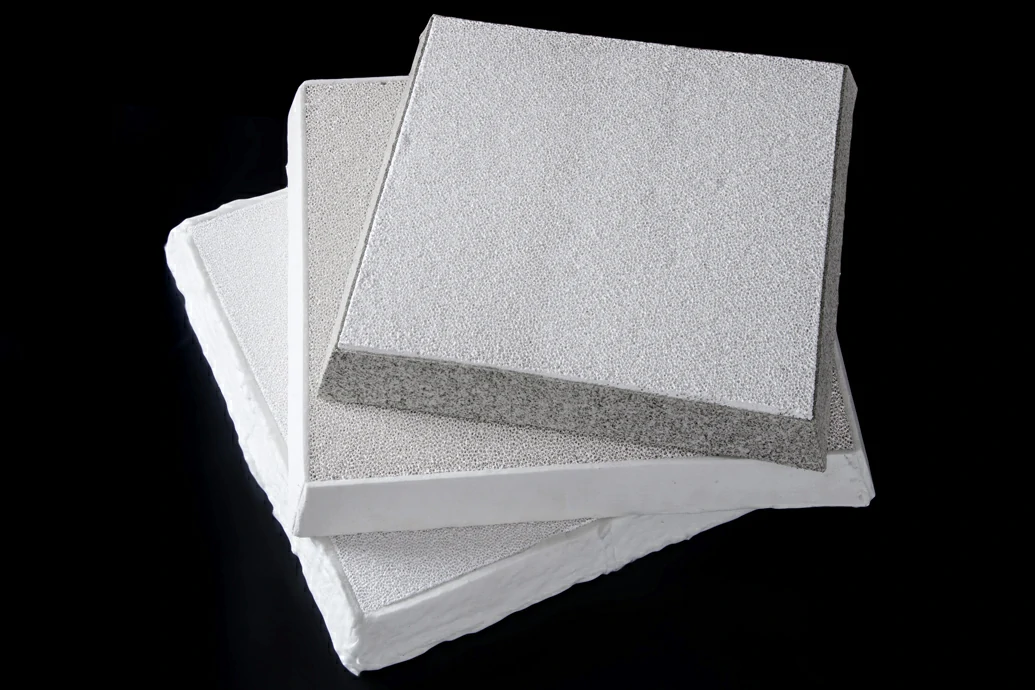
Alumina-based Ceramic Foam filters trap large inclusions and adsorb micron-scale particles through sieving, inertial impaction, and adsorption. Their three-dimensional network catches particles down to 20 microns, giving filtration efficiency 3x better than standard metal mesh screens.
What This Means for Your Casting Floor
Foundries using Alumina foam filters report:
- First-pass yield improvements of 5–15 percentage points (jumping from 85% to 90–98% ranges)
- Inclusion defects cut by more than half (porosity, slag entrapment, double-oxide film defects all drop)
- Tensile strength gains of 5–10%
- Elongation improvements of 20–50%
- Fatigue life extended 30–100% in high-cleanliness alloys
These numbers come from actual Gravity casting applications where X-ray inspection confirmed defect-free castings after installing CFF filtration in the gating system.
The Technical Specs That Matter
Aluminum-grade ceramic foam filters run on alumina (Al₂O₃) content between 80–90%, chosen for chemical inertness against molten aluminum. They’re rated for continuous operation at 1100–1200°C, handling thermal cycling from room temperature preheat through 730–780°C pour temperatures without cracking.
Porosity sits at 80–90%, with pore density (PPI) selected by application:
- 10–20 PPI: coarse filtration, high flow, low pressure drop
- 20–30 PPI: standard aluminum casting balance
- 40–60 PPI: precision filtration for automotive safety components and aerospace alloys
Critical filtration velocity for gravity casting stays below 0.5 m/s at the sprue to prevent turbulence and double-oxide film formation. Every Indonesian foundry manager should know that threshold before selecting any filter, local or imported.
The Current Real-World Supply Situation for Locally Produced Indonesian CFF
Nobody publishes hard numbers on Indonesia’s domestic CFF production. Search Chinese or English trade databases and you’ll find plenty of data on Indonesia’s nickel and ferroalloy boom, but almost nothing specific to local ceramic foam filter manufacturing.
What We Know From the Metallurgy Boom
Indonesia’s captive power plants for smelters hit 22.78 GW in 2023. Nickel smelting alone accounts for 8.82 GW, over 60% of that capacity. Every gigawatt of smelting capacity needs casting consumables, CFF included. Industry rule of thumb puts filter consumption at 0.3–0.6 m² per ton of cast metal. Do the math on Indonesia’s nickel and ferroalloy output, and local CFF demand likely runs into the hundreds of thousands of square meters annually.
Who’s Actually Making These Filters?
Nickel and ferroalloys now fall under Indonesia’s strategic export commodity list, centralized through state entity PT Danantara Sumberdaya Indonesia (DSI). But that centralization stops at exports. Raw material sourcing, including CFF procurement, still happens plant-by-plant through importers and local agents.
Most domestic ceramic production clusters around Java (Jakarta, Surabaya) and Sulawesi’s nickel industrial parks. These plants run Chinese, Japanese, or European CFF formulas and equipment, licensed to Indonesian production facilities. They churn out standard sizes, 17″×14″ and 23″×23″, in the 10–60 PPI range that matches international specs.
The Bottom Line for Foundry Managers
Local Indonesian CFF suppliers aren’t inventing new ceramic chemistry. They’re running licensed technology from established international players, adapted for local production economics. Your quality control questions need to target that licensing relationship, not just the factory floor. Ask which foreign technology partner backs their formula. Ask how long they’ve held that license.
Imported CFF (China/India/Europe Brands) — Technical Specs and Cost Structure
Three price tiers exist for imported ceramic foam filters, and the gap between them tells you exactly what you’re paying for.
The Technical Breakdown
Chinese-made CFF brands like FoundryMax run high-purity Al₂O₃ formulations targeting 6xxx and 7xxx aluminum alloys. Pore density runs 10–50 PPI, with die casters favoring 20/30 PPI. Inclusion removal rates hit 60–80% for particles above 20 microns. Most export-grade Chinese factories carry ISO 9001 and ISO 14001 certification, tested against ASTM E1558 filtration standards.
Indian and European brands (SF-Foundry-type suppliers) push further. They blend Al₂O₃–SiC composite ceramics, which survive more than 20 thermal shock cycles without cracking. That’s a real advantage over pure alumina filters. Pore density runs 15–45 PPI, skewing higher for aerospace and transmission housing applications. Inclusion removal exceeds 80% on aerospace-grade projects. European suppliers hold IATF 16949 or AS9100 certification, feeding directly into OEM PPAP approval chains. Indian suppliers carry ISO 9001, gaining indirect recognition through downstream foundry certifications.
The Cost Math
FOB pricing for a standard 17″×17″×2″ aluminum CFF breaks down predictably:
- China: $2.00–3.00 per piece FOB, bulk orders
- India: $2.50–3.50 per piece FOB
- Europe: $4.00–6.00 per piece FOB (labor and energy costs push this higher)
Freight adds about $0.09 per piece on a full 40-foot container (20,000+ filters per load). Insurance runs 0.3–0.5% of cargo value. From the CIF Indonesian port, Chinese filters land at $2.10–3.20, Indian at $2.60–3.70, and European at $4.10–6.20 per piece.
Then Indonesia’s import duties stack on. Nominal tariffs of 5–10%, VAT at 11%, and 2–4% in miscellaneous fees push the total tax burden to 18–25%. Run the math at 22% average, and landed cost climbs to about $3.17 for Chinese filters, $3.79 for Indian, and $6.10 for European product—before it ever reaches your Gating System.
Key Comparison Dimensions: Comprehensive Side-by-Side Comparison of Local vs. Imported Products
Strip away the marketing pitch, and four numbers decide this argument every time: purity, alloy fit, total cost, and how fast someone shows up when your filter cracks mid-pour.
Purity, Pore Uniformity, Thermal Shock
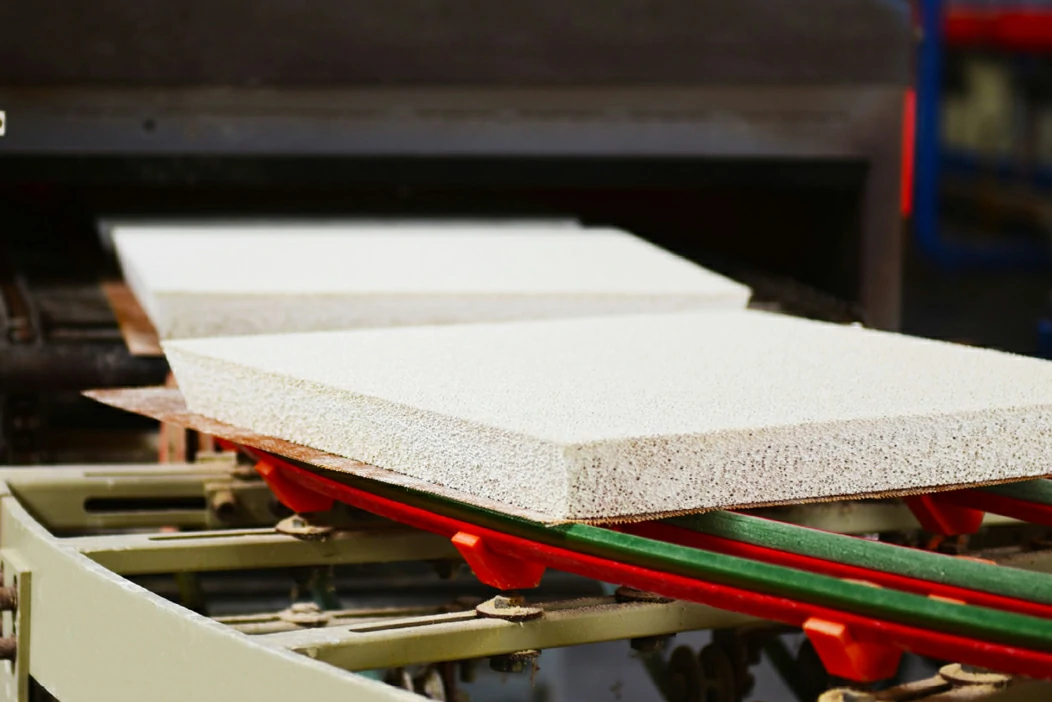
Imported filters run ≥99.3% Al₂O₃ purity, impurities under 0.7%. Local high-end brands sit at ≥98.5%, impurities 1.0–1.5%. That gap matters most on high-magnesium alloys, where corrosion resistance depends on tight chemistry.
Pore consistency tells the same story. A nominal 30 PPI imported filter measures 28–32 PPI actual, standard deviation under ±5%. Local product swings 25–35 PPI, deviation hitting ±10–15%. That variance shows up as unpredictable pressure drop on your casting floor.
Thermal shock cycling (720–760°C aluminum, air-cool, reimmerse) breaks imported filters after 10–15 cycles. Local filters crack at 5–8, with premium domestic product reaching 8–12. Translated to furnace runs: imported filters last 3–5 heats per block, local averages 1–3.
Alloy Compatibility: Standard vs High-Magnesium
Both options handle standard Al-Si alloys (AlSi7Mg, AlSi9Cu) at 90–100% coverage. Imported filters push pour temperatures to 760–780°C. Local product tops out around 740–760°C, with flux stability trailing behind.
High-magnesium alloys expose the real gap. Above 5–6 wt% Mg, imported filters engineered with optimized Al₂O₃-SiO₂ ratios still deliver 2–3 heats per block. Local filters, using generic Al-Si formulas, drop to 1–2 heats with faster permeability decay and heavier slag buildup.
Cost: The TCO Reality Check
Local filters price 30–40% below imported. But run the total cost of ownership—purchase price, logistics, scrap rate, inventory carrying cost—and the gap narrows to 1–5% annually. Higher local scrap rates and shorter filter life eat the upfront savings.
Service Support
Local suppliers offer same-region, 24-hour on-site response for blockages or cracked filters. Imported suppliers rely on documentation and remote troubleshooting, with response measured in days, not hours.
Decision-Making Framework for Foundry Selection in Indonesia
Four variables decide whether aluminum foundries in Indonesia use local or imported ceramic foam filters: casting classification, alloy chemistry, plant scale, and defect-cost math. Skip any one, and you’re guessing instead of calculating.
Classify Your Castings First
Standard parts — unit value under $20-30, non-safety-critical brackets, housings, covers — tolerate 3-5% combined scrap and rework rates. They only need ISO 9001 plus mill certs. Local CFF from Indonesian foundries producing 500-5,000 tons annually handles these fine.
Critical structural or export-certified parts — over $100/unit, chassis components, brake housings, turbine blades — demand sub-1% scrap rates, IATF 16949, and customer process audits like VDA 6.3. If your Indonesian supplier lacks a proven export track record, import from established Chinese, Thai, or Indian plants until local capability catches up.
Match Alloy System to Sourcing Path
Standard Al-Si alloys (AlSi9Cu3, AlSi10Mg) run well on local Indonesian lines. Furnace batches of 300-800 kg for small-mid plants, spectral checks every heat, Si controlled to ±0.2%.
High-magnesium alloys (AZ91, AM60) change the calculation. Combustion risk and Indonesia’s tightening environmental oversight make local high-Mg casting immature. A phased approach works better: import finished high-Mg parts for years 0-2, pilot 200-500 tons/year locally in years 3-5, then scale to a full local line once scrap rates hit ≤2%.
Scale the Plant to the Order
Small-batch Indonesian foundries (500-5,000 tons/year) fit multi-product, low-volume work with 3-6 week lead times. Large continuous-cast lines (20,000+ tons/year) beat small shops on cost by 10-20% per ton but need longer PPAP validation upfront.
Run the Defect-Cost Math
Total unit cost = material + energy + labor + depreciation + filter cost + defect cost. At $10/unit production cost and 10,000 units/month, a $0.05 filter that pushes scrap rates higher can cost more than a $0.20 filter that holds defects near zero. Calculate this before signing any CFF contract.
Feasibility and Risk Assessment of Import Substitution through Localization in Indonesia
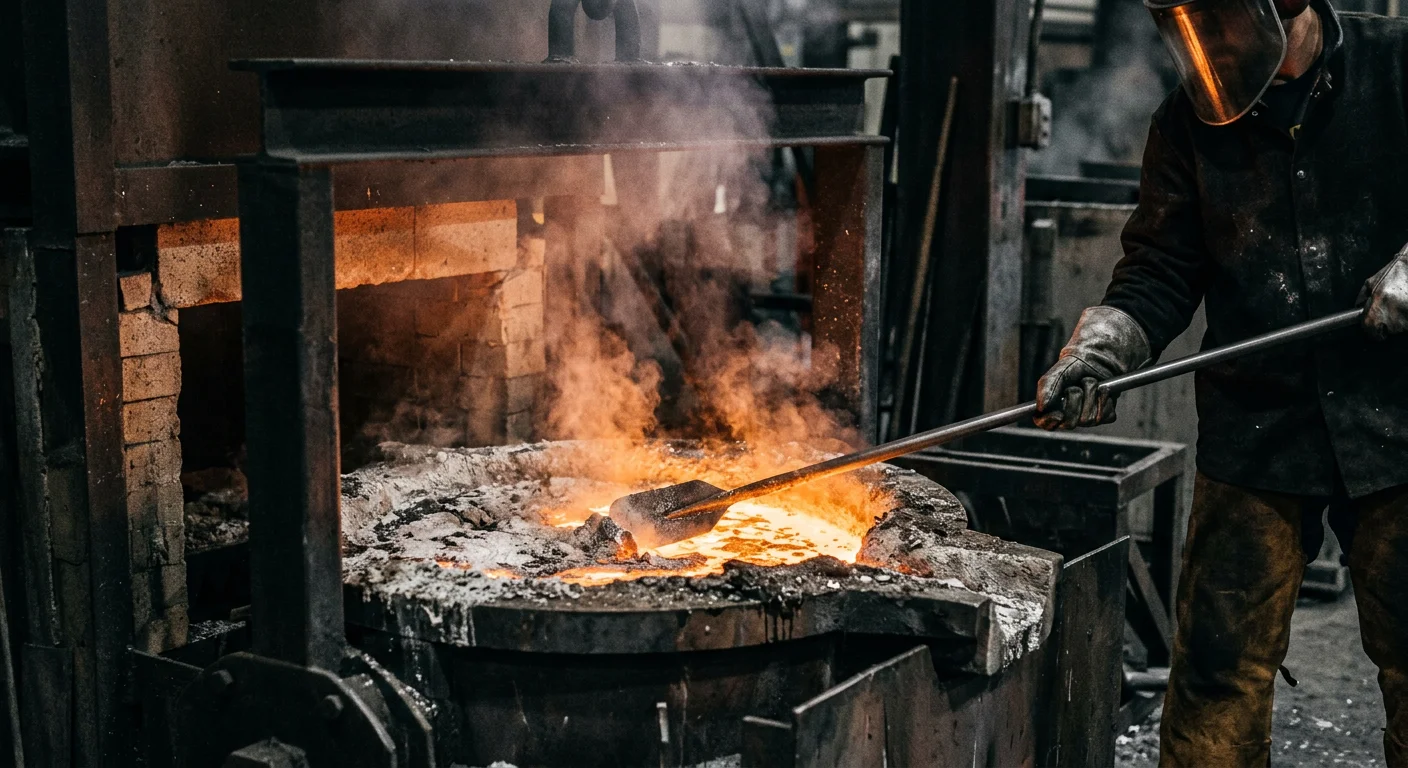
Indonesia’s government wants you to buy local. The 35% import substitution program targets chemicals, automotive, electronics, and pharma, with subsidized gas pricing to sweeten the deal. But CFF sits in the gap between wanting local capacity and having it.
The Technical Ceiling
Ask any potential local supplier for their phosphorus content data. Aluminum-compatible CFF needs total impurities under 0.1%, phosphorus specifically below 0.01–0.02%. If they can’t produce 12 months of ICP-OES reports showing that consistency, walk away. Same goes for high-magnesium compatibility testing, including soaking trials at 720–760°C for 2–8 hours, checking crack rates under 5% and permeability decay curves. Most local plants stop at basic MSDS sheets and pressure tests. That’s a technical gap.
TKDN Changes the Math
Local content requirements (TKDN) already run 35–45% across telecom, power, and automotive. Under the EV policy, local content jumps from 40% to 60% by 2026. Import tax breaks disappear if you miss it. Total vehicle cost swings 10–20% once those exemptions vanish. If your foundry supplies government-linked or incentivized projects, dropping below the TKDN threshold costs you the tax break outright.
The Hybrid Fix That Works
Localize the commodity items: refractory brick, insulation, ladle coatings, packaging, logistics. All ISO 9001-capable, all easy TKDN wins. Keep critical CFF imported from established Chinese or European suppliers until local labs can prove ISO/IEC 17025 accreditation and batch-to-batch consistency.
Contract Triggers Worth Writing In
Set a hard rule that three to five consecutive batches exceeding a 10% performance standard deviation automatically triggers an import fallback clause. Build in an annual TKDN review too — policy moves fast, and your supply chain needs room to move with it.
Conclusion
The choice between local and imported ceramic foam filters for aluminum foundries in Indonesia requires weighing lead time and cost against consistency. Local suppliers offer faster lead times and lower logistics costs, but their consistency and pore structure precision still lag behind established imported brands, especially for foundries running tight alloy specs or high-volume automotive castings. Imported filters from China, India, or Europe deliver proven reliability, but at a price and shipping-time premium that smaller operations can’t always absorb.
Match the filter to your production risk tolerance as well as your budget. High-stakes castings deserve the certainty imported CFFs provide; lower-risk runs can test local alternatives without gambling the whole batch.
What’s best for Indonesia depends on a decision framework. Start small by qualifying a local supplier on a non-critical run, benchmark against your current imported filter, and let the data, not the sales pitch, decide what earns a permanent spot on your production line.