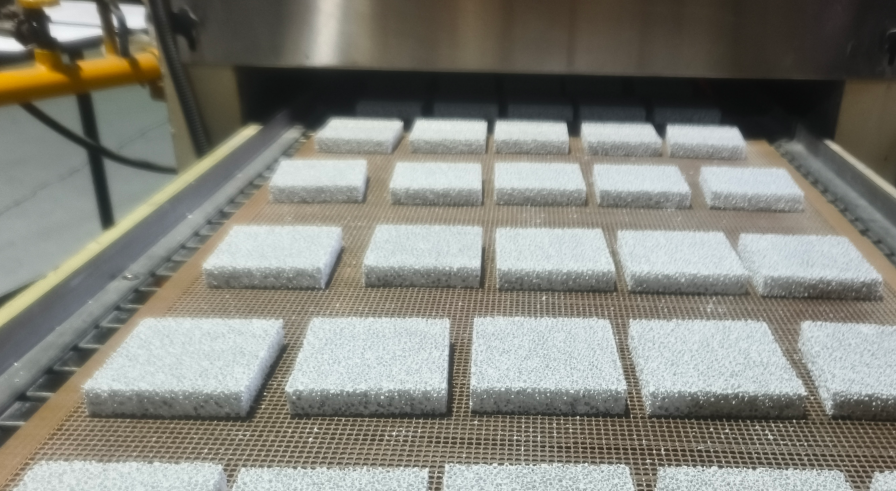
If you’re running an aluminum foundry in Indonesia and your Ceramic foam Filters keep failing quality checks, or show up late from suppliers who go silent after payment, you already know the cost is downtime, scrapped castings, and clients who won’t wait for excuses.
You can’t just scroll through a directory and pick whoever ranks first when you need reliable foam ceramic filter suppliers for aluminum casting in Indonesia. Local players like PT. SIKMA and Maeda Indonesia each have their own strengths, while cross-border suppliers from China and Southeast Asia bring different pricing and lead-time tradeoffs.
This breakdown covers who’s worth contacting, how to verify their claims before you commit, and which product specs matter for your Casting process. It gives procurement teams what they need to make a call that won’t blow up in three months.
Indonesian Local Suppliers (PT. SIKMA, Maeda Indonesia, etc.)
PT. Sinar Kharisma Mitra Agung, better known as PT. SIKMA, brands itself as a “One Stop Shopping for Wire Mesh and Foundry Products” supplier out of Bekasi, West Java. Its registered address, Jl. Hutama Raya No.4 Blok M, Jatimulya, appears consistently across LinkedIn, SignalHire, Indonetwork, and Glints. That’s a good sign—it means the company has a real, verifiable footprint, not just a listing.
PT. SIKMA isn’t a manufacturer. It’s the sole agent for ALFISO–ALFATEC, a European refractory and insulation brand. Their ceramic foam filters are imported, then warehoused locally for distribution. When you evaluate them as a foam ceramic filter supplier for aluminum casting in Indonesia, you’re really buying European-spec product with Indonesian logistics around it.
The PPI range is 10–40 for aluminum and non-ferrous work, typically stocked at 20–30. Standard sizes run from 50×50mm up to 200×200mm, with thickness 22–30mm. Pricing is roughly USD 1.5–3.0 per piece for standard 100×100mm filters (about IDR 25,000–50,000), and climbs to USD 3–6 for larger 150–200mm panels. Lead time is 3–7 days if it’s in stock locally, or 8–12 weeks if it needs to ship from Europe. MOQ is usually 50–100 pieces per spec, though sample orders of 10–20 pieces are negotiable.
The tradeoff is straightforward: fast turnaround on common specs, slower turnaround and higher cost on anything custom like Zirconia-based filters for steel casting.
Maeda Indonesia and other local names deserve their own due diligence. Before you commit, ask the same three questions you’d ask PT. SIKMA: Are they a manufacturer or reseller? What’s their actual inventory versus made-to-order split? And can they hand you a data sheet showing thermal resistance, pressure drop, and filtration efficiency, not just a sales brochure?
China and Southeast Asia Export Suppliers (Serving the Indonesian Market)
Indonesian customs records already show Chinese-made filters moving through the supply chain. Volza logged a September 2021 shipment of 1,600 pieces of 15″–30PPI Ceramic Foam filters from China, valued at US$28,000—roughly US$17.5 per piece. That’s your baseline for negotiating bulk pricing.
Suppliers worth contacting first:
-
Cangzhou Sefu Ceramic New Materials (Hebei) — States outright that its products ship to Western Europe, North America, the Middle East, and Southeast Asia. Holds ISO9001 certification and its own import-export license, meaning no middleman markup. Contact: Ms. Kerry, based in Guanting Industrial Park, Cangzhou City.
-
Baoding Ningxin Group (Hebei) — The only supplier on this list whose product page names Indonesia directly, labeled “India Turkey Indonesia Market Supplier.” Located in Baqie Industrial Zone, Tang, Baoding.
-
Jintai Group (Jiangxi) — Calls itself the biggest ceramic foam filter manufacturer in China, backed by ISO9001 and SGS certification. Reach them at Rita@Jintai-Group.Cn.
-
Jinggan Refractory (Shandong) — Full contact transparency: phone, mobile, and email all listed, which makes verifying lead times and custom specs straightforward.
-
Pingxiang Baitian (Ball-tec) — Specializes in zirconia foam filters, useful if your casting line needs higher thermal resistance beyond standard alumina filters.
-
FoundryMax — Offers custom manufacturing and wholesale, with responsive quoting for aluminum casting applications.
Typical export specs run 10–40 PPI, 30–200mm diameter, in Al₂O₃, ZrO₂, or SiC. Before wiring payment, request scanned ISO certificates, SGS reports, customs export declarations, and certificates of origin—not just a product brochure.
Supplier Reliability Verification Standards
A PDF of an ISO 9001 badge tells you nothing about whether that supplier’s Ceramic foam filters will hold up in your next pour. You need to check certification, batch data, and technical backup together.
Start with the paperwork baseline. ISO 9001 is non-negotiable for any foam ceramic filter supplier serious about the aluminum casting business. ISO 14001 is the next filter. It’s not mandatory everywhere, and it signals process discipline. Most buyers stop at “do you have a certificate.” One industry survey found 66% of procurement teams request a copy of the ISO 9001 certificate, but only 60% check the expiration date, and 51% verify the certified scope matches the product they’re buying. Only 15% go as far as confirming with the issuing body. That gap is where unreliable suppliers slip through.
Batch data proves or disproves reliability. Ask for Certificates of Analysis on at least 3–6 consecutive batches, not one cherry-picked sample. Look at compressive strength, porosity, and permeability across those batches. A single “passed” result means nothing if you can’t see the trend behind it. If strength numbers swing wildly between lots, that’s a red flag for unstable raw material sourcing or inconsistent sintering control.
Traceability closes the loop. You want batch numbers linked to raw material lot, kiln run, inspector, and shipping batch. Any change to formula, firing curve, or tooling should come with a documented CAPA or deviation record.
Test their technical support directly by asking about preheat ramp rates, installation guidance, and response time on failure analysis.
Analysis of Product Specifications for Aluminum Casting
Material choice determines everything downstream. Alumina Ceramic Foam filters (Al₂O₃) dominate aluminum casting because they are chemically inert. SiC filters handle iron, steel, and copper alloys at 1450–1600°C, but SiC reacts with molten aluminum and risks contaminating the melt with carbon and silicon. Zirconia CFFs push past 1700°C for high-alloy steel work, but the cost doesn’t justify use in aluminum lines. Alumina sits in the 1100–1300°C range, well above aluminum’s 680–780°C pour temperature, and resists the thermal shock of repeated pours without cracking.
Casting Process dictates PPI selection:
-
Gravity casting in sand or metal molds: 20–30 PPI balances inclusion removal against flow rate. Thick-walled parts can drop to 10–20 PPI for higher throughput.
-
Low-pressure casting for wheels and thin-wall structural parts: 30–40 PPI gives tighter control over porosity and inclusions while managing pressure rise.
-
High-cleanliness precision work like automotive safety components and aerospace structures uses 40–60 PPI as secondary filtration near the gate to catch bifilm and micron-scale inclusions.
Push PPI higher and you gain filtration precision but lose flow rate. Pressure drop climbs. Foundries compensate by upsizing the filter panel so fill times don’t have to slow down.
Open porosity typically runs 80–90%, which creates the “deep-bed” effect that traps particles at multiple depths. At the right PPI, you get inclusion removal above 90% and hydrogen porosity reduction near 70–75%. Compressive strength, rated in the multi-MPa range depending on manufacturer, determines whether a filter survives static head pressure without fracturing mid-pour. Undersized strength means cracked panels, secondary contamination, and forced reductions in pour speed just to protect the casting.
Common Risks in Procurement Decision-Making and Mitigation Strategies
Three things sink most ceramic foam filter purchases before the first shipment lands: wrong pore size, bad sealing at installation, and suppliers who won’t show purity records. All of them are preventable if you know what to check first.
PPI mismatch and clogging. Most buyers size filters against rated flow and skip peak conditions. Actual flow can hit 30–50% above design values, and pressure drop climbs past the safe threshold fast. One PPI grade too fine and initial pressure drop jumps 40–60%, cutting cleaning cycles from 30 days to 7–10. One grade too coarse and filtration efficiency drops 10–20%, doubling contamination downstream. If pressure drop starts at 0.05 MPa and hits 0.2 MPa within two weeks, the selection was wrong from day one. Fix it: ask for flow-versus-pressure curves across at least three flow points, build in 30% area redundancy, and run a 4–8 week trial before locking the spec for high-value lines.
Sealing failures and bypass leakage. Field audits show 30–40% of filtration performance complaints trace back to installation seals, not the filter. Undersized O-ring compression, sealing surfaces rougher than Ra 3.2 μm, or the wrong gasket material for the operating temperature all create bypass paths that let unfiltered melt through. That cuts effective filtration efficiency by 10–50%. Get sealing structure drawings, torque specs, and 100% pressure-test records from the supplier before installation, not after a failed pour.
Missing purity documentation and weak sintering. Any supplier who can’t produce raw material composition reports or batch traceability numbers is a red flag. Filters without documented sintering temperature and mechanical strength data often crack or shed powder within 3–6 months of use. If compressive strength sits at 2–3 MPa against an industry average of 5 MPa or higher, or the sample price runs 20–30% below market with no clear explanation, walk away. Reliable foam ceramic filter suppliers for aluminum casting in Indonesia should hand over strength test data and batch records without hesitation. If they stall, you have your answer.
Practical Advice on Procurement in Indonesia and Supplier Selection Priorities
Fifty billion rupiah changes your sourcing strategy. Cross that threshold on a government or state-owned contract, and TKDN compliance becomes mandatory. Rules require local product priority above that line. For smaller trial orders or non-standard specs, a local trading agent paired with a verifiable factory works fine, as long as you audit the factory before payment clears.
Score suppliers in this order:
-
Legality — First, verify NIB through the OSS system, then cross-check the NPWP and registered address against LinkedIn or Indonetwork listings.
-
Real manufacturing capacity — Make sure machines are owned, not leased, and staff are direct employees, not subcontracted.
-
Compliance certificates — Check for SNI, Halal, ISO, and the TKDN percentage if you’re bidding on government work.
-
Delivery capability — Look at capacity, lead time, MOQ, and whether they ship from Jakarta or Surabaya.
-
Sample quality — Assess development speed and how well packaging holds up against humidity and inter-island shipping vibration.
-
Risk controls — Ask for international buyer references and see if they’ll accept a video or on-site factory audit.
For high-value lines, run a trial batch and get third-party QA before signing an annual framework agreement.
Conclusion
Finding reliable foam ceramic filter suppliers for aluminum casting in Indonesia means knowing where to look and what questions to ask. Local players like PT. SIKMA offer speed and easier communication, while Chinese and Southeast Asian exporters often bring sharper pricing and broader product ranges. Either way, the suppliers who survive scrutiny are the ones with verifiable certifications, consistent porosity specs, and a track record of on-time delivery under real production pressure.
Focus on suppliers who can prove their filters perform batch after batch rather than chasing the lowest quote first. Request samples, ask for third-party test reports, and start with a small trial order before committing to volume.
Indonesia’s foundry sector is growing fast, and the foundries that lock in dependable filtration partners now will be the ones scaling without costly rework later.