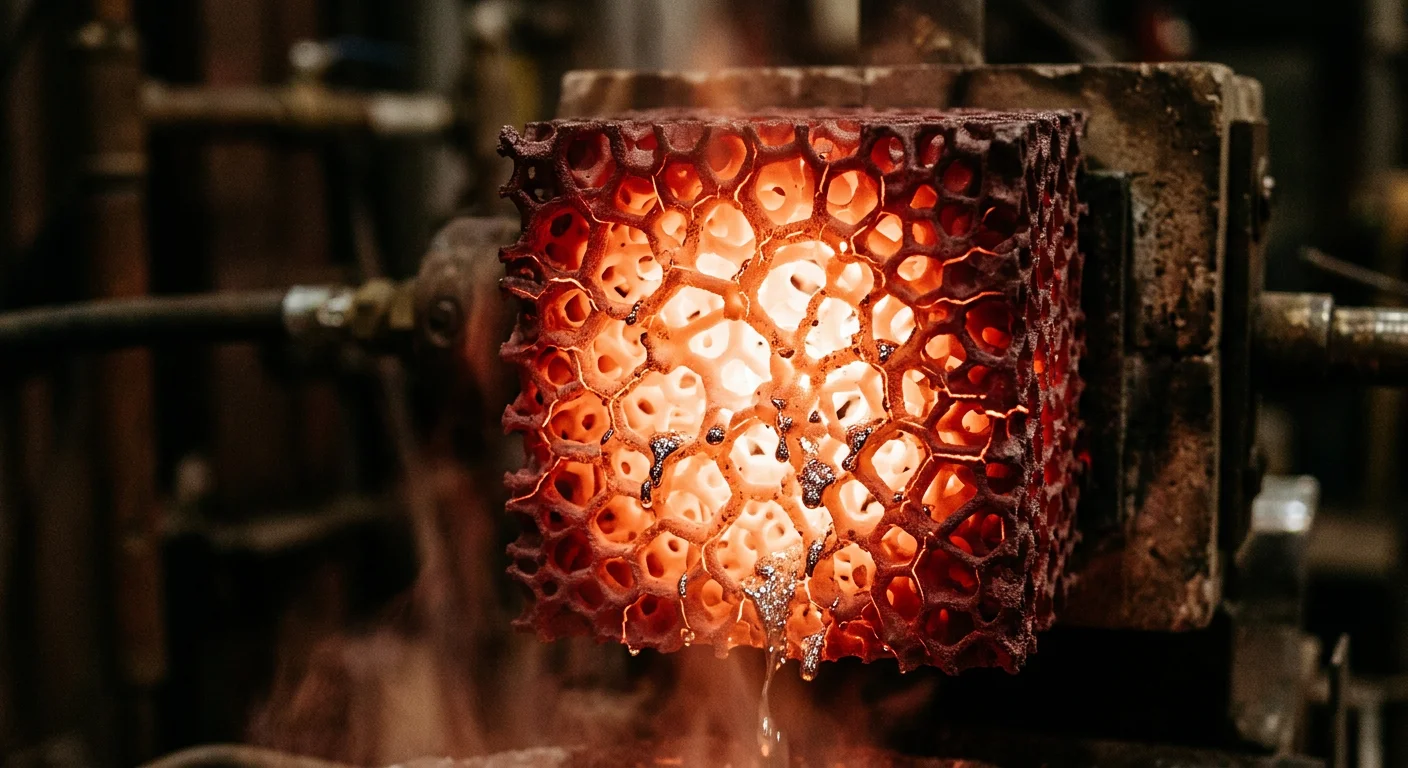
Casting defects rarely announce themselves until the molten metal hits the mold—and by then, a subpar ceramic filter has already cost you thousands in scrap metal and downtime. For Indonesia’s iron and steel foundries, where humidity, local sourcing constraints, and inconsistent supply chains complicate an already technical decision, choosing the right filter supplier is risk management.
This guide breaks down the 7 best ceramic filter suppliers serving Indonesia’s foundry sector, from local distributors like PT Makmur Meta Graha Dinamika to global heavyweights like CoorsTek and specialized manufacturers out of China and India. You’ll get a practical look at what each supplier offers, including Foam filters, SiC options, technical support, and lead times, so you can match the right partner to your production line instead of gambling on a name you saw at a trade show. We’ll also walk through the selection criteria that matter before you sign a single purchase order.
PT Makmur Meta Graha Dinamika
Local distributors win on logistics. PT Makmur Meta Graha Dinamika headquarters is at Wisma 77 Tower II, 25th Floor, Jl. Letjend. S. Parman Kav 77, Jakarta Barat. The company operates 4 offices and 5 warehouses in Jakarta, Surabaya, Medan, and Klaten. That is regional coverage built for fast replenishment.
Their import profile leans toward silicon, silicon metal, and steel shot—materials used in foundry and metal-melting. They are also listed as an Indonesian distributor for O.M.LER s.r.l., with Mr. Andre Partogi as the contact point. Trade data shows 1,053 recorded import shipments, sourced mainly from Hong Kong, China, and Japan.
For lead times, no official SLA exists, but a multi-node network like this delivers within 1-2 business days for Jabodetabek, 2-4 for Java’s major cities, and 3-7 for Sumatra/eastern Indonesia.
No public pricing, no verified customer testimonials, no confirmed case studies in the current sourcing data. You are buying proximity, local stock positioning, and faster emergency turnaround than importing direct from overseas ceramic filter manufacturers.
FoundryMax
Zirconia does the heavy lifting when steel is on the line, and FoundryMax builds its entire steel-casting strategy around that single fact.
FoundryMax runs three ceramic filter material families for foundry work: SiC, ZrO2, and Al2O3. For iron and steel foundries in Indonesia, the relevant split comes down to two of them.
ZrO2 (Zirconia) is FoundryMax’s answer for steel and high-temp alloys. Official specs list a max temperature of 1760°C with pore ratings between 10–40 PPI. The company’s own steel filter page goes further, stating that stabilized zirconium oxide handles temperatures up to 1700°C—a claim that lines up cleanly with the 1760°C ceiling on their filtration systems page.
SiC, by contrast, tops out at 1560°C, also in the 10–40 PPI range, but FoundryMax positions it for iron and copper casting, not steel. If you’re pouring steel, ZrO2 is the recommended path.
Customization Range
FoundryMax’s public data shows selection flexibility across three dimensions:
- Mesh structure: 0.8×0.8mm to 2.5×2.5mm
- Honeycomb/parallel channels: 100–300 CPSI
- Foam: 10–40 PPI or 10–60 PPI, depending on material
For aluminum work, Al2O3 caps at 1250°C with a wider 10–60 PPI spread—useful context even though it’s outside the iron and steel scope.
SEFU / Cangzhou Sefu Ceramic New Materials
Ten production lines. 383 export shipments to 31 buyers across three continents. SEFU operates at that scale, and it’s why Indonesian iron and steel foundries keep this Hebei-based manufacturer on their shortlist.
Cangzhou Sefu Ceramic New Materials is in Guanting Industrial Park, Cangzhou City, and works as both a manufacturer and an OEM/ODM supplier. Staffing figures vary by source—Made-in-China lists 52 employees, some TradeIndia listings go up to 300—but the factory footprint (1,000–3,000 m²) and reported USD 50 million annual turnover point to a mid-to-large operation built for volume.
Steel Filtration Capability
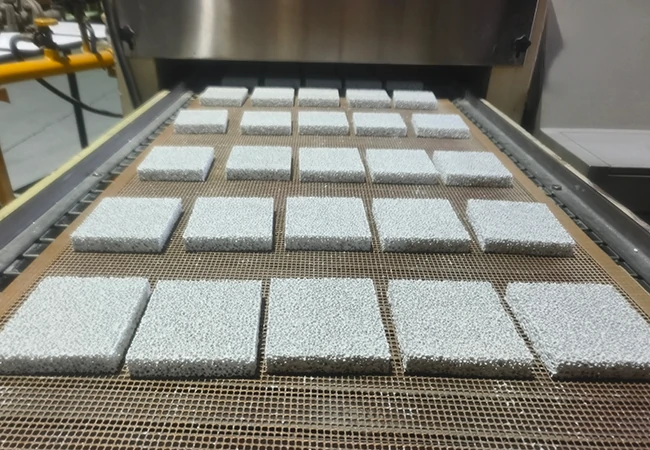
SEFU’s ceramic filter for steel targets carbon steel, low-alloy steel, and stainless grades (304/316 included). Industry-standard specs for this filter class put the working temperature ceiling around 1650–1700°C, covering typical steel pouring temperatures of 1540–1650°C. Pore ratings run 20–30 PPI for standard steel filtration, tightening to 30–40 PPI for high-cleanliness stainless applications.
SEFU produces square filters from 50×50mm to 150×150mm (22–50mm thick) and round versions from 40–70mm diameter. Buyers sourcing smaller SiC filters—say, a 70×20mm, 20 PPI configuration—land within SEFU’s standard manufacturing range.
Export Track Record and Logistics
SEFU’s top export destinations are India, Vietnam, and Mexico. Indonesia isn’t in the top three, but the HS code structure (6903, 6909, 6914) matches ceramic foam filter shipments that follow foundry supply patterns across Southeast Asia.
For Indonesian buyers, expect:
- Production time: 7–15 days standard, 15–25 days for custom specs
- Sea freight to Jakarta/Surabaya: 7–14 days
- Customs clearance: 3–7 days with complete documentation
- Total lead time: 20–35 days, compressible to 18–20 days with stock on hand
SEFU holds ISO 9001, ISO 14001, and ISO 45001 certifications, plus SGS quality verification. That paperwork smooths customs processing for HS 6903/6909 imports that need certificates of origin and inspection documents.
CoorsTek – Flow-Rite Ceramic Casting Filters (Global Tier-1 Supplier)
When the pore structure of a filter is regular and repeatable, it changes how molten metal moves through it. That’s the engineering idea behind CoorsTek’s Flow-Rite® line.
Flow-Rite® uses an alumina-silicate composition, which CoorsTek calls “a kind of mullite.” Typical mullite chemistry runs 65–75% Al₂O₃ and 25–35% SiO₂. That gives it enough refractoriness to handle steel pours in the 1550–1650°C range without breaking down. So it works for iron, aluminum, carbon steel, and low-alloy steel castings. For extreme high-temp superalloys, you’d still want Zirconia-based filters (ZrO₂ ≥70%) instead.
What Makes the Cellular Structure Different
Most foam filters have random pore patterns. Flow-Rite® doesn’t. CoorsTek says the cellular structure is “identical from one filter to another,” and that matters for two reasons.
First, inclusion capture. The alumina-silicate surface has a strong affinity for metallic oxide inclusions, so Al₂O₃, SiO₂, MnO, and FeO particles stick to the pore walls instead of flowing into the casting. Second, flow control. The uniform, repeating channels convert turbulent pour flow into something closer to laminar flow, which cuts vortexing and gas entrapment while keeping pressure drop predictable pour after pour.
Global Support Footprint
CoorsTek has regional technical teams in three locations:
- Japan – Tokyo HQ (+81-3-5437-8411), with manufacturing in Aichi Prefecture
- Americas – +1-303-271-7100, info@coorstek.com
- Europe – +49-89-5514190, infoeurope@coorstek.com
CoorsTek doesn’t publish pricing or MOQ, but for comparison, zirconia foam Filters typically run $1–3 per piece for small sizes and $5–10 for 150mm+, with MOQs of 100–500 pieces. Mullite-based filters like Flow-Rite® usually price 20–40% lower than zirconia equivalents. That difference matters if you’re an Indonesian foundry testing volumes before committing to bulk stock.
SELEE Corporation
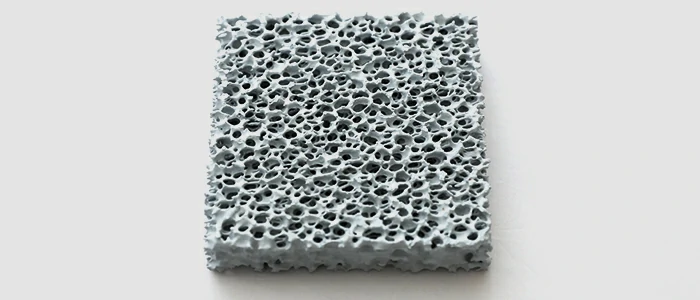
Ninety-eight percent. That’s the global market share SELEE’s PBA Ceramic foam Filters hold across the entire industry—a number that turns “supplier” into “standard.”
SELEE invented the phosphate-bonded Alumina foam Filter structure in 1973, five years before the company was founded in 1978 in Hendersonville, North Carolina. Since 1995, SELEE has operated as a wholly-owned subsidiary of Porvair plc, which acquired it for roughly $38.3 million. That backing hasn’t slowed innovation—it’s funded it.
Certifications that matter: SELEE is the only Ceramic foam filter and refractory supplier holding ISO 9001, QS 9000, and Ford Q1 simultaneously. That combination usually signals deep integration into automotive OEM supply chains, and it explains why SELEE markets itself as “The Pioneer & World Leader in Melt Filtration Technology.”
Product Coverage for Steel and Iron Foundries
For Indonesian iron and steel foundries specifically:
- Iron/ductile iron: SiC-based ceramic foam filters, rated for 1350–1500°C, used in brake discs, engine blocks, and heavy machinery castings
- Steel/stainless steel: High-alumina or zirconia-based filters engineered for shape retention above 1600°C, targeting turbine housings and pressure vessel components
- Superalloy investment casting: Filters holding structural integrity past 1600–1700°C for turbine blade production
SELEE’s filter data is also integrated directly into MAGMASOFT simulation software, letting foundry engineers select specific filter geometries, pore structures, and pressure-drop values before casting a single part.
Southeast Asia Access Point
SELEE runs a Wuhan office (+86-27-83311026) with a dedicated Chinese-language site. That’s likely your closest support channel if you’re sourcing from Indonesia, since direct Southeast Asian distribution isn’t publicly listed.
Midvale Industries
Midvale Industries has been in metal casting and surface treatment since 1901—over 120 years, longer than most foundries have been around. The company is headquartered at 6310 Knox Industrial Dr, Saint Louis, MO, with a western office in Tulsa, OK, and operates as a registered small business and WOSB (Woman Owned Small Business). Between 2022 and 2024, Midvale landed 6 federal contracts worth about $223,000 under NAICS 327910 (abrasive product manufacturing). That’s a signal its materials pass inspection in aerospace and defense supply chains.
One-Stop Process Solutions, Not Just Filters
Midvale doesn’t sell Ceramic filters as a standalone item. It positions itself as an “engineered process solutions” provider covering foundry sand, blast media, cleaning chemicals, and paint/coating equipment—everything from melt to final surface prep. Its abrasive line includes steel shot, stainless steel shot, and aluminum oxide media, typically sized G10–G50 (0.3–1.2mm), adjustable by hardness and grit for iron, steel, and high-alloy castings. For aerospace-grade coating removal, Midvale’s process packages usually target Ra 1.5–3.5 μm surface roughness with 0.1–0.3mm residual compressive stress depth.
Why It Matters for Indonesian Exporters
Foundries shipping to U.S. or European buyers face ASTM, AMS, and ISO 9001/AS9100 scrutiny. Midvale’s combined sand-binder-abrasive-coating approach targets industry-standard improvements: 3–5 point gains in first-pass yield, 20–30% reduction in rework rates, and coatings rated for ≥240 hours salt-spray resistance—useful benchmarks for 30–45 day ocean shipments. You can contact the company at +1-800-341-0043 to reach technically trained specialists for remote consultations, though there’s no dedicated Southeast Asia office at the moment.
Tattvam Vyapaar / Tattvam Ventures (Indian SiC filter supplier)
Geography does half the selling here. Tattvam Ventures Pvt. Ltd., trading as Tattvam Vyapaar, ships Silicon Carbide ceramic foam filters from India’s west coast ports—Nhava Sheva and Mundra—straight across the Malacca Strait to Jakarta or Surabaya. That’s roughly 3,000–3,500 nautical miles, a 10–14 day sail, comparable to what Chinese suppliers offer but sometimes cheaper on freight.
Product Fit for Iron and Steel
Tattvam’s sic filters operate around 1400–1500°C, matching most iron and mid-alloy steel pours. The company markets “outstanding thermal resistance” and “superior chemical stability.” Industry benchmarks confirm that SiC foam typically survives 5–6 thermal shock cycles at 1100°C before failing, with compression strength above 1.0 MPa and 80–90% porosity across 10–60 PPI ranges.
For pours needing more headroom, Tattvam also supplies Zirconia filters rated near 1700°C, useful for high-alloy steel work where SiC falls short.
Cost Comparison
| Material | Max Temp | Thermal Shock Cycles | Relative Cost |
|---|---|---|---|
| Al₂O₃ | ≤1200°C | ≥5 | Low |
| SiC | ≤1500°C | 5–6 | Medium |
| ZrO₂ | ≤1700°C | ≥3 | High |
That pricing tier lets Indonesian foundries match filter grade to casting grade instead of overpaying for zirconia on standard iron work.
Key Criteria for Selecting Ceramic Filters for Iron and Steel Foundries in Indonesia
Material choice alone decides whether a batch of castings ships clean or gets scrapped at inspection. For Indonesian foundries, that choice narrows to a simple split: zirconia for steel, silicon carbide for iron. Get this backward and no supplier’s certification paperwork will save the pour.
Material Selection by Casting Type
Cast steel (carbon, alloy, high-temperature grades) needs zirconia filters with:
- ZrO₂ ≥85%, stabilizer (Y₂O₃/MgO) at 5–8%, Al₂O₃ capped at 8%
- Porosity 75–85%, bulk density 0.55–0.75 g/cm³, compressive strength 0.8–1.4 MPa
- Max service temperature ~1700°C, matched against 1500–1650°C pour temps with a ≥100°C safety margin
- Thickness ≥25mm for standard steel work, 25–30mm for high-temperature grades
Cast iron (gray, ductile, high-chrome) runs on SiC:
- SiC content ≥70% standard, ≥75% high-strength grade
- Al₂O₃ binder 15–25%, SiO₂ ≤9%, free carbon ≤1.2%
- Thickness around 22mm, PPI 10–20 for high-chrome iron at 1400–1480°C
If aluminum or copper parts share the line, switch to Al₂O₃ (≤1250°C, 82–90% porosity) or keep SiC for copper.
PPI: The Flow-vs-Cleanliness Tradeoff
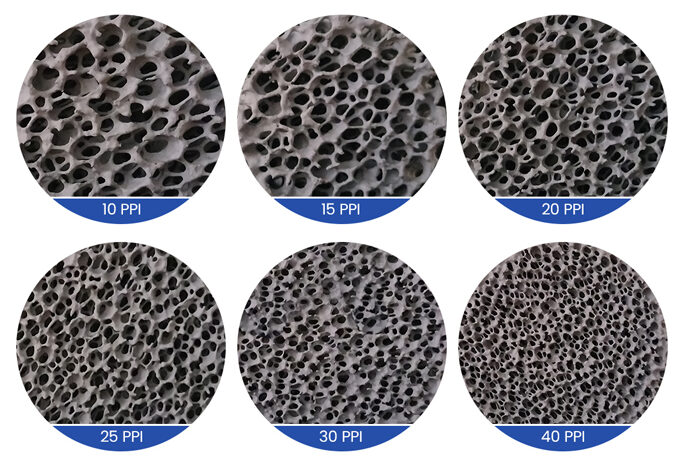
10–20 PPI favors flow. It works for large castings and ingots, with throughput around 6 kg/cm²·s, but it’s weak against 10–50µm inclusions. 20–30 PPI balances both, standard for automotive and general machinery parts. Pressure drop runs 20–40% higher than coarse-pore options. Push past 30–40 PPI without enlarging filter area, and misruns or cold shuts follow, especially on gravity-pour systems with limited drop height.
Sizing the Filter to Your Gating System
Filter working area should equal 4–6x the choke cross-section of the gating system. The formula is filter area (cm²) = pour weight (kg) ÷ [pour time (s) × unit flow rate (kg/s·cm²)], plus a 30–50% safety margin for clogging. Square filters (75×75mm to 200×200mm) fit boxed gating; round versions reduce turbulence in vertical runners. Keep dimensional tolerance within ±0.5mm to avoid on-site machining.
Supplier Vetting Checklist
Before signing anything, confirm:
- Technical support: material recommendations, PPI/thickness tables, gating ratio guidance, and test reports per ASTM C134/C773
- Lead times: standard SKUs in 3 days, custom specs within 7 days
- Tropical packaging: wooden crate or pallet protection against humidity, since Southeast Asia freight runs 7–14 days
Conclusion
Choosing the right ceramic filter supplier means matching your foundry’s melt volume, alloy type, and pour temperature to a filter that performs under pressure. Among the 7 best ceramic filter suppliers for Indonesia iron and steel foundry operations, the real differentiators are local logistics reliability (PT Makmur Meta Graha Dinamika’s edge), technical depth and customization (FoundryMax, CoorsTek, SEFU, Midvale), and cost-efficiency at scale (SELEE, Tattvam). No single supplier wins on every metric.
Pull samples from two or three shortlisted vendors, run them against your actual casting conditions, and compare defect rates before committing to a long-term contract. Foundries that treat filter selection as a strategic sourcing decision rather than a commodity purchase consistently see fewer rejects and lower rework costs. That’s the margin difference between a good quarter and a great one.