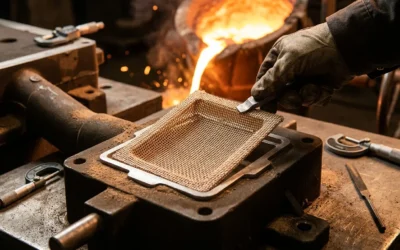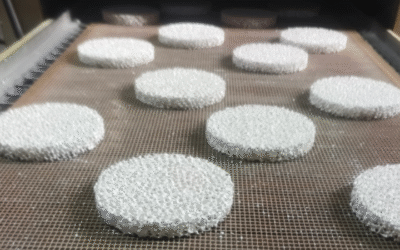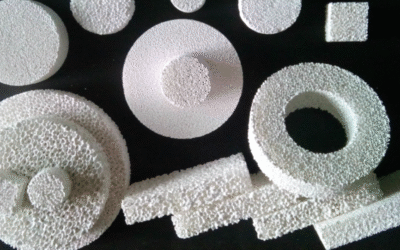
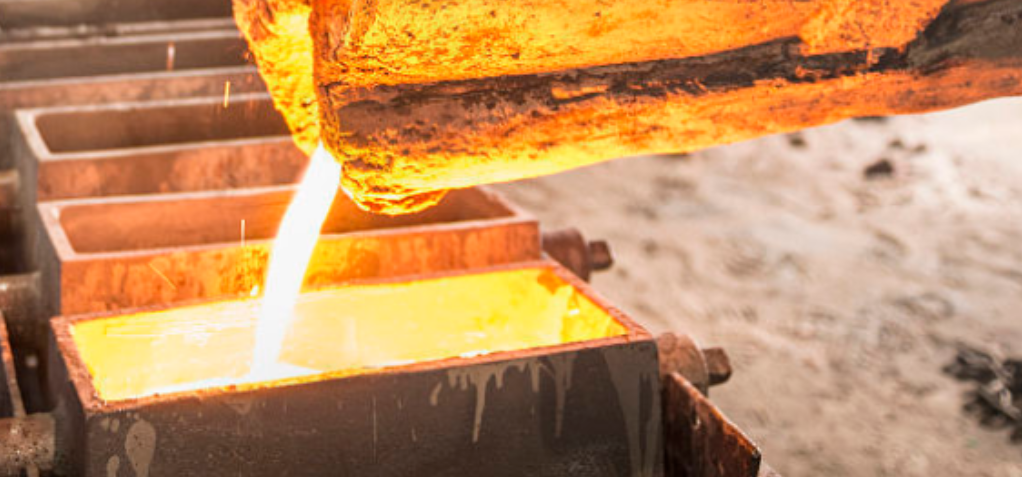
Walk through any aluminium casting facility in Nairobi or Mombasa, and you’ll see something the untrained eye might miss: the ceramic filter, tucked quietly between the furnace and the mould. It’s the difference between a clean casting and one packed with inclusions. Kenyan foundries are finally catching on.
But not all filters are the same. Some suppliers bring decades of metallurgical experience from Europe and China. Others are local distributors cutting corners on porosity ratings.
This guide covers the top 7 ceramic filter suppliers for aluminium casting in Kenya. It breaks down who actually delivers consistent quality, competitive lead times, and technical support — plus the exact checklist you should run through before signing a purchase order.
SELEE Corporation – Aluminium Casting Ceramic Foam Filter Specialist
Every industry has an original — the name everyone else quietly imitates. In ceramic foam filtration, that name is SELEE Corporation. Back in 1973, SELEE invented the Ceramic foam filter using a phosphate-bonded alumina (PBA) structure. The design has been copied so widely that SELEE claims it represents over 98% of Ceramic foam Filters in use worldwide. That’s near-total market saturation.
For aluminium casting, SELEE’s filters have been the industry-standard cast house filter since the mid-1970s. Their aluminium line comes in square sizes from 225mm to 660mm (9 to 26 inches), with a wide range of pore sizes. The CS-W™ Aluminium Cast House Filter series offers pore grades 20/30/40/50/60, with minimum average pore sizes between roughly 417 and 1,218 microns. The material is glass-bonded aluminosilicate particles with an apparent density of 2.95 g/cm³ and macro-porosity between 70–80% — built for deep-bed filtration across various production volumes.
For Kenyan buyers, there’s no confirmed local distributor. You’ll be dealing with the US or Wuhan office, and pricing, MOQ, and lead times aren’t published. Expect a custom quote process rather than off-the-shelf stock.
Drache Umwelttechnik GmbH – European Ceramic Manufacturer
Germany still means precision engineering, and Drache Umwelttechnik GmbH applies that reputation to molten metal filtration. Founded in 1984 by Frank Drache and Gerlinde Weyl-Drache, the company built its headquarters and manufacturing base in Diez, Rheinland-Pfalz. It’s a fully “Made in Germany” operation. With 51–100 employees, Drache is a specialized company focused on ceramic Foam filters and casthouse technology.
Their flagship product is the Ceralu® Al2O3 Ceramic foam filter, engineered specifically for aluminium DC casting and continuous casting. Drache also supplies DBN Boron Nitride coatings, DKS Calcium Silicate components, filter boxes, launder systems, preheating systems, and relinings for degassers. The company’s product line is built around engineered systems that extend beyond the filter itself.
That positioning matters for buyer fit. Kenyan foundries running small, standalone operations may find Drache’s offerings overbuilt for their needs. But large industrial casthouses and continuous casting facilities looking for integrated filtration solutions will find a stronger match here.
Global Reach, Kenya Gap
Drache claims support across 50+ countries, with confirmed regional presence in the US (Gibsonville, NC), the Middle East (Sharjah, UAE), Sweden, Russia, Australia, and China. No Kenya-specific distributor shows up in public records. Expect direct engagement with the German HQ at +49 6432 6070 or the US subsidiary at 336.446.0100.

FCRI / Jin Gang Group – Leading Manufacturer of Ceramic Foam Filters for Metal Casting
China’s ceramic filter industry runs deep, and Foshan Ceramics Research Institute (FCRI) — operating alongside Jin Gang Group — sits near the top of it. Based in Shiwan, Chancheng District, Foshan, Guangdong, this manufacturer produces alumina, silicon carbide, and zirconia foam Filters, plus Extruded Ceramic filters for broader foundry use. Market reports name FCRI Group among the main players in the global ceramic foam filter market for casting.
That market is growing fast. Valued at USD 115.40 million in 2025, it’s projected to hit USD 265.70 million by 2033 — a 10.99% CAGR. China alone holds 25.3% market share, and ferrous casting accounts for 48.1% of global revenue. FCRI’s filters reportedly hold a big share of the Chinese domestic market, with exports to Spain, Turkey, India, and Mexico. A separate listing claims shipments to 30+ countries — including the USA, Japan, Italy, the UK — with end users like Toyota and Fiat.
Product Specs and What to Verify
FCRI’s foam filters run 70%–95% porosity, with low pressure loss, high mechanical strength, and non-reactive performance against molten metal. Common formats span 10 to 50+ PPI, in sizes from under 100mm to over 300mm — the standard range for most Kenyan foundry lines.
No public data confirms Kenya-specific customers, pricing, or MOQ. Before ordering:
- Confirm material grade — alumina, SiC, or zirconia
- Request PPI, exact dimensions, and tolerance specs
- Ask about MOQ, lead time, sample policy, and export packing
- Push for East Africa shipping references, since none are publicly confirmed
Contacts: +86 757 8278071 | gdfcri@163.com | fcri@vip.tom.com
Shandong Cast Care New Material Co. Ltd. – Silicon Carbide Foam Filter Specialist
There’s a certain honesty to a factory that tells you exactly how big it is. 4,000 square meters, 5 production lines — Shandong Cast Care doesn’t dress up its scale, it just states it. The company sits in Zhangqiu District, Jinan, Shandong, and operates as both manufacturer and trading house, which usually means fewer middlemen and more direct answers when you call.
Their specialty is the silicon carbide foam filter (SiC), alongside alumina and zirconia variants. The SiC line is built for punishment. Working temperatures around 1530°C, with strong thermal shock resistance and stable chemical behavior that won’t alter melt chemistry. That matters when you’re pouring aluminium alloys where every micro-second of turbulence risks a new inclusion.
Placement is precise too. These filters go directly at the runner or ingate inside the mold gating system, engineered for tight dimensional tolerances that suit automatic placement on production lines. Porosity options run 10, 20, 30, 40 PPI, customizable higher on request.
Recycled Aluminium: A Practical Fit
For Kenyan foundries working with secondary or recycled aluminium (which carries more entrained oxides than primary melt), the sic filter‘s core value is oxide removal, reduced turbulence, and cleaner fill.
What’s Missing
No published Kenya distributor. No confirmed East African shipping record. Contact runs through Mr. Andrew Li or Huang Dawei at 0539-6281098. Expect to negotiate MOQ and lead time directly, since standard industry benchmarks suggest 50–200 pcs minimums and 10–30 day delivery windows.
SEFU CERAMIC – Multi-Material Ceramic Foam Filter Supplier
Cangzhou Sefu Ceramic New Materials Co., Ltd. built its business out of a factory in Cangzhou’s Guandian Industrial Park in Hebei Province, one filter, one order, one export shipment at a time. The company’s founding date varies by source — 2010 on some pages, 2013 on others. The product range stays the same.
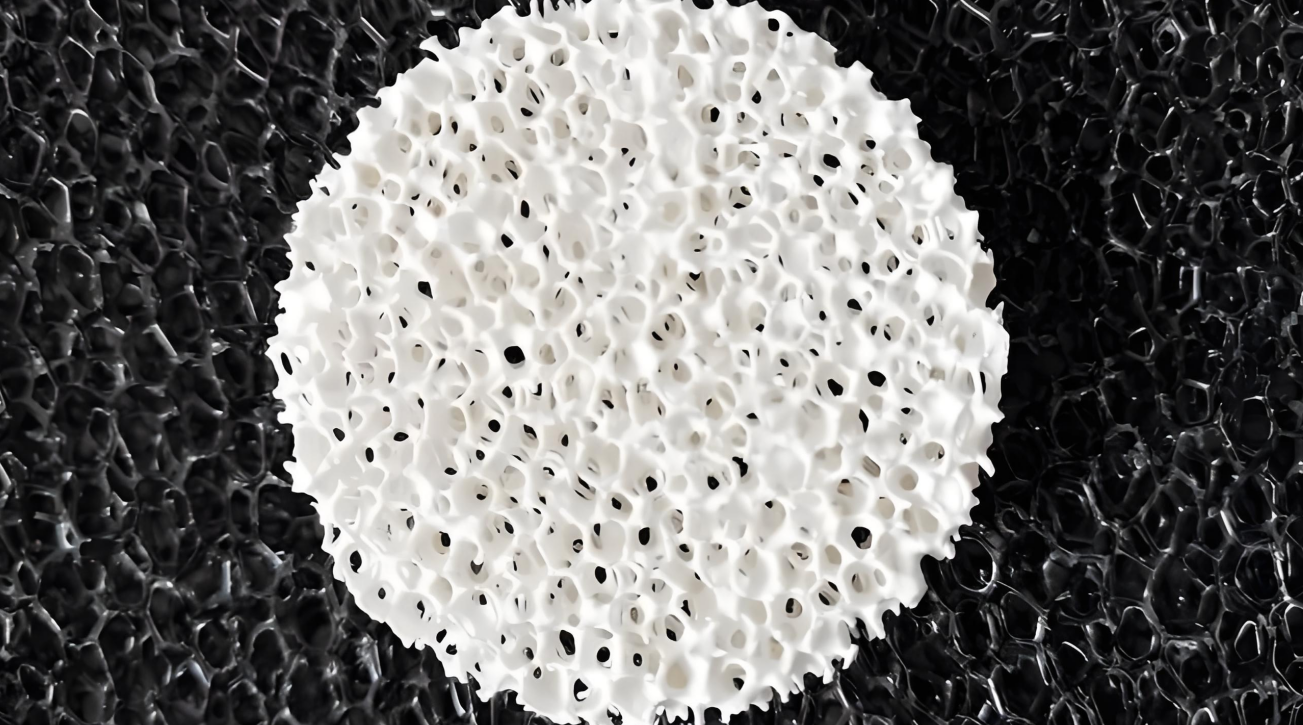
SEFU makes Ceramic foam filters, honeycomb Ceramic filters, and glass fiber filters, along with thermocouples, sampling cups, and riser sleeves. For aluminium casting specifically, their alumina (Al2O3) ceramic foam filter is the one to know: low density, high porosity, built on a three-dimensional reticulated skeleton structure. One product listing shows a 40 PPI variant at 17″×17″×2″.
They also produce SiC and zirconia foam filters, but those serve different alloys — SiC handles grey iron, Ductile Iron, and copper alloys, while zirconia is built for carbon and stainless steel. Good to know if your foundry runs mixed production lines.
Scale and Reach
Reported numbers vary by platform: TradeIndia lists 300 employees and USD 50 million annual turnover; Made-in-China cites a 15,000 m² facility with 200 employees. SEFU holds ISO 9001:2015, ISO 14001:2015, ISO 45001:2018, and SGS certifications, and claims exports to 20+ countries, including Egypt. No Kenyan distributor confirmed yet.
Reach them directly: info@sefunm.com, info@sf-foundry.com, or WhatsApp +86 13785803358.
Midvale Industries – Metal Casting Ceramic Filter Manufacturer
Founded in 1901, Midvale Industries has quietly outlasted most of its competitors, with over 120 years in industrial process solutions. It started as a local foundry and mining supplier and grew into a national player. Today it serves foundry, die casting, aerospace, automotive, medical, metal finishing, and painting industries across the US.
On its Foundry page, Midvale lists Ceramic Foam Filters as part of its core and mold-making services. The company is a solutions provider that carries filtration products alongside its broader casting supplies.
Multi-Metal, Not Just Aluminium
Midvale doesn’t claim aluminium specialization. Its foundry business spans metalcasting and die casting broadly, which suggests the filters work across multiple metal systems rather than being engineered specifically for aluminium alloys.
The Kenya Gap
Midvale’s confirmed footprint sits in St. Louis, Missouri and Tulsa, Oklahoma, distributing nationally within the US. No public record shows East African or Kenyan clients, overseas warehousing, or international agent networks.
What to Verify Before Buying
- Ask for PPI, dimensions, and material composition (Al2O3, SiC, zirconia)
- Confirm compatibility with your specific alloy (aluminium, ductile iron, or steel)
- Request export shipping references, especially to Africa
- Nail down MOQ, lead time, and packaging, since none of this is published online
FoundryMax – Ceramic Filter Supplier for Aluminium Casting
Ten to sixty PPI. That range alone tells you FoundryMax built its aluminium filtration line with flexibility in mind. The alumina ceramic Foam Filter is made specifically for aluminium alloys and rated to withstand temperatures up to 1250°C. It’s a three-dimensional Reticulated foam structure that traps inclusions and keeps flow control rated excellent. That’s better than mesh screens or channel-type filters.
Sizes That Match Kenyan Foundry Lines
Common formats include 100×100×22mm, 150×150×22mm, 200×200×22mm, 305×305×50mm, 381×381×50mm, and 508×508×50mm. Round discs come in Dia.60×15, Dia.80×22, Dia.100×22, and Dia.150×22. Standard packing runs 180 pieces per box for the smallest size, dropping to 10 pieces per box for the largest.
The Gaps
The product pages list no compressive strength figures, no thermal shock cycle counts, and no ISO or SGS certification numbers. There’s no case study, no installed-base evidence, and no Kenya or East African distributor in any public listing.
Before ordering, ask directly for:
- Full spec sheet: thickness, PPI, compressive strength, thermal shock cycles
- Third-party test reports for porosity and heat resistance
- DDP/CIF delivery terms for Kenya, including agent and shipping documentation
- MOQ, sample policy, and mixed-order rules
Key Considerations Checklist for Kenyan Foundries Buying Ceramic Filters
Whether a purchase order turns into a good decision or a costly mistake depends on material, PPI, delivery/customs, and East African service capability. Skip any one of these, and you’re gambling with downtime.
Material: Al₂O₃ vs SiC
For aluminium casting, two materials dominate. Al₂O₃ (alumina) handles standard melts, rated around 1300°C. SiC (silicon carbide) runs hotter and harder, rated near 1400°C, built for higher thermal loads. Cost-wise, alumina wins for general work. SiC costs more but delivers better thermal conductivity and hardness for demanding melt conditions.
Before signing anything, request a batch XRF composition report. Watch for Fe₂O₃ above 1%, as that often signals lower raw material purity, which can affect stability against certain aluminium alloys. For serious orders, push suppliers for raw material ratios, sintering curves, batch traceability codes, and third-party test reports.
PPI Selection Logic
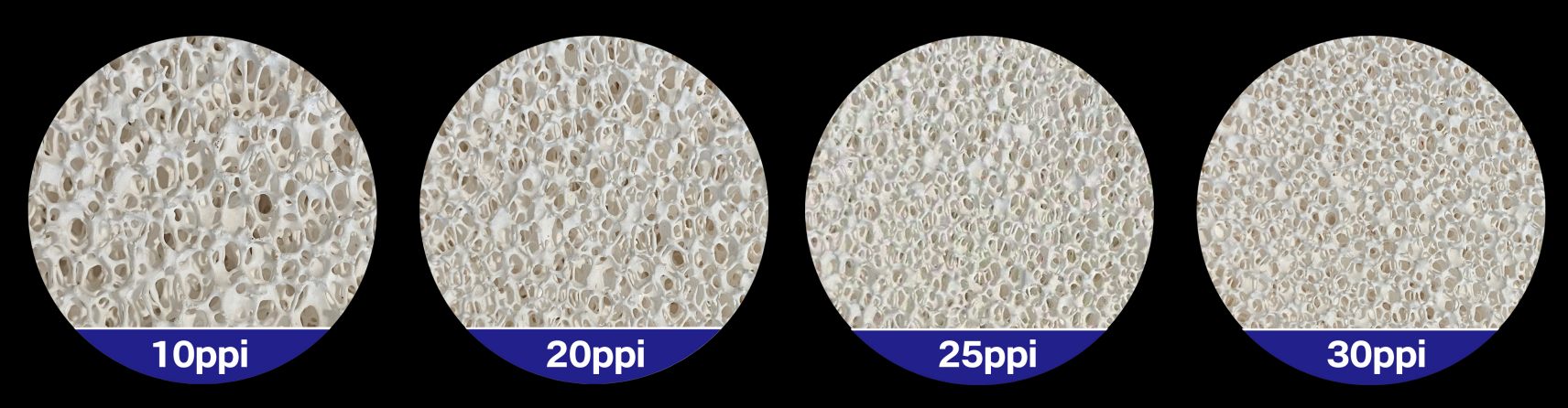
For PPI, 10–20 is for coarse filtration, 30–40 is standard for most aluminium castings including automotive parts, and 40–60 is for fine particle interception. Calculate flow rate first, then pick the finest PPI that still sustains it. Too fine slows fill; too coarse lets inclusions through. Cross-check porosity too — usually 60%–90%. Higher porosity means better flow but weaker mechanical strength.
Temperature and Sintering Checks
Match rated temperature against your actual melt and holding temperatures, plus transit time. Reference sintering range sits at 1350–1450°C with adequate soak time for densification. Under-sintered filters weaken. For aluminium work, test thermal shock stability. Does the filter shed powder, crack, or spall under repeated heat cycling?
Trade Costs Kenyan Buyers Must Calculate
- Lead time: prioritize suppliers with stock or East African warehousing
- MOQ: validate with samples before scaling
- Customs: confirm HS codes, duties, and require commercial invoices, packing lists, origin documents, and material test files upfront
- Breakage rate: lock in replacement terms and inspection windows in your contract
Supplier Service Checklist
- Local agent in Kenya, Tanzania, or Uganda
- Regional stock for common specs (30–40 PPI)
- Casting case history in aluminium, grey iron, or ductile iron
- Technical support: selection guidance, pour trials, gating layout
- Aftersales: traceability, response time, breakage replacement
Ready-to-Send Inquiry List
Request material, PPI, dimensions, porosity, temperature rating, sintering process, XRF/third-party reports, MOQ, lead time, packaging, and breakage terms, all in one email. Test flow speed, inclusion reduction rate, surface defect rate, and powder-shedding before committing to volume orders.
Conclusion
Choosing the right partner among the Top 7 Ceramic Filter Suppliers For Aluminium Casting In Kenya is a quiet vote of confidence in your final pour, your finish, your reputation on the foundry floor. The differences between SELEE’s precision, Drache’s European engineering, SEFU’s material versatility, and FoundryMax’s aluminium-specific focus reduce to three factors. You need filtration efficiency matched to your alloy, consistency you can measure batch after batch, and a supplier who understands Kenya’s logistics realities, not just the spec sheet. The best foundries build relationships with suppliers who show up when it matters. So take this guide, match it against your production volume and casting demands, and reach out to two or three candidates this week for samples or quotes.