Picking the wrong ceramic foam filter density buries slag inclusions and porosity defects inside castings you thought were clean. One bad pour costs you scrapped parts, downtime, and an uncomfortable conversation with your quality team. On a spec sheet, 10PPI, 20PPI, 30PPI, and 40PPI filters look almost identical, but they behave very differently once molten metal hits them.
This guide breaks down what PPI measures, how pore density affects flow rate and filtration precision, and which ceramic foam filter pore size fits your alloy, pour temperature, and inclusion load. You’ll also get a side-by-side comparison and a practical decision framework so you know which filter belongs on your next pour instead of guessing.
What Does PPI Actually Mean in Ceramic Foam Filters
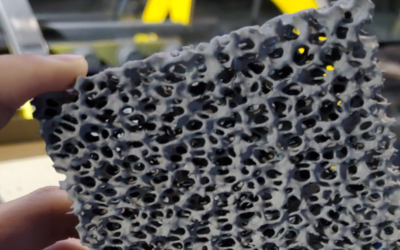
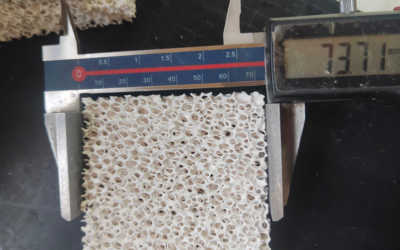
PPI stands for Pores Per Inch, the average count of pores or cells along a linear inch of a ceramic foam filter’s surface. It measures linear frequency across the material, distinct from pores per square inch or an exact pore diameter.
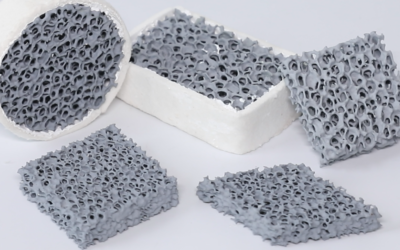
Foundries commonly see Ceramic foam Filters rated at 10, 20, 30, 40, 50, and 60 PPI. In principle, higher PPI ratings produce finer cells, narrower flow channels, and sharper filtration, balanced against increased resistance to flow.

Problems arise when treating PPI as an absolute conversion formula. Two filters stamped 30 PPI from different manufacturers often have noticeably different physical pore sizes. Slurry coating thickness, foaming structure, sintering shrinkage rates, pore geometry, and open porosity all change the finished dimensions.
Nominal vs. Actual PPI Range
|
Nominal Rating |
Typical Actual Pore Density |
Common Manufacturer Tolerance |
|---|---|---|
|
10 PPI |
8–12 PPI |
±2 PPI |
|
20 PPI |
18–22 PPI |
±2 PPI |
|
30 PPI |
28–32 PPI |
±2 PPI |
|
40 PPI |
38–42 PPI |
±2 PPI |
|
50 PPI |
48–52 PPI |
±2 PPI |
|
60 PPI |
58–62 PPI |
±2 PPI |
These ranges represent supplier grading guidelines rather than fixed guarantees. Ordering based solely on the box label leaves too much room for error. Review the testing method, batch inspection reports, and tolerance data before committing to a filter density for your pour.
10 PPI Ceramic Foam Filter: Coarse Filtration and High-Flow Scenarios
A 10PPI filter acts like a bouncer at the door, stopping heavy contaminants like slag chunks, refractory fragments, and oxide skins while letting metal pass through quickly.
Pore size explains why. A 10PPI ceramic foam filter has pores measuring 1,500–2,000 μm, with cell dimensions between 2.0 and 2.5mm. Those wide openings catch coarse non-metallic inclusions, but they will not stop sub-millimeter oxides.
High throughput and low resistance make these filters practical for short pour windows, fast mold filling, and large-section runners. In aluminum systems, design guidance sizes the filter’s wetted area at 1.2–1.5x the choke area, targeting surface velocities of 0.3–0.8 m/s.
Pressure drop data highlights the trade-off. In one flue-gas test used as a general magnitude guide, 10PPI foam samples produced about 50 Pa of resistance with fine-particle capture efficiency near 5%. Because flow resistance scales with the square of PPI, jumping to finer grades increases both pressure drop and clogging risk.
Where 10PPI Fits
-
Large gray iron and ductile iron castings, such as machine beds, housings, and heavy wheels
-
Steel castings and steel ingots with high throughput requirements
-
Aluminum ingot and billet pre-filtration ahead of a finer final-stage filter
-
Copper and other alloys, with some SiC-based 10PPI products rated up to 1500°C
When NOT to Use 10PPI
Skip 10PPI for thin-wall aluminum, aerospace or high-end automotive parts, and any casting sensitive to micro-oxide films. Those jobs need 20–50PPI filters, where the tighter pore structure catches what 10PPI lets through.
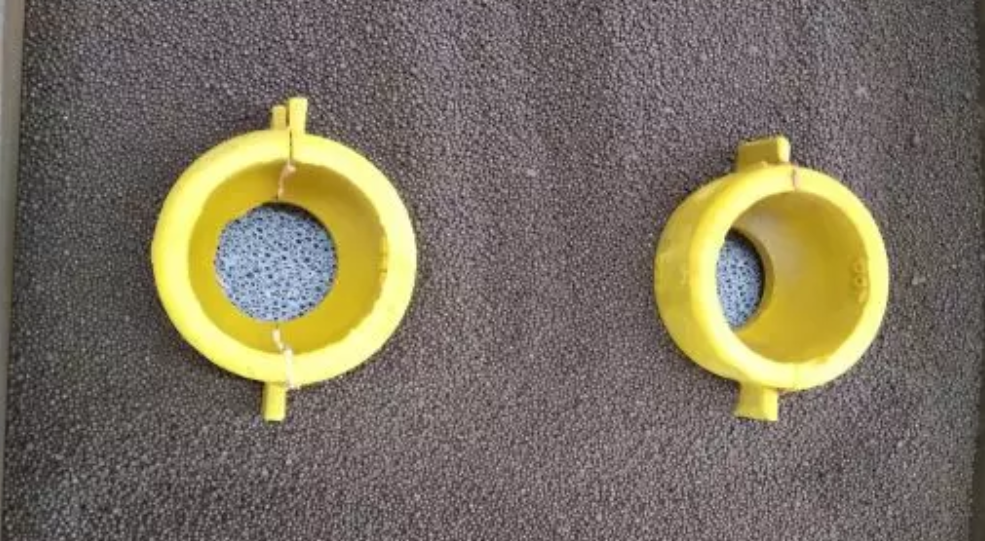
A common hybrid setup runs 10PPI in the main runner for flow volume, then steps up to 20PPI near the cavity gate for cleanliness.
20 PPI Ceramic Foam Filter: The Go-To Choice for General-Purpose Aluminum Casting

Most foundries use 20PPI as their default ceramic foam filter pore size, and for good reason. It catches inclusions down to about 80 μm, with typical filtration efficiency around 78%, though supplier data spans 75–85% depending on the alloy and pour conditions. Pore structure measures between 1.0–3.0mm, varying by manufacturer and test method.
Why Engineers Treat 20PPI as the Starting Point
Across standard pore sizes, 10PPI handles only coarse inclusions without a documented filtration rate. Stepping up the scale, 30PPI reaches 40 μm removal at ~85%, 40PPI captures 20 μm at ~88%, 50PPI hits 10 μm at ~92%, and 60PPI removes particles down to 5 μm at ~95%. Each finer step produces cleaner metal, but increases flow resistance.
20PPI strikes a practical balance. It keeps flow resistance low enough to ensure proper mold filling while still catching the oxide films, slag, and refractory fragments behind most inclusion defects in single-melt aluminum. Because of that balance, engineers log baseline data here first (tracking metal throughput, pre- and post-filter inclusion counts, fill times, and clogging rates) before testing tighter grades.
Where It Fits in Aluminum Foundry Filter Selection
-
Primary melt, low recycled content: Use 20PPI as the default.
-
Sand casting, ingot, billet pre-filtration: Standard choice across operations.
-
Large castings: Increase filter area rather than PPI. Use 7-inch filters for 20–50 kg/min, 9-inch for 25–80 kg/min, and 12-inch for 50–150 kg/min.
-
High scrap content or pressure-tight parts: Run parallel trials with 30–40PPI.
Keep metal velocity at 0.1–0.3 m/s through the filter, preheat before pouring, and seal the filter print tightly to prevent bypass flow.
30 PPI Ceramic Foam Filter: The Balanced Choice for Mid-to-High-Quality Castings
Call 30PPI the “sweet spot” filter. It balances flow capacity and inclusion removal, which keeps it running daily through standard aluminum billets, slabs, high-quality extrusion stock, and automotive structural castings. Published filtration efficiency lands at 85–92%, with typical pore sizes between 1.2 and 1.8mm.
What 30PPI Actually Stops
Target inclusion size sits at 40 μm and above. Some suppliers cite an 85% capture rate at that threshold, while other technical data puts removal of particles over 40 μm at better than 80%. That 85% rating reflects specific test conditions; it varies across alloy types, flow rates, filter areas, and installation methods. PPI alone does not define filtration efficiency, pore window size, permeability, or load capacity.
Where 30PPI Fits in Aluminum Foundry Filter Selection
-
Continuous casting slabs and billets: Inline filtration runs 30–40PPI in standard foundry practice.
-
6061/6063 DC casting: The common range spans 30–50PPI to prevent pressure drops and unstable flow from over-filtration.
-
Automotive structural parts and wheels: 30PPI handles general inclusion control. Critical cleanliness targets call for tighter grades.
-
Automotive sheet, can stock, aerospace: Step up to 40PPI or higher. Published selection charts place these high-cleanliness products closer to 50PPI.
Setup Requirements Before You Run 30PPI
Melt pretreatment matters. Skim slag, refine, degas, and let the bath settle before pouring through a 30PPI filter, as the ceramic media cannot absorb heavy dross or coarse primary oxides.
Maintain a metal head of 100–150mm above the filter. Lower-PPI filters run on 75–100mm, while 40PPI and finer need taller heads or a larger filter area.
Preheat the filter to at least 500°C before contact with molten aluminum to reduce thermal shock cracking and localized freeze-up.
Size the filter area to match casting speed, metal temperature, and alloy viscosity instead of raising the head to force flow. Excessive head height risks erosion, channeling, and filter breakage.
If inclusion loads fluctuate between batches, 30PPI clogs quickly. Shift to a larger filter, run staged filtration, or place a 20PPI coarse filter upstream of the 30PPI unit.
Acceptance Criteria Beyond the PPI Number
Ceramic foam filters lack a single unified ASTM standard. For wrought aluminum cleanliness, ASTM B594 ultrasonic inspection provides an indirect check. Before accepting any batch, confirm the test particle size behind the efficiency rating, filter area, metal flow rate, pressure drop, thermal shock strength, preheat temperature, and lot-to-lot consistency alongside the PPI stamp on the box.
40 PPI Ceramic Foam Filter: Built for High-End Precision Castings

Aerospace shops and premium automotive suppliers specify 40PPI for strict inclusion control. It targets gravity casting, low-pressure casting, and high-end precision parts where surface finish and internal cleanliness allow no compromise. Typical pore size runs 0.6–0.8mm, and filtration efficiency averages about 88%, with published ranges spanning 82–91% depending on alloy, filter area, flow velocity, preheat condition, and incoming melt cleanliness.
What 40PPI Catches and What It Doesn’t
A 40PPI ceramic foam filter traps oxide films, slag, and non-metallic inclusions larger than 20 μm. Some technical literature places that threshold at 10–20 μm, but single-pass capture of ultra-fine particles like spinels (roughly 1–20 μm) drops off sharply. Use this grade as a final cleanup tool alongside thorough melt refining and degassing; it cannot salvage a dirty bath on its own.
Pressure Drop and Head Height Requirements
While published data lists no unified maximum pressure drop, standard engineering practice expects flow resistance through 40PPI to run about 4x that of 20PPI at identical flow rates, placing it in the mid-to-high resistance bracket. A 25mm-thick 40PPI filter typically needs 40–80mm of aluminum metal head to establish initial wetting and breakthrough flow. Size your filter area to handle peak instantaneous flow, alloy temperature, and fill-time targets instead of sizing strictly to gate cross-section. Sizing too small drives up pressure drop and causes premature clogging.
Material Specs and Common Sizes
Automotive and general structural parts: high-purity alumina, Al₂O₃ ≥80%
Aerospace and safety-critical castings: high-purity alumina or zirconia, Al₂O₃ ≥99%, with batch-level records for pore size, porosity, thermal shock, and cleanliness
Standard sizes: 200×200mm to 250×250mm for automotive and structural work
Aerospace precision casting: smaller formats, 50×50mm to 100×100mm, integrated into ceramic shell gating systems
Where 40PPI Delivers Results
Aerospace: turbine blades, guide vanes, and high-purity aluminum or non-ferrous structural castings typically run 40–60PPI to control oxide films, slag, and pinholes with traceable quality documentation
Automotive key components: A356, A357, and A380 wheels, engine blocks, control arms, suspension parts, subframes, and structural brackets, where 40PPI balances inclusion removal against fill capability
High surface-quality castings: pump bodies, valve bodies, turbochargers, and thin-wall structural parts, where 40PPI reduces surface pitting, leak-test failures, and X-ray defects
When 40PPI Isn’t Enough
If acceptance criteria demand cleanliness above 95% inclusion removal, very thin walls, or strict control over sub-20 μm particles, 40PPI falls short. Move to 50–60PPI, dual-stage filtration, or upgraded melt treatment instead.
Setup Checklist Before Pouring
-
Complete rotary or inline degassing to control hydrogen content and oxide film levels before metal reaches the filter
-
Skim dross first, because a heavy initial inclusion load clogs 40PPI fast
-
Treat the filter as fine filtration within a broader purification setup for A356 and A357 alloys
-
Preheat the filter fully and keep it dry to prevent thermal shock, cracking, or cold shut
-
In low-pressure casting, install the filter at the base of the riser tube or in the runner and maintain a stable metal head, since excess pressure drop can cause underfill or shortened pour windows
-
If flow rate is high or dross load is heavy, add filter area, run parallel filters, or dial back instantaneous flow rather than forcing metal through an undersized filter
PPI Grade Comparison: Key Dimensions of Flow, Precision and Pressure Drop
Four filters present four very different physics problems. Pore size shrinks, flow slows, and pressure drop climbs, with none of these metrics moving in a straight line.
|
PPI |
Pore Size Range |
Filtration Capability |
Relative Flow |
Relative Pressure Drop |
Typical Application |
|---|---|---|---|---|---|
|
10 PPI |
1.5–3.0 mm |
Catches coarse slag; low-to-moderate precision |
100 (baseline) |
1.0x (baseline) |
Large castings, continuous pour, fast-fill parts |
|
20 PPI |
0.7–2.0 mm |
~78% capture, removes 80μm+ inclusions |
50–70 |
2–3x |
General aluminum casting, ingot, standard structural parts |
|
30 PPI |
0.3–1.5 mm |
25–90% range, typically ~85%, removes 40–50μm+ |
30–50 |
4–6x |
High-quality castings, slabs, precision aluminum parts |
|
40 PPI |
0.1–1.0 mm |
~88% capture, removes 20μm+ |
20–35 |
8–10x |
Aerospace, pressure-tight seals, automotive safety parts |
PPI rating alone does not fix pore size. Differences in foam structure, coating methods, and supplier calibration shift these ranges, making overlap between adjacent grades common.
The Area-Compensation Math
Flow follows a straightforward balance: Q ∝ A × v (flow equals area times velocity), while pressure drop scales as ΔP ∝ LQ/(A·k), representing thickness times flow divided by area and permeability. Doubling the filter area cuts unit-area velocity by roughly 50%, lowering pressure drop and buying more headroom before clogging starts.
Jumping from 20PPI to 40PPI drops per-area flow capacity to 25–50% of the baseline. That means you need 2–4x more effective area to maintain the same throughput. Shops commonly scale surface area by 1.5–2x when moving 10→20PPI, 1.5–2.5x for 20→30PPI, and 2–4x for 20→40PPI. They achieve this using larger filter plates, parallel filter banks, or deeper bowls with broader cross-sections.
Risk Trade-offs by Grade
|
PPI |
Clogging Risk |
Inclusion Residual Risk |
Dominant Failure Mode |
|---|---|---|---|
|
10 |
Low |
High |
Fine oxide films and spinels pass through |
|
20 |
Medium-low |
Medium |
Local clogging under heavy inclusion load |
|
30 |
Medium-high |
Low |
Slow fill, cold shut if area is undersized |
|
40 |
High |
Very low |
Flow stoppage, severe underfill on blockage |
Documented gravity-casting data shows 10PPI filtration delivering 30–40% gains in strength and elastic modulus for specific composite aluminum alloys. That is a measurable result, but not a universal benchmark. For pressure-tight and safety-critical parts, pairing 30–40PPI with expanded filter area outperforms raising the PPI on a fixed footprint. For large or thin-wall fast-fill castings, sticking with 10–20PPI keeps flow-stoppage risk low.
How to Choose the Right PPI Density Based on Casting Conditions (Decision Flow)
Seven inputs drive filter selection: alloy type, pour temperature, casting weight and wall thickness, target fill time, melt inclusion load, quality grade, and available filter area. Skip any one of them, and your PPI choice turns into guesswork.
Step 1: Set the PPI Range by Quality Grade
-
Bulk castings, ingots, remelt stock: 10–20 PPI. Flow capacity and clog resistance matter more than precision here.
-
Structural parts, engine blocks, standard extrusion billet: 20–30 PPI, balancing efficiency against throughput.
-
High-integrity automotive parts, wheels, engine components: 30–40 PPI for tighter inclusion targets.
-
Aerospace, thin-wall, pressure-tight, or X-ray-inspected parts: 40–60 PPI, but only with enough filter area and clean melt behind it.
-
High-pressure die casting: Start at 10–20 PPI to keep pressure drop from choking the fill.
Step 2: Correct for Flow Rate and Casting Size
Heavy, thick-wall, fast-fill jobs pull you toward 10–20 or 20–30 PPI. For thin-wall parts with low pour head and tight fill windows, avoid jumping straight to high PPI. Add filter area at 20–30 PPI instead, or risk cold shuts and underfill. For reference, 7-inch filters handle 20–50 kg/min, 9-inch filters handle 25–80 kg/min, and 12-inch filters handle 50–150 kg/min, though alloy, temperature, and pour head shift actual throughput. Size the filter area to total metal volume, not just the PPI rating. An undersized area clogs any grade early.
Step 3: Correct for Melt Cleanliness
If you have heavy oxide films, dross, or recycled contamination, drop one PPI step (40→30, 30→20) and add filter area at the same time. If the melt is thoroughly skimmed, degassed, and refined, move up one step (30→40). Pick the lowest PPI that reliably meets your cleanliness target.
|
Parameter |
Effect on PPI |
Actionable Choice |
|---|---|---|
|
Alloy type |
Aluminum spans 10–60 PPI; viscosity and oxide tendency shift actual pressure drop |
Trial 6061/6063 billet at 30–50 PPI; start contaminated remelt at 20–40 PPI |
|
Pour temperature |
Low temp and poor fluidity raise freeze-up risk at high PPI |
Drop one grade and add area for cold or thin-wall parts; fully preheat filter and seal box for high PPI |
|
Casting weight |
More total metal means more filter load |
Lower PPI or add parallel filters for heavy parts; do not compensate with faster pour speed |
|
Target flow |
Higher PPI raises resistance, cutting throughput |
10–30 PPI when flow leads; 30–60 PPI when quality leads and flow is low |
|
Inclusion load |
More inclusions clog fine pores faster |
20–30 PPI plus heavier skimming and degassing; reserve 40–60 PPI for clean melt |
|
Quality grade |
Higher spec demands finer pores |
10–20 general, 20–30 structural, 30–40 high-integrity, 40–60 aerospace/precision |
Troubleshooting Mid-Pour
Filter clogs mid-pour (falling flow, rising bath level, stretched fill time, underfill): Drop one PPI step, or upsize to a larger filter or dual parallel units. Check skimming, degassing, filter preheat, and whether filter area matches casting weight before blaming the PPI grade. If clogging persists, fix melt cleanliness upstream rather than raising pour temperature or forcing flow.
Inclusions still exceed spec: If flow stays stable with no clogging, the PPI is likely too coarse, so step up one grade (20→30 or 30→40). When inclusion loads are heavy, treat the melt first. Jumping straight to high PPI on dirty metal clogs the filter before it can do its job. Check for bypass leaks, cracked filters, or poor seating, because metal routes around an ill-fitting filter regardless of pore size. Precision aluminum parts moving from 30–40 PPI to 40–60 PPI need a re-check of fill time and filter life before you lock in the change.
Fill slows, cold shuts, or underfill appears: Check for oversized PPI, an undersized filter, or low pour temperature first. Work through corrections in this order: increase filter area, drop one PPI step, then optimize preheat and pour temperature. Raising pour speed alone rarely fixes the root cause.
PPI Selection Differences Across Metal Materials
Alloy chemistry determines your filter material before PPI even enters the picture. Pair the wrong ceramic with the wrong metal, and no pore density will fix it.
Aluminum: Al₂O₃ Is the Default
Standard aluminum pours at 680–780°C, safely within the 1100–1700°C service range of Al₂O₃ Foam filters. Magnesium levels change the requirements. 5xxx alloys with over 2.5% Mg need at least 80% Al₂O₃, while anything past 4% Mg (such as 5182 and 5083) calls for 99% Al₂O₃ or SiC to cut down chemical reactions and wetting risk.
Magnesium: Oxidation Risk Outweighs PPI
Magnesium oxidizes rapidly. A 10–20PPI filter handles high-flow, thin-wall, fast-cycle pours without clogging early. For sand, gravity, or low-pressure casting, 20PPI serves as a reliable starting point. Stepping up to 30–40PPI works for airtight structural parts, provided you add filter area and tighten pour-temperature control. When working with Mg-heavy alloys, stick to 20–30PPI instead of jumping straight to 40PPI once oxide films build up.
Cast Iron and Steel: Material Grade Comes First
|
Metal |
Filter Material |
Service Temp |
Typical PPI |
|---|---|---|---|
|
Gray/ductile iron |
SiC |
≤1550°C |
10–20 (up to 30 for cleanliness) |
|
Carbon/low-alloy steel |
ZrO₂ |
≤1700°C |
20–30 |
|
Superalloys |
ZrO₂/high-refractory |
>1700°C |
30+ |
Technical Parameters You Must Confirm Before Purchasing Ceramic Foam Filters
A spec sheet tells half the story. Before signing a PO, pin down six data points in writing.
Material-alloy match: Al₂O₃ (≤1200°C) for aluminum/zinc, SiC (≤1500°C) for iron/copper, and ZrO₂ for steel and superalloys. Request verified melt-temperature and thermal-shock test data rather than baseline melting points.
Measured PPI: Check the actual pore count with tolerance limits (the industry standard runs ±2 PPI).
Flow data: Measure initial flow, steady-state flow, pressure drop, and the clogging decay curve under your target metal temperature, head height, and filter area. Benchmarks sit around ~5–15 cm/min metal velocity per 1,000 kg poured, with pressure drop under 0.5–1.0 MPa.
Filtration efficiency: Anchor efficiency to a specific particle size and test method. Target ≥99% capture above 20 μm for high cleanliness; published Al₂O₃ data often shows >90%.
Dimensions and tolerance: Specify length, width or diameter, thickness, chamfer, flatness, and warpage. Foundrymax’s standard range covers 40–500mm, 11–50mm thick, with a tolerance of ±1.5mm under 100mm and ±2mm above.
Max service temperature: Confirm continuous and peak working temperatures, plus the total thermal-cycle count.
Request all of this in the invoice or technical agreement before the first shipment.
Conclusion
Choosing between 10, 20, 30, or 40 PPI comes down to matching ceramic foam filter pore size directly to your casting conditions. If you miss on the flow rate, you risk bottlenecking production or letting inclusions slip into finished parts. Coarser PPI ratings suit high-volume pours with a higher tolerance for debris, while finer ratings protect jobs where surface finish and internal soundness cannot be compromised.
Before placing your next order, pull your alloy specs, pouring temperature, and inclusion history, then check them against the decision framework above. If you are still balancing throughput against filtration precision, FoundryMax‘s technical team has worked through these trade-offs across hundreds of foundry floors. Talk to us before locking in a spec sheet that could cost you a batch of castings down the line.